




Georgian Enamel Trinket Box
A georgian enamel trinket box is a small, painted container made for pocket or dressing table use during the eighteenth century.
Georgian Enamel Trinket Box
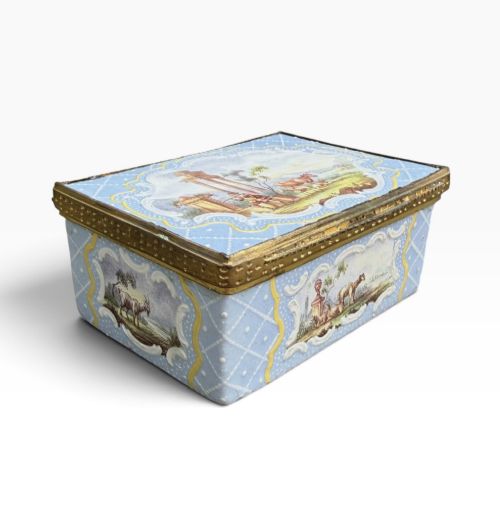
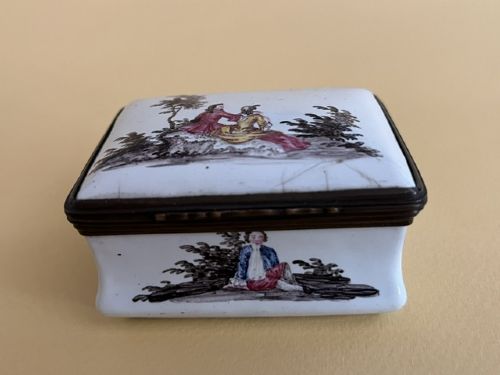
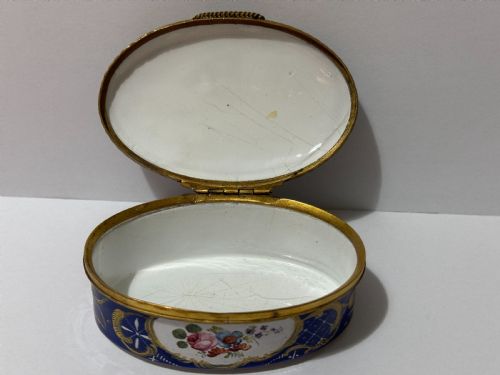
A georgian enamel trinket box is typically encountered as a small snuff box, patch box, or bonbonniere dating from the eighteenth century. These diminutive containers include oval and rectangular forms, often decorated with pictorial scenes such as musicians in parkland or inscribed with affectionate mottoes.
Most examples originate from English centres such as Bilston and South Staffordshire. The selection spans the Georgian period, with occasional nineteenth century interpretations continuing the earlier traditions of decoration and form.
Materials and construction
These pieces are constructed by fusing opaque white or coloured enamel to copper or brass bases. Artisans then hand-painted the polished enamel surfaces with detailed miniature scenes or lettering, often mounting the lids in gilt metal or copper gilt mounts.
The fabrication relies on precise temperature control during firing to bond the vitreous enamel to the metal substrate. Finer items incorporate hinged gilt metal bezels that secure the lid to the base with careful mechanical alignment.
The listings span the eighteenth and nineteenth centuries, featuring materials such as copper, brass, and gilt metal shaped into patch boxes and snuff boxes.
Assessing quality and craftsmanship
Quality rests upon the delicacy and preservation of the hand-painted decoration on the lid and sides. Finer pieces display crisp miniature painting, well-rendered figures, and legible inscriptions without extensive restoration or flaking to the enamel.
The integrity of the copper or brass carcass and the snugness of the gilt metal hinge also distinguish superior specimens. Well-preserved examples retain the original brilliance of the enamel colours and show minimal wear to the metallic mounts.
The Georgian Enamel Trinket Box Glossary
- Bilston enamel
- A term used for enamels produced in the Staffordshire town of Bilston during the eighteenth century. These workshops specialised in small boxes and plaques.
- Patch box
- A small pocket container used to hold small cosmetic patches made of silk or velvet. Ladies applied these to the face during the Georgian era.
- Bonbonniere
- A small decorative container intended for sweets or sugar plums. They frequently take whimsical or novelty shapes.
- Vinaigrette
- A small hinged box featuring an internal pierced grille. This held a sponge soaked in aromatic vinegar for refreshing the user.
Georgian Enamel Trinket Box: Frequently Asked Questions
What were these boxes used for?
These small containers served practical purposes for Georgian society, holding dry snuff, adhesive cosmetic patches, or sweetmeats.
Ladies and gentlemen carried them in pockets or handbags for everyday use and social display.
How do I date an enamel box?
Dating relies on stylistic clues, mounting techniques, and the palette of the enamel colours used. Eighteenth century examples usually feature copper bases and hand-painted local or sentimental scenes.
Later nineteenth century pieces often show different manufacturing marks and heavier metal mounts.
Where were they made?
The vast majority of these pieces originate from Staffordshire, particularly workshops in Bilston and South Staffordshire. These English centres dominated production during the Georgian period.
Occasional continental or Swiss examples also appear in collections.
How should I display them?
Because of their small scale, these items sit well inside glass cabinets or on dedicated trays where they are safe from knocks. Keeping them away from direct sunlight protects the painted enamel surfaces.
Handling them by the body rather than the hinges preserves the original gilt mounts.