


Antique Enamel Bonbonniere
An antique enamel bonbonniere is a small, hinged container for sweetmeats or cosmetics, offering a glimpse into eighteenth-century social elegance.
Antique Enamel Bonbonniere
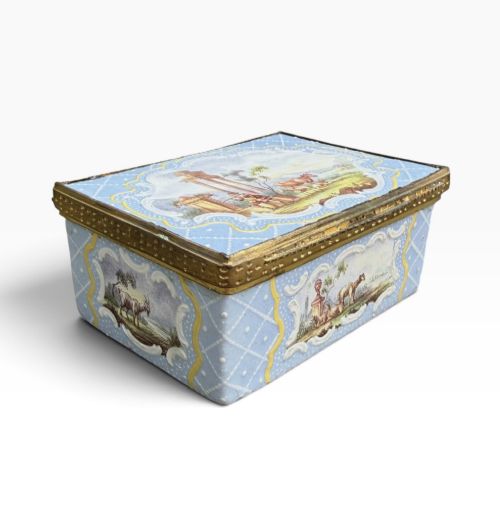
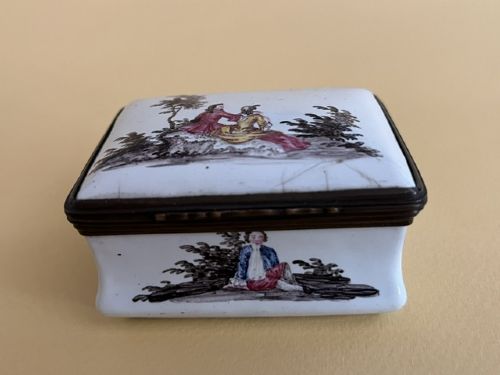
An antique enamel bonbonniere belongs to a family of small, hinged containers that includes patch boxes and snuff boxes. These diminutive vessels served the polite society of the eighteenth century, holding small treats or cosmetic patches.
The pieces seen on this page date principally from the eighteenth century, specifically the Georgian period, alongside later nineteenth-century examples and twentieth-century jars. Staffordshire and Bilston workshops dominate the origins recorded in the listings.
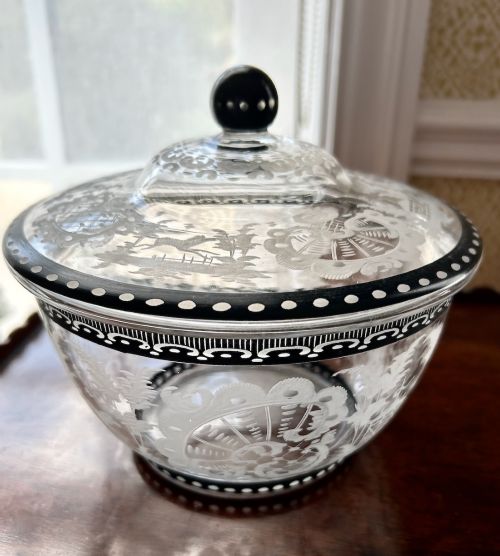
Forms vary from rectangular boxes to specialised containers shaped as animals, such as the King Charles Cavalier Spaniel. Alongside these sit related items like glass bowls and covers, expanding the selection of decorative containers.
How they were made
Craftsmen built these containers using copper or brass as a base for the enamel coating. Gilt metal and gilded metal mounts provided the hinges and rims necessary to secure the lids.
The technique involved fusing vitreous enamel to the metal substrate, often followed by hand-painting detailed scenes, inscriptions or portraits. Engraved glass techniques appear in the later nineteenth-century and twentieth-century pieces on the page.
Listings on this site span the eighteenth, nineteenth and twentieth centuries, featuring materials such as enamel, copper, brass, glass and gilt metal.
What varies in quality
The refinement of the hand-painted decoration determines much of the distinction between pieces, with intricate miniature painting commanding greater attention than simpler designs. The crispness of the metal mountings and the alignment of the hinge also indicate the standard of production.
Preservation of the vitreous enamel surface affects the character of each box, as does the clarity of any moulded or engraved details on the glass and metal components.
The Antique Enamel Bonbonniere Glossary
- Bonbonniere
- A small ornamental box intended for holding sweets or bonbons. These pieces often feature hinged lids and detailed enamel decoration.
- Bilston
- A Staffordshire town renowned for its enamel production during the eighteenth century. Factories here specialised in small luxury boxes.
- Patch box
- A small container equipped with a mirror inside the lid, used for holding cosmetic beauty patches. Eighteenth-century ladies used these to adorn their faces.
- Snuff box
- A small pocket-sized container designed to hold ground tobacco. Many examples from the Georgian period utilise enamel over copper.
- Vitreous enamel
- A material made by fusing powdered glass to a substrate by firing. This creates a smooth, durable and glossy coloured surface.
Antique Enamel Bonbonniere: Frequently Asked Questions
What was an antique enamel bonbonniere used for?
These small containers held sweetmeats, sugared almonds or breath-freshening bonbons during the eighteenth and nineteenth centuries.
They sat upon dressing tables or were carried in pockets as fashionable accessories for polite society.
How do I date an eighteenth-century enamel box?
Dating relies upon stylistic markers, shape conventions and the characteristics of the copper and enamel manufacturing techniques. Georgian pieces often display specific floral motifs or portrait styles associated with Staffordshire production.
Comparison with documented examples from Bilston helps narrow the decade of origin.
Are enamel boxes fragile?
The vitreous enamel surface is glass fused to metal, making it vulnerable to sharp impacts or drops. Gentle handling prevents chipping or cracking of the decorated coating.
Storage away from hard surfaces and other metal objects keeps the exterior intact.