

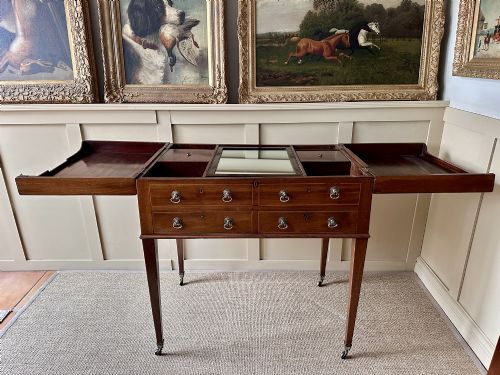

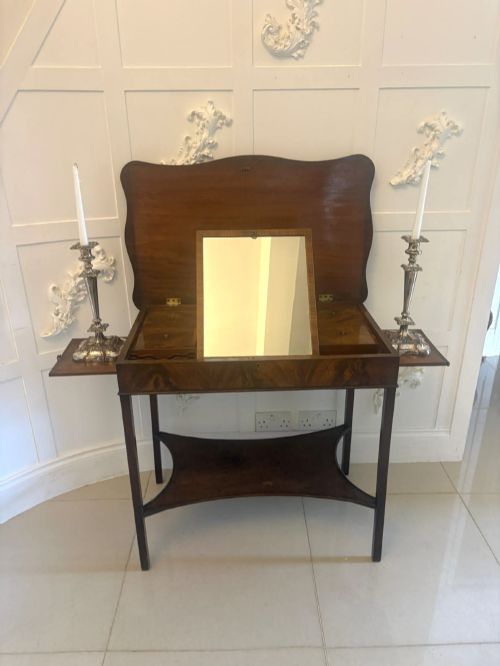
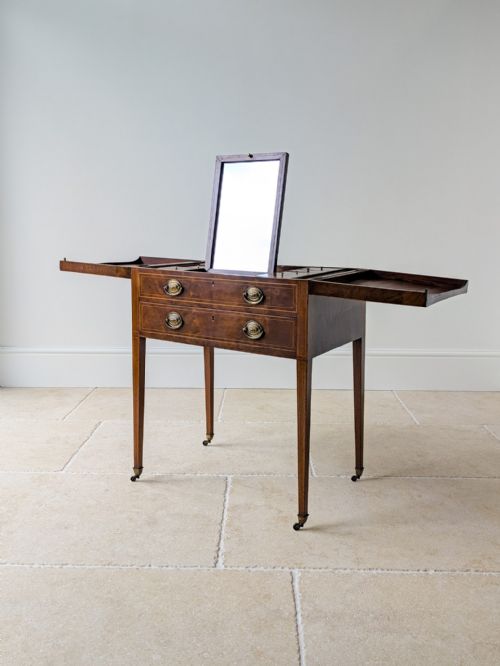
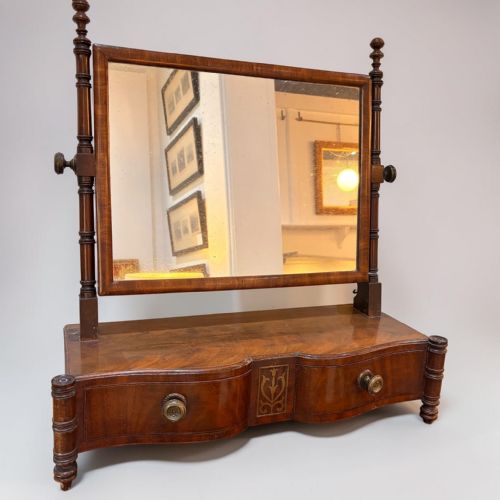

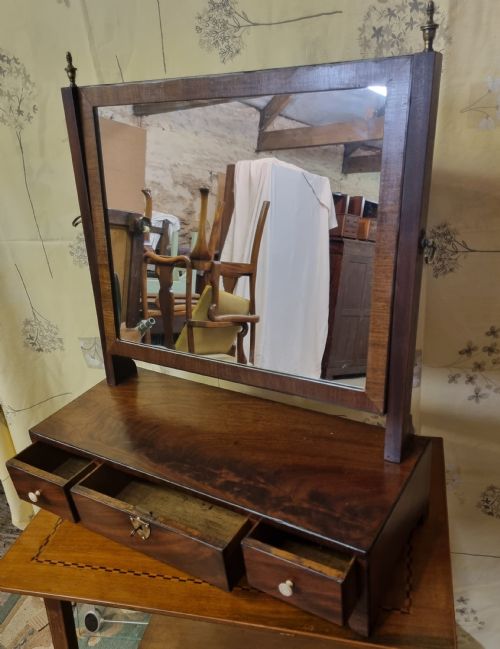
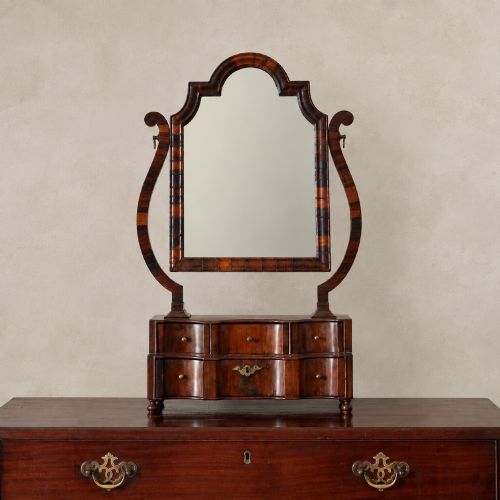
Georgian Dressing Table Mirror
A georgian dressing table mirror sits low and steady on the chest, designed to tilt and catch the morning light.
Georgian Dressing Table Mirror
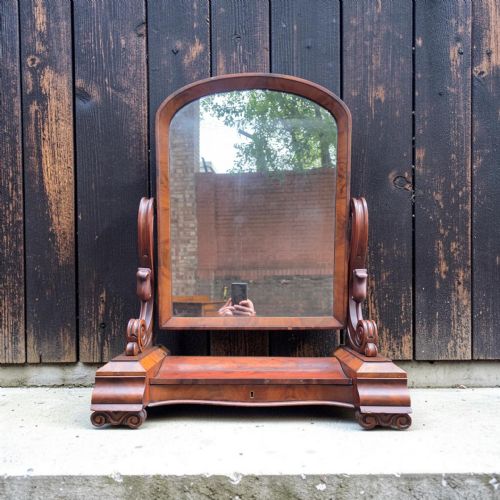
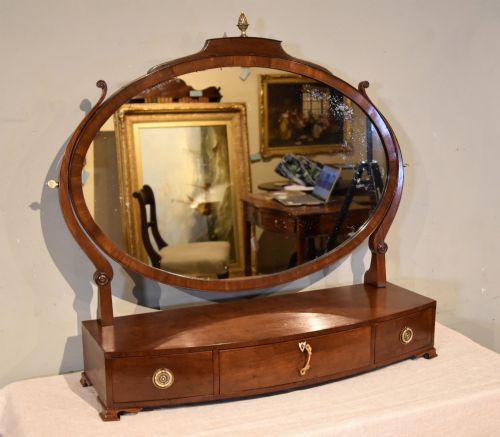
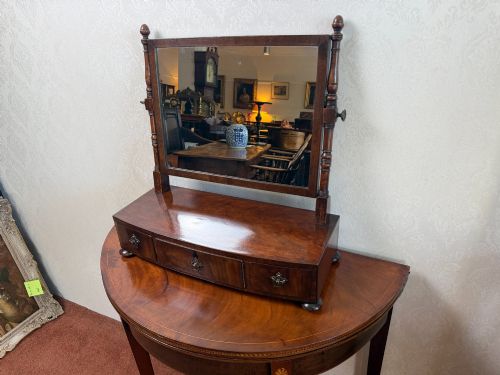
A georgian dressing table mirror, also known as a toilet mirror or dressing glass, sits upon a small box base fitted with drawers. These portable looking glasses were made to stand on larger furniture in bedrooms and dressing rooms during the eighteenth and nineteenth centuries.
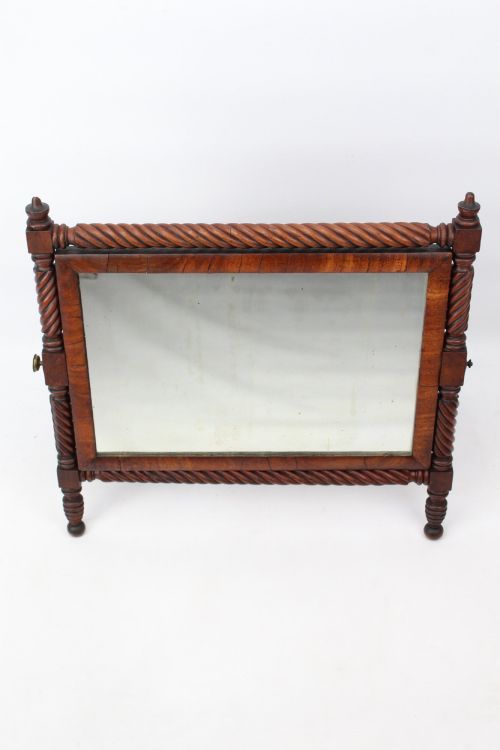
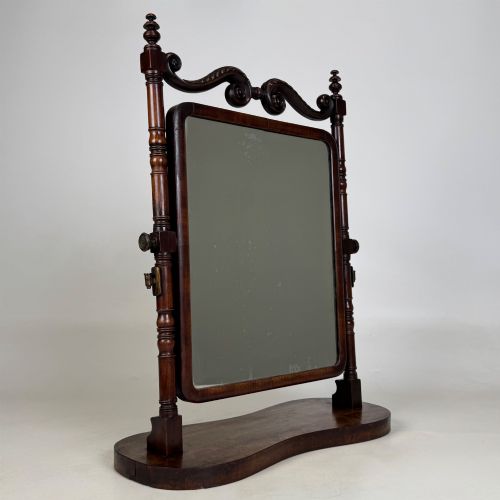
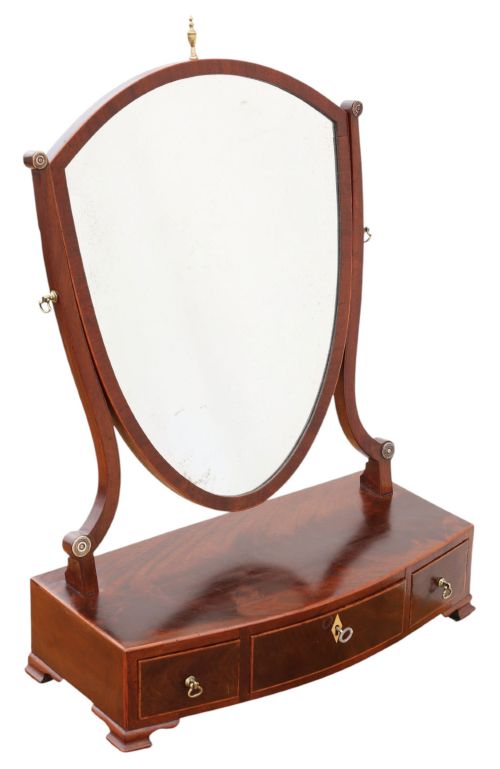
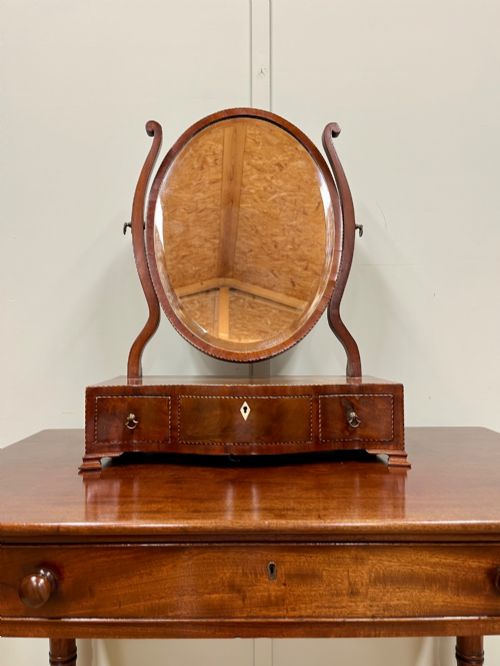
The form appears in several distinct shapes across the period listings, from rectangular plates to shield and oval glasses supported by upright arms. The base often contains small compartments or drawers for holding pins, trinkets, and personal grooming items.
Mahogany and walnut dominate the surviving examples, appearing alongside lighter satinwood and boxwood inlay. While the majority belong to the Georgian and Regency eras, occasional pieces reflect later revivals and continental work.
How they were made
Cabinet makers constructed the frames and base boxes using solid timbers and fine veneers, frequently employing mahogany and walnut. Crossbanding, stringing, and boxwood inlay provided subtle geometric decoration around drawer fronts and mirror surrounds.
The glass plate hangs between two upright arms by means of brass pivot screws, allowing the mirror to tilt to the required angle. Original mercury silvered glass often shows small areas of speckling or oxidation from age.
Base sections commonly feature bracket feet or ogee feet supporting small serpentine or straight drawer configurations. Brass handles and escutcheons secure the miniature drawers and add functional detail to the facade.
Georgian Dressing Table Mirror Retail Price Guide 2026
Typical asking prices for georgian dressing table mirror among the pieces listed under this phrase on Sellingantiques today, from the lower quarter to the upper quarter. They describe what is for sale here now, not the wider market.
A gentleman's dressing mirror often hid miniature compartments specifically sized for small pocket watches and collar studs.
What varies in quality
Proportion and timber selection dictate the standing of a piece, separating straightforward utilitarian items from more ambitious cabinet work. Figured grain, careful matching of veneers, and refined shaping on shield or oval frames reveal the hand of a skilled maker.
The integrity of the mirror plate and the retention of original brass hardware influence character and authenticity. Subtle details such as dovetailed drawer construction and secondary softwood framing show the standard of internal execution.
The Georgian Dressing Table Mirror Glossary
- Toilet mirror
- A smaller mirror designed to sit on a dressing table or chest of drawers. These pieces share the same form as dressing table mirrors.
- Swing mirror
- A mirror plate hung on pivots between two upright posts so that it can tilt. This mechanism allows the user to adjust the angle of reflection.
- Shield plate
- A mirror glass cut into the shape of a heraldic shield. This popular late eighteenth-century silhouette softens the stricter geometry of earlier rectangular designs.
- Crossbanding
- A narrow strip of veneer laid across the grain of the primary wood around the border of a panel or drawer. It creates a neat visual frame for the surface.
- Serpentine front
- A piece of furniture featuring a front line that curves outward in the centre and inward at the sides. This contour requires careful shaping of the solid wood or drawer fronts.
Georgian Dressing Table Mirror: Frequently Asked Questions
Where did people place these mirrors?
These mirrors stood on top of chests of drawers, side tables, or dedicated dressing tables in bedrooms and dressing rooms. Their portable nature meant owners could move them around the house to follow the best daylight.
The base boxes provided convenient storage for daily accessories, jewellery, and cosmetics close to hand while preparing for the day.
How do I spot an original glass?
Older mirror glass often displays a slightly uneven reflection, minor surface pitting, and dark specks caused by the degradation of the backing over centuries. Bevelled edges on thin plates also point towards period manufacturing techniques.
Completely clear, uniform reflections typically indicate a modern replacement plate fitted into the old wooden frame at a later date.
What is a triplate mirror?
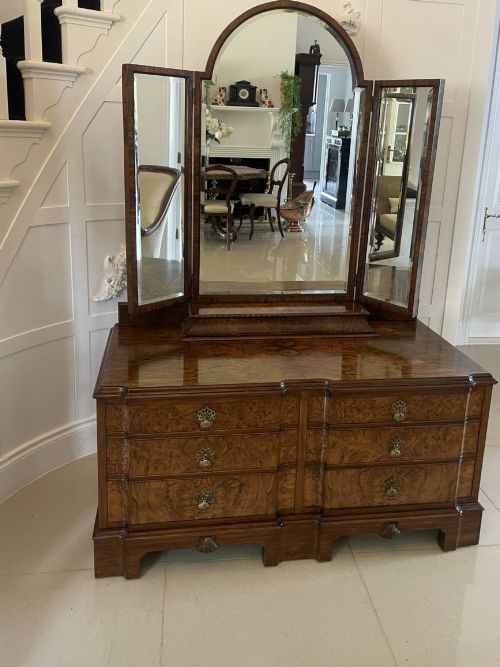
A triplate mirror consists of three separate looking glasses hinged together in a folding arrangement. This configuration allowed the user to view different angles simultaneously during grooming.
Such pieces are less common than single-plate swing mirrors and offered a more elaborate setup for dressing rooms.
Are the drawer bases original?
Makers constructed the small drawers inside the base using secondary timbers like oak or pine with neat hand-cut dovetails. Examining the interior construction helps confirm whether the drawer boxes remain undisturbed from the period of manufacture.
Repairs or replaced drawer bottoms are common given the heavy use these small compartments received over generations of personal grooming.