

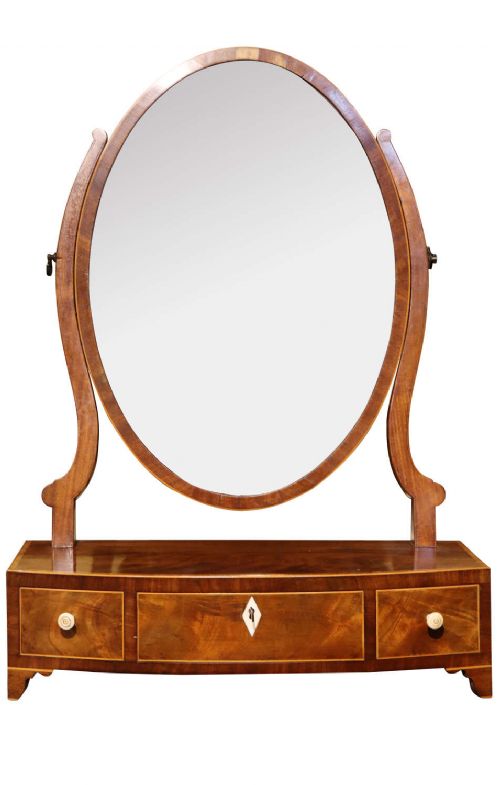


Georgian Dressing Table Glass
Georgian dressing table glass pieces are traditional swing and toilet mirrors designed for grooming, offering historical charm and functional elegance to any interior.
Georgian Dressing Table Glass
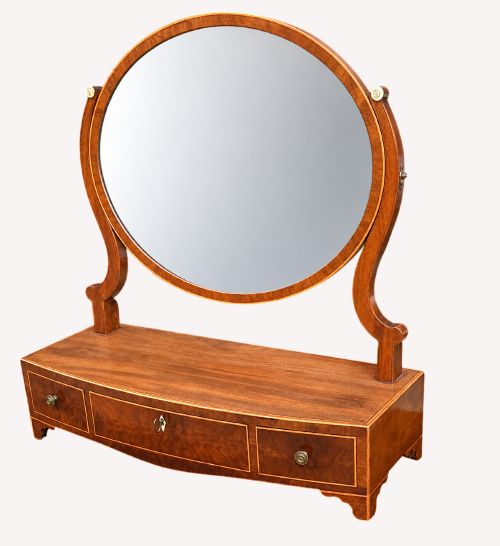
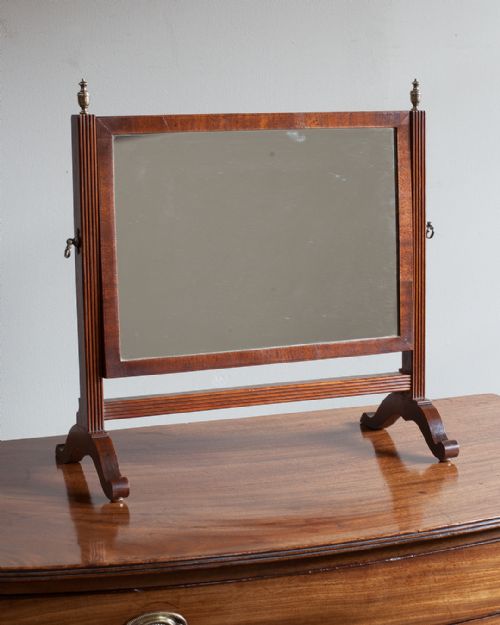
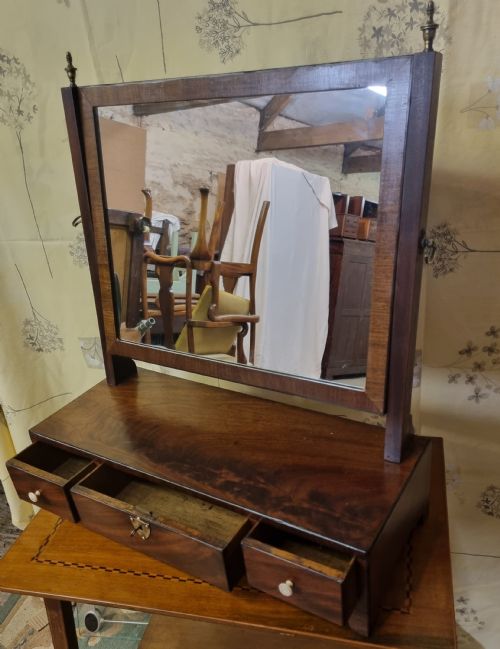
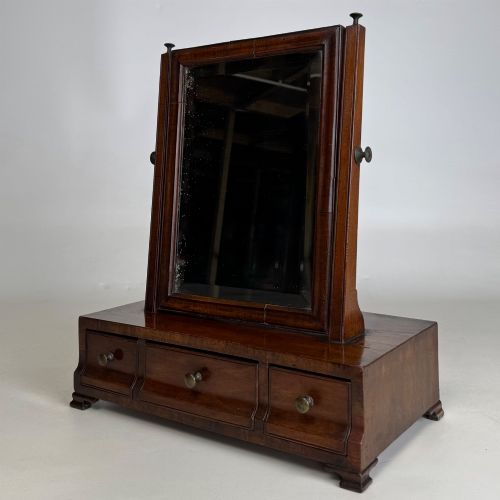
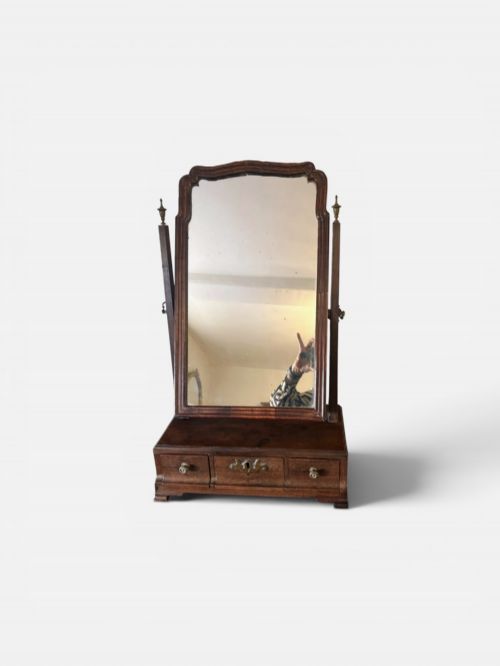
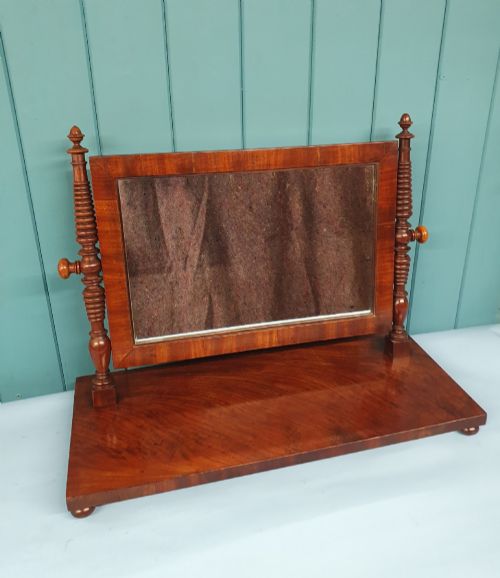
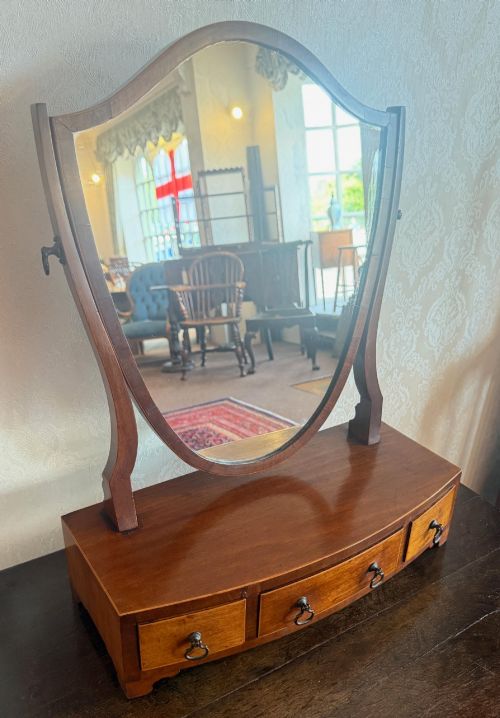
When you search for georgian dressing table glass, you encounter a selection of historic table mirrors, swing mirrors, and toilet mirrors designed to sit atop desks or chests of drawers. Most examples on this page date from the eighteenth and nineteenth centuries, spanning periods such as the Georgian, Regency, and Victorian eras.
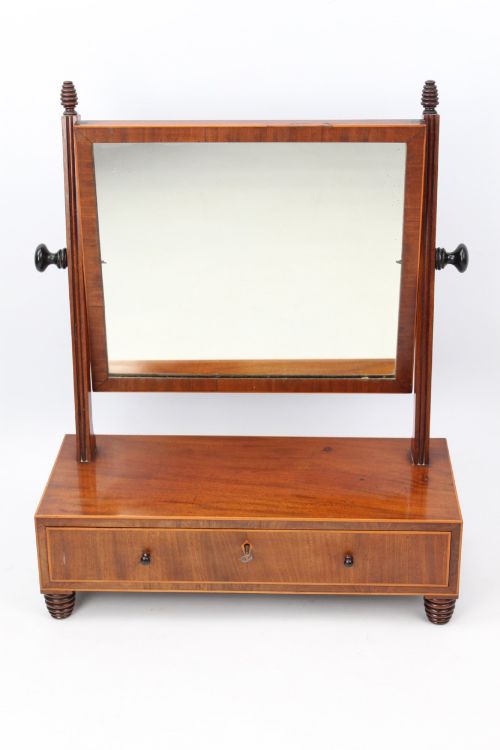
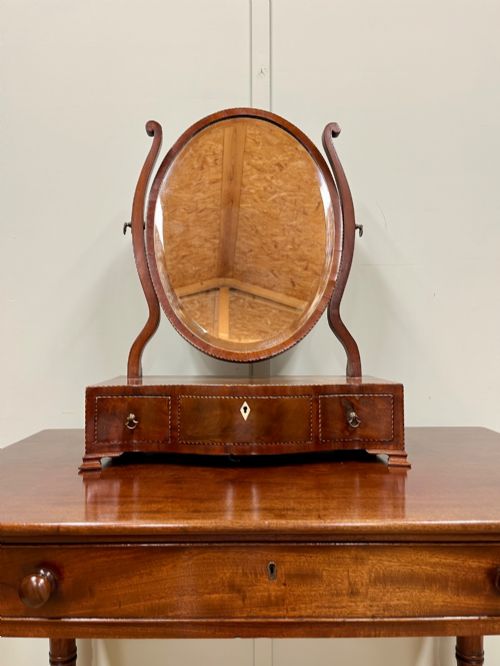
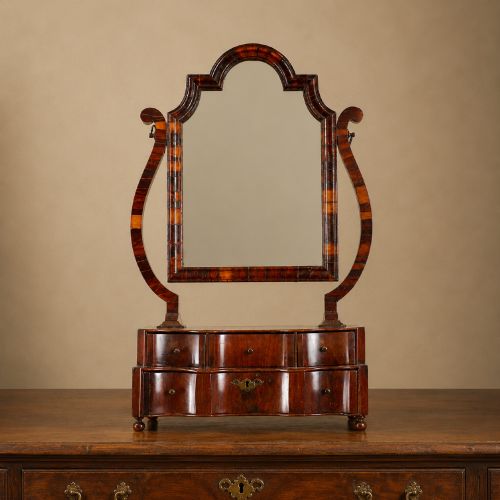
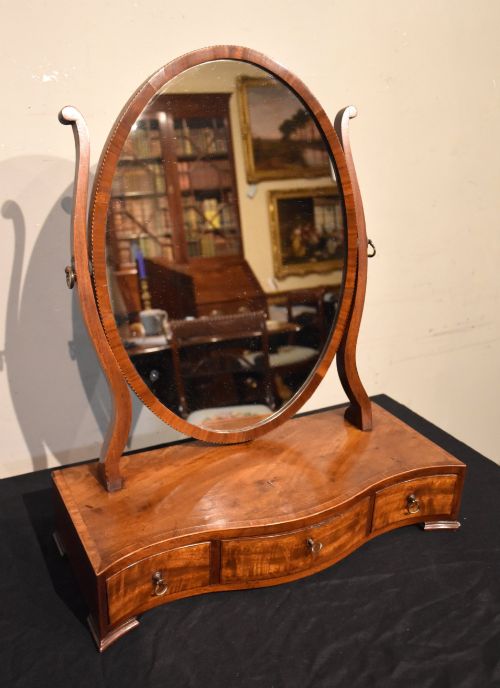
The standard form consists of an adjustable glass mirror plate held within a wooden frame, mounted on upright supports above a small base box or plinth. These base boxes frequently incorporate small drawers for storing cosmetics, jewellery, or personal items.
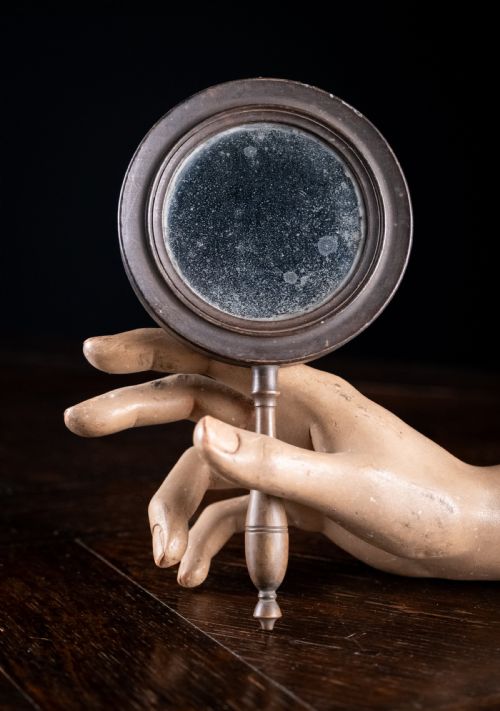
Alternative forms include hand mirrors, double-sided hand mirrors, patch stands, and dressing room looking glasses. Walnut, mahogany, and satinwood dominate the construction, often featuring crossbanding, marquetry inlay, or parcel-gilt details.
Materials and construction
Cabinet makers utilised dense hardwoods like mahogany and walnut for the frames and box bases, frequently incorporating secondary woods and decorative veneers such as satinwood, laburnum, and harewood. Crossbanding and Dutch marquetry inlay provided contrasting borders and decorative enrichment on finer pieces.
Mirror plates were set into rebated frames, sometimes accompanied by brass hinges, brackets, or adjustment screws that allowed the glass to tilt. Smaller accessories like patch stands incorporated lead glass, silver mounts, and cut glass components.
Object types span swing mirrors, toilet mirrors, dressing glasses, patch stands, and double-sided hand mirrors.
Assessing quality and proportion
Quality rests heavily on the crispness of the cabinet work, the choice of figured wood veneers, and the harmonious proportion between the mirror frame and the base. Pieces featuring serpentine fronts, delicate stringing, or crossbanded borders demonstrate superior craftsmanship compared to plain, utilitarian versions.
The retention of original mirror glass, brass hardware, and secondary woods elevates the standing of a piece. Hand-carved parcel-gilt details and sophisticated marquetry inlay indicate workshop output intended for high-status interiors.
John Douglas
The Georgian Dressing Table Glass Glossary
- Toilet mirror
- A small table mirror designed for personal grooming, typically equipped with a box base containing small drawers. These pieces sat upon dressing tables or chests.
- Swing mirror
- A mirror plate hung on pivots between two upright posts, allowing the glass to tilt back and forth. This mechanism is central to most period dressing glasses.
- Crossbanding
- A decorative border technique where veneer strips are applied perpendicularly to the grain of the surrounding wood. It frames the edges of drawer fronts and mirror frames.
- Patch stand
- A small pedestal or stand used to hold cosmetic patches favoured in the eighteenth century. Examples are found in glass and silver.
- Serpentine front
- A furniture front curved in a wave shape, featuring a convex centre flanked by concave sides. This profile appears frequently on finer drawer bases.
Georgian Dressing Table Glass: Frequently Asked Questions
What is a Georgian dressing table glass?
A Georgian dressing table glass is a portable mirror designed to sit on a table or chest during grooming. They usually feature an adjustable swing mirror mounted above a small wooden base with drawers.
Cabinet makers produced these mirrors in forms ranging from simple mahogany toilet mirrors to elaborate marquetry-inlaid satinwood examples. They served as both functional items and decorative furnishings in period bedchambers.
How do I use a toilet mirror today?
These mirrors function effectively on top of modern chests of drawers, dressing consoles, or sideboards. Their compact footprints make them suitable for contemporary bedrooms and hallways.
The small drawers in the base provide practical storage for small accessories, while the adjustable swing mechanism allows you to angle the glass as needed.
How do I tell a Georgian mirror from a Victorian one?
Georgian and early nineteenth-century mirrors generally display lighter timber scantlings, hand-cut dovetails, and softer patination on the wood. The joinery techniques and choice of veneers, such as Cuban mahogany or figured walnut, offer clues to the period.
Later Victorian interpretations often feature heavier framing, different finishing materials, and machine-cut elements. Comparing the secondary woods and hardware styles helps clarify the date of manufacture.
What woods were used for these mirrors?
Mahogany is the predominant timber found across these listings, alongside walnut used in earlier eighteenth-century pieces. Cabinet makers also employed satinwood, laburnum, and harewood for decorative contrast.
Veneers and crossbanding enhanced the visual appeal of the base boxes, while parcel-gilt accents added a touch of metallic brightness to the carved woodwork.