

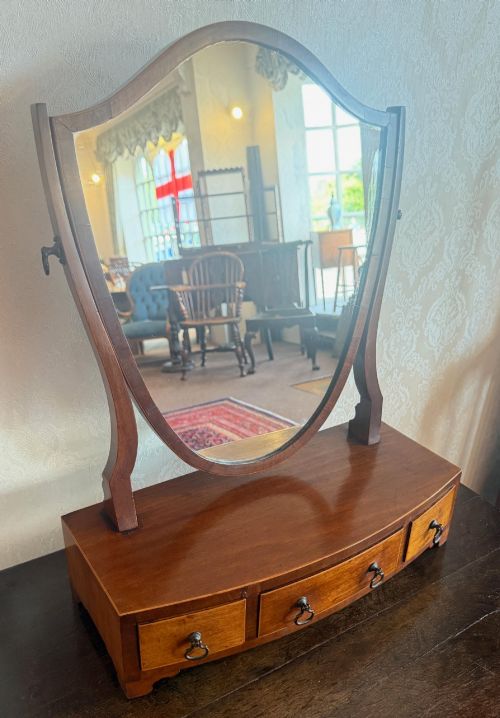
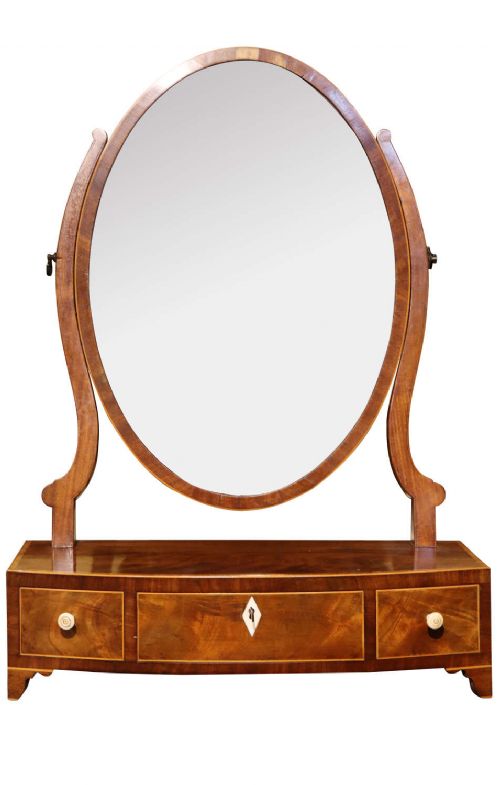
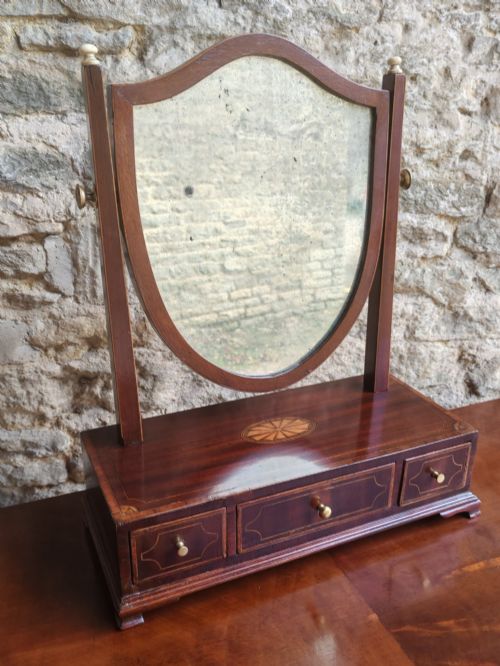
Georgian Drawer Vanity Mirror
A georgian drawer vanity mirror is a tabletop looking glass with fitted base drawers, designed for daily grooming and prized for timber warmth and functional proportion.
Georgian Drawer Vanity Mirror
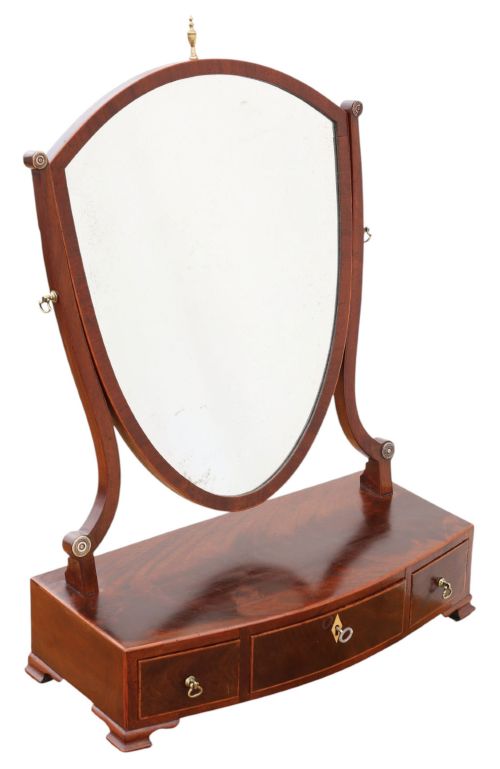
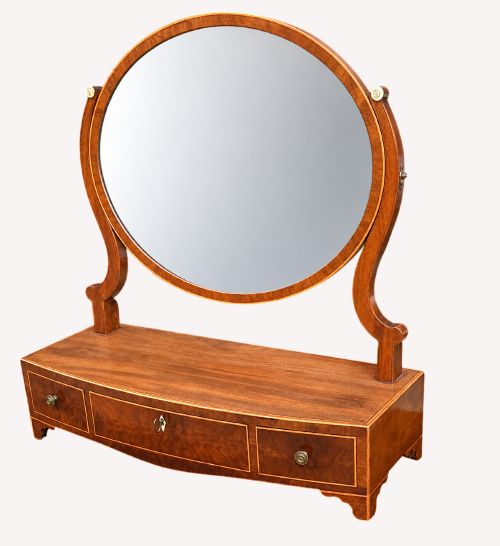
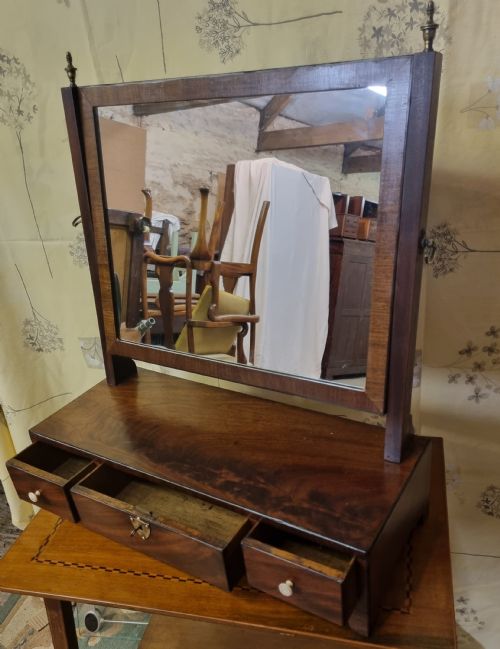
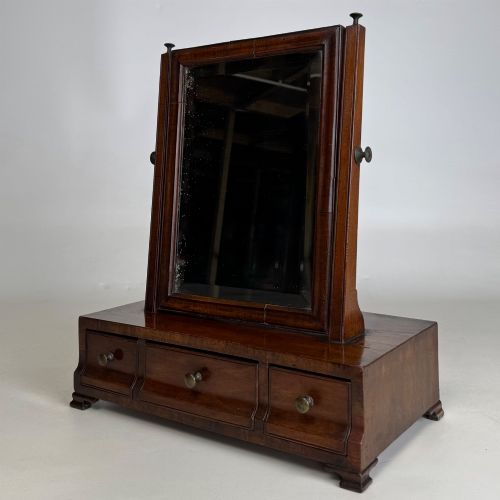
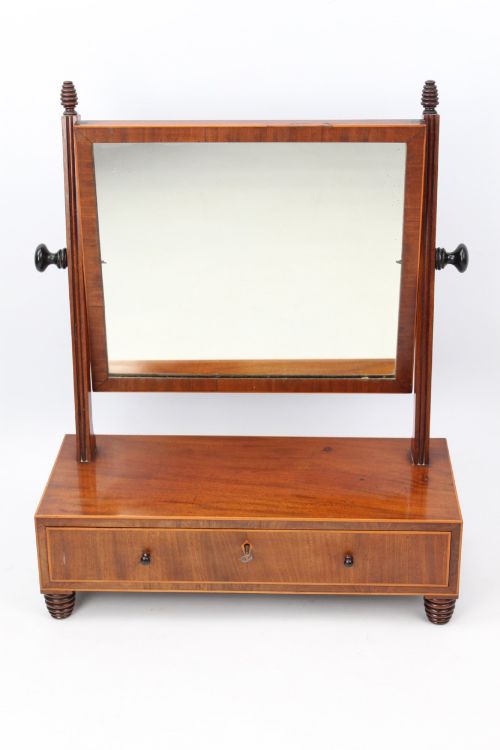
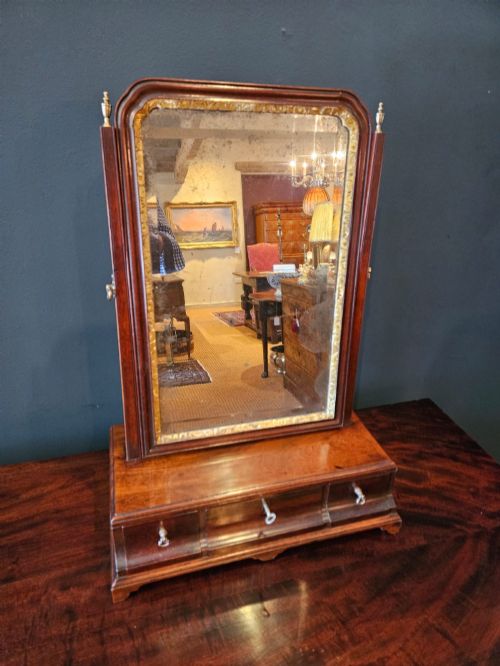
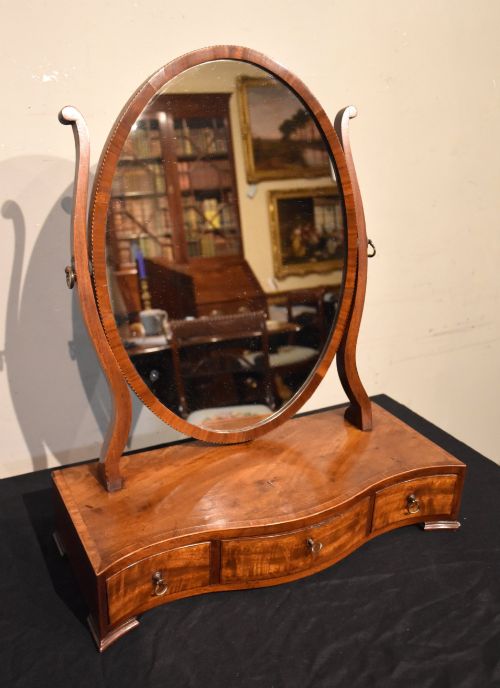
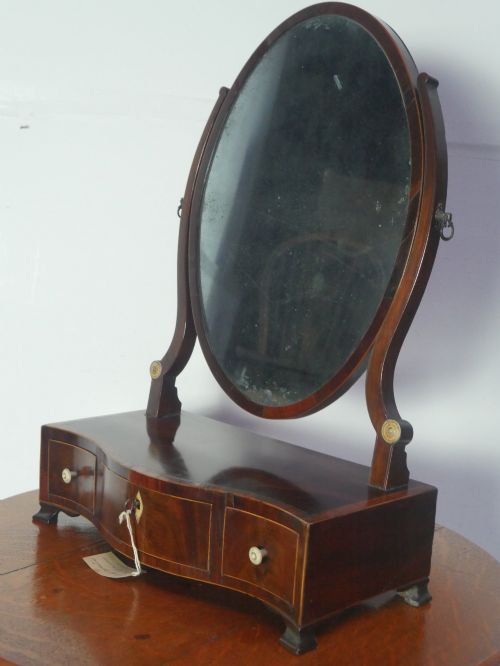
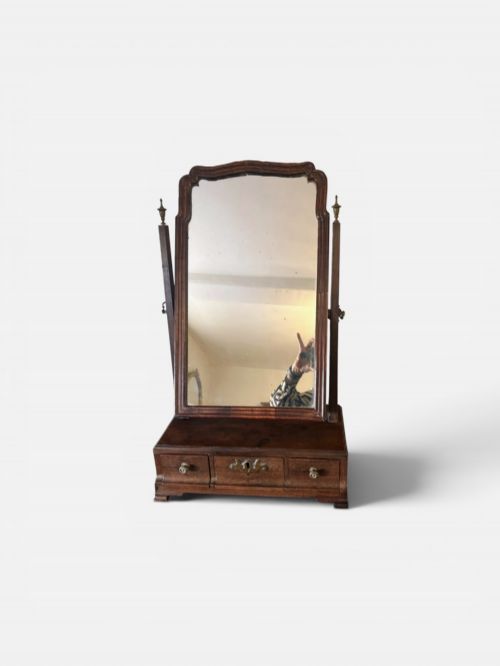
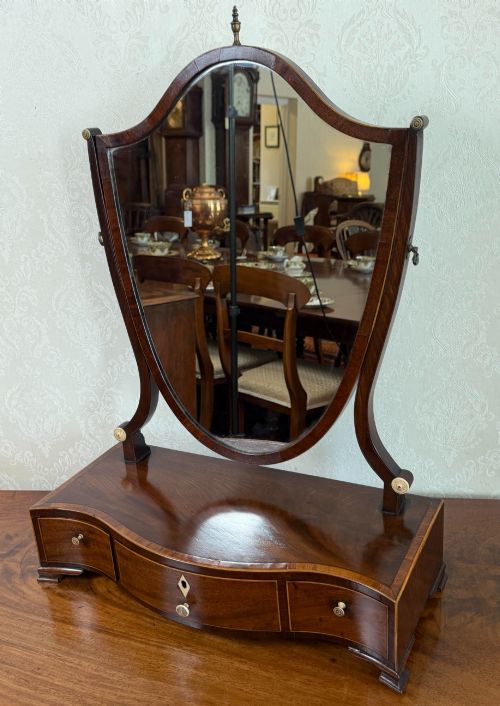
When you search for a georgian drawer vanity mirror, you encounter pieces designed to sit upon a chest or dressing table, featuring an adjustable swing glass mounted on upright arms above a small box base. These items served as essential dressing accessories in period bedchambers before the widespread use of full-length wardrobes.
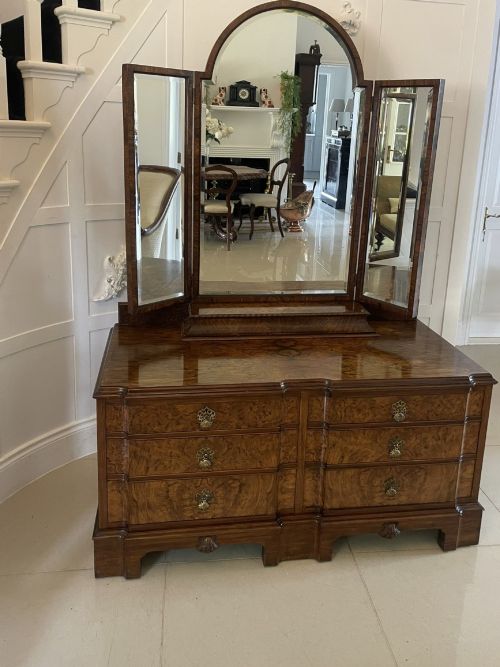
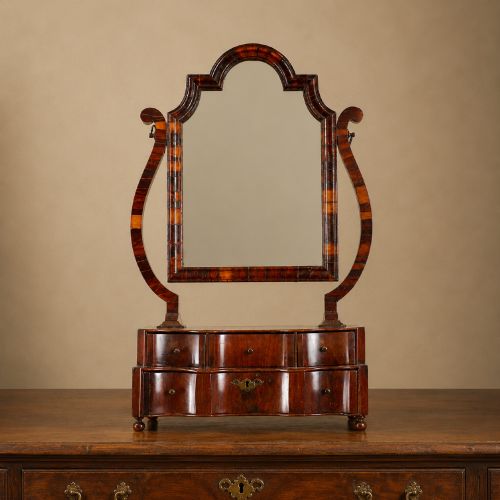
The versions you meet most frequently on this page are constructed from rich timbers like mahogany or walnut, often following Georgian, George III, or Regency conventions. They range from plain rectangular plates to shield and oval formats, supported by serpentine or straight drawer bases.
Makers occasionally incorporated marquetry, crossbanding, or parcel-gilt details to elevate the visual appeal of the stand. The base typically contains one to three small drawers lined for holding cosmetics, trinkets, or personal valuables.
Materials and construction methods
Cabinetmakers utilised solid timbers and veneers, predominantly mahogany and walnut, selected for deep grain patterns and stability over time. Secondary woods such as oak frequently lined the internal compartments of the small drawers.
The mirror plates themselves consist of historic glass held within moulded frames, pivoted on brass screw pins or side arms to allow angle adjustment. Joinery relies on traditional dovetailed box construction for the drawer bases and mortise and tenon joints for the upright supports.
Historic dressing mirrors occasionally retain faint traces of old face powder settled deep inside the tiny drawer corners.
What separates the finest examples
Quality rests in the crispness of the timber carving, the subtlety of figured veneers, and the harmonious proportion between the mirror plate and the base drawers. Superior examples display fine dovetailing, original brass hardware, and untouched patination on the wood surface.
The integrity of the original mirror glass and the fluidity of the swing mechanism also mark out the better pieces. Finer specimens show careful attention to detail in crossbanding, stringing, or shaped serpentine fronts that require advanced woodworking skill.
The Georgian Drawer Vanity Mirror Glossary
- Swing mirror
- A looking glass hung on vertical pivots between two upright posts, allowing the user to alter the viewing angle. This mechanism sits directly on top of the drawer base.
- Toilet mirror
- A traditional term for a small dressing glass used during personal grooming and ablutions. These items were typically placed on dressing tables or chests of drawers.
- Crossbanding
- A narrow strip of veneer laid around the border of a drawer front or table top with the grain running perpendicular to the main panel. It creates a neat decorative border.
- Serpentine
- A curved line that is convex in the centre and concave at the sides, frequently seen on the fronts of better drawer bases. This shape adds movement and visual complexity.
- Parcel-gilt
- Partially gilded woodwork where gold leaf highlights specific carved details or mouldings against a dark timber background. It provides a subtle contrast of texture and colour.
Georgian Drawer Vanity Mirror: Frequently Asked Questions
Where should I place a dressing mirror?
These pieces sit comfortably upon sturdy chests of drawers, side tables, or dedicated dressing desks in a bedroom or hallway. Ensure the surface supports the footprint of the base securely.
Position the glass near natural light sources to make full use of the adjustable swing mechanism during daily grooming routines.
How do I adjust the swing glass?
Most examples utilise brass screw pins or threaded nuts set into the upright support arms. Gently tighten or loosen these fittings by hand to achieve the desired resistance for tilting the plate.
Avoid forcing the movement if the mechanism feels stiff, as historic brass threads require careful handling to prevent stripping.
What were the base drawers used for?
The small compartments housed personal items such as cosmetics, pins, rings, and small documents. Their compact scale suited daily personal accessories.
In period interiors, these enclosed spaces kept delicate items protected from dust and light when not in active use.
How do I clean the mirror plate?
Use a soft, dry microfibre cloth to remove dust from the glass surface and timber frame. Avoid spraying liquids directly onto the mirror, as moisture can seep behind the silvering.
If liquid cleaner is necessary, apply a small amount to the cloth rather than the glass to protect the historic backing and wood surrounds.