



Georgian Dining Seating
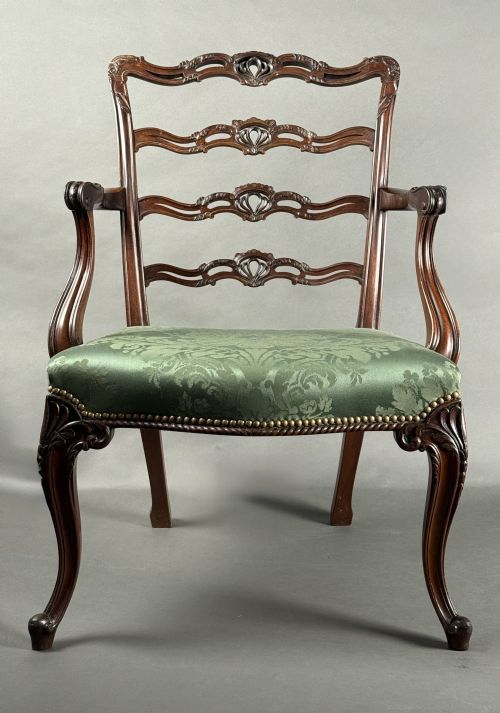
Georgian dining seating brings together mahogany, elm, and walnut forms built for the table, offering lasting proportion and traditional craft.
Georgian Dining Seating
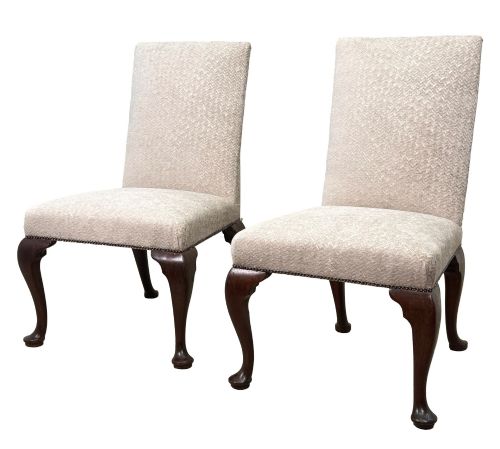
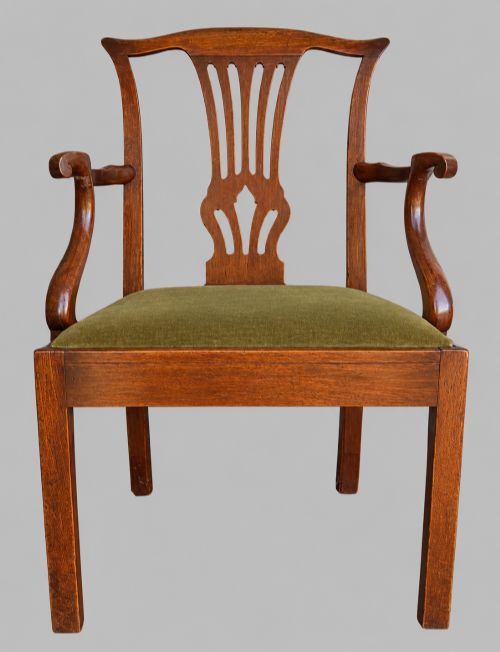
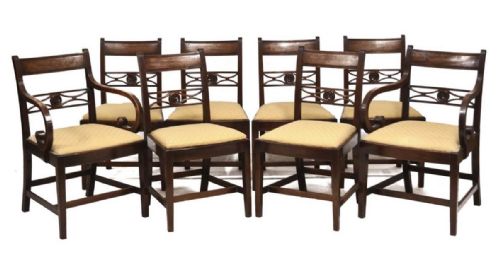
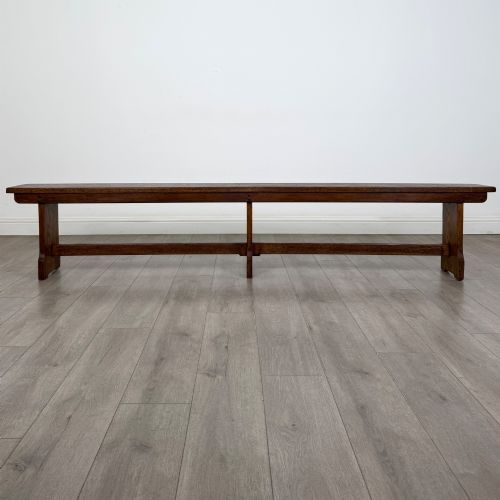
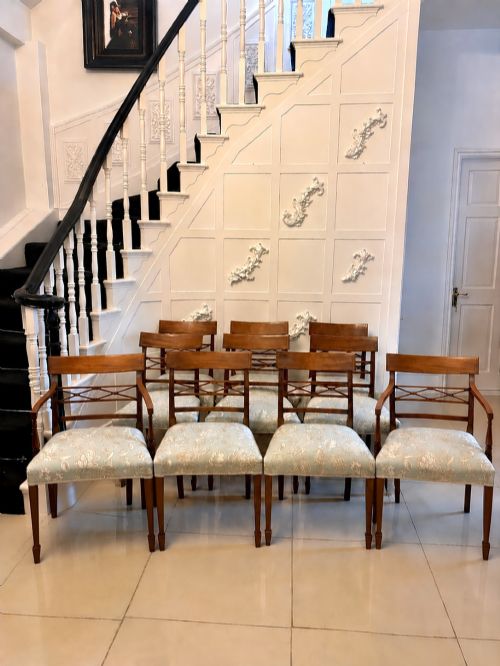
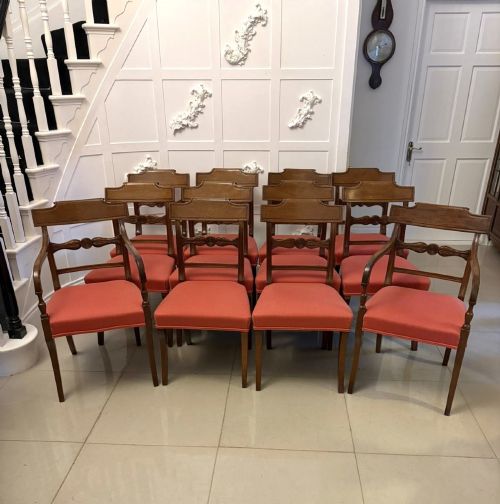
Georgian dining seating encompasses dining chairs, armchairs, side chairs, benches, and tavern seating spanning the 18th and 19th centuries, alongside later revival pieces. When exploring georgian dining seating, buyers encounter sets of dining chairs alongside individual armchairs and country variants in ash and elm.
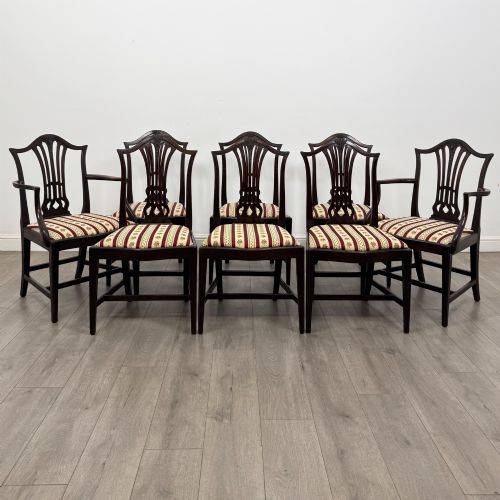
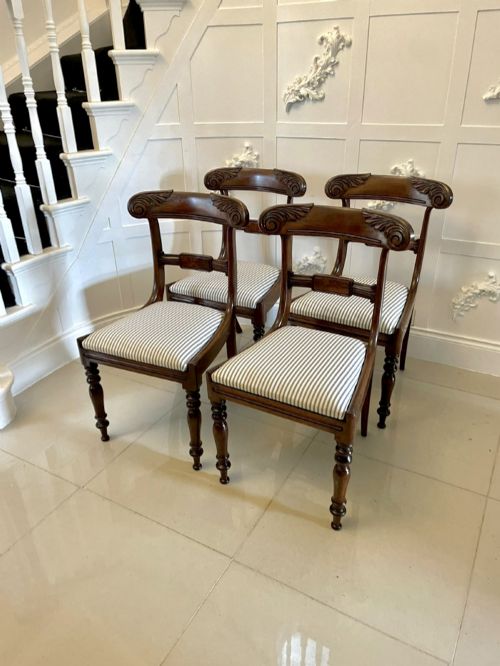
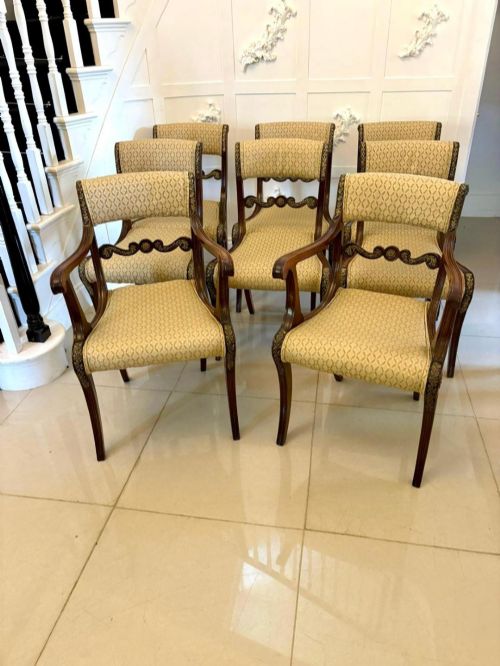
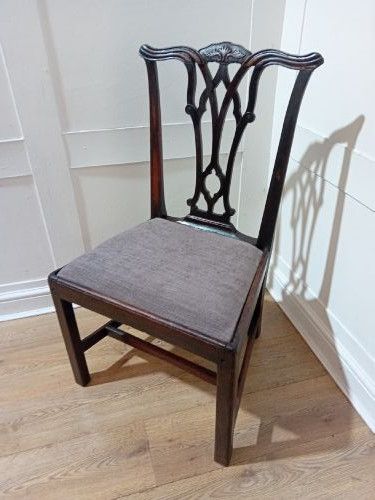
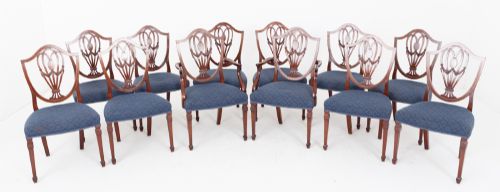
The primary forms on this page include mahogany dining chairs in sets of four, six, eight, and twelve, frequently accompanied by carvers or elbow chairs. Side chairs and hall chairs also appear, rooted in George III, Regency, and William IV periods, plus Georgian Revival interpretations from the early 20th century.
Materials and construction
Makers relied heavily on solid mahogany, complemented by regional timbers like ash, elm, fruitwood, oak, and walnut. Brass inlay, cane work, and various upholstery fabrics provide surface enrichment and functional seating texture.
Joinery techniques tied frames together with traditional jointing, while turned spindles, shield backs, and bar backs defined the structural silhouettes of country and formal dining chairs alike.
Listings feature mahogany, elm, fruitwood, and walnut across Georgian, Regency, and William IV periods.
Distinctions in standard
Timber selection and grain figure separate standard workshop output from exhibition pieces, where dense mahogany and rich natural patina elevate the surface presence. The crispness of carved details, such as shield backs or brass inlay, marks the hand of a more accomplished maker.
Uniformity across large sets of chairs indicates careful original workshop assembly, whereas later assembled sets may show subtle variations in timber tone and proportion.
The Georgian Dining Seating Glossary
- Carver
- An armchair designed with elbow rests, traditionally placed at the head of a dining table to match a set of single side chairs.
- Shield back
- A chair back designed in the outline of a heraldic shield, popularized during the late 18th century by makers such as Hepplewhite.
- Bar back
- A horizontal wooden slat forming the central support of a chair back, frequently seen on William IV and Regency dining seating.
- Patina
- The surface sheen and colour developed by wood over decades of handling, light exposure, and polishing.
- Elbow chair
- An alternative term for an armchair, often utilised to describe seating with supportive armrests intended for desk or dining use.
Georgian Dining Seating: Frequently Asked Questions
How many chairs came in a standard Georgian set?
Sets varied according to the dining room size and household wealth, ranging from four to twelve chairs, frequently including two carvers for the hosts.
Larger dining sets often combined single chairs with matching armchairs to accommodate extended dining parties.
Can I mix single chairs and carvers?
Historical dining arrangements regularly paired a matching set of single side chairs with two armcarvers placed at the table ends.
Matching timber and style keep mixed sets visually unified around the dining table.
What is the difference between George III and Regency seating?
George III pieces often exhibit classical carved details, mahogany frames, and shield or pierced ladder backs dating from the mid to late 18th century.
Regency seating tends toward cleaner classical lines, sometimes incorporating brass inlay, sabre legs, or cane seats.
How do I care for antique mahogany dining chairs?
Keep wooden surfaces away from direct heat sources and strong sunlight to prevent the timber and finish from drying out.
Regular dusting with a dry cloth maintains the polish and preserves the natural patina over time.