


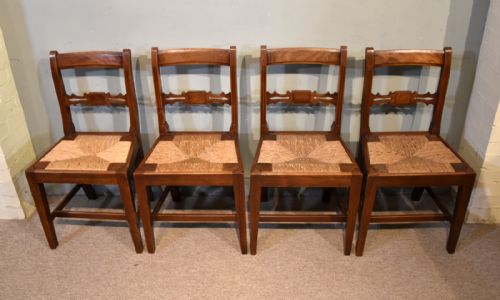


Early Regency Chair
An early regency chair brings neoclassical restraint and refined timber figures into a room.
Early Regency Chair
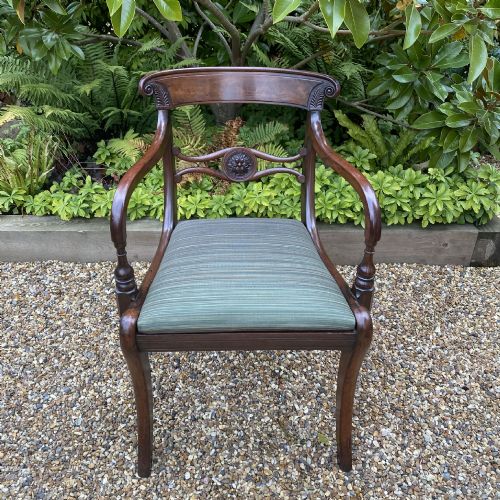
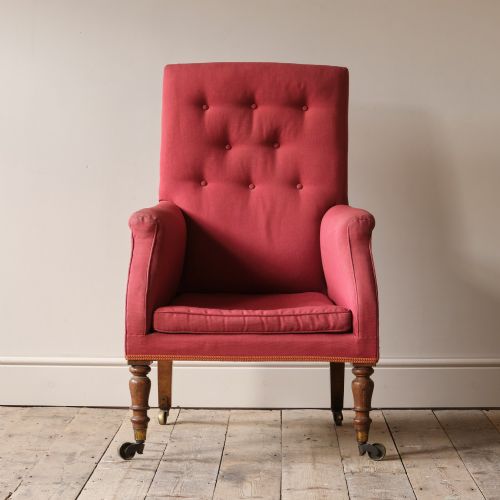
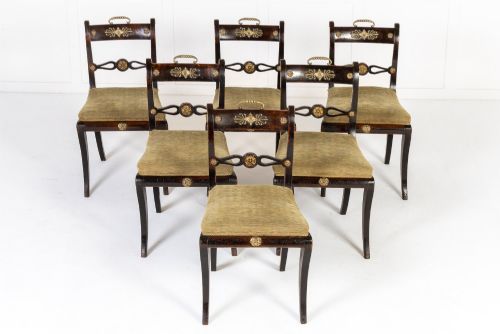
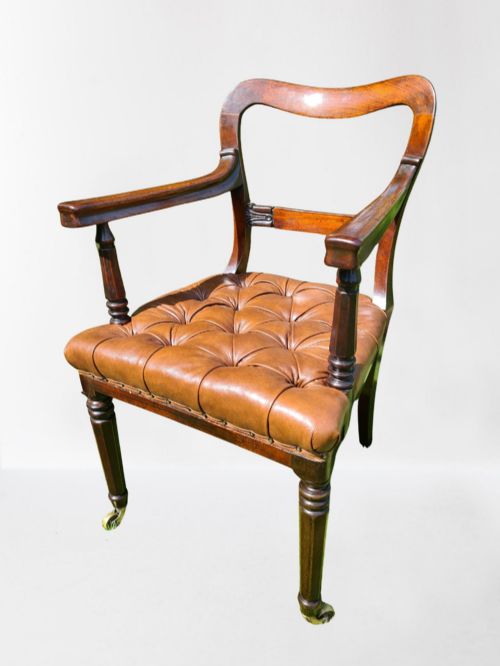
An early regency chair encompasses forms created around the turn of the nineteenth century, drawing heavily on Georgian proportions while introducing sharper classical lines. These seating pieces appear as single library armchairs, desk chairs, and sets of dining chairs intended for formal rooms.
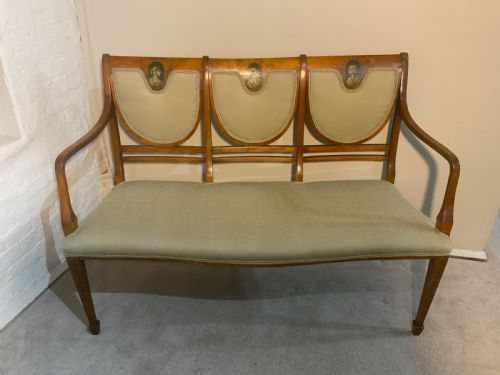
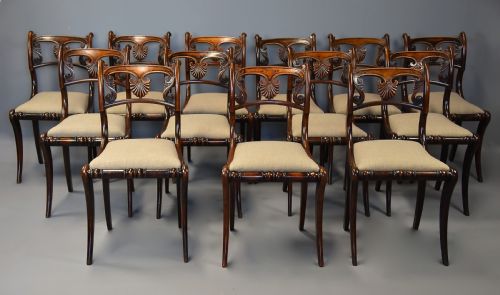
The pieces on this page span several specific seating categories, including carver armchairs, side chairs, and matched sets of dining chairs. Makers of the period also produced country variants in yew and elm, alongside more formal town seating in mahogany and rosewood.
Meticulous attention to classical motifs unites these forms, connecting pieces labeled under the Regency, George IV, and William IV periods. Buyers encounter both single statement chairs designed for a desk and larger sets meant for a dining table.
Materials and Construction
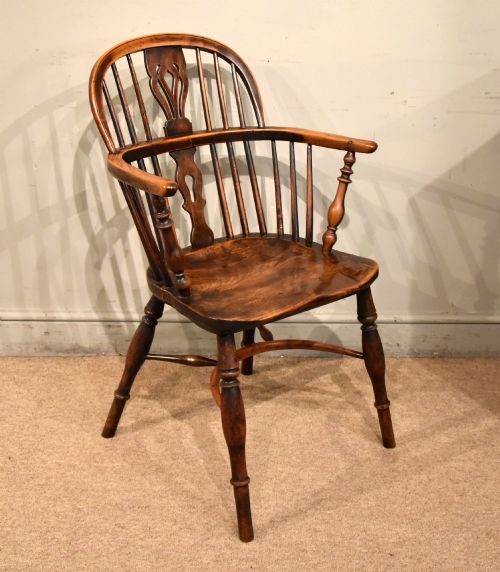
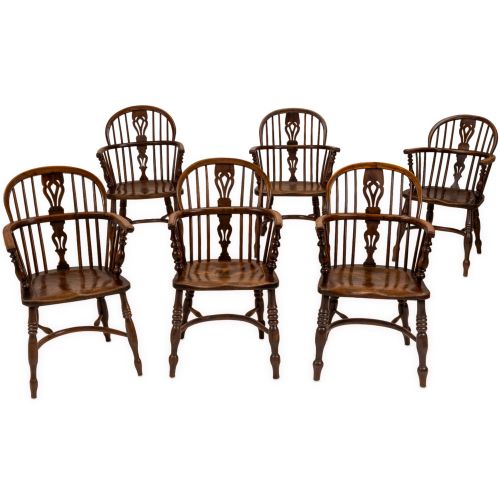
Cabinetmakers relied heavily on dense timbers such as mahogany and rosewood, frequently employing simulated graining techniques to imitate rarer woods. Country workshops turned to local timbers like yew, elm, and fruitwood to construct sturdy Windsor armchairs and kitchen dining chairs.
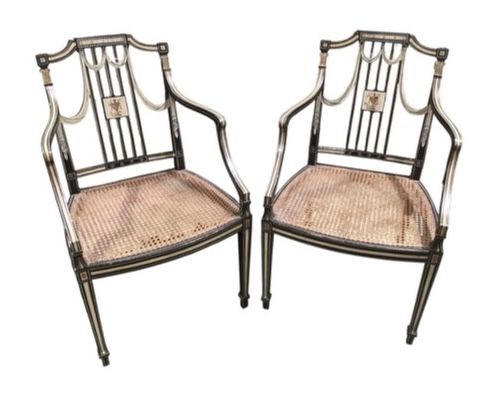
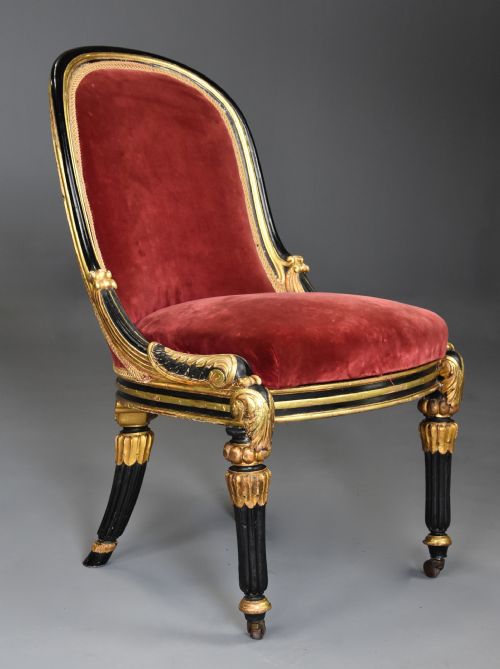
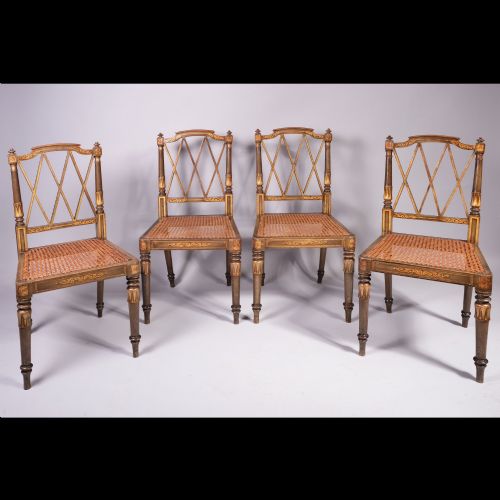
Upholstery techniques of the era utilised quality fabrics including leather, velvet, and cane inserts to provide comfort within formal frames. Details like brass inlay, ebonising, and gilding added decorative contrast to the structural woodwork.
Joinery methods prioritized durability, utilising turned components and crinoline stretchers in windsor designs to stabilize the seat. Frame construction often involved carved mahogany or satinwood veneer applied over secondary supports.
Early Regency Chair Retail Price Guide 2026
Typical asking prices for early regency chair among the pieces listed under this phrase on Sellingantiques today, from the lower quarter to the upper quarter. They describe what is for sale here now, not the wider market.
Listings feature mahogany, rosewood, yew, elm, and fruitwood alongside cane, velvet, and leather upholstery.
Judging Quality and Execution
The distinction between ordinary and superior pieces rests on the crispness of the carving and the selection of timber figures. Richly grained mahogany and carefully matched sets demonstrate a higher standard of workshop production.
Proportion and the handling of classical details dictate the refinement of a piece, separating standard utility furniture from high-style salon seating. Original surface patination and intact upholstery materials also influence the integrity of the surviving object.
Henry Thomas Peters of Genoa
The Early Regency Chair Glossary
- Carver armchair
- An armchair with wooden arms, typically designed to sit at the head of a dining table or function as a desk chair. These pieces match the simpler side chairs in a dining set.
- Bergere
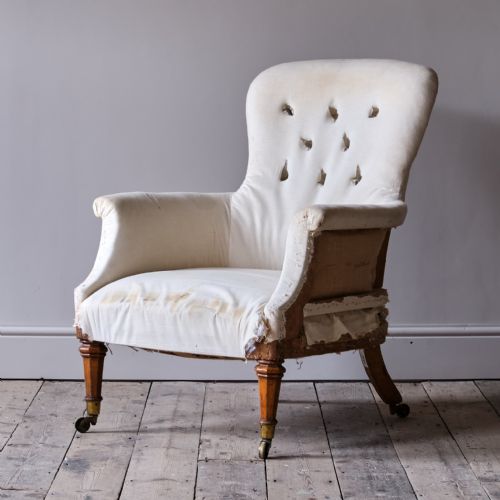
- An enclosed upholstered armchair with cane or upholstered sides and a loose seat cushion. This form appears frequently in nineteenth-century libraries and drawing rooms.
- Crinoline stretcher
- A curved hoop stretcher connecting the legs of a Windsor chair to provide structural rigidity. The design originates from eighteenth-century seating styles.
- Simulated rosewood
- A painted surface finish imitating the dark grain and warm tones of genuine rosewood. Craftsmen used this technique on secondary timbers to achieve a high-fashion look affordably.
- Curule design
- A form of cross-framed seating inspired by ancient Roman magistrate chairs. Library armchairs of the period occasionally adopted this classical silhouette.
Early Regency Chair: Frequently Asked Questions
How do I use an early regency chair in a modern room?
These seating pieces fit naturally as standalone desk chairs or reading seats where their classical proportions can stand out. Pairing a single library armchair with contemporary upholstery creates a striking focal point.
Dining sets integrate smoothly around modern tables, bringing warmth through rich mahogany and rosewood tones. Their restrained neoclassical lines complement minimalist interiors without overwhelming the space.
Are these chairs comfortable for daily sitting?
Library and bergere armchairs offer deep, supportive seating designed for extended periods of reading or writing. Upholstered versions provide substantial padding suited for daily use.
Dining and side chairs feature upright backs and rigid frames typical of nineteenth-century seating conventions. Adding custom squab cushions can increase comfort for prolonged dining occasions.
How can I tell a Regency chair from a later copy?
Examine the timber surfaces for the genuine warmth and wear patterns characteristic of nineteenth-century cabinetmaking. Hand-cut joinery and traditional secondary woods provide reliable indicators of period manufacture.
Stylistic cues such as sabre legs, reeded framing, and classical brass mounts align directly with the production methods of the era. Later reproductions often display machine-tooled joints and inconsistent patination.
What is the difference between a side chair and a carver?
Side chairs lack arms and were designed to line dining tables or scatter along drawing-room walls. Their compact footprints made them easy to move around formal spaces.
Carver armchairs feature supportive wooden armrests and typically sat at the head and foot of a dining table. They also served as standalone desk or writing chairs.