

Georgian Dining Carver
When you search for a georgian dining carver, you find sturdy timber armchairs designed to sit at the ends of dining tables.
Georgian Dining Carver
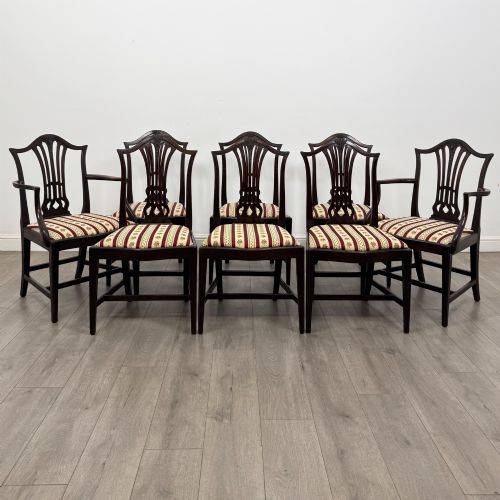
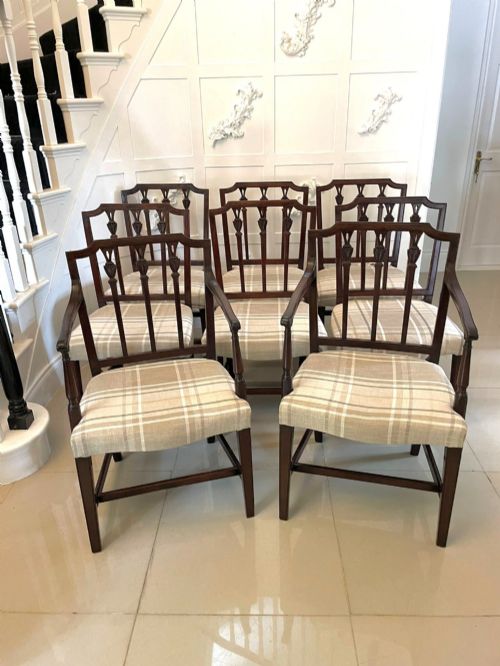
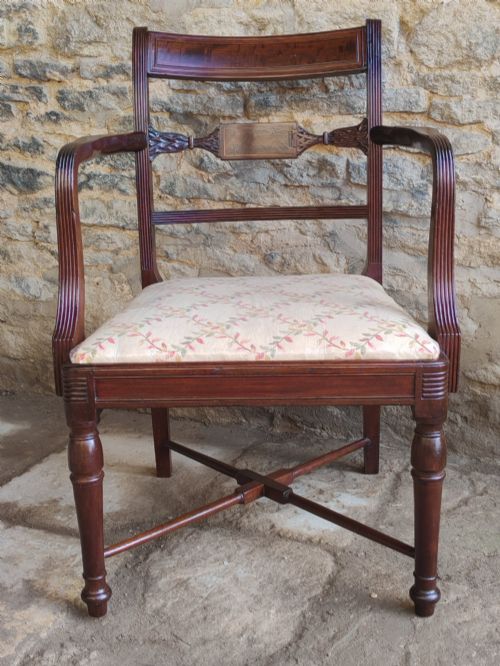
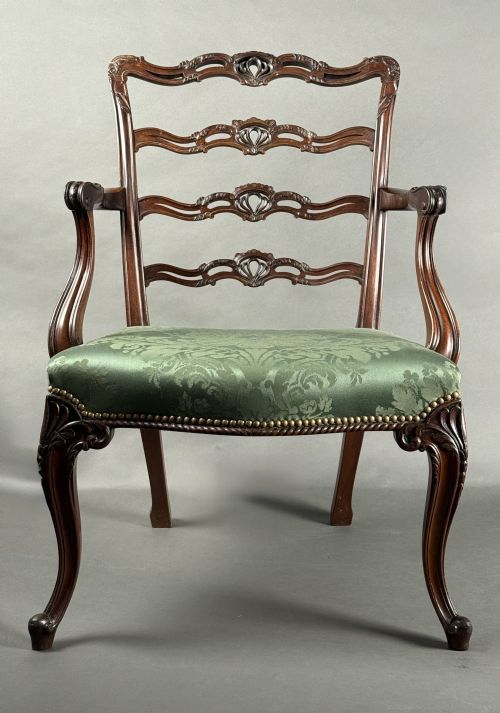
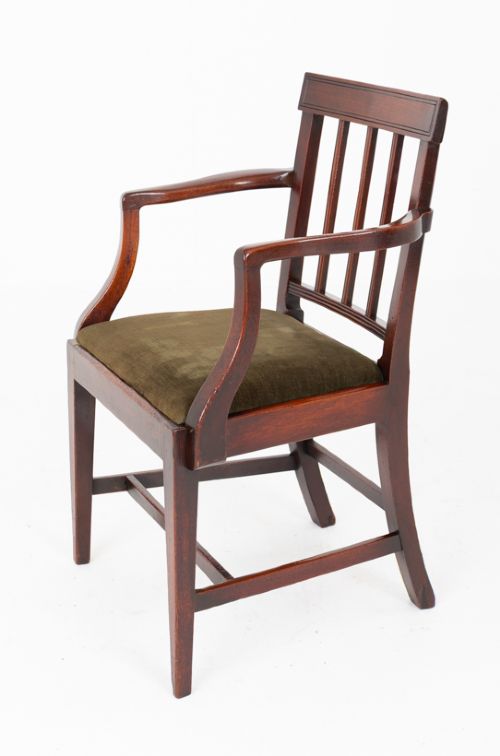
A georgian dining carver is a timber armchair intended to anchor each end of a dining table, featuring supportive arm rests and often matching a larger set of single dining chairs. The pieces found here span the eighteenth and nineteenth centuries, alongside later revival iterations from the early twentieth century.
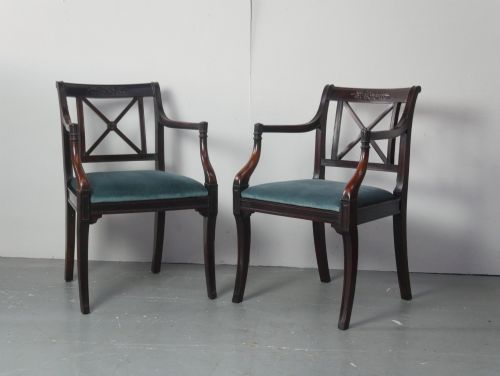
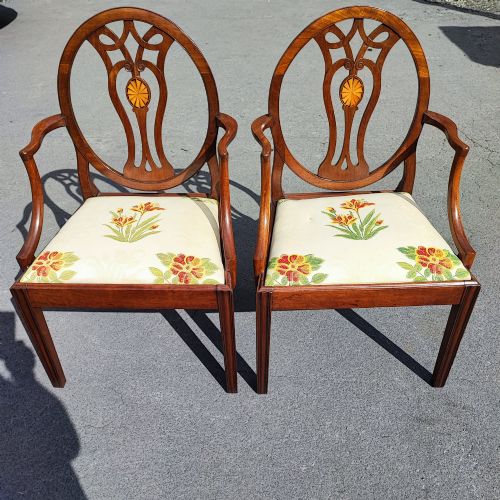
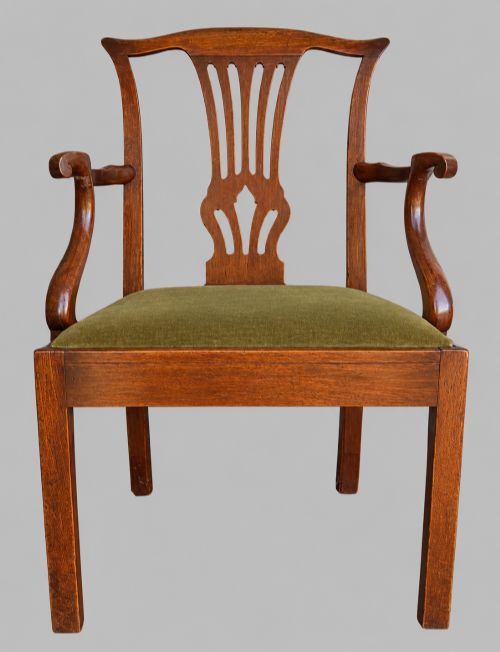
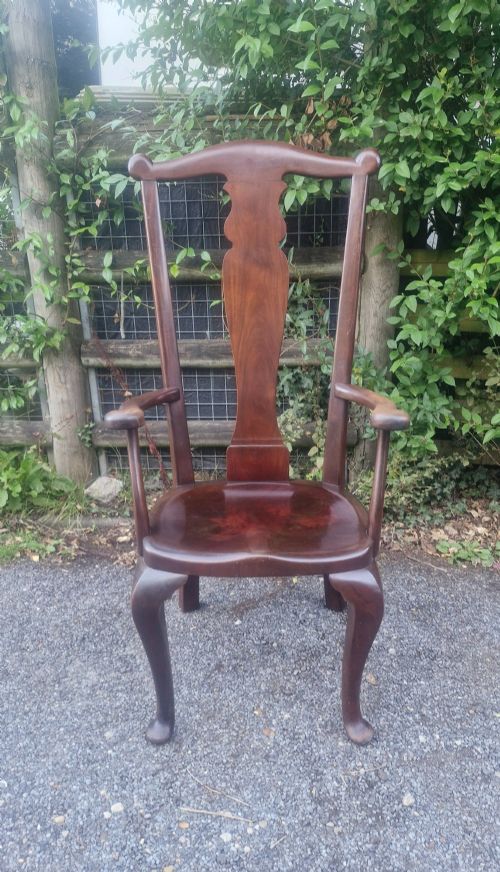
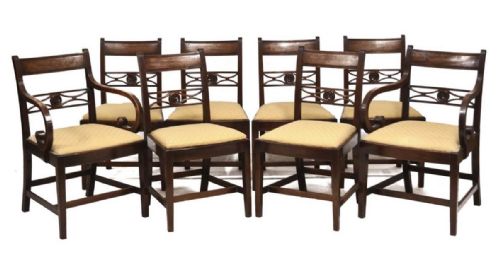
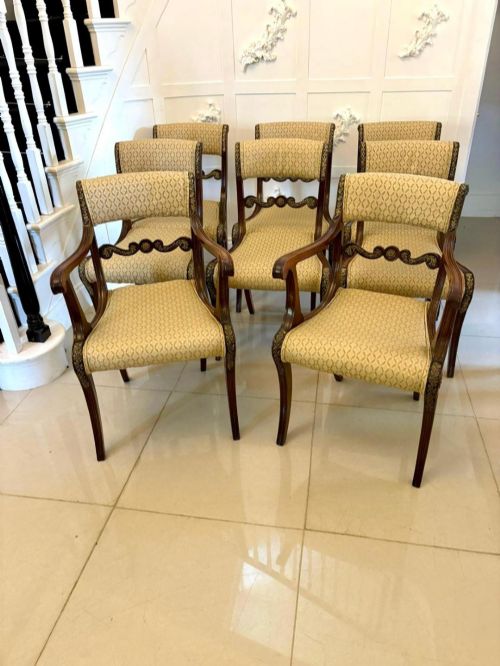
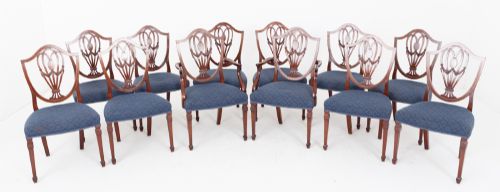
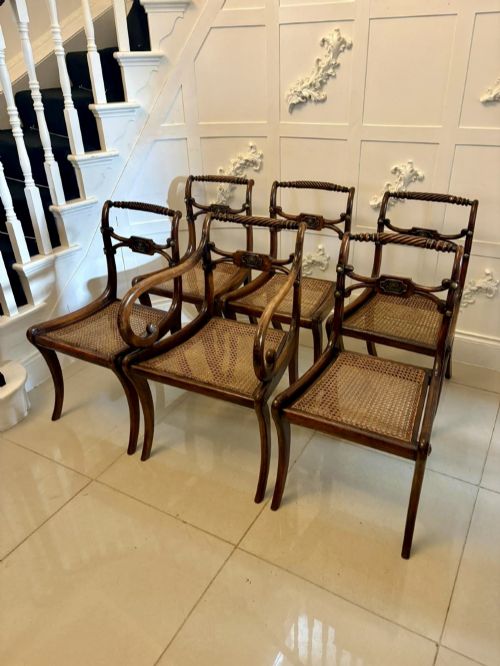
Makers produced these chairs in various regional forms, ranging from urban workshops using mahogany to country makers employing ash, elm, and fruitwood. Common regional iterations include Sheraton shield backs, Hepplewhite styles, and Regency bar-back designs.
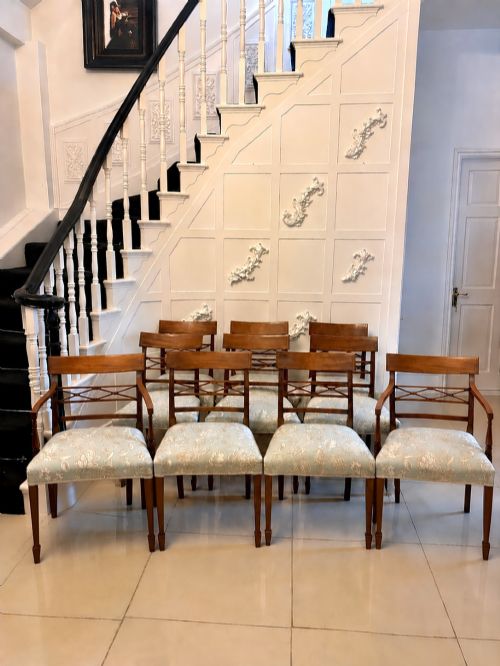
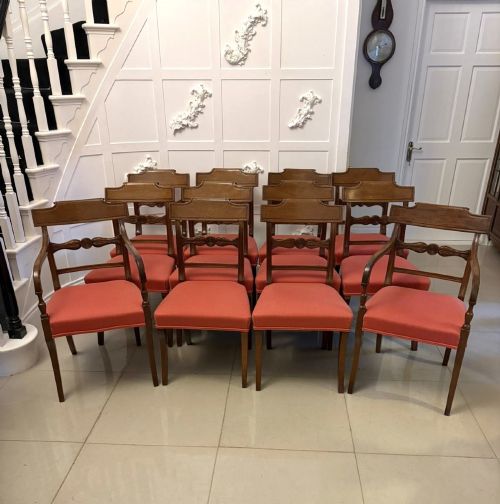
Buyers encounter single examples, pairs, or larger suites where two carvers accompany six, eight, or ten single chairs. They serve their original function at the dining table or migrate to desk and library settings.
How They Were Made
Joiners and cabinet makers constructed these frames primarily in solid mahogany, supplemented by regional timbers like oak, walnut, ash, and elm. Workshops utilised traditional mortise and tenon joinery to ensure rigidity under daily use at the dining table.
Carvers shaped crest rails and splats by hand, sometimes incorporating satinwood inlay, brass details, or carved ribbons and tassels. Seats started as drop-in frames covered in leather, fabric, or velvet, or utilised woven cane panels.
Several chairs double as office desks by day, proving that Georgian ancestors also suffered from working through lunch.
What Varies In Quality
The timber selection dictates much of the stature, with dense, deeply figured mahogany and tight-grained secondary woods marking out superior execution. Finer examples show crisp, deep hand-carving on the splats and arms rather than shallow, mechanical shaping.
Structural integrity depends on the tightness of the joints and the preservation of the original framing timber without excessive modern reinforcement. Upholstery methods and the quality of secondary woods hidden beneath the seat further separate standard production from high-tier cabinet work.
Waring and Gillow·Gillows
The Georgian Dining Carver Glossary
- Carver
- An armchair designed to match a set of single dining chairs, traditionally placed at the head and foot of the dining table.
- Shield Back
- A chair back shaped like a heraldic shield, popularized by designers like Hepplewhite during the late eighteenth century.
- Bar Back
- A horizontal cross-rail across the upper back of a chair, often curved to fit the user's spine, commonly seen in Regency seating.
- Splat
- The vertical wooden slat positioned in the centre of a chair back, frequently pierced or carved into distinct patterns.
- Drop-in Seat
- A wooden frame holding upholstery that drops into a rebate in the chair seat rails, allowing easy removal for recovering.
Georgian Dining Carver: Frequently Asked Questions
How do I spot a true eighteenth-century carver?
Examine the timber shrinkage, hand tool marks on the underside, and the construction methods used in the frame joints. Eighteenth-century examples display patination and joinery appropriate to pre-industrial cabinet making.
Compare the proportions and carving style against documented examples from the same period to confirm authenticity.
Can I use carvers with a modern table?
Check the height of the arm rests against the underside clearance of your dining table before purchasing. Many older carvers have lower arms that slide easily beneath standard table tops.
Mix timber tones carefully, as mahogany and walnut carvers pair well with various table finishes if the proportions align.
How should I care for the leather or fabric seats?
Clean leather surfaces with appropriate saddle soaps and condition them periodically to prevent cracking from dry household air. Fabric and velvet seats benefit from professional dry cleaning or gentle surface brushing.
Avoid placing antique chairs in direct sunlight to protect upholstery dyes and timber finishes from fading.
What is the difference between a desk chair and a dining carver?
Desk chairs often feature swiveling mechanisms, casters, or heavier office-oriented frames, whereas dining carvers maintain standard fixed legs suited for stationary dining. Both share similar open armchair forms and ergonomic back rails.
Many nineteenth-century examples served dual purposes across dining rooms and libraries depending on the household needs.