
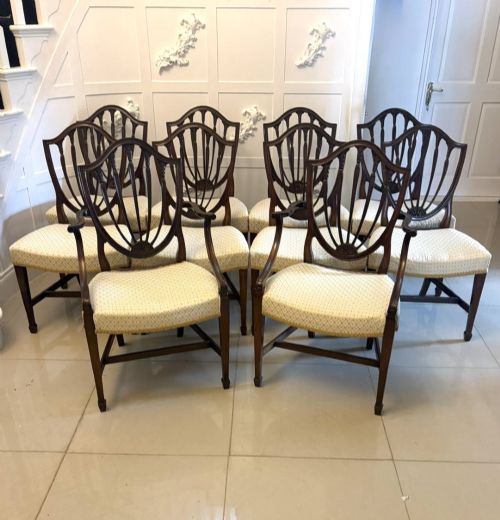
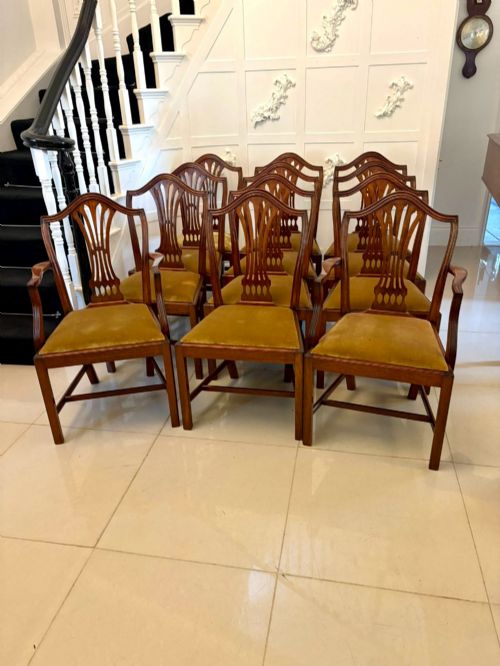
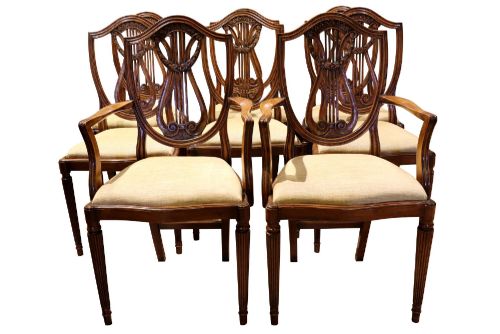
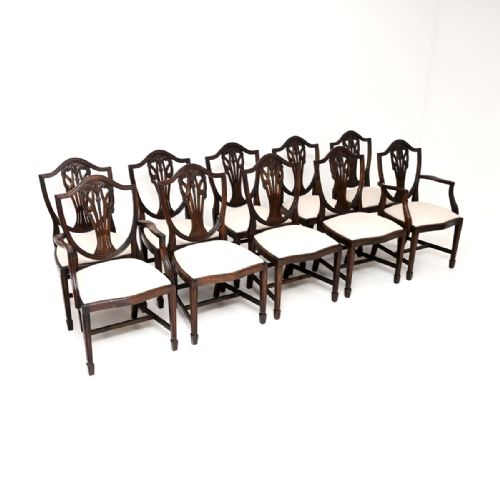
Hepplewhite Style Carver
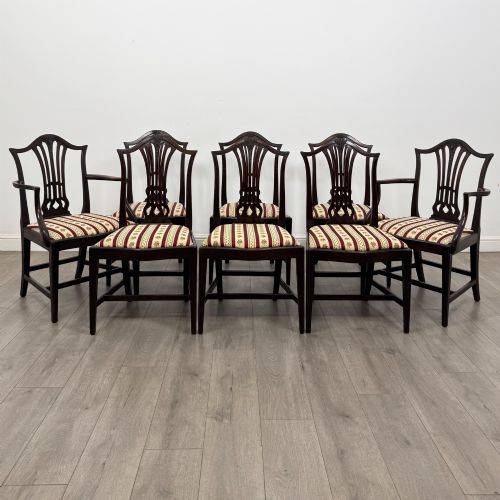
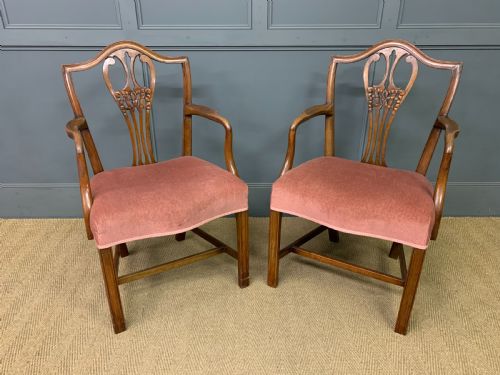
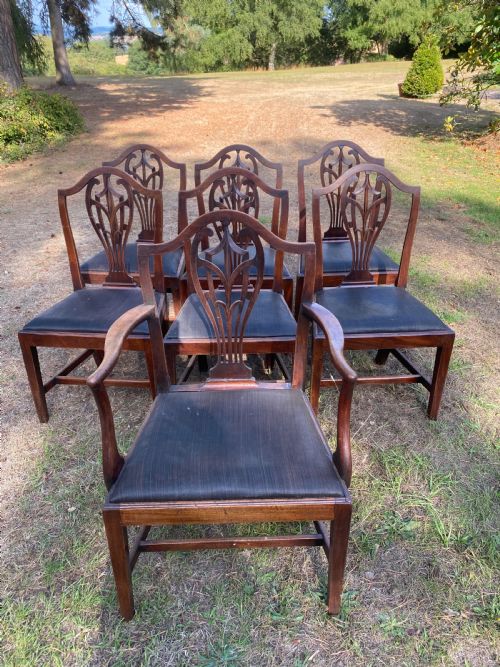
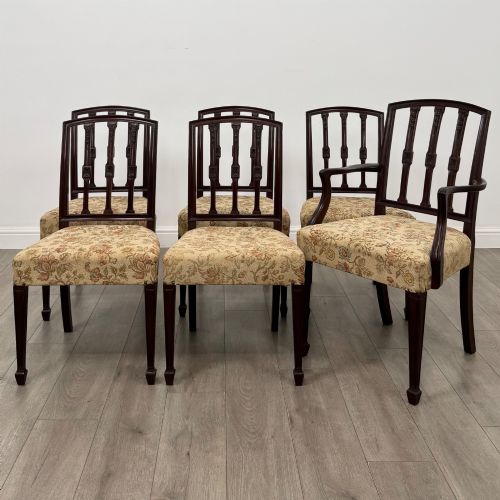
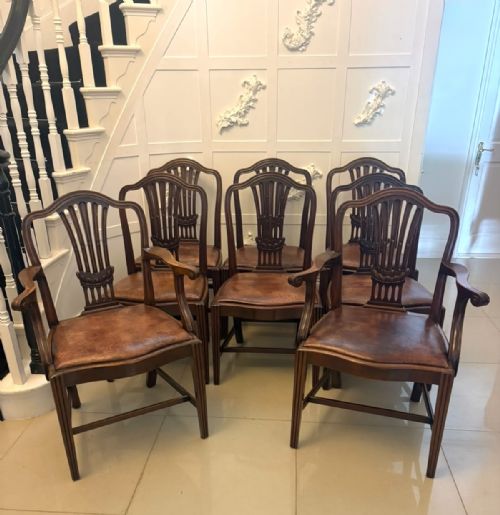
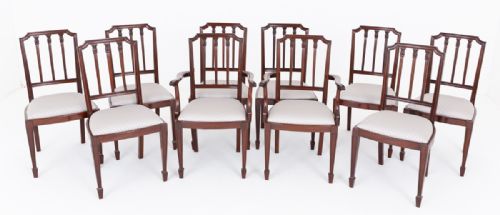
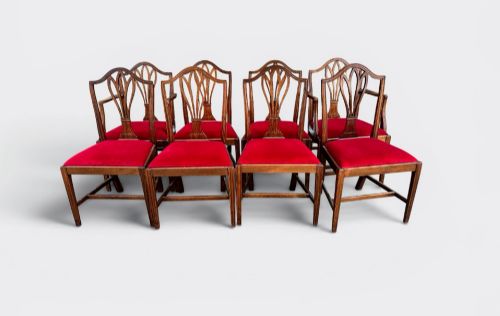
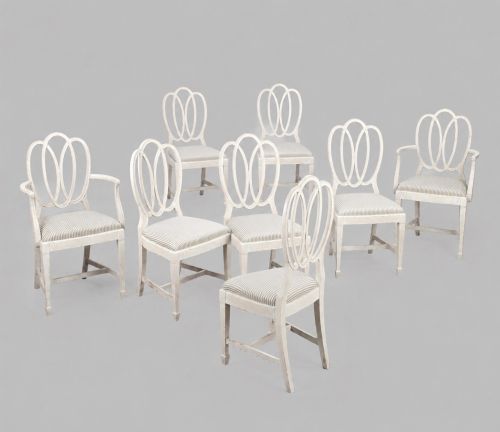
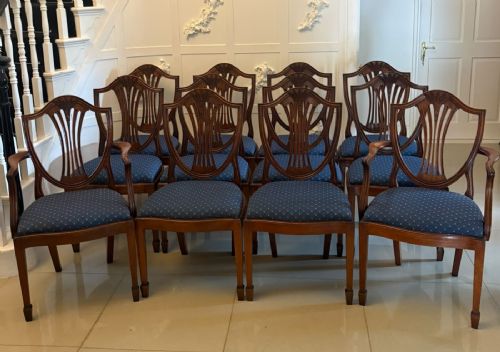
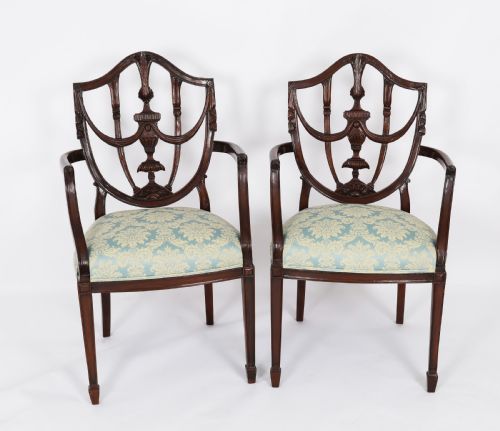
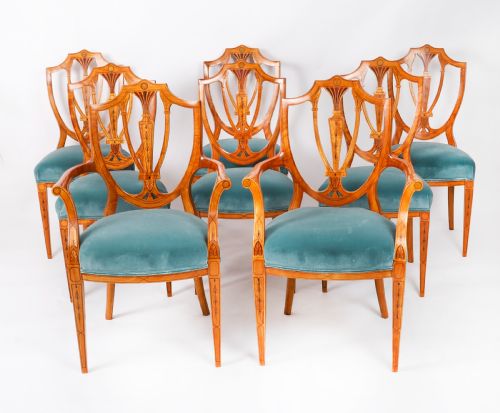
A hepplewhite style carver brings classic eighteenth-century elegance to a dining table through a characteristic shield back and open arms.
How They Were Made
Makers relied heavily on solid mahogany and occasionally elm or satinwood, selecting timber for strength in the slender framework required by the style. Backrests were constructed using steam-bent wood or intricately pieced splats shaped into the signature shield or wheel designs.
Joinery involved traditional mortise and tenon techniques to ensure stability in the open arms and legs without the need for bulky stretchers. Upholstered drop-in pads were built with webbing and horsehair stuffing, covered in fabrics ranging from plain leather to patterned tapestries.
What Varies in Quality
The distinction between tiers rests upon the crispness of the hand-carving on the shield splat and the choice of timber grain. Superior examples display deep, sharp detailing in motifs such as wheat ears or drapery, whereas lesser pieces rely on shallow moulding or plain execution.
Proportion and structural integrity also set pieces apart, with finer carvers exhibiting balanced arm curves and robust leg joinery that resists wobble. The quality of the secondary timbers used underneath and the original integrity of the drop-in seat frame indicate the workshop standards of the period.
Several armchairsdouble as office desks, proving that eighteenth-century diners knew the value of a comfortable workspace before emails existed.
Maple and Co·Cowtan and Sons
The Hepplewhite Style Carver Glossary
- Carver
- An armchair designed to match a set of dining chairs, usually placed at the head of the table. These seats feature open arms that allow fuller skirts or coats to fit comfortably.
- Shield back
- A backrest shape resembling the outline of a heraldic shield, tapering towards the base. This silhouette defines the classic aesthetic of late eighteenth-century seating.
- Splat
- The vertical wooden strip down the centre of a chair back connecting the top rail to the seat. In these chairs, the splat is often pierced and carved into intricate geometric or floral patterns.
- Drop-in seat
- A removable wooden frame upholstered separately and dropped into the seat rebate of the chair. This construction method made recovering or replacing upholstery straightforward.
Hepplewhite Style Carver: Frequently Asked Questions
How can I tell an original Georgian carver from a later revival?
Distinguishing periods relies on examining construction marks, timber ageing, and tool methods visible underneath the seat frame. Eighteenth-century pieces show hand-cut joinery and period-specific patina, while Edwardian and 1920s revivals display later machining techniques.
Revival pieces often match larger sets produced during the early twentieth-century interest in Georgian aesthetics.
Were carvers always sold with dining chairs?
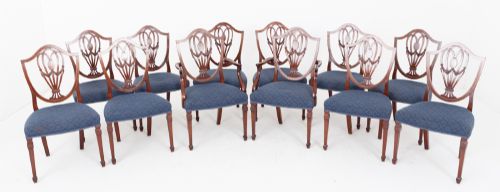
Makers frequently produced carvers as part of larger dining suites that included multiple side chairs. Surviving sets often retain a ratio of two armchairs to ten or twelve standard dining chairs.
Pairs of carvers also appear independently for use as desk chairs or hallway seating.
What wood was traditionally used for these chairs?
Mahogany is the predominant wood found across these listings, prized for its durability and rich grain. Elm and satinwood also appear occasionally in specific regional or revival pieces.
The timber was selected to support the slender, elegant framing characteristic of the design without sacrificing structural strength.