



Eighteenth Century Carver Chair
An eighteenth century carver chair offers structural timber work and generous armrests, making it a functional antique desired for any traditional study or dining space.
Eighteenth Century Carver Chair
The eighteenth century carver chair encompasses substantial seating forms designed with armrests, appearing primarily across Georgian and 19th Century iterations. Buyers investigating this category frequently encounter pieces configured as armchairs, desk chairs, and dining suites.
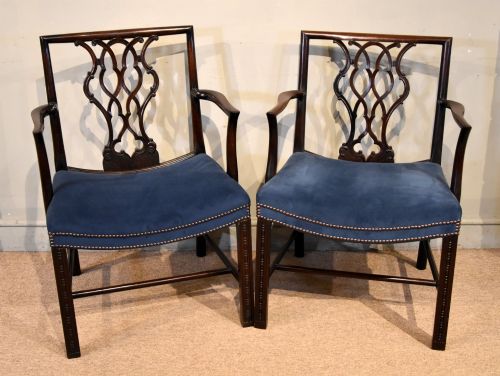
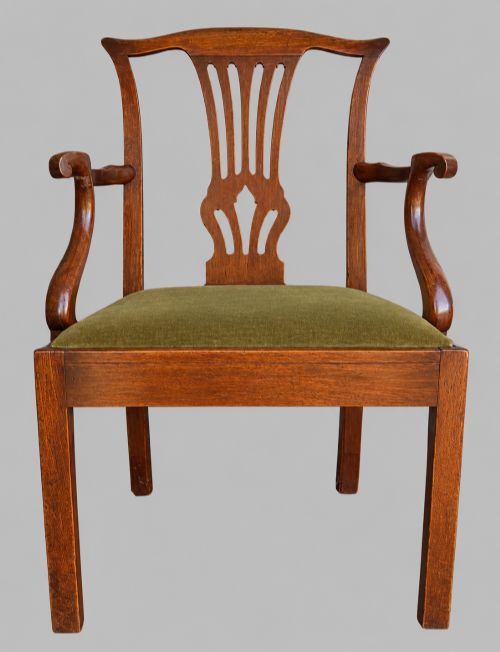
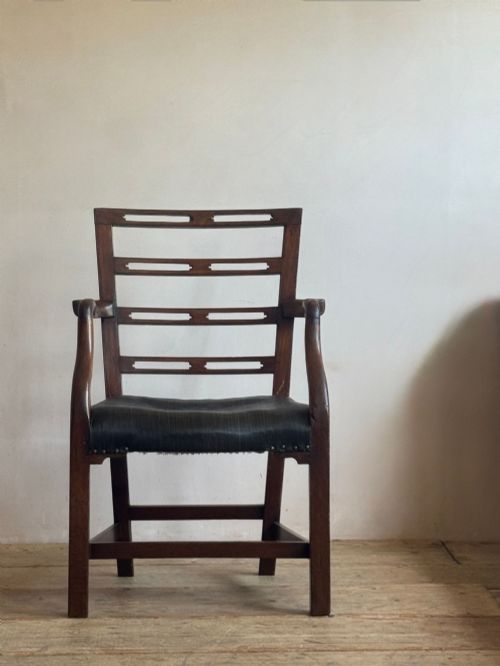
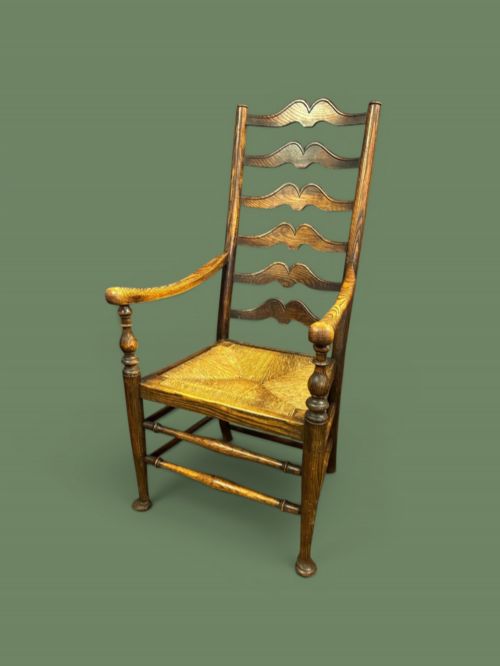
Most examples present timber frames influenced by Georgian tastes, English country traditions, and occasional continental styles including Italian Rococo and French Provincial. The selection ranges from formal mahogany elbow chairs to rustic ladder-back forms constructed from elm and beech.
Makers adapted these proportions for varied domestic settings, producing single desk chairs alongside larger matching suites of carver and slipper chairs. These seating forms served practical functions around dining tables and writing desks while signalling social position.
Materials and construction methods
Cabinetmakers relied heavily on dense hardwoods like mahogany and fruitwood for formal chairs, whilst country workshops utilised sturdy domestic timbers such as elm and beech. These woods provided the necessary structural integrity for slender legs and load-bearing armrests.
Seats incorporated traditional flexible elements, pairing woven rush with upholstered inserts finished in fabric, velvet, or leather. Decorative details occasionally included applied brass elements or silver leaf highlights on high-status continental frames.
Eighteenth Century Carver Chair Retail Price Guide 2026
Typical asking prices for eighteenth century carver chair among the pieces listed under this phrase on Sellingantiques today, from the lower quarter to the upper quarter. They describe what is for sale here now, not the wider market.
Early country makers ingeniously stretched rush across simple elm frames to create seats that yield just enough for a weary writer.
Assessing craftsmanship and finish
Superior execution shows in the crispness of carved woodwork and the harmonious proportion of arm supports to the main frame. Lesser pieces exhibit simpler joinery and heavier, less refined timber profiles.
The visual depth of the timber surface dictates aesthetic distinction, where natural patination and careful polishing elevate the appearance. Examples lacking this warmth often display flat, overworked finishes that obscure the grain.
The Eighteenth Century Carver Chair Glossary
- Carver chair
- A term denoting an armchair, typically used at the head of a dining table or as a desk chair. These pieces feature integrated armrests distinguishing them from standard dining chairs.
- Elbow chair
- An alternative designation for an armchair, referencing the support provided for the arms. This term frequently appears in historical descriptions of seating furniture.
- Ladder-back
- A chair back construction featuring multiple horizontal slats resembling the rungs of a ladder. This style is common in country vernacular seating.
- Patination
- The surface sheen and colour acquired by timber through age, handling, and wax polishing. It serves as a key indicator of authenticity and historical care.
Eighteenth Century Carver Chair: Frequently Asked Questions
What is an eighteenth century carver chair?
An eighteenth century carver chair is a seated furniture piece featuring structural armrests, designed for use at desks or dining tables. These items combine practical utility with period decorative styles.
They reflect the woodworking traditions of their era, utilising regional timbers and formal design idioms ranging from country ladder-backs to carved mahogany elbow chairs.
How were these armchairs used historically?
Historically, carver chairs served prominent seating roles in domestic interiors, often placed at the head of dining tables. Their armrests provided added comfort and denoted status.
They also functioned as desk chairs in libraries and studies, accommodating individuals engaged in writing or reading tasks.
How do I live with period carver chairs?
Living with these chairs involves balancing daily utility with appropriate conservation practices. Placing them away from direct heat sources prevents timber splitting.
Regular waxing maintains the timber's surface finish, while careful handling of upholstered or rushed seats preserves their structural integrity.
How do I distinguish regional styles?
Regional variations appear primarily through timber selection and decorative restraint. English country pieces tend to utilise elm or beech with simple ladder-back frames.
Formal Georgian examples favour mahogany with refined carving, whilst continental variants exhibit more ornate flourishes like silver leaf gilding.