
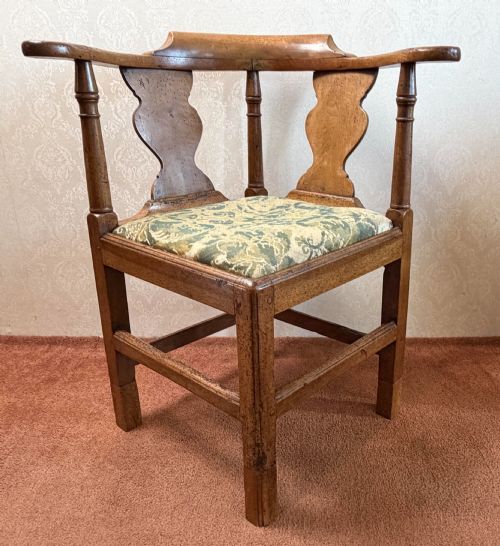


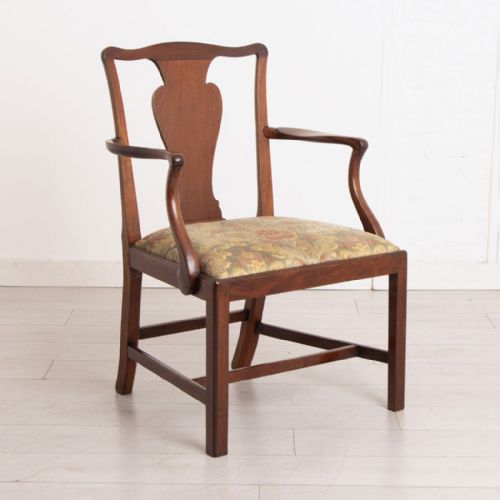


Vasiform Splat Armchair
These vasiform splat armchairs are sturdy wooden seats defined by their distinct vase-shaped back splats, offering both traditional character and enduring support.
Vasiform Splat Armchair
A vasiform splat armchair uses a central vertical back rail shaped like an antique vase, giving the seating a balanced and classical silhouette. You will most frequently encounter these pieces in 18th century and Georgian styles, alongside later revival interpretations.
The selections span dining chairs, corner chairs, and nursery seating, demonstrating how cabinetmakers adapted the characteristic splat across different domestic forms. Armchairs dominate the offerings here, often featuring supportive wooden arms flanking the signature carved back.
Origins stretch from the robust oak and fruitwood vernacular pieces to refined mahogany and walnut examples. Buyers find both single statement chairs and matched sets, allowing for versatile placement around a dining table or in a study.
Materials and construction
Cabinetmakers relied on hardwoods such as mahogany, walnut, oak, and fruitwood to shape the distinct vase splats and supporting frames. These dense timbers allowed artisans to carve intricate contours without compromising the structural integrity of the backrest.
Joinery methods involved traditional mortise and tenon connections, ensuring the uprights and rails remained rigid under daily use. Seats were frequently designed to accept drop-in upholstery frames covered in fabric, leather, or textile.
Distinguishing quality
The refinement of the carving on the central vase splat and surrounding frame marks the division between standard seating and superior examples. Crisp edges and balanced proportions indicate an artisan who took great care in transferring classical lines to the timber.
Timber selection plays a major role, with richly figured burr walnut or dense, aged mahogany elevating the visual presence of the chair. Subtle details such as moulded arm supports and well-executed joinery separate workshop standards.
The Vasiform Splat Armchair Glossary
- Vasiform splat
- A vertical wooden slat in the centre of a chair back shaped to resemble a classical vase. This feature provides central back support while defining the aesthetic period of the seating.
- Chippendale
- A style of 18th century English furniture design known for ornate carving and sturdy proportions. It often incorporates elaborate splats and cabriole legs.
- Queen Anne style
- An earlier 18th century design movement characterised by curved lines, pad feet, and flowing wooden contours. Splats from this era tend to be smooth and vase-shaped.
- Corner chair
- A seating form designed to fit snugly into room angles, featuring a diagonal seat plan and a continuous curved armrest supported by multiple uprights.
- Fruitwood
- A dense timber sourced from fruit-bearing trees such as pear or cherry, utilised by provincial makers for its pleasant grain and robust qualities.
Vasiform Splat Armchair: Frequently Asked Questions
How do I date an antique armchair?
Dating relies on examining the timber species, joinery techniques, and stylistic cues present in the woodwork. Earlier pieces often display hand-carved details and specific wood selections characteristic of Georgian or Queen Anne periods.
Later revival pieces replicate these historical motifs but generally show different tool marks and modern internal construction methods upon close inspection.
Are these chairs suitable for daily use?
These historical chairs were built by skilled cabinetmakers using robust hardwoods designed for everyday domestic life. Their sturdy frames and supportive armrests make them practical for placement in studies, hallways, or around dining tables.
Buyers should ensure the joints remain tight and any upholstered elements meet their personal comfort requirements before regular use.
What is the difference between Georgian and revival pieces?
Original Georgian pieces were constructed during the 18th century, reflecting the prevailing furniture design trends of that specific era. Revival pieces were manufactured later, such as during the Victorian or early 20th century, paying homage to those earlier styles.
Both categories utilise similar timber materials like walnut and mahogany, but differ in age, wear patterns, and manufacturing context.