




Edwardian Walnut Carver
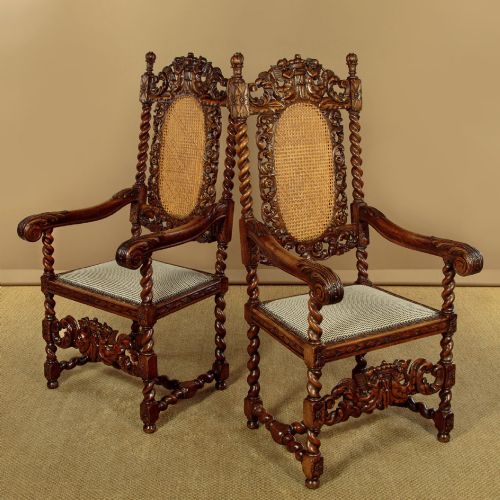
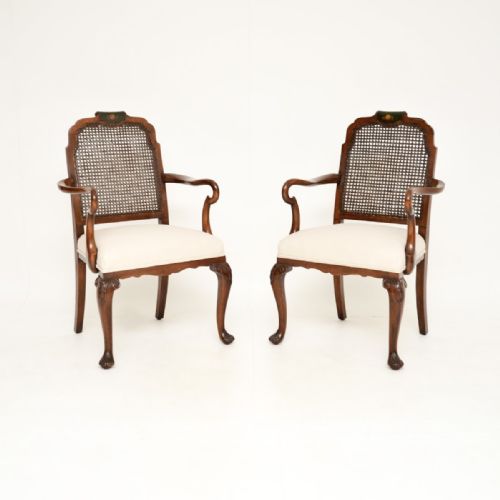
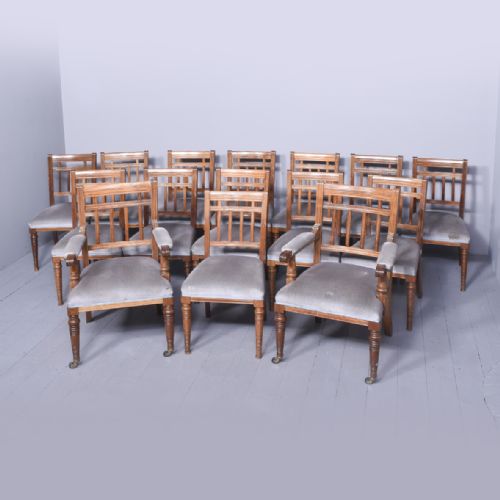
These edwardian walnut carver chairs bring substantial timber frames and formal presence to any room.
Edwardian Walnut Carver
An edwardian walnut carver chair is a sturdy armchair designed for dining or library use, featuring prominent wooden arms and a sturdy walnut frame. These seats appear most frequently from the Edwardian era, alongside pieces dating from the Victorian period up to the nineteen-twenties.
Makers of the period drew heavily on earlier aesthetics, resulting in forms influenced by Queen Anne, William and Mary, and Chippendale revival designs. Buyers encounter single examples as well as large sets intended for formal dining spaces.
The objects serve practical seating needs while offering distinct period character through carved details, high backs, and elbow rests. Walnut remains the defining timber uniting these diverse historical revivals.
Materials and construction methods
The primary material is walnut, chosen for its rich grain and durability, sometimes paired with decorative inlay or painted elements. Artisans shaped the timber into cabriole legs, splat backs, and curved armrests.
Seating areas utilise cane panels, traditional upholstery, or loose cushions covered in fabric, velvet, or leather. Construction relies on firm joinery to support the substantial weight of the hardwood frames.
Listings feature walnut as the primary timber, complemented by cane, leather, fabric, and velvet upholstery across multiple revival styles.
Determining quality in walnut seating
Quality rests in the crispness of the wood carving and the choice of walnut timber, where rich grain and deep colour elevate a piece. Marked works by known cabinetmakers command greater attention due to documented provenance.
The integrity of the frame, the execution of revival details such as splats and cabriole legs, and the condition of cane or upholstery define the upper tier of these chairs.
Shoolbred·Spillman & Co
The Edwardian Walnut Carver Glossary
- Carver chair
- An armchair, typically designed to match a set of dining chairs, featuring open wooden arms. Such pieces usually sat at the head of a dining table.
- Caning
- Woven rattan material used to form seat panels or backrests. This technique provides a light, flexible surface within a rigid wooden frame.
- Splat
- The vertical strip of wood down the centre of a chair back. It often takes a vase or fiddle shape and may feature carving or painted decoration.
- Revival style
- A design movement that imitates the historical aesthetics of earlier centuries. Makers during the Edwardian period frequently looked back to William and Mary, Queen Anne, and Chippendale models.
Edwardian Walnut Carver: Frequently Asked Questions
How do I identify an Edwardian carver?
Look for the characteristic walnut timbers and revival styling that typify the early twentieth century. Construction details often reflect transitional periods between Victorian heaviness and lighter Edwardian elegance.
Examine the carved motifs and leg forms to ascertain whether the piece follows Queen Anne, Chippendale, or William and Mary revival patterns.
Were these chairs used at a dining table?
Carver chairs traditionally served as the head and foot seats at a formal dining table, offering wider armrests than standard side chairs. They also stood in libraries, hallways, or morning rooms as occasional seating.
The sturdy wooden arms provided additional comfort and a formal silhouette suited to reception spaces.
How do I care for walnut and cane furniture?
Keep walnut timber away from direct heat sources and strong sunlight to prevent the wood from drying out or splitting. Dust regularly with a soft, dry cloth and apply occasional appropriate wood care products.
Caned panels require gentle cleaning and benefit from occasional light moisture to keep the rattan flexible and prevent snapping.
Can I mix different revival styles together?
Mixing Queen Anne, Chippendale, and William and Mary revival pieces works well because they share walnut as a common material and historic design roots. The unifying timber tone bridges minor variations in carving and leg shape.
Grouping chairs with similar wood finishes maintains a cohesive look while celebrating the variety of historical revivals.