


Vintage Needlepoint Armchair
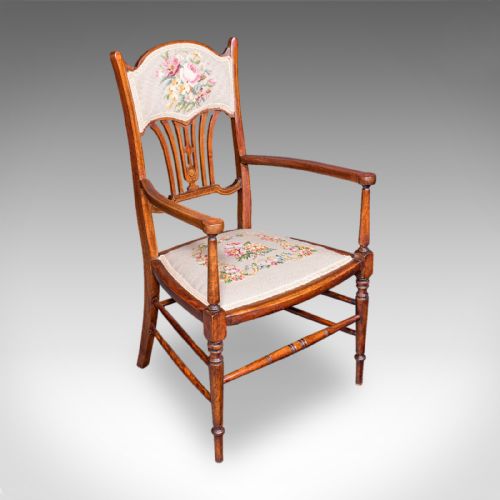
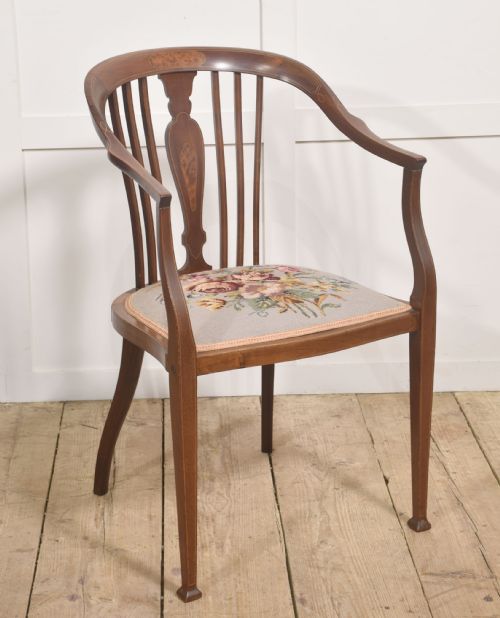
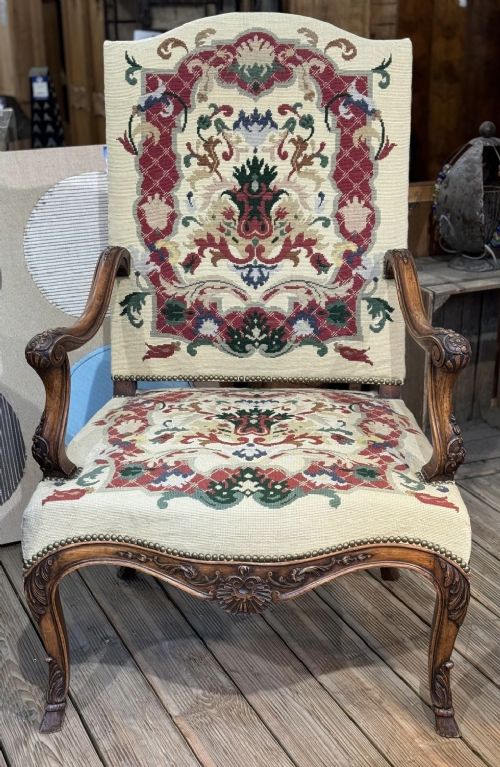
A vintage needlepoint armchair brings textured wool upholstery and rich timber frames together, offering substantial character for a traditional interior.
Vintage Needlepoint Armchair
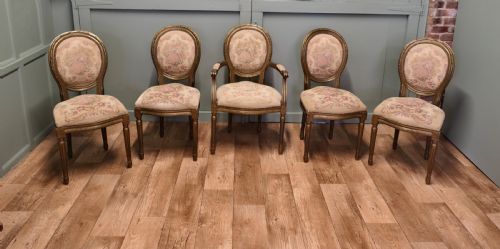
When you search for a vintage needlepoint armchair, you encounter seating upholstered in worked canvas panels alongside timber frames originating from the eighteenth century through to the early twentieth century. These pieces encompass various forms including open armchairs, salon suites, nursing chairs, and wingbacks.
The most frequent examples found here date from the nineteenth and early twentieth centuries, spanning Victorian, Edwardian, and French revival styles. Walnut and mahogany frame woods predominate, paired with wool tapestry and needlework upholstery.
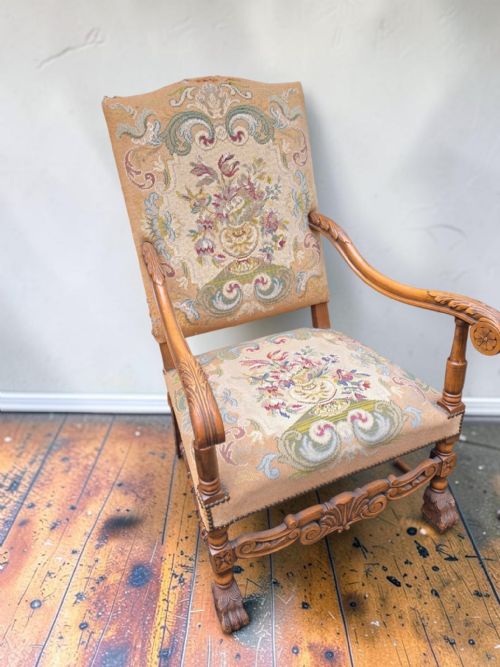
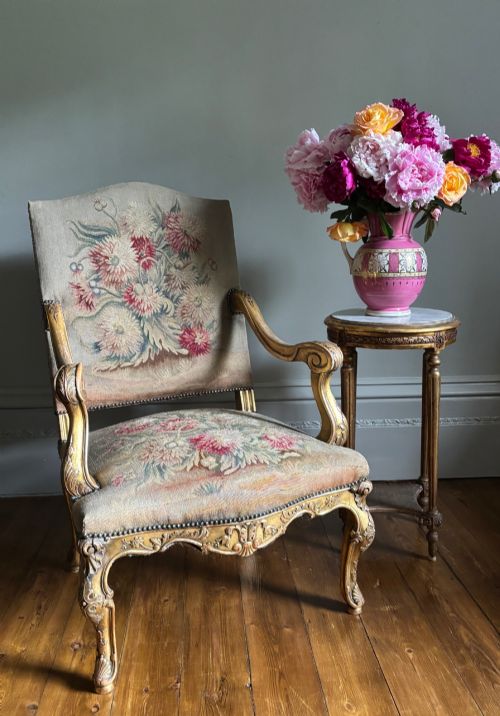
Forms range from compact occasional chairs to large walnut tapestry covered armchairs and painted French open arm chairs with needlepoint panels. Certain pieces reflect specific historical revivals such as French Regence style or George II period revival.
Materials and Construction
Frames are constructed from hardwoods including walnut, mahogany, beech, oak, and satinwood, occasionally featuring marquetry inlay, gilding, or painted surfaces. Joinery methods of the period provide structural stability to the open arms, scroll backs, and sabre legs.
Upholstery involves wool tapestry and needlepoint panels, sometimes described as petit point, stretched over sprung or padded seat foundations. These textile coverings are fixed directly to the timber frame using traditional tacks.
Listings feature eighteenth to twentieth-century periods, including Victorian, Edwardian, and Georgian eras, constructed from walnut, mahogany, and oak.
Judging Quality and Execution
The finesse of the carved woodwork and the tightness of the timber joints distinguish finer examples from standard production. Carved walnut spoonbacks, giltwood detailing, and inlaid satinwood or rosewood display higher levels of cabinetmaker skill.
The density and complexity of the needlepoint or tapestry work dictate the visual success of the upholstery. Finely worked wool tapestry panels with detailed pictorial or floral motifs elevate the standing of an armchair compared to simpler textiles.
Gillows
The Vintage Needlepoint Armchair Glossary
- Needlepoint
- A form of canvas work embroidery executed with wool yarn, frequently seen on Victorian and French armchairs. It creates a durable, textured surface with intricate patterns.
- Petit point
- Needlepoint executed on a fine mesh canvas using small stitches, allowing for high detail in the pictorial upholstery panels. It represents meticulous handwork on period chairs.
- Fauteuil
- An open-armed upholstered armchair originating in France, typically featuring exposed wood framing. These chairs often incorporate carved walnut or painted finishes.
- Giltwood
- Timber treated with gold leaf or gilt preparation, characteristic of ornate French Regence style chairs. It adds reflective contrast to the carved wooden frame.
- Elbow chair
- An armchair with wooden supports for the arms, often designed for the morning room or parlor. These chairs combine seating comfort with accessible arm placement.
Vintage Needlepoint Armchair: Frequently Asked Questions
What is the difference between French and English styles?
French armchairs from this selection often display painted finishes, giltwood, or open arm frameworks in styles like French Regence or Louis XVI. English counterparts tend to favour walnut, mahogany, or Edwardian satinwood inlay with more restrained structural lines.
French pieces lean towards decorative carved woodwork and salon seating, while English examples frequently include wingback fireside chairs and sturdy elbow chairs.
How should I care for vintage needlepoint upholstery?
Protect wool tapestry and needlepoint panels from direct sunlight to prevent the natural dyes from fading over time. Gentle vacuuming through a mesh attachment removes surface dust without catching the wool threads.
Avoid placing these armchairs in damp environments to preserve both the textile fibres and the underlying timber frame. Professional textile conservation can address any historic wear within the canvas work.
Where should I place an occasional needlepoint chair?
These smaller chairs suit bedrooms, dressing rooms, or quiet corners of a drawing room where their decorative needlework panels remain visible. Their compact scale allows them to function as accent seating without dominating a floor plan.
Pairing a salon chair or nursing chair with complementary antique furniture highlights the carved walnut or mahogany woodwork.