





Georgian Desktop Toilet Mirror
A georgian desktop toilet mirror offers the refined practicality of eighteenth-century dressing furniture, scaled for tabletop placement.
Georgian Desktop Toilet Mirror
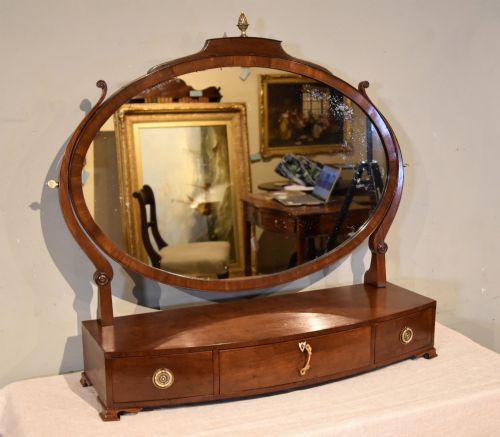
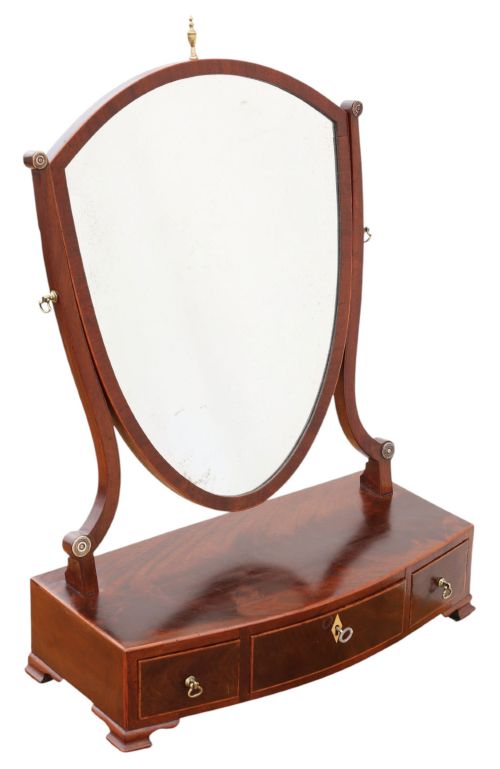
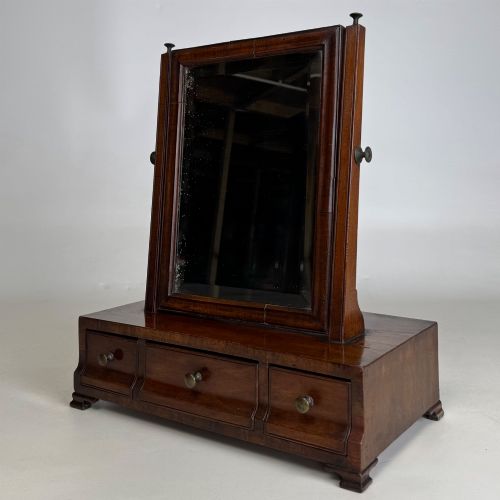
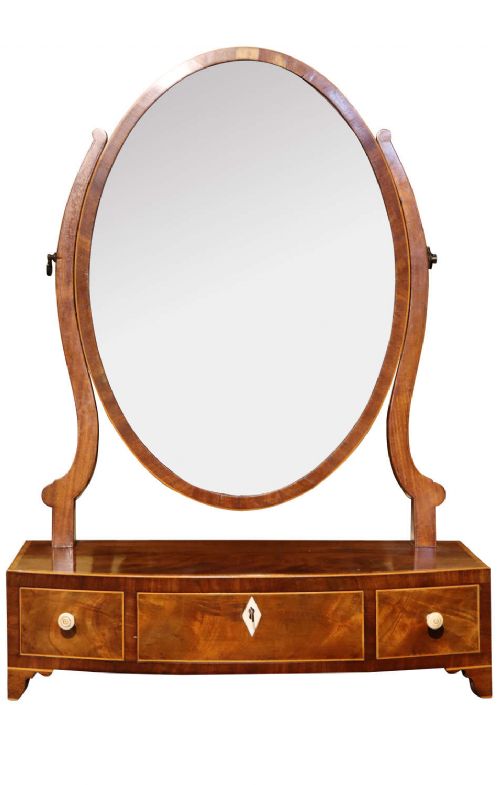
A georgian desktop toilet mirror sits upon a small chest or base fitted with drawers, designed for daily grooming on a table or dressing chest. These pieces combine a pivoting glass plate with a compact wooden stand, originating primarily in the eighteenth and early nineteenth centuries.
Materials and construction
Cabinetmakers constructed these frames and bases predominantly in solid mahogany or walnut, frequently enhancing surfaces with satinwood inlay, boxwood stringing, or elaborate Dutch marquetry. Timber selection determined the structural integrity and visual depth of the base drawers.
Mirrors utilise silvered glass plates suspended within adjustable side pivots, allowing the user to alter the angle of reflection. Brass finials, hinges, and escutcheons complete the moving elements and drawer hardware.
Georgian Desktop Toilet Mirror Retail Price Guide 2026
Typical asking prices for georgian desktop toilet mirror among the pieces listed under this phrase on Sellingantiques today, from the lower quarter to the upper quarter. They describe what is for sale here now, not the wider market.
Hidden trinket drawers sometimes lurk behind secret panels within the compact bases of these mirrors.
Judging the standard
Superior examples demonstrate meticulous timber selection, visible in matched mahogany veneers, precise crossbanding, and fine boxwood inlay on the drawer fronts. The crispness of carved details on the upright supports and the retention of original brass hardware distinguish finer pieces.
Proportion dictates overall success, where the scale of the swing mirror balances harmoniously against the compartmented base. Construction methods, such as dovetail joints on the small drawers, reveal the underlying competency of the cabinetmaker.
The Georgian Desktop Toilet Mirror Glossary
- Crossbanding
- A decorative border of veneer laid perpendicular to the grain of the main surface. This technique frames the drawer fronts and primary panels of the mirror base.
- Marquetry
- Intricate patterns formed by fitting together various decorative veneers. Dutch marquetry often displays floral and pictorial motifs across walnut surfaces.
- Swing mirror
- A glass plate mounted on vertical pivots between two upright posts. This mechanism allows the user to tilt the reflection freely.
- Escutcheon
- A small protective plate surrounding a keyhole. Brass examples on these pieces often retain their original hand-hammered pins.
Georgian Desktop Toilet Mirror: Frequently Asked Questions
Where were these mirrors placed?
These mirrors sat atop existing tables, chests of drawers, or dedicated dressing surfaces within bedrooms and dressing rooms.
Their elevated position provided a convenient height for standing or sitting during personal grooming.
How do I distinguish walnut from mahogany pieces?
Walnut pieces generally date to the earlier part of the eighteenth century, showing rich, figured grain patterns often enhanced by marquetry or inlay.
Mahogany examples became predominant later in the Georgian period, presenting a denser, reddish-brown timber that took a high polish.
What is the function of the small drawers?
The miniature drawers housed small personal valuables, cosmetics, and grooming accessories used during the Georgian era.
They also added crucial weight to the base, ensuring the upright frame remained stable while the glass tilted.
Are the mirror plates original?
Many surviving pieces retain later replacement glass plates due to the fragile nature of early silvered surfaces.
Original plates often exhibit faint oxidation, minor foxing, or slight distortion within the handmade glass.