




Georgian Delftware Plate
A georgian delftware plate brings eighteenth-century tin-glazed earthenware into a room, offering hand-painted blue and white or polychrome scenes that collectors display on walls or dressers.
Georgian Delftware Plate
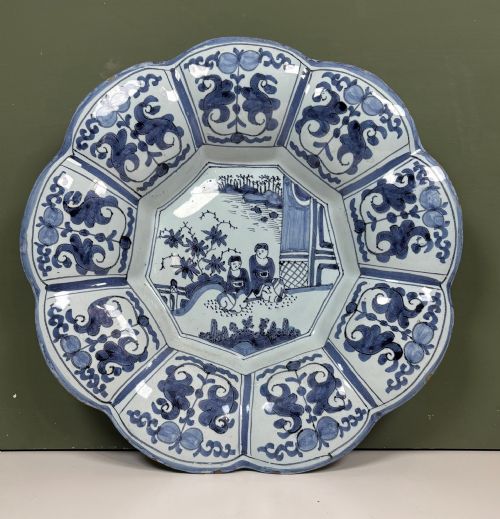
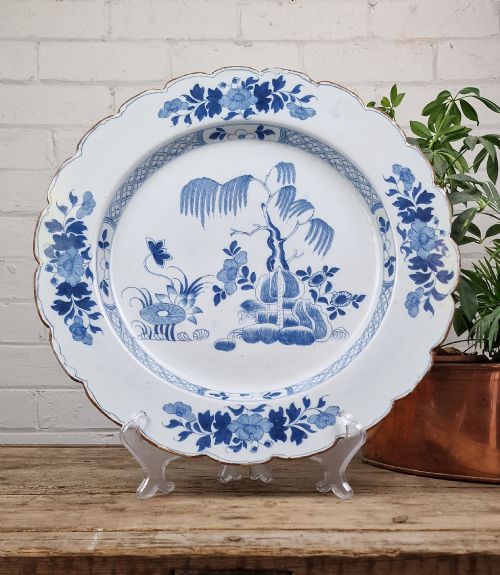
When searching for a georgian delftware plate, a buyer encounters eighteenth-century ceramic vessels shaped into decorative plates, chargers, dishes, and platters. The pieces documented here span the eighteenth century, including specific dates around 1740, 1750, 1760, 1770, and 1790. Chargers provide a larger display format, while standard plates and smaller dishes offer domestic vessel forms from the period.
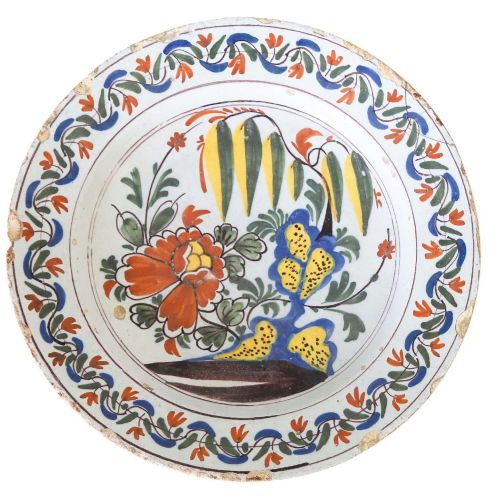
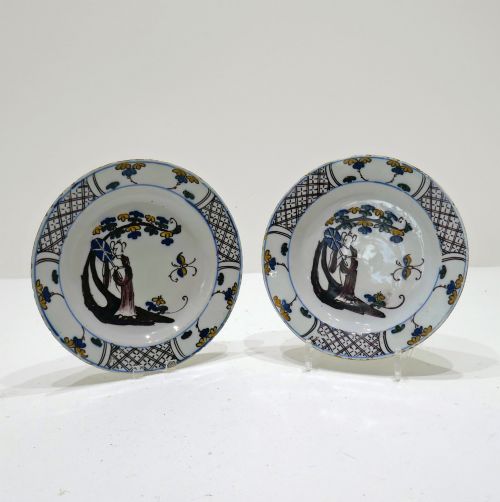
The aesthetic vocabulary encompasses English and Dutch origins, featuring styles such as Georgian Chinoiserie, Dutch Baroque, and Queen Anne influences. Buyers frequently meet blue and white examples alongside polychrome decoration depicting floral motifs and figures. Marriage plates and specialised commemorative items also appear among the standard domestic tableware.
How they were made
Makers formed these objects from earthenware bodies, coating them in a tin glaze that created an opaque white surface for painting. Potters then applied cobalt pigment or cobalt oxide directly onto the unfired or absorbent glaze to build the design.
For polychrome versions, artisans added mineral pigments alongside cobalt to achieve multi-coloured palettes before the single firing process fixed the decoration into the glaze.
Listings feature eighteenth-century earthenware using tin glaze, cobalt pigment, and polychrome decoration across plates, chargers, and dishes.
What varies in quality
The clarity and precision of the hand-painted brushwork separate standard examples from superior pieces, particularly in detailed floral arrangements and Chinoiserie scenes. Deeper saturation of the cobalt pigment and more harmonious multi-coloured palettes elevate the visual impact of polychrome items.
The surface preservation of the tin glaze and the stability of the earthenware body dictate the condition and overall presence of each charger or dish.
Lambeth Delft·Bristol Delft
The Georgian Delftware Plate Glossary
- Tin Glaze
- An opaque white ceramic glaze containing tin oxide that provides the characteristic background for eighteenth-century painted earthenware. This coating accepts pigment readily before firing.
- Charger
- A large decorative plate or dish typically intended for display on a wall or sideboard rather than daily dining use. These large vessels often showcase the most ambitious painted compositions.
- Chinoiserie
- European decorative motifs inspired by Chinese art, featuring imaginative landscapes, figures, and architectural elements. This style appears frequently on eighteenth-century ceramic tableware.
- Polychrome
- Decoration employing multiple colours rather than a single pigment like cobalt blue. Artisans utilised various mineral oxides to achieve diverse hues on individual vessels.
- Earthenware
- Porous pottery fired at lower temperatures than stoneware or porcelain, forming the fundamental clay body of these tin-glazed objects.
Georgian Delftware Plate: Frequently Asked Questions
How were chargers used?
Large chargers served as ornamental display pieces in eighteenth-century homes, mounted on walls or stood on dressers to exhibit elaborate painted scenes.
Smaller plates fulfilled both decorative functions and light domestic service before collectors preserved them as historical ceramics.
How do I date a plate?
Dating relies on stylistic shifts in the hand-painted motifs, the specific palette of the cobalt or polychrome pigments, and documented production centres.
Pieces carrying specific attribution to periods like the 1740s or 1760s display comparative characteristics in their tin glaze and earthenware structure.
How should I display them?
Due to the delicate nature of tin-glazed earthenware, plates and chargers require secure wall mountings or stable plate stands.
Keeping them away from direct moisture and handling them carefully preserves the historical glaze surface.