

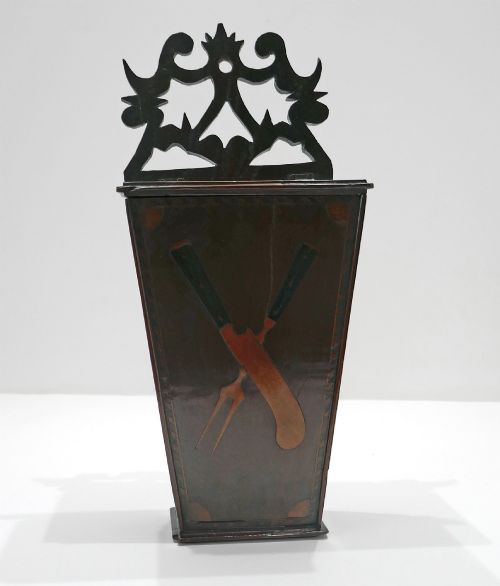


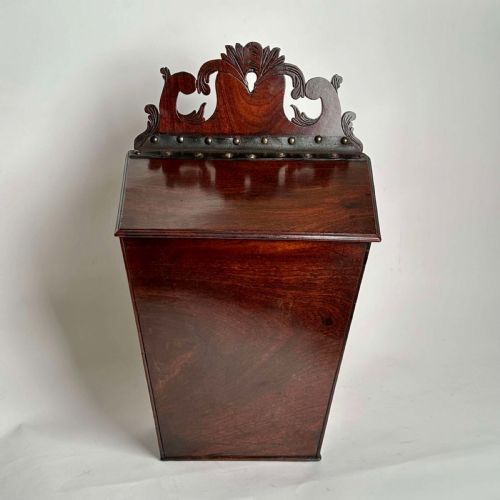


Georgian Cutlery Tray
A georgian cutlery tray brings functional period craftsmanship to the table, offering sturdy timber partitions designed to carry silver and steel cleanly from kitchen to dining room.
Georgian Cutlery Tray
A georgian cutlery tray typically presents as a deep rectangular wooden trough or carry fitted with a central upright handle, designed to transport knives, forks, and spoons. Buyers encounter numerous examples fashioned from rich mahogany or domestic oak, often partitioned into distinct compartments for different utensils.
The form frequently overlaps with butler's carries, work boxes, and wine bottle caddies, appearing across periods from the seventeenth century through the regency era. Regional variations emerge clearly in pieces bearing Welsh country folk art traits, including red painted finishes and boldly-shaped sides.
Many survivors feature canted sides and dovetailed joints, reflecting the practical demands of daily service in country houses and town residences alike. While some examples remain simple single-compartment troughs, others incorporate multiple sections for flatware, fruit, or nuts.
Materials and construction methods
Cabinetmakers relied heavily on dense hardwoods like mahogany and oak, occasionally selecting walnut or elm for domestic service vessels. Timber boards were joined securely at the corners with dovetailed joints to withstand the heavy weight of metal cutlery.
Brass handles and mounts appear frequently on finer specimens, providing a sturdy grip and a bright contrast to dark woods. Silver plate and old Sheffield plate also feature prominently in metal trays produced by specialised makers.
Country pieces often display simpler pegged or nailed construction alongside hand-carved details and painted red surfaces. Surfaces were traditionally finished with wax, highlighting the natural grain of the wood through decades of handling.
Georgian Cutlery Tray Retail Price Guide 2026
Typical asking prices for georgian cutlery tray among the pieces listed under this phrase on Sellingantiques today, from the lower quarter to the upper quarter. They describe what is for sale here now, not the wider market.
Some trays doubled as nut containers, proving that even a humble cutlery holder had to multitask during dessert.
Assessing craftsmanship and condition
Quality rests significantly on the selection of timber and the precision of the joinery, with hand-cut dovetails marking superior cabinet work. Thicker boards and intact internal partitions separate robust dining room carriers from lighter utility boxes.
The presence of original brass upright handles and secure hardware influences the integrity of the piece. Finer examples retain their deep patination and unaltered surfaces, whereas heavily restored or later replaced elements diminish the historical character.
Creswick·Walker Knowles
The Georgian Cutlery Tray Glossary
- Canted sides
- Sloping or bevelled edges commonly found on the walls of wooden trays, improving grip and visual balance. This shaping helps prevent flatware from sliding out during transport.
- Old Sheffield plate
- A composite metal made by fusing a thin sheet of silver to a thicker copper base, popular for domestic metalware before electroplating. Makers applied this technique to create durable knife trays.
- Dovetail joint
- An interlocking corner joint formed by interlocking wedge-shaped fingers, prized for structural strength. It remains a hallmark of quality cabinet making in period wooden boxes.
- Butler's carry
- A deep wooden container fitted with a central vertical handgrip designed for moving tableware between rooms. These pieces often double as cutlery trays or work boxes.
- Trug
- A shallow wooden basket or tray traditionally used for gathering garden produce or carrying household items. In domestic settings, sturdy oak trugs doubled as cutlery and utility holders.
Georgian Cutlery Tray: Frequently Asked Questions
How were these trays used?
Servants used these sturdy wooden troughs to transport knives, forks, spoons, and napkins from the kitchens to the dining table in large households. They kept flatware organised and accessible during meal preparations and clearing duties.
Beyond dining service, similar carriers functioned as work boxes for household tasks, holding sewing supplies or small tools. Some deeper variants were specifically adapted for carrying wine bottles, fruit, or nuts during dessert courses.
What woods were commonly used?
Mahogany and oak predominate among surviving examples, selected for their durability and attractive grain patterns. Mahogany offered a rich, dark tone suited to formal dining rooms, while oak served both formal and country houses.
Walnut and elm appear less frequently in regional and earlier pieces, adding textural variety to domestic inventories. Painted pine and local fruitwoods also turn up in vernacular Welsh country work.
How can I tell the period?
Construction methods offer the clearest clues to age, particularly the transition from hand-cut dovetails in earlier pieces to later nineteenth-century manufacturing techniques. Timber selection and surface patination also point towards specific eras of production.
Design styles shift from the robust simplicity of eighteenth-century country oak to the refined lines of regency mahogany and plated metal wares. Maker marks on silver-plated trays provide definitive dates when present.
How do I care for wooden trays?
Keep wooden pieces away from direct sunlight and sudden temperature changes to prevent the timber from splitting or warping over time. Dust gently with a dry cloth and apply a quality natural beeswax occasionally to nourish the surface.
Avoid using harsh chemical cleaners or submerging antique wooden items in water. Metal-plated variants require careful cleaning with appropriate silver care products to preserve the finish.