





Vintage Wooden Cutlery Holder
These vintage wooden cutlery holder pieces organise domestic service and dining tables, bringing tactile warmth and period character to everyday storage.
Vintage Wooden Cutlery Holder
When you search for a vintage wooden cutlery holder, you encounter items designed for storing, sorting and carrying eating utensils across centuries of domestic life. The selection here spans utilitarian kitchen pieces and formal dining room accessories, reflecting the changing needs of household staff and family dining.
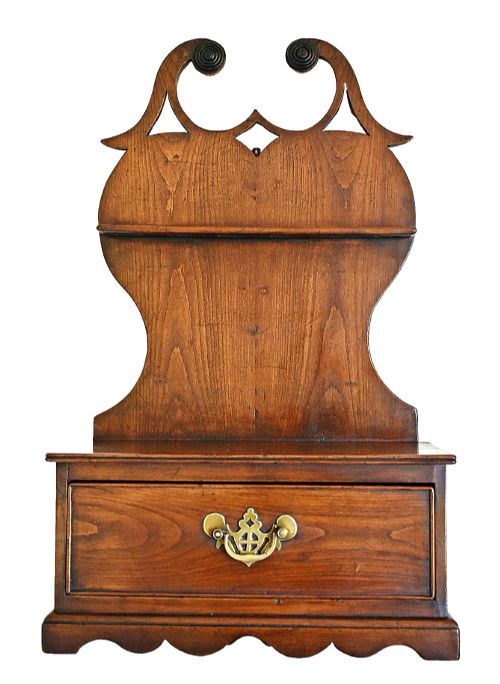
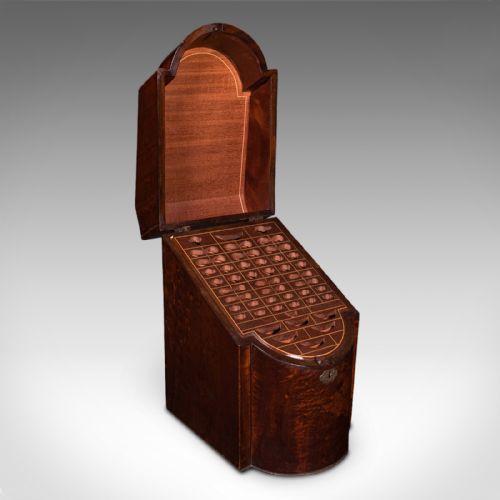
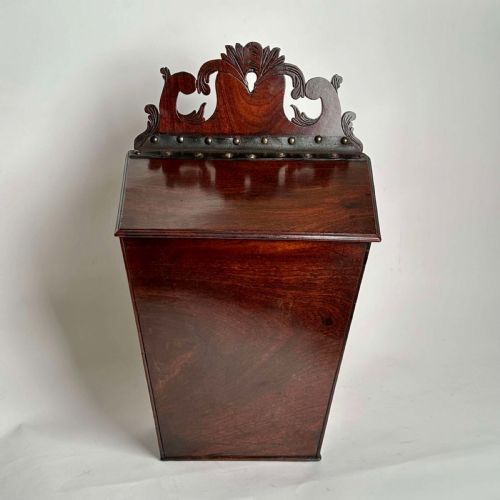
The pieces you are most likely to meet on this page take the form of tabletop boxes, hanging wall boxes, spoon racks and handled trays. These objects range from sturdy country workshop items to refined vernacular furniture forms made for daily service.
Origins represented in these listings stretch from English country houses and Welsh farmhouses to Scandinavian rural interiors. You will find items originating across several centuries, showing how kitchen organisation evolved from open wall storage to dedicated desktop and sideboard boxes.
Materials and construction methods
Makers utilised native hardwoods such as mahogany, oak, fruitwood and walnut, selecting each timber for durability and grain pattern. Construction frequently involves dovetail joints at corners and panelled bases designed to withstand the heavy weight of metal utensils.
Surface finishes range from natural waxed grain and visible wood inlay to applied red paint on vernacular pieces. Brass carrying handles, hinges and escutcheons appear regularly, combining structural reinforcement with functional portability.
Vintage Wooden Cutlery Holder Retail Price Guide 2026
Typical asking prices for vintage wooden cutlery holder among the pieces listed under this phrase on Sellingantiques today, from the lower quarter to the upper quarter. They describe what is for sale here now, not the wider market.
Materials appearing across these listings include mahogany, oak, fruitwood, walnut, pine, brass and pewter.
Distinguishing quality and craftsmanship
Quality in these utility items rests on the integrity of the timber selection and the precision of the joinery. Fine dovetailing and thoughtful proportion distinguish pieces made by skilled cabinet makers from simpler workshop productions.
Patina and surface wear tell the history of use, separating items that retain their original dry finishes and patination from those with later interventions. The presence of original hardware, such as brass lifting handles or hanging loops, adds integrity to the piece.
The Vintage Wooden Cutlery Holder Glossary
- Dovetail
- A joint formed by interlocking wedge-shaped fingers, prized for its strength in box construction. This technique holds the corners of many older wooden boxes together securely.
- Trefid spoon
- An early dining spoon with a flattened, three-lobed terminal handle shape. These spoons often appear displayed in hanging wooden racks.
- Escutcheon
- A protective plate surrounding a keyhole or lifting fixture. They are frequently cast in brass on finer wooden storage boxes.
- Vernacular
- Everyday utilitarian objects made by local craftspeople without high-style architectural pretension. These pieces reflect regional traditions and practical domestic needs.
- Patina
- The surface sheen and colour developed through years of handling, polishing and natural ageing. A desirable patination shows authenticity and long-term domestic use.
Vintage Wooden Cutlery Holder: Frequently Asked Questions
What is the difference between a knife box and a cutlery tray?
Knife boxes typically feature a hinged lid and sloping front designed to protect formal dining blades from dust and damp air.
Cutlery trays and carries are open vessels with central vertical partitions and carrying handles, intended for moving flatware directly between the kitchen and the dining table.
How were spoon racks used in older homes?
Spoon racks were mounted on kitchen or dining room walls to display and store everyday eating spoons within easy reach.
The vertical slots held the bowls or handles securely, keeping pewter and wooden spoons organised and ventilated.
Can I use these vintage holders for modern cutlery?
Many older compartments accommodate modern forks, knives and spoons, though older slots may feel narrow for bulky contemporary handles.
Measuring your flatware against the internal dimensions helps ensure proper fit before storing them away.
How do I care for antique wooden storage pieces?
Maintain the timber by applying occasional light coats of natural beeswax to nourish the dry grain and protect the surface.
Keep wooden boxes away from direct heat sources and damp environments to prevent wood movement and splitting.