




Country House Wooden Tray
These country house wooden tray pieces bring robust utility and honest charm to a hall or utility space.
Country House Wooden Tray
A country house wooden tray encompasses practical daily carriers and heavy-duty hall furniture found across rural English, Scottish, and Welsh estates. When buyers search for a country house wooden tray, they encounter robust items designed for daily domestic service rather than delicate parlour display.
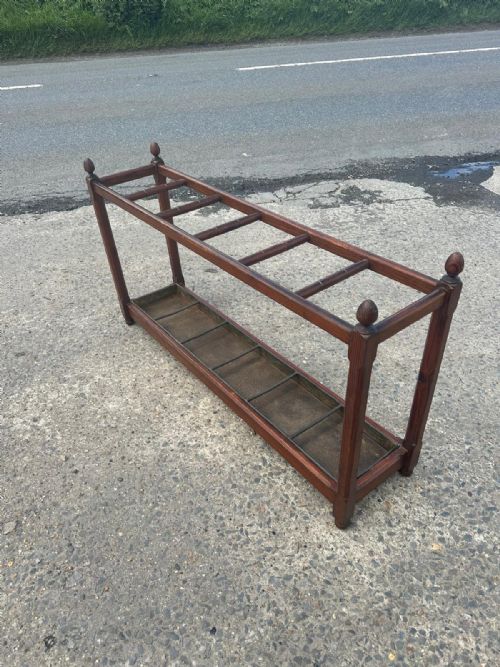
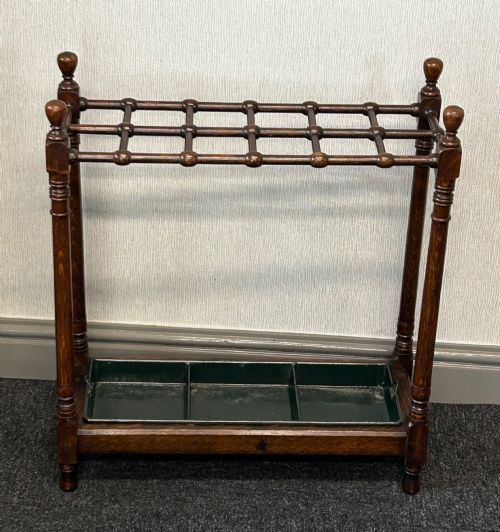
The pieces listed on this page span the Georgian, Victorian, and Edwardian eras, with a strong emphasis on late nineteenth-century manufacture. Forms include knife trays, butler carries, garden trugs, and umbrella or stick stands fashioned from native timbers.
Oak, mahogany, pitch pine, and walnut dominate the selection, often combined with iron, zinc, or brass fittings to handle heavy everyday use. Buyers will find items ranging from demi-lune hall stands to rustic folk art carriers built for practical tasks.
Materials and construction
Carpenters utilised durable native hardwoods and softwoods such as oak, mahogany, pine, and pitch pine to withstand the heavy demands of a large estate. Selected timbers were chosen for their strength and straight grain, ensuring the carriers and stands could support wet umbrellas, heavy cutlery boxes, or garden tools.
Joinery techniques relied on sturdy construction methods suited to utilitarian objects, frequently reinforced with metal components like iron, zinc, or brass. Painted finishes also appear, as seen in traditional Welsh red painted items designed for functional service in the kitchen or scullery.
Country House Wooden Tray Retail Price Guide 2026
Typical asking prices for country house wooden tray among the pieces listed under this phrase on Sellingantiques today, from the lower quarter to the upper quarter. They describe what is for sale here now, not the wider market.
A Welsh red painted knife tray reminds us that domestic staff occasionally brightened the scullery with a splash of bold colour.
Assessing quality and character
Quality in these utilitarian items rests on the integrity of the timber and the honesty of the construction. Superior examples retain their original surface patination, bearing the marks of active use rather than modern restoration.
The integration of secondary metals, such as brass carry handles or zinc liners, separates standard workshop output from finer estate pieces. Proportion and structural soundness ultimately determine the standing of each piece, distinguishing simple vernacular items from more substantial commissioned hall furniture.
Heals of London
The Country House Wooden Tray Glossary
- Pitch pine
- A resinous softwood valued for its durability and strong grain pattern, frequently utilised in late nineteenth-century utility furniture and umbrella stands.
- Demi-lune
- A half-moon shape characteristic of hall stands designed to sit flush against a wall in narrow corridors or entranceways.
- Butler's carry
- A deep wooden tray or box featuring integrated handles, originally used for transporting tableware, letters, or domestic items around a large residence.
- Garden trug
- A shallow basket traditionally fashioned from strips of wood for gathering produce, flowers, or outdoor tools.
Country House Wooden Tray: Frequently Asked Questions
What is a country house wooden tray?
A country house wooden tray is a utilitarian container or stand built from native timbers for heavy domestic service in a large estate.
These pieces include knife boxes, butler carries, and garden trugs designed for practical daily tasks rather than formal display.
How were these wooden items used?
They served functional roles across large households, from organising cutlery in the scullery to holding wet umbrellas in the main entrance hall.
Stands and carriers were positioned where durability and moisture resistance mattered most, utilising metals like zinc and brass to manage daily wear.
Which woods are most common?
Oak, mahogany, and pine appear frequently across the selection, alongside pitch pine and walnut in finer examples.
Makers selected these dense timbers to ensure the furniture and trays could withstand generations of heavy estate use.
How do I date a piece?
Dating relies on stylistic markers from the Georgian, Victorian, and Edwardian periods, alongside the specific timber choices and construction methods.
Late nineteenth-century examples often feature pitch pine or applied metal fixtures, while earlier Georgian items show simpler, heavier hardwood construction.