





Georgian Brass Handle Caddy
A georgian brass handle caddy delivers understated storage in rich timber, combining period form with functional metalwork.
Georgian Brass Handle Caddy
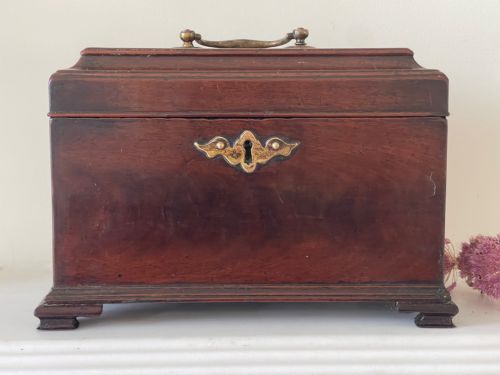
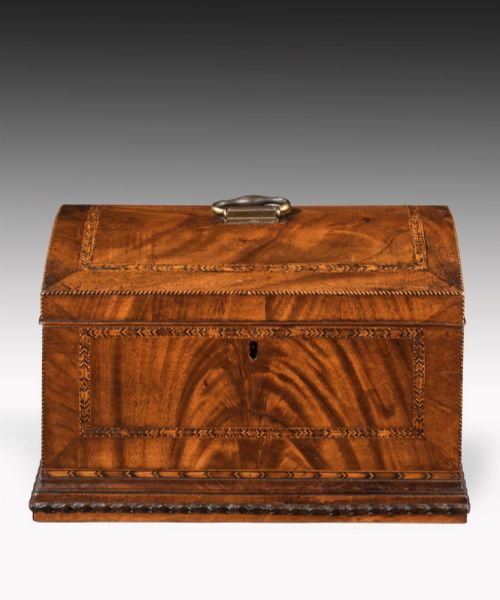
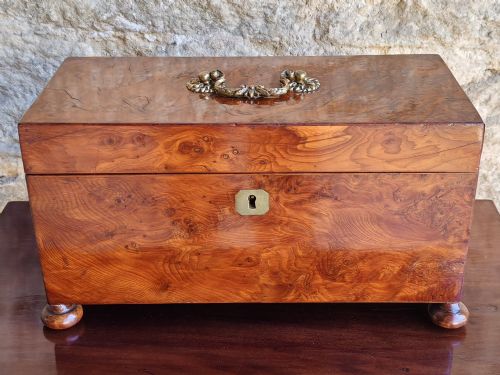
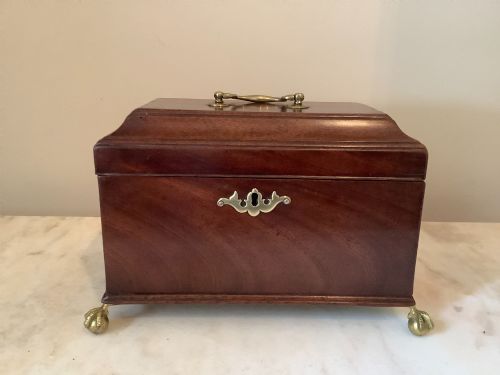
The georgian brass handle caddy search phrase brings together timber storage boxes and small containers made during the eighteenth and early nineteenth centuries. Buyers encounter mahogany, burr walnut, laburnum and yew wood structures fitted with lift handles or drop rings in cast brass.
Most examples function as tea caddies, cellarettes, or small chests featuring hinged lids and fitted interior compartments. The selection spans standard domestic containers up to larger sarcophagus wine coolers and bottle carriers designed for entertaining.
Pieces originating from the Georgian, George III, and Regency periods dominate the selection alongside later revival items. Makers utilised boxwood, satinwood, ebony and bone for stringing and inlay to highlight the primary timber grain.
Materials and construction
Cabinetmakers built these objects using solid mahogany, walnut or exotic veneers applied to secondary woods. Joinery relied on precise dovetailing at the carcase corners to withstand the daily strain of lifting and carrying.
Brass fittings such as lion mask handles, carrying rings, escutcheons and bracket feet were cast and hand-chased before being secured with small brass screws. Internal partitions and secret drawers were constructed from thinner secondary timbers to maximise storage space.
Georgian Brass Handle Caddy Retail Price Guide 2026
Typical asking prices for georgian brass handle caddy among the pieces listed under this phrase on Sellingantiques today, from the lower quarter to the upper quarter. They describe what is for sale here now, not the wider market.
Listings feature items spanning the eighteenth, nineteenth, and early twentieth centuries, constructed from mahogany, burr walnut, laburnum, yew and rosewood.
Assessing the craftsmanship
Quality reveals itself in the choice of timber and the precision of the veneer work, where superior examples display symmetrical grain patterns and careful book-matching. The crispness of brass casting and the retention of original locks and key escutcheons elevate the standing of a piece.
Finer boxes maintain intact internal canisters, mixing bowls or original lining papers rather than replaced interiors. The tightness of the mitres and the smooth operation of secret drawers distinguish high-workshop production from basic domestic carpentry.
Giles Grendey·Mappin and Webb
The Georgian Brass Handle Caddy Glossary
- Caddy top
- A moulded edge profile commonly found on eighteenth-century furniture tops and box lids, mimicking the stepped form of tea containers. It provides a distinctive visual termination to the timber surface.
- Cellarette
- A large freestanding or tabletop container designed to hold wine bottles and liquor decanters securely. These pieces frequently incorporate lead linings and heavy brass carrying handles.
- Sarcophagus
- A box shape featuring a sloping or domed lid resting on a rectangular base, popular during the Regency period. This architectural form often incorporates carved paw feet and prominent side handles.
- Stringing
- Thin inlay lines of contrasting wood such as boxwood or ebony embedded into the primary timber surface. It creates geometric borders that frame the panels of boxes and furniture.
Georgian Brass Handle Caddy: Frequently Asked Questions
What was a georgian brass handle caddy used for?
These containers served primarily to store expensive imported tea leaves under lock and key within the domestic household. The brass handles allowed servants to transport the container securely between rooms.
Larger variations functioned as cellarettes and bottle carriers to hold wine and spirits for dining room service. The internal divisions kept fragile glass vessels separated during movement.
How do I identify a Regency period caddy?
Regency pieces often display classical architectural influences such as sarcophagus shapes, brass paw feet, and bold mahogany veneers. Ebony stringing and contrasting inlay work frequently appear on these nineteenth-century items.
Earlier George III examples tend towards simpler rectangular or octagonal forms with bracket feet. The presence of penwork decoration or sarcophagus proportions usually points towards the Regency era.
Are interior compartments usually original?
Many surviving tea containers retain their original fitted wooden compartments, foil linings, or glass mixing bowls. However, heavy use often led to the loss or replacement of internal canisters over the centuries.
Buyers should examine the secondary wood inside the partitions to check for consistency with the main carcase. Unaltered interiors significantly enhance the historical interest of the box.
How should I care for a wood tea caddy?
Keep timber boxes away from direct sunlight and extreme humidity fluctuations to prevent the veneer from lifting or cracking. Apply a microcrystalline wax occasionally to nourish the antique polish without building up residue.
Handle the brass fittings with care and avoid using abrasive cleaning agents on the metalwork. Gentle dusting with a soft dry cloth preserves the aged patina of the surface.