
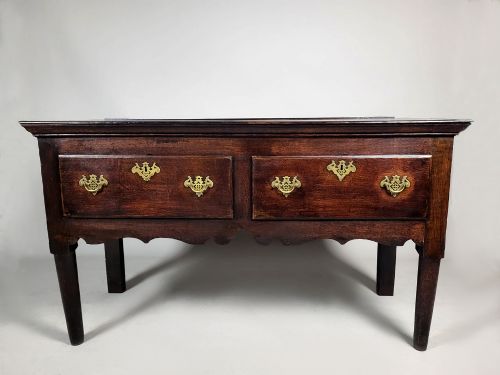
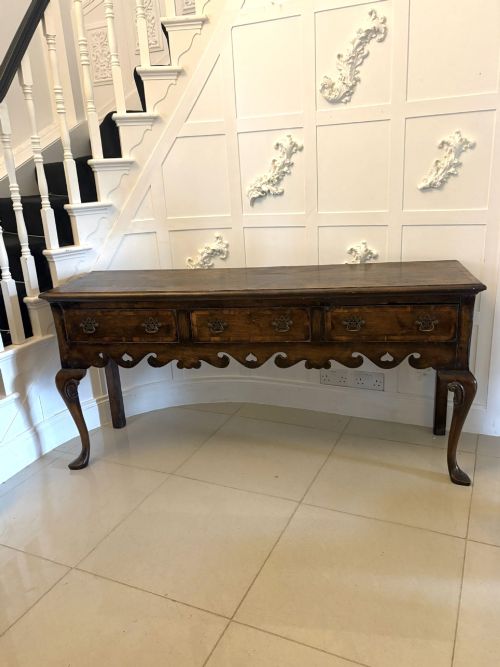
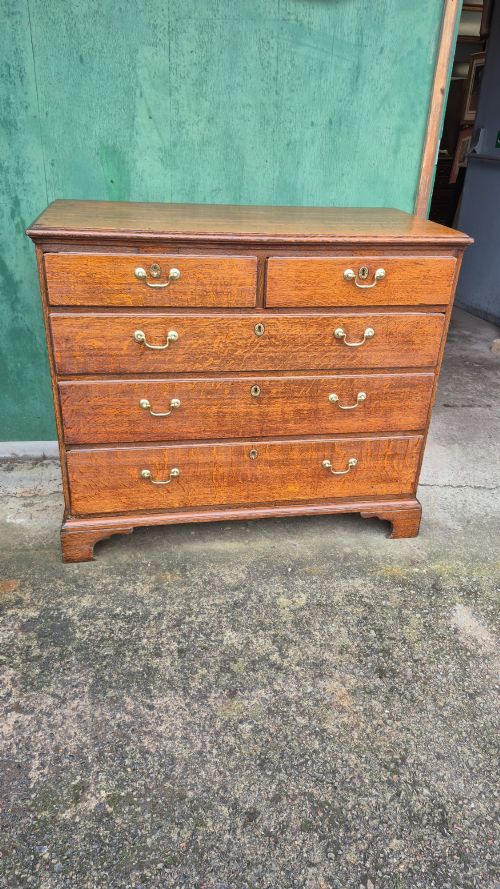
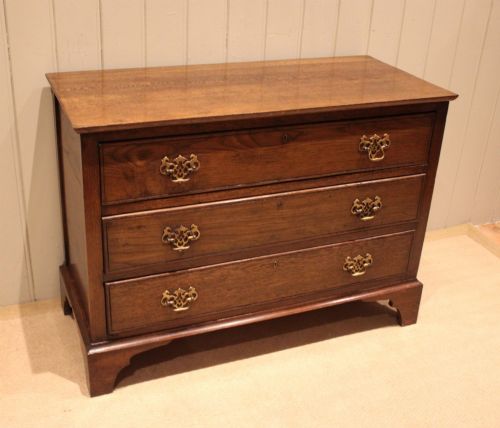


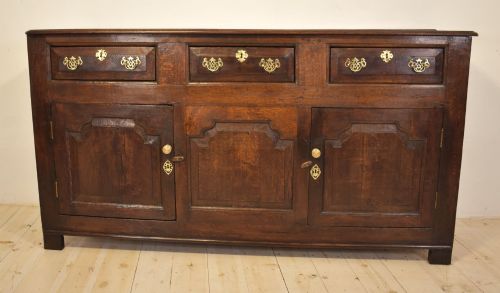
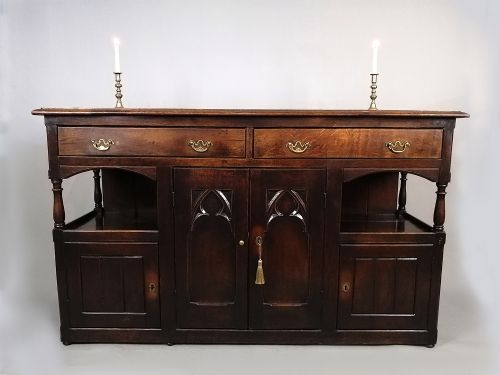
Georgian Country Oak Dresser
A georgian country oak dresser brings substantial utility and grounded character to a room through centuries-old timber and honest vernacular design.
Georgian Country Oak Dresser
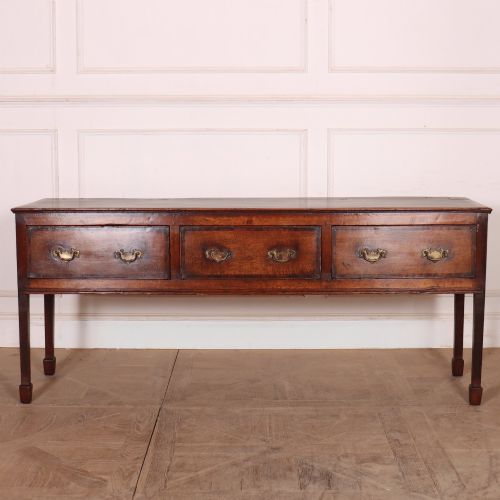
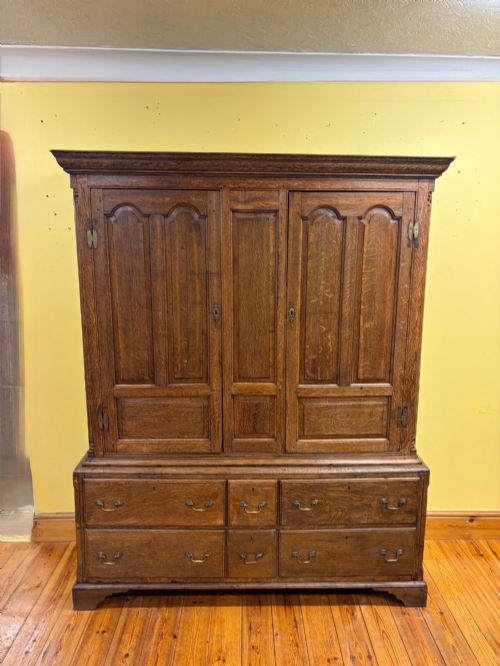
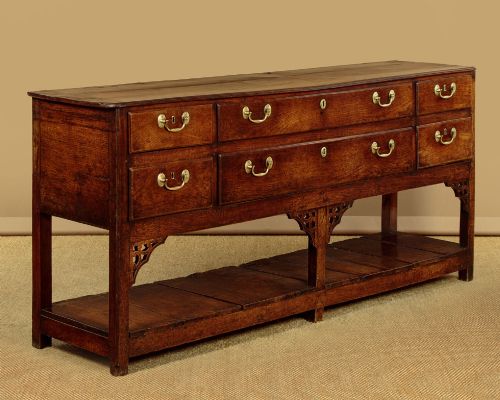
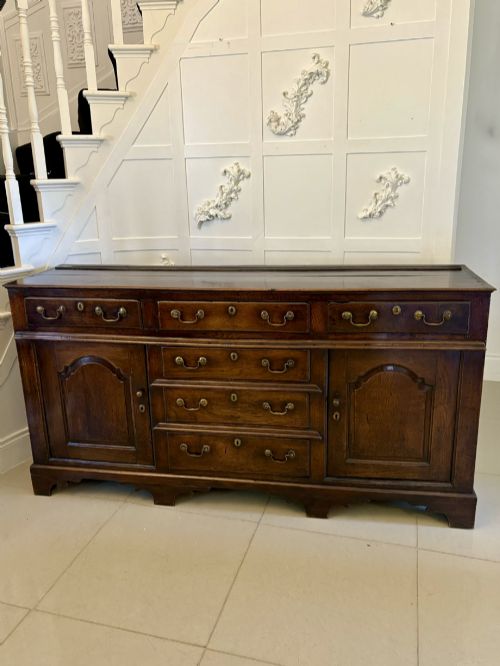
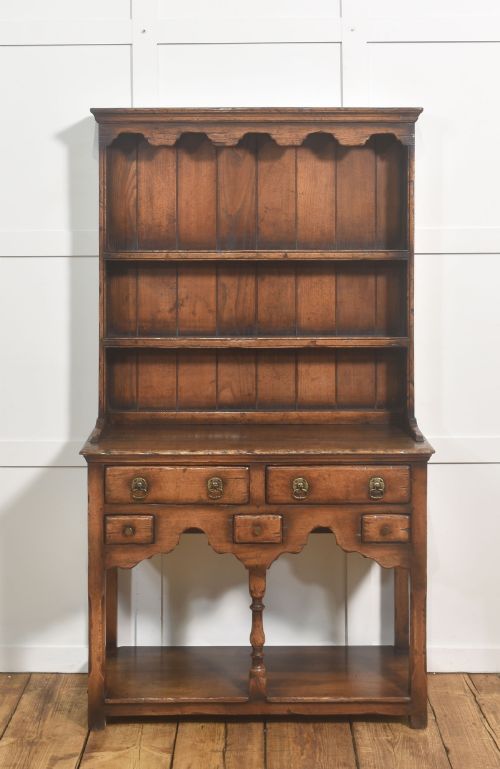
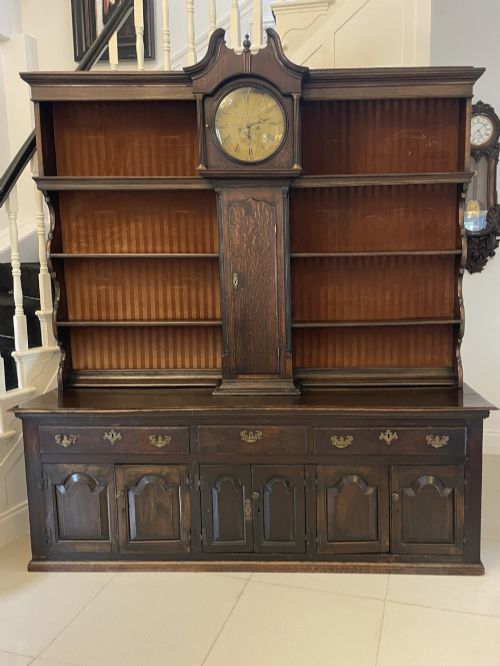
A georgian country oak dresser typically combines a lower storage base with cupboards or drawers alongside an upper open plate rack for displaying ceramic delftware. Many examples survive as standalone dresser bases, potboard bases, or housekeeper cupboards originating from English, Welsh, and Irish workshops.
The pieces on this page span the eighteenth and nineteenth centuries, alongside later georgian style revivals from the Edwardian period. Buyers frequently encounter regional variations such as Snowdonia or Lancashire pieces, reflecting local rural craftsmanship rather than urban polish.
Open-backed plate racks appear alongside enclosed cupboards and two-part corner units. These forms served domestic storage needs in country houses and cottages long before becoming decorative focal points in modern interiors.
Materials and Construction
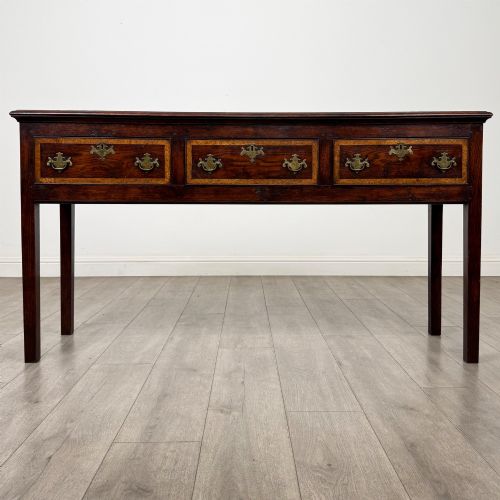
Solid oak provides the primary structural timber, often complemented by secondary woods and detailed with brass or iron hardware and glass elements. Certain pieces feature mahogany crossbanding or inlaid details that introduce subtle tonal contrast to the golden or blond timber.
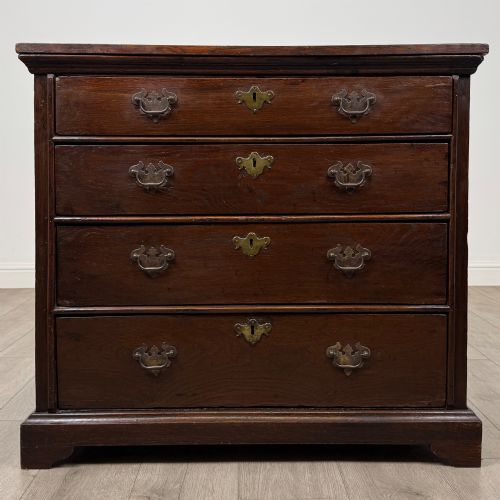
Makers utilised traditional joinery suited to heavy domestic use, constructing potboard bases and drawer chests with durable frames. Surfaces display the natural grain and patination built up through centuries of handling and polishing.
Evaluating the Range
Quality separates pieces through the crispness of regional carving, the integrity of the timber, and the retention of original brass handles and plate racks. Earlier eighteenth-century examples often exhibit superior proportion and more substantial structural timber than later nineteenth-century adaptations.
The depth of patination and the harmony between upper plate racks and lower bases influence desirability. Retaining original surfaces without heavy modern intervention marks out the finer examples in the range.
The Georgian Country Oak Dresser Glossary
- Potboard base
- A dresser base featuring an open lower shelf traditionally used for storing pots and pans. This platform sits just above the floor on short feet or stiles.
- Plate rack
- An open shelving superstructure attached to the top of a dresser, designed to display plates upright. These shelves often incorporate shaped friezes or small spice drawers.
- Crossbanding
- A decorative border technique where thin strips of veneer, such as mahogany, are applied to the edges of drawer fronts so the grain runs perpendicular to the main panel. This adds visual contrast to oak furniture.
- Cwpwrdd tridarn
- A traditional Welsh three-tier press cupboard providing extensive enclosed storage. These architectural pieces represent larger vernacular furniture forms.
- Delftware
- Tinned earthenware pottery imported or made locally, frequently displayed on the plate racks of period dressers. The term often describes the plates designed to fit the grooves of these racks.
Georgian Country Oak Dresser: Frequently Asked Questions
Are plate racks original to the bases?
Many dressers survived with their original upper plate racks, though some racks were reunited with bases at later dates. Checking the timber ageing and construction joints helps determine if the two parts originated together.
Both married and original pieces appear frequently across the historical record.
How do I care for antique oak?
Antique oak benefits from gentle dusting and occasional applications of traditional wax to nourish the dry timber. Avoiding direct sunlight and sudden temperature changes protects the surface patination.
Proper humidity levels prevent the solid wood from splitting or warping over time.
How do I distinguish regional styles?
Regional pieces often display distinct construction methods, such as the specific proportions seen in Welsh cottages or Lancashire workshops. Local timber selection and decorative detailing, like inlaid woodwork, point to specific areas of origin.
Comparing hardware and drawer configurations helps identify these geographical traits.