


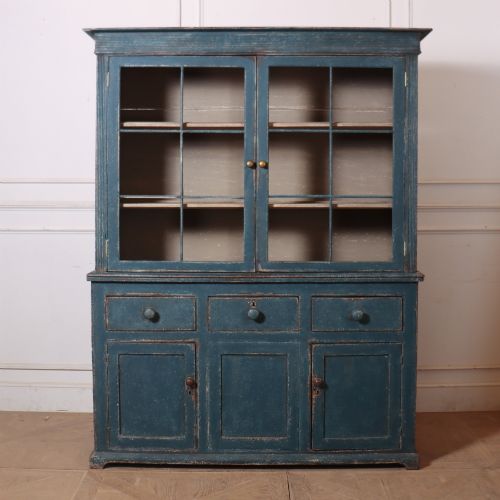
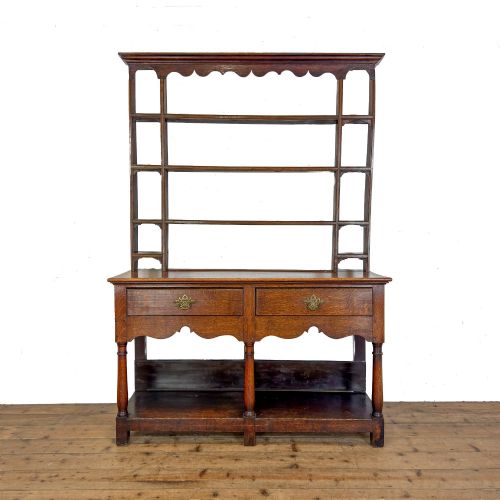
Georgian Country Kitchen Dresser
A georgian country kitchen dresser brings honest regional craft and sturdy utility into a modern interior.
Georgian Country Kitchen Dresser
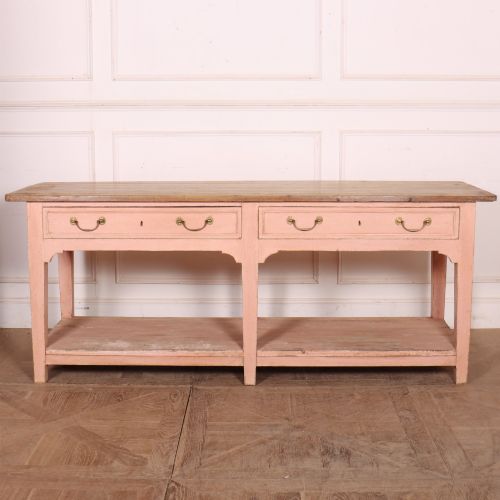
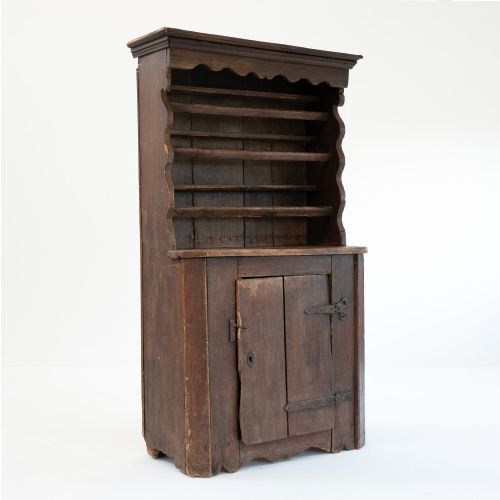
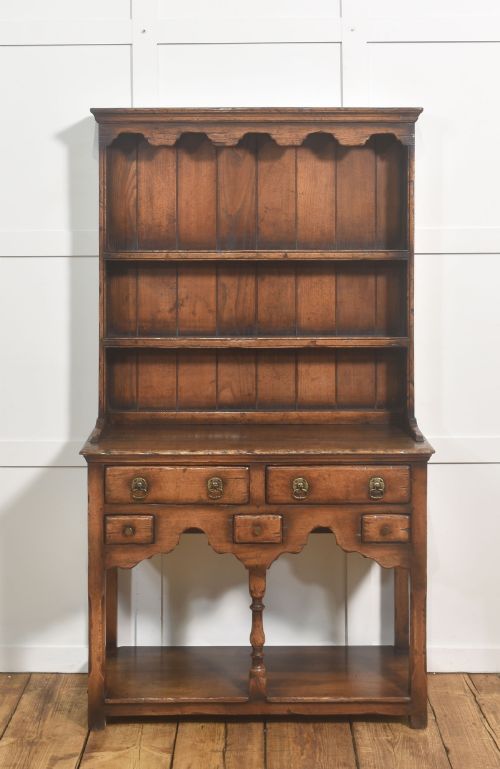
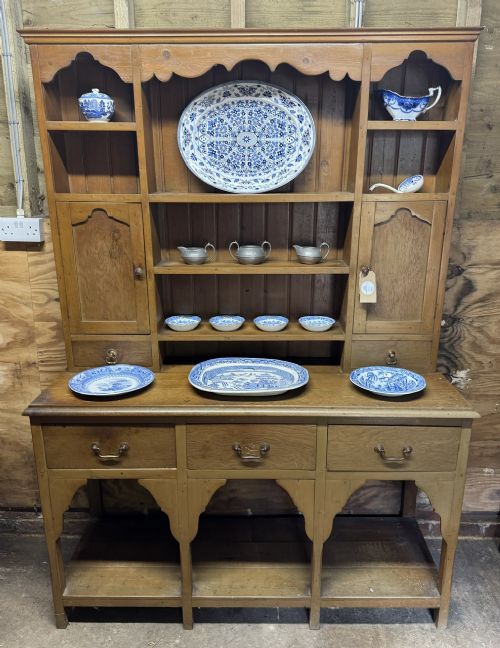
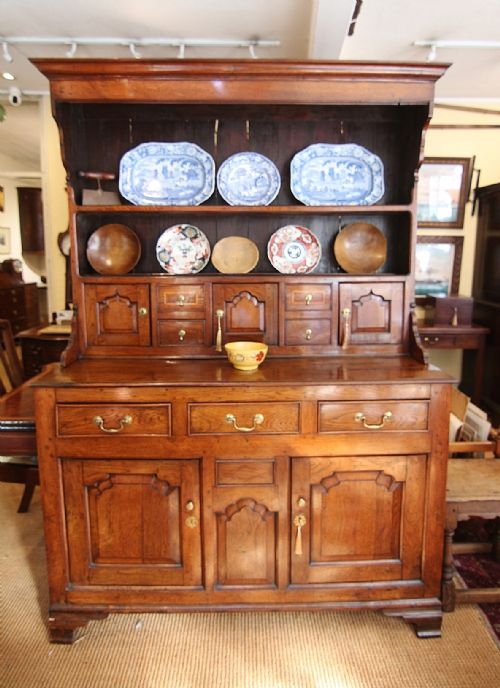
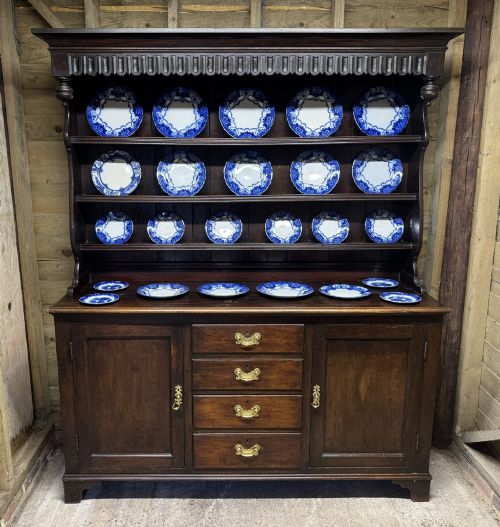
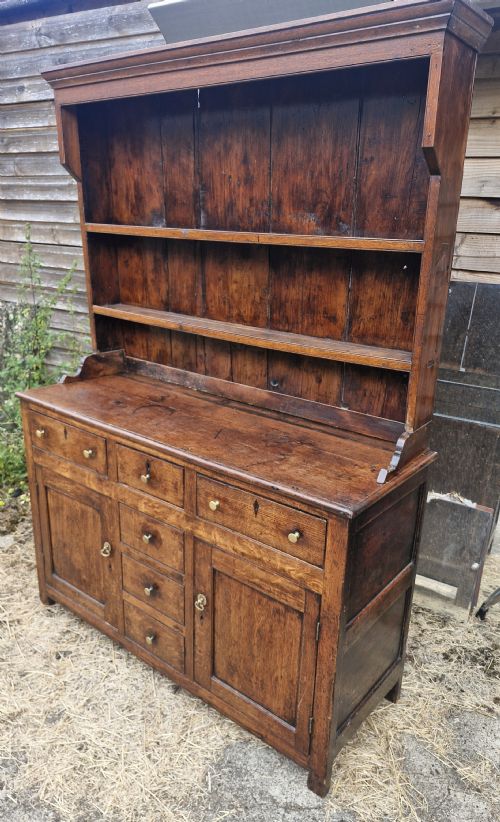
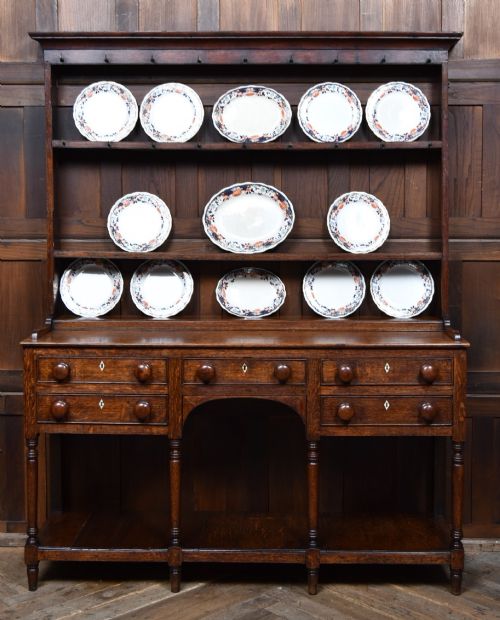
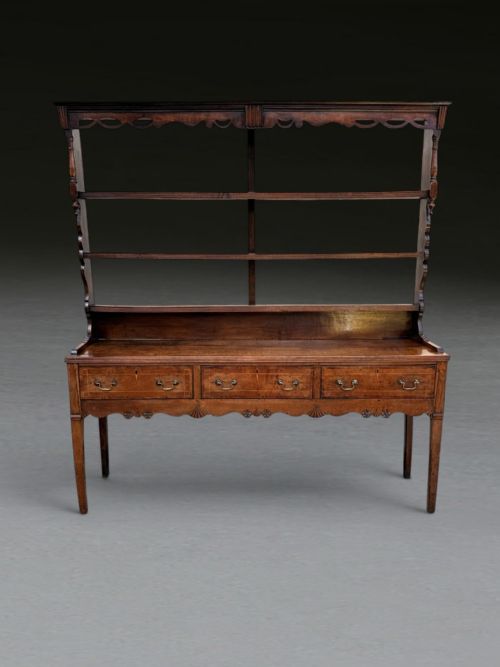
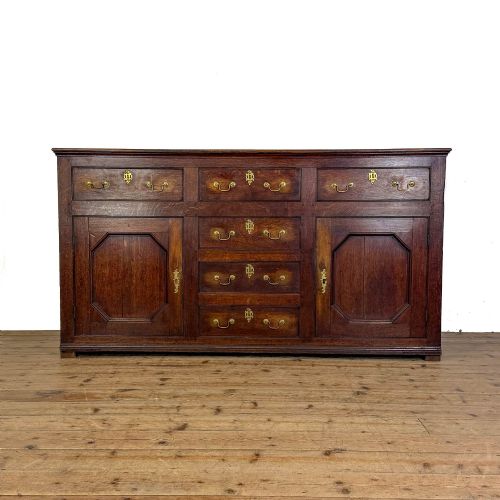
A georgian country kitchen dresser is a utilitarian storage piece typically combining a lower base of drawers and cupboards with an upper plate rack or open shelving. These pieces originate from regional workshops across Wales, England, Ireland, and Scotland during the eighteenth and nineteenth centuries.
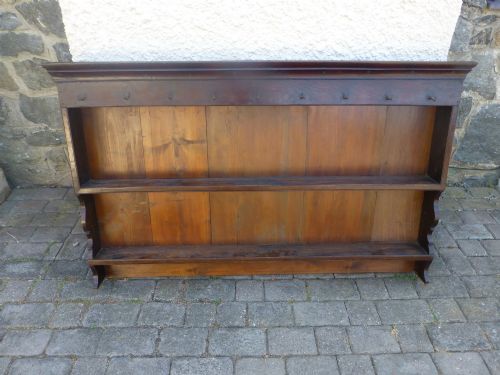
The version most commonly met on this page is the oak potboard dresser base or open-backed rack dresser, often displaying regional characteristics such as Snowdonia or Llanrwst construction. Pine and painted timber examples also appear, reflecting both vernacular tastes and domestic practicality.
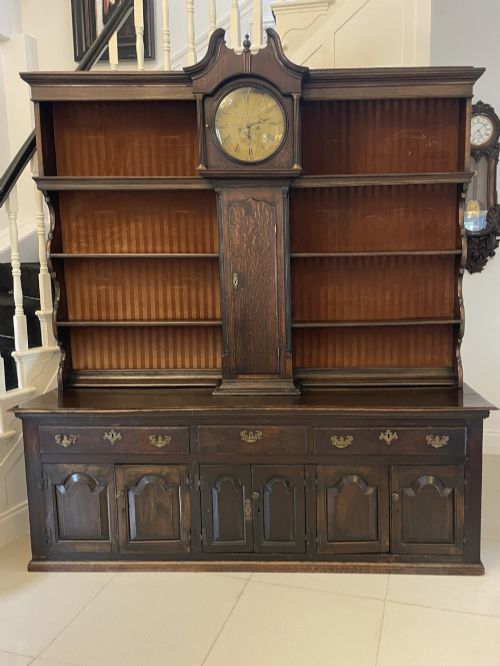
Formats range from monumental proportions with longcase clocks integrated to modest cottage dresser bases designed for daily farmhouse use. Regional variations span West Country, Welsh, and Shropshire traditions, each utilising local timber stocks.
Materials and Construction
Makers relied principally on solid oak and pine, supplemented by sycamore, brass hardware, and iron elements for hinges and pulls. Timber was selected locally, meaning Welsh and English provincial pieces display distinct grain patterns and regional logging habits.
Construction techniques combine pegged mortise and tenon joints with hand-planed panels, dovetail drawers, and applied mouldings. Surfaces frequently retain original painted finishes, wax layers, or accumulated patinas built up over centuries of domestic service.
Listings feature oak, pine, and painted timber surfaces spanning the eighteenth and nineteenth centuries.
Distinctions in Quality
Quality in a georgian country kitchen dresser rests upon the integrity of the timber selection and the retention of original surface patination. Pieces that maintain their unstripped pine, original painted skins, or rich oak surfaces hold greater visual depth than those excessively sanded.
Structural harmony between the base and the upper plate rack dictates the architectural success of the composition. Superior examples display restrained regional detailing, such as inlaid crossbanding or well-proportioned breakfront drawer layouts, executed by skilled vernacular cabinetmakers.
The Georgian Country Kitchen Dresser Glossary
- Potboard
- A low slatted shelf beneath a dresser base traditionally used for storing pots and pans. This platform sits just above the floor on plain or shaped feet.
- Delft rack
- An open wooden shelving superstructure mounted above a dresser base to display ceramic plates and platters. The shelves often incorporate plate grooves and small hooks.
- Bread and cheese cupboard
- A regional vernacular form featuring pierced or perforated panels for ventilation, designed to store perishable foodstuff safely. These are particularly associated with Welsh workshops.
- Breakfront
- A cabinet configuration where the central section projects forward from the flanking outer wings. This arrangement creates subtle shadow lines and varied drawer depths.
Georgian Country Kitchen Dresser: Frequently Asked Questions
Are dresser racks original to the bases?
Plate racks and dresser bases were sometimes separated or paired together over long periods of domestic use. Examining timber species, wear patterns, and mounting points helps determine if the components share a common history.
Many surviving pieces retain their matching upper and lower sections from provincial workshops.
How do I care for waxed oak furniture?
Waxed oak surfaces benefit from regular dusting with a soft cloth and occasional applications of traditional beeswax to nourish the timber. Avoid placing these pieces near direct heat sources or moisture.
Gentle maintenance preserves the accumulated patina and protects the historic finish from drying out.
What distinguishes a Welsh dresser?
Welsh dressers often incorporate distinct regional cabinetmaking traits, such as specific pediment profiles, local timber choices like Snowdonia oak, or specialised storage configurations like bread and cheese cupboards.
These characteristics reflect the strong vernacular traditions found across Welsh rural communities.
Can I paint a bare pine dresser?
Historic pine and timber dressers frequently alternate between unpainted waxed surfaces and layers of painted skin depending on generational preferences. Applying a breathable paint finish aligns with long-standing domestic traditions.
Evaluating the existing surface state guides whether to preserve or adapt the exterior.