



Georgian Corner Armchair
A georgian corner armchair is a sturdy, enveloping seat designed to tuck neatly into a room angle.
Georgian Corner Armchair
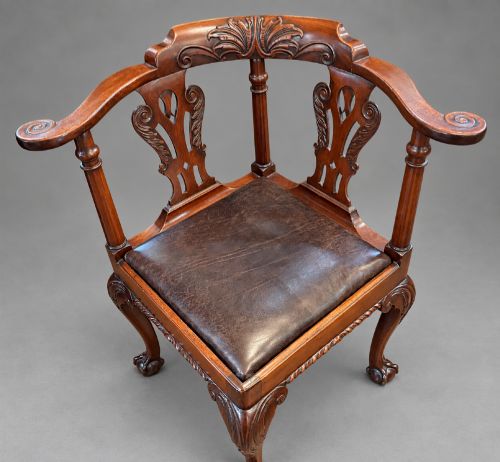
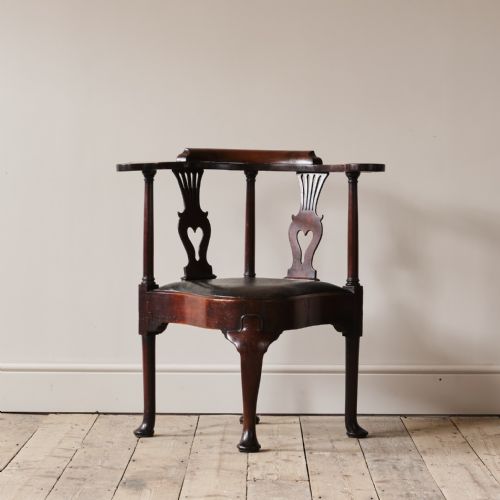
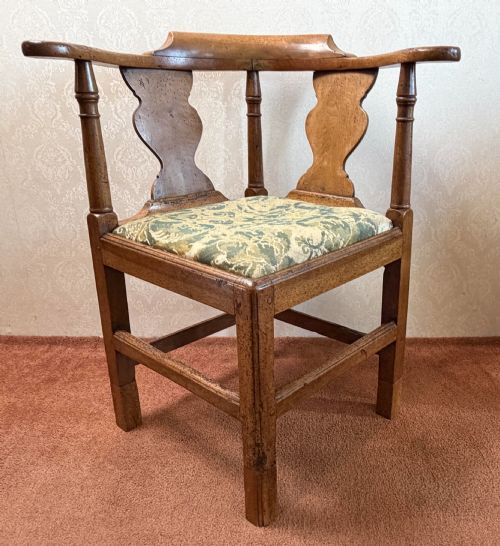
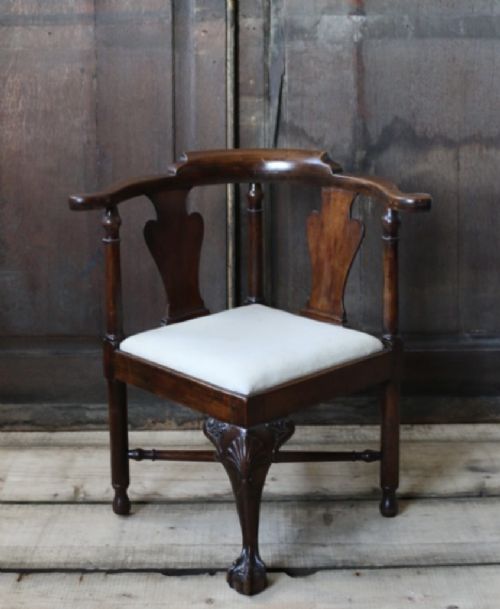
The georgian corner armchair occupies a distinct place in period seating, engineered specifically to fit room intersections rather than flat walls. These chairs often serve double duty as desk or reading seats, offering a wrapped backrest supported by turned columns and a central splat.
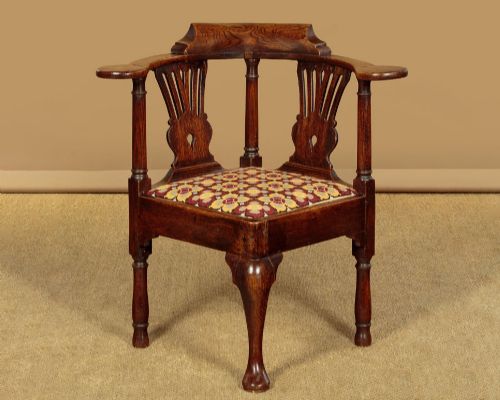
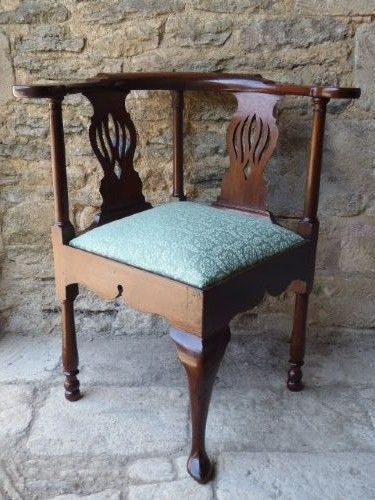
Most examples seen here date from the eighteenth century, spanning periods from Queen Anne through George III, though later Edwardian revivals also appear. Forms range from urbane mahogany parlour pieces to robust country styles in oak, elm, and fruitwood.
Regional variations emerge clearly across the selection, including Irish desks seats and North Country vernacular builds. Buyers frequently encounter rush seats or drop-in pads covered in fabric, leather, or tapestry.
Materials and construction
Cabinetmakers built these frames primarily using dense hardwoods like mahogany and walnut for formal urban commissions, while rural workshops relied on native oak, elm, and fruitwood. Timber selection dictated the sharpness of carved details and the overall weight of the frame.
Joinery involved complex compound angles to unite the diagonal leg and the wrapping arm bow securely. Many seating decks utilised drop-in frames or woven rush to support squab cushions and upholstery.
Georgian Corner Armchair Retail Price Guide 2026
Typical asking prices for georgian corner armchair among the pieces listed under this phrase on Sellingantiques today, from the lower quarter to the upper quarter. They describe what is for sale here now, not the wider market.
Listings feature eighteenth-century pieces alongside Edwardian revivals, utilising mahogany, walnut, oak, elm, and fruitwood.
Assessing quality and proportion
Quality rests heavily on the handling of the wood and the integrity of the structural joints where the arms meet the back rail. Finer pieces maintain crisp carving on the splats and graceful curves on the sweeping top rails.
Proportion distinguishes exceptional pieces from standard provincial work, particularly in how the central back leg aligns with the opposing front foot. Vernacular versions in elm or oak prioritise rustic charm and heavy timbers over refined carving.
The Georgian Corner Armchair Glossary
- Splat
- The vertical central strip of wood rising from the seat to the back rail. It often displays vase or interlaced contours in formal eighteenth-century designs.
- Squab seat
- A loose removable cushion placed over the wooden or rush base of the chair. It provides comfort and allows for periodic reupholstery.
- Rush seat
- A seating surface woven from dried marsh grasses or sedge. This traditional technique appears frequently on country vernacular examples.
- Corner chair
- A seating form featuring a diagonal front leg and a semicircular arm rail supported by three or four additional legs.
- Elm
- A tough, interlocking timber commonly used by country makers for regional chairs. Its resilient grain resists splitting under heavy use.
Georgian Corner Armchair: Frequently Asked Questions
What is a georgian corner armchair used for?
These chairs were historically designed to sit snugly in room corners or serve as comfortable desk and reading seats. Their enclosed backs provided draught protection in smaller spaces.
Today they function effectively as accent seating in hallways, studies, or bedrooms where standard rectangular chairs might obstruct pathways.
How do I identify an 18th century piece?
Eighteenth-century examples display hand-cut joinery, patinated timber surfaces, and specific stylistic traits associated with reigns like George II or George III. Construction details often reveal early fastening methods and tool marks.
Later Edwardian revivals tend to show machine-cut precision and cleaner timber without centuries of accumulated handling.
Are these chairs comfortable to sit in?
Comfort depends entirely on the seat height and the presence of a supportive squab cushion or upholstered pad. Many original designs sit lower than modern dining chairs.
Adding a well-fitted textile or leather cushion transforms the rigid wooden base into a surprisingly cosy reading spot.
How do city styles differ from country chairs?
Urban pieces utilise imported mahogany or rich walnut, often featuring carved cabriole legs and pierced splats. They reflect fashionable metropolitan tastes of the period.
Country versions favour native timbers like oak, elm, and fruitwood, relying on plain turned spindles and sturdy rush seats for practical durability.