

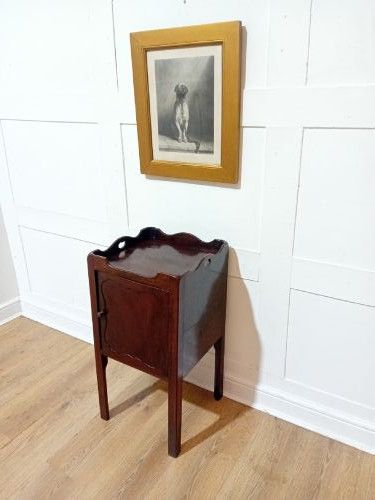
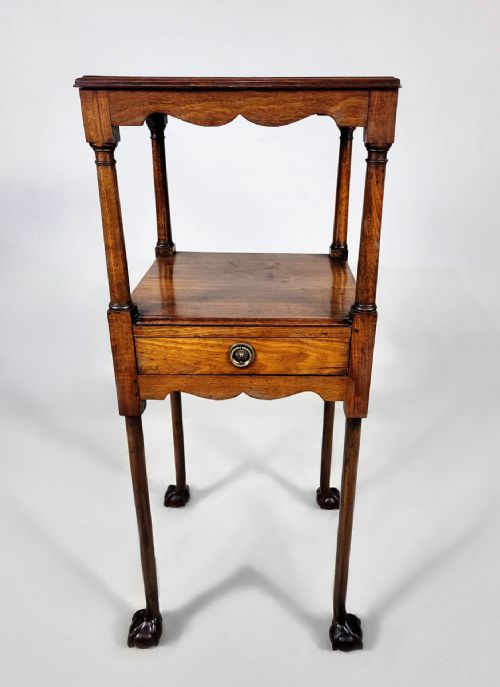
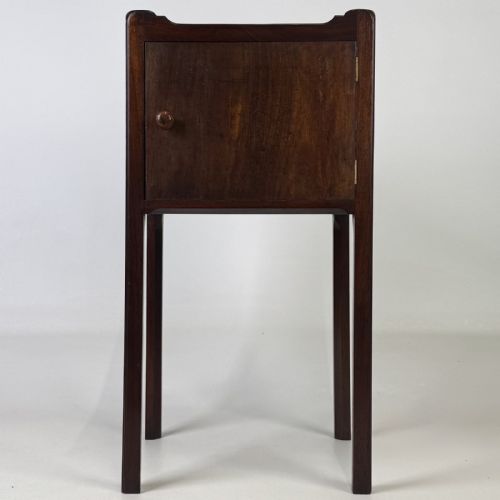
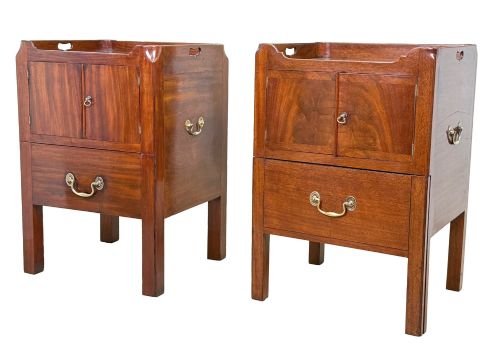
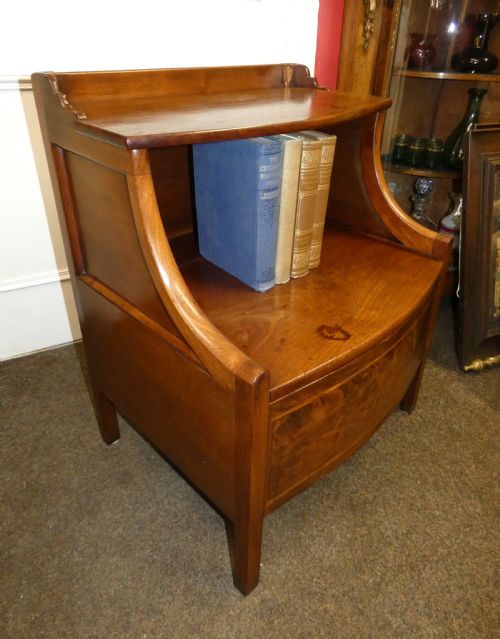
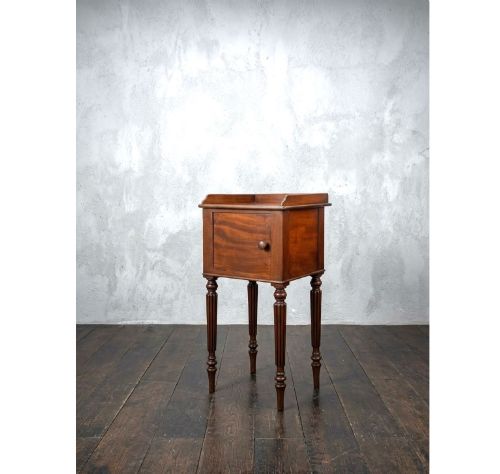
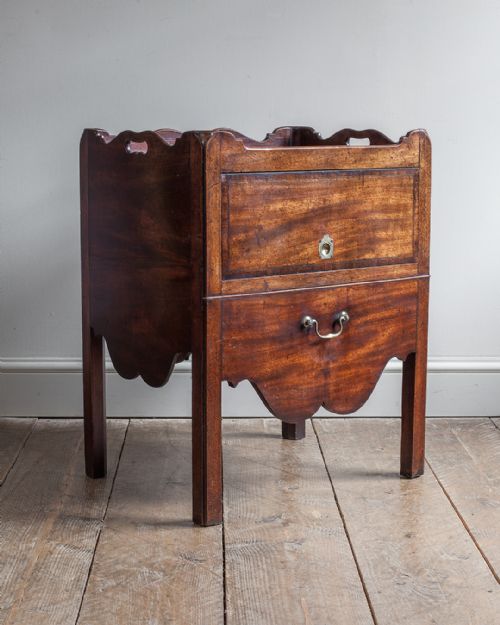
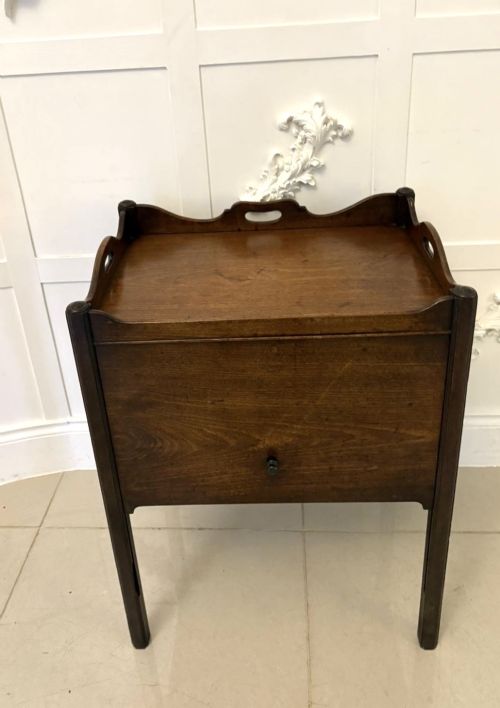
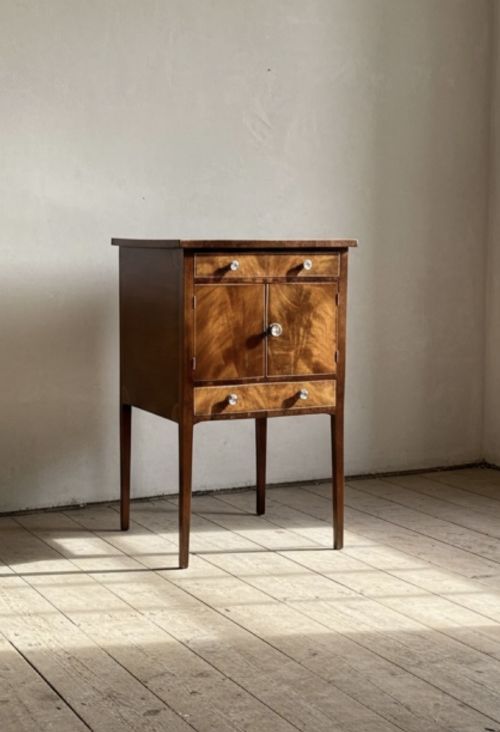

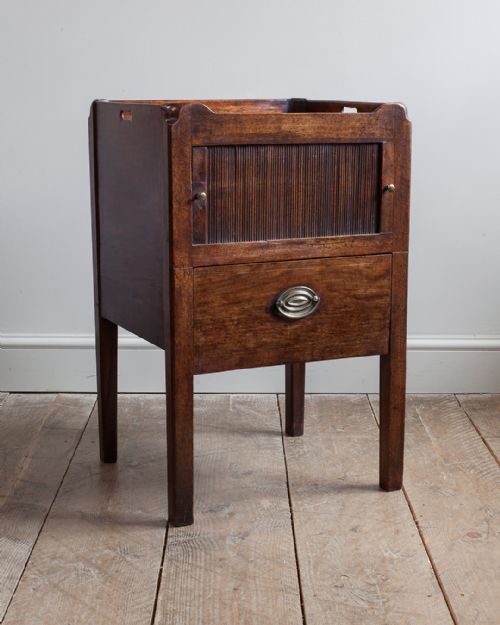
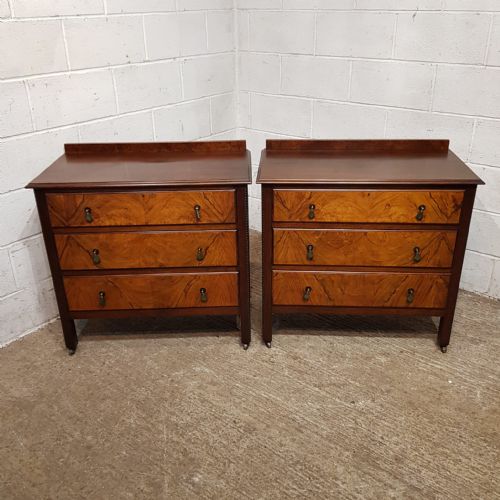
Georgian Commode Nightstand
These georgian commode nightstand pieces offer practical bedside storage dressed in the rich mahogany and walnut of the eighteenth and nineteenth centuries.
Georgian Commode Nightstand
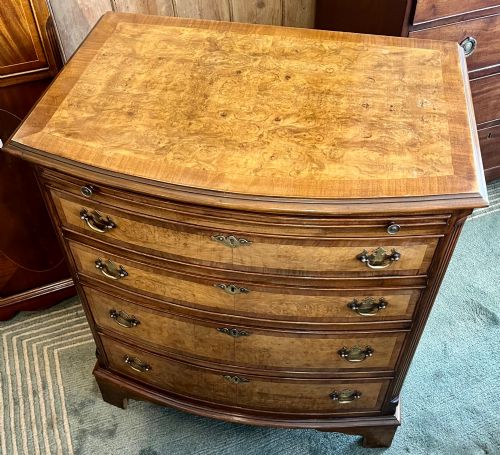
When searching for a georgian commode nightstand, a buyer encounters a focused variety of small domestic tables, cupboards, and chests designed for the bedroom. The listings on this page span the Georgian, Regency, and Edwardian eras, reaching into later twentieth-century revivals.
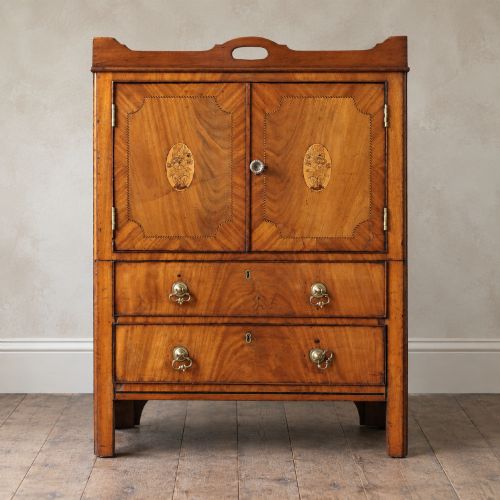
The most common forms are bedside cupboards, tray top commodes, and nightstands. Cabinetmakers built these pieces to house chamber pots or to serve as compact bedside tables, using rich timbers suited to upper-class chambers.
Origins stretch from eighteenth-century workshops through nineteenth-century iterations to later revival pieces from the nineteen-twenties and thirties. Oak, elm, and simulated painted wood appear alongside the primary mahogany and walnut stock.
How they were made
Cabinetmakers relied heavily on solid mahogany and walnut, frequently selecting flame mahogany veneer and burr walnut for decorative surfaces. Boxwood provided crisp inlay work, whilst brass fixtures added functional contrast to doors and drawers.
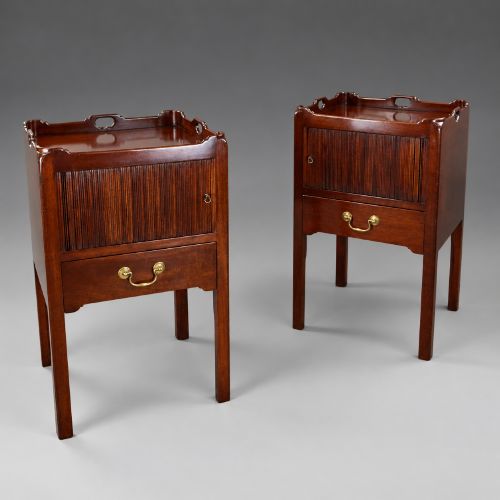
Construction techniques balanced utility with aesthetic refinement, utilising tray tops to contain items on the surface and tambour fronts to conceal interior shelving or storage. Close stools and pot cupboards were constructed with enclosed lower sections to fulfil their original sanitary purpose discreetly.
Georgian Commode Nightstand Retail Price Guide 2026
Typical asking prices for georgian commode nightstand among the pieces listed under this phrase on Sellingantiques today, from the lower quarter to the upper quarter. They describe what is for sale here now, not the wider market.
Listings feature mahogany, walnut, oak, and elm, with flame mahogany veneer and burr walnut adding decorative grain patterns across multiple centuries.
What varies in quality
The choice of timber underpins the distinction between standard examples and superior pieces, with figured flame mahogany veneer and burr walnut marking out finer commissions. Subtle details such as boxwood stringing and well-executed tambour mechanisms indicate skilled workshop production.
Proportion and structural integrity define the upper tier of these bedroom furnishings. Pieces maintaining original brass hardware and clean, unwarped tray tops reflect careful historic use and superior original joinery.
The Georgian Commode Nightstand Glossary
- Commode
- A small cabinet or chest of drawers designed for the bedroom, often housing a concealed chamber pot in earlier periods. These items evolved into general bedside storage units by the nineteenth century.
- Pot Cupboard
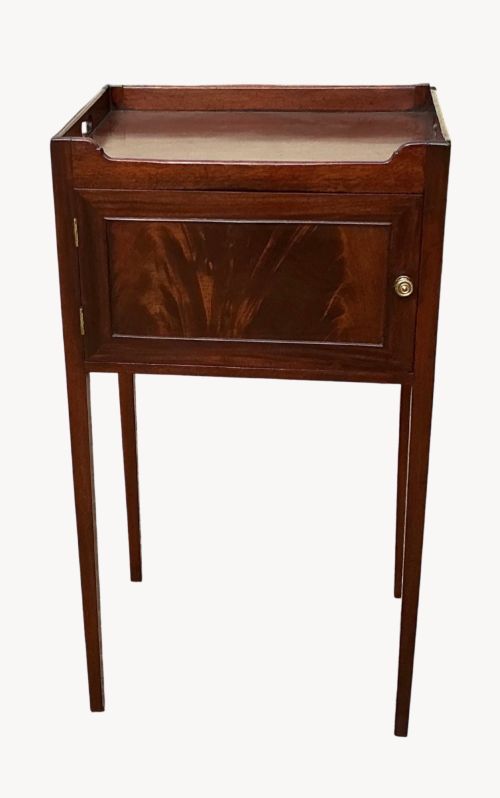
- A compact bedside cabinet with a door enclosing a space originally intended for a chamber pot. They frequently feature tray tops to prevent items from rolling off the edges.
- Tambour
- A flexible sliding shutter formed from narrow vertical strips of wood glued to canvas, allowing smooth closure of curved cabinet fronts. This technique required precise carpentry.
- Tray Top
- A raised gallery moulding around the perimeter of a tabletop to secure objects placed upon it. It is a defining feature of many eighteenth-century bedside commodes.
- Close Stool
- An enclosed piece of furniture designed to conceal a chamber pot, often disguised as a small chest of drawers or a bedside cabinet. Elm and oak were frequently utilised for these utilitarian forms.
Georgian Commode Nightstand: Frequently Asked Questions
What is a georgian commode nightstand used for?
These pieces served primarily as bedside storage in period bedrooms, often concealing a chamber pot behind a cabinet door or within a drawer structure. Today they function perfectly as compact lamp tables or bedside tables.
Their enclosed compartments and tray tops make them practical for keeping small personal items out of sight while providing a stable surface for lighting.
How do I identify an 18th-century piece?
Eighteenth-century examples typically feature solid mahogany or walnut construction, hand-cut dovetails on the drawer sides, and period-appropriate hardware such as brass pull handles. The timber patination often shows a deep, warm gloss acquired through generations of care.
One should examine the secondary woods inside the carcass and drawers, as regional workshops utilised local timbers that help date the manufacturing period.
What is a tambour front?
A tambour front consists of narrow vertical strips of wood attached to a flexible canvas backing, enabling the door to slide smoothly around a curved track. This clever mechanism kept bedside contents neatly concealed without requiring swinging doors.
Cabinetmakers utilised this technique on select George III tray top commodes to combine secure storage with refined architectural lines.
Are revival pieces common?
Revival items from the early twentieth century, including nineteen-twenties and nineteen-thirties Georgian style furniture, appear frequently alongside genuine eighteenth and nineteenth-century stock. These later pieces adopted traditional forms and mahogany or walnut veneers.
They offer the aesthetic appeal of earlier designs while reflecting the manufacturing standards and domestic requirements of the interwar period.