


Georgian Coffer Bach
These Georgian coffer bach pieces are miniature Welsh storage chests crafted for domestic use, prized for their compact scale and regional character.
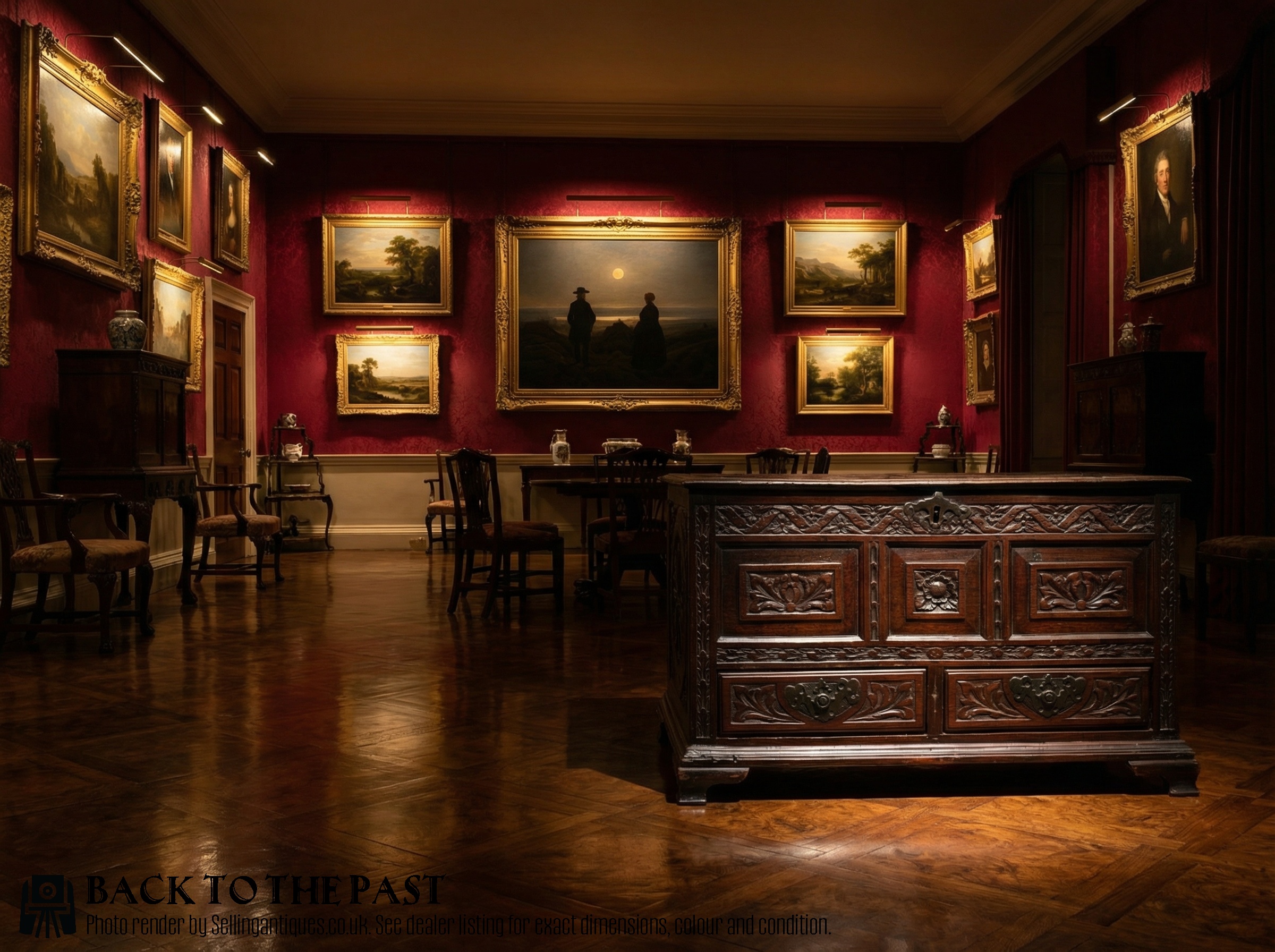
Georgian Coffer Bach
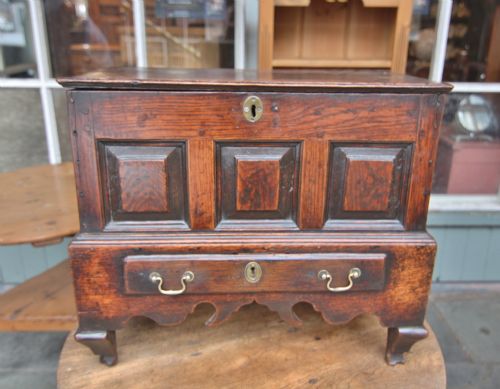
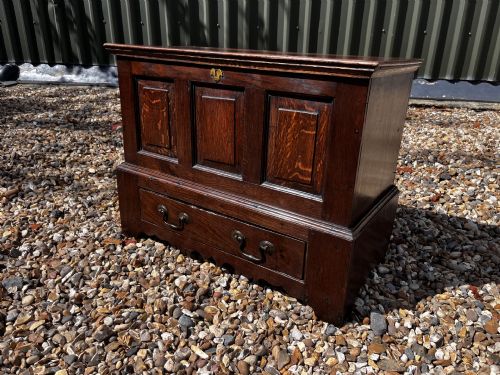
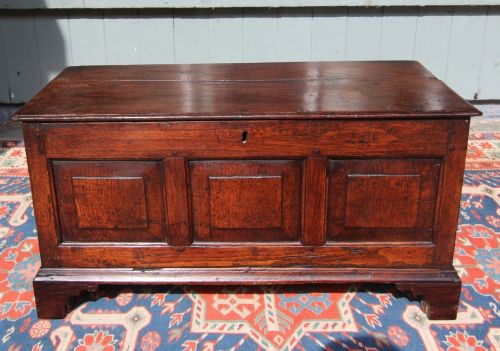
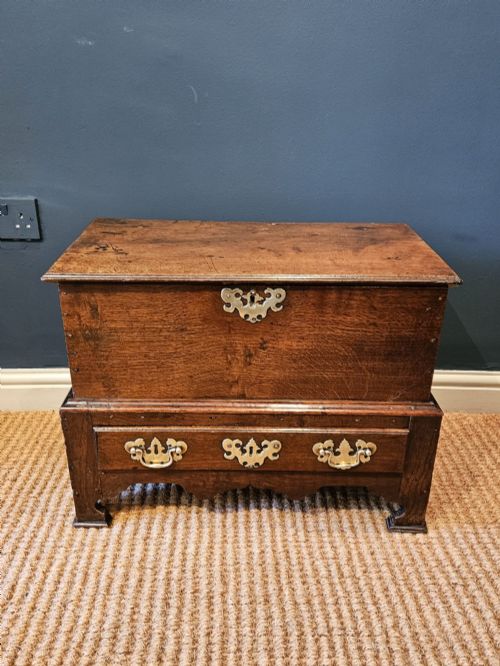
A georgian coffer bach is a small storage chest or miniature chest originating from Wales during the eighteenth century. These pieces combine the proportions of a standard blanket chest with a diminutive footprint, often incorporating small drawers beneath the main lidded compartment.
The versions most frequently met on this page date from the eighteenth century, particularly the middle decades around seventeen fifty to seventeen eighty. They appear in Welsh vernacular and regional Georgian styles, reflecting local cabinet-making traditions.
Makers designed these miniature chests for domestic settings as valuable receptacles for documents, linen, or personal treasures. Their compact scale makes them suitable for placement on tables or surfaces within modern interiors.
Materials and construction
Makers constructed the primary carcass and panels almost entirely from solid oak, utilising regional timbers selected for durability and strength. Cabinet-makers incorporated fruitwood and timber inlay for decorative contrast on selected panels.
Hardware elements such as hinges, escutcheons, and drawer pulls rely on cast brass and forged iron. Turned feet support the base structures of these miniature chests, elevating the oak bodies off the floor.
Makers occasionally scaled down every architectural moulding so faithfully that the tiny chests look like dollhouse furniture built by master joiners.
Judging quality in miniature chests
The standard of a georgian coffer bach rests upon the crispness of its vernacular proportions and the integrity of its timber. Superior examples display balanced joinery, undisturbed patination on the oak surfaces, and original brass or iron hardware.
Subtleties in regional decoration distinguish finer pieces, such as deliberate timber inlay or fruitwood detailing on the front panels. The presence of untouched turned feet and well-fitted interior till compartments elevate the standing of an individual chest.
The Georgian Coffer Bach Glossary
- Coffer bach
- A Welsh term translating to little coffer, denoting a miniature storage chest or trunk. These pieces typically feature a hinged lid above a small chest body.
- Vernacular style
- Furniture design rooted in local traditions and materials rather than metropolitan fashions. Welsh country pieces often display distinct regional joinery methods.
- Timber inlay
- The technique of inserting contrasting woods into recessed portions of a primary oak surface. Makers utilised fruitwood inlay to create geometric or floral patterns.
- Turned feet
- Support elements shaped on a lathe to form circular or bulbous profiles. Early eighteenth-century examples frequently stand upon distinct turned feet.
- Till
- A small internal compartment fitted inside a chest for storing coins or small valuables. This enclosed section sits beneath the main lid.
Georgian Coffer Bach: Frequently Asked Questions
What is a coffer bach used for?
Historically, households utilised these miniature chests to store important documents, family Bibles, lace, or personal valuables. Their small scale allowed them to sit securely upon larger tables or dressers.
Today, owners employ them as decorative storage pieces on sideboards or desks within living spaces.
How old are these small chests?
The pieces available originate predominantly from the eighteenth century, spanning the Georgian period from roughly seventeen twenty to seventeen eighty.
Regional cabinet-makers in Wales produced them by hand using traditional oak and fruitwood materials.
Where should I place a coffer bach at home?
Because of their compact proportions, these chests sit well on sturdy tables, low chests of drawers, or dedicated display surfaces. They require minimal floor space while offering functional lidded storage.
Keep them away from direct heat sources to protect the aged oak timber.