
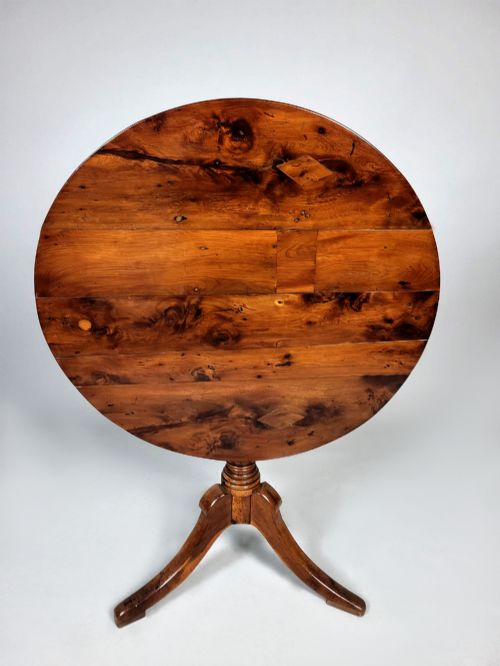
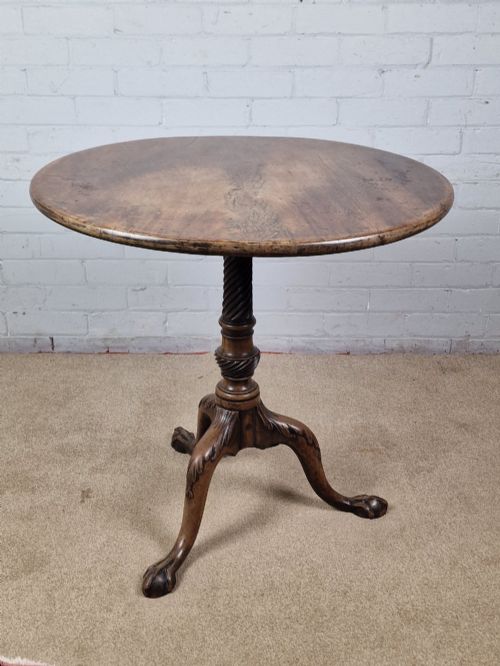
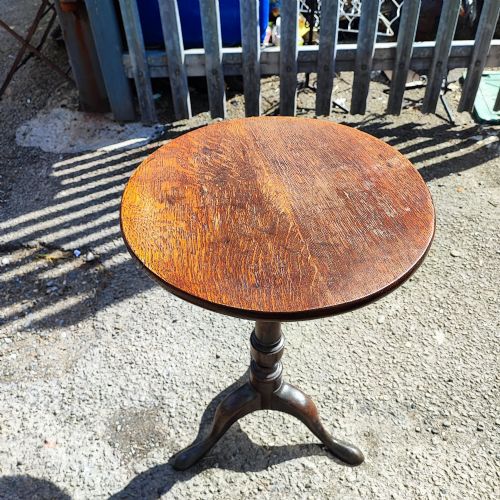
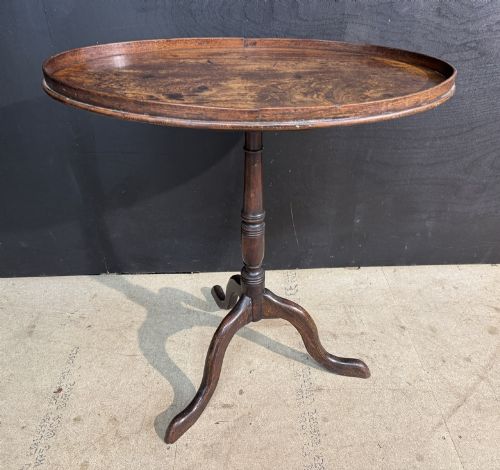
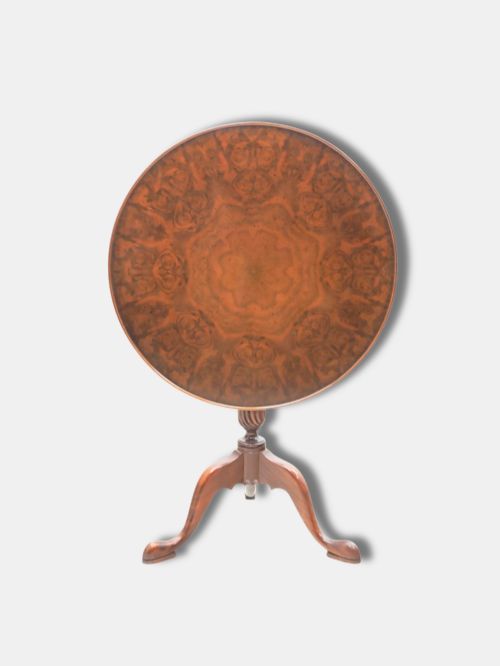
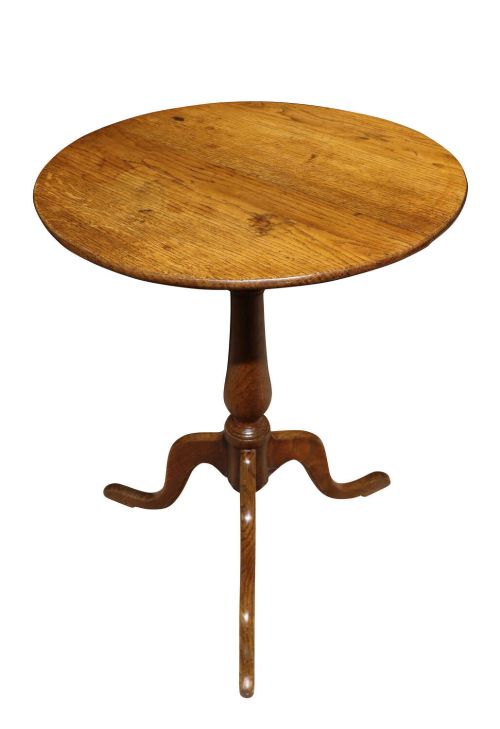
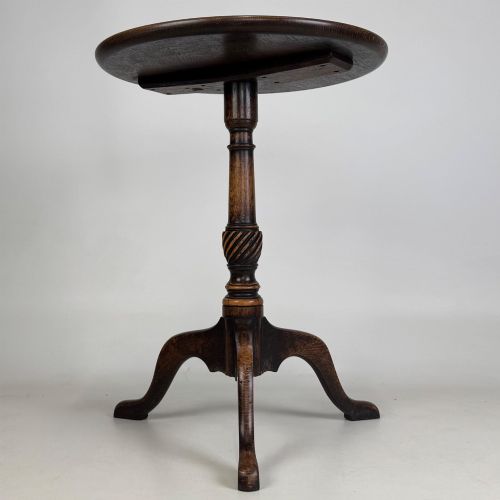
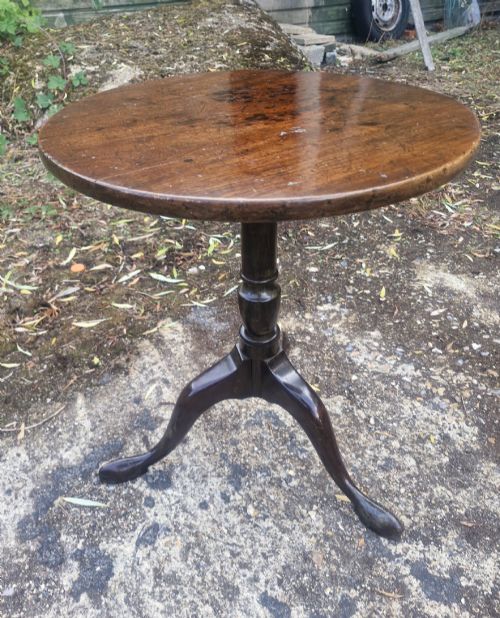
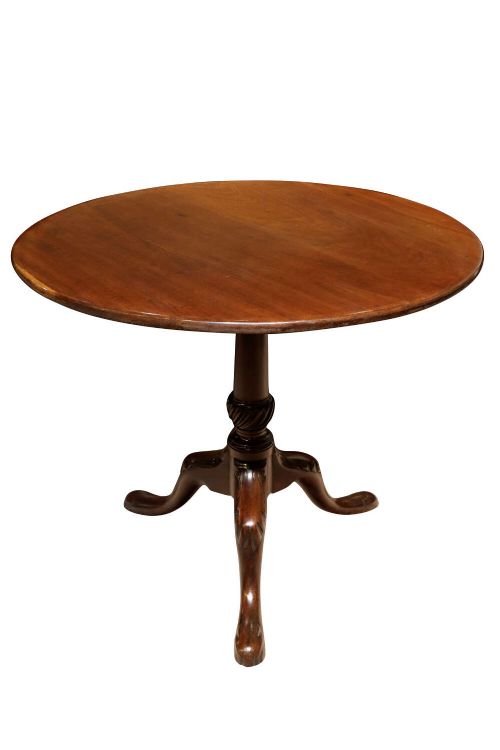
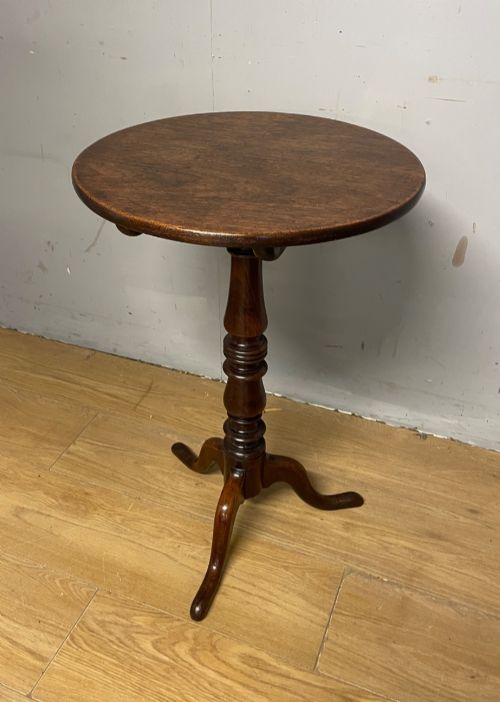
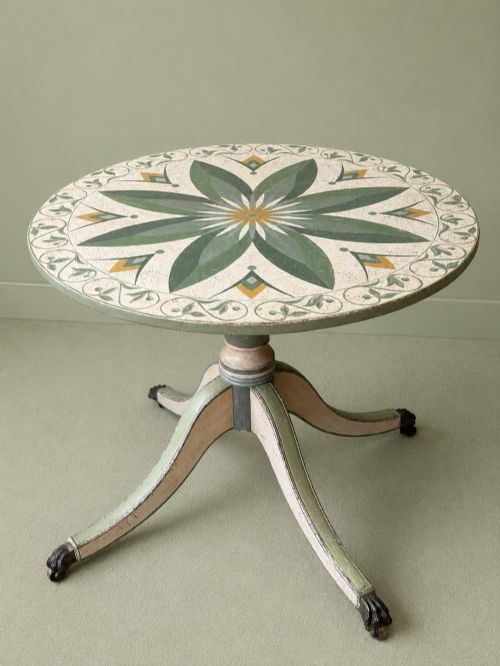
Georgian Circular Tripod Table
These items of georgian circular tripod table construction offer sturdy small-scale surfaces for tea, wine and display.
Georgian Circular Tripod Table
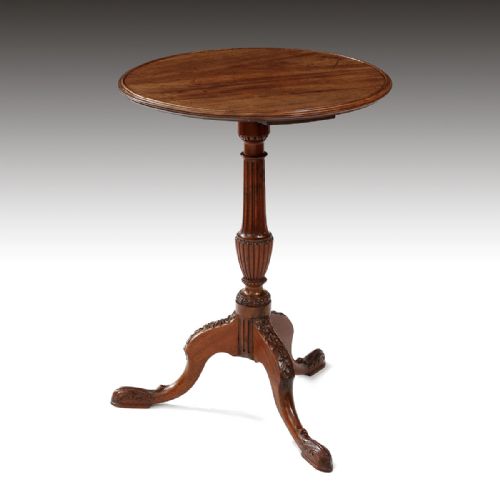
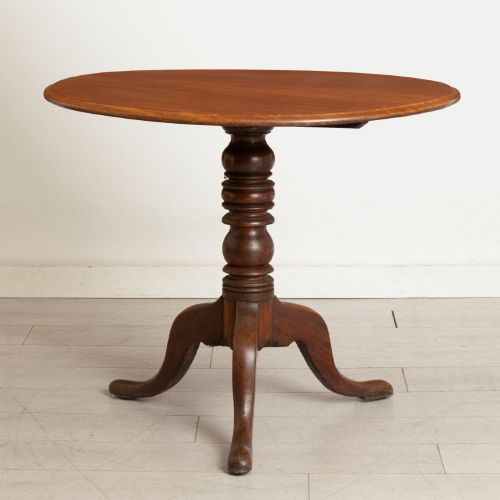
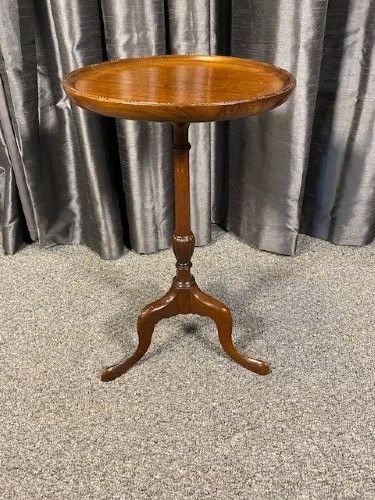
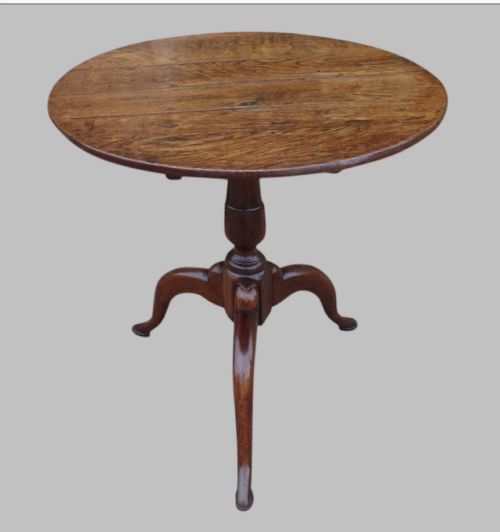
A georgian circular tripod table stands on a central pillar supported by three splayed legs, providing a compact surface that moves easily around a room. The listings reveal numerous forms dedicated to specific domestic tasks, including wine tables, tilt-top tables, tea tables, occasional tables and centre tables.
Most examples originate from the Georgian and Regency periods, utilising timbers such as mahogany, oak, walnut and rosewood. Makers produced both formal pieces with turned pedestals and simpler country furniture in elm or fruitwood.
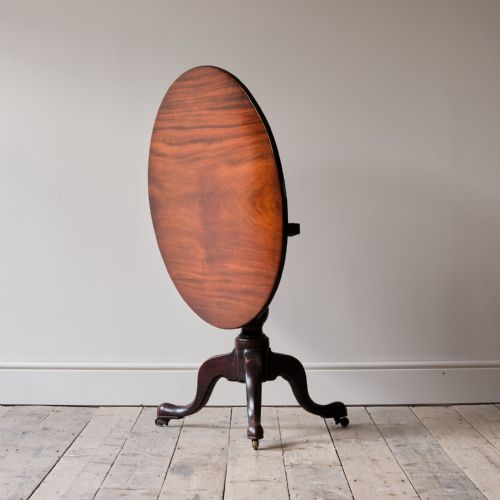
Tilt-top and snap-top variants appear frequently, allowing the round top to swivel or pivot upright when not in use for convenient storage against a wall.
Materials and Construction
Cabinetmakers constructed these pieces primarily from solid mahogany, oak and walnut, occasionally applying burr walnut veneer to the circular tops for decorative grain patterns. Timber selection dictated how well the round top resisted warping in changing household temperatures.
The characteristic three-legged base connects to the central column using traditional joinery, often reinforced beneath by solid blocks. Many tables incorporate a birdcage mechanism beneath the top, allowing the surface to both rotate and tilt on its axis.
Some tilt-top tables double as impromptu dining surfaces for solitary supper by the hearth.
Quality and Proportion
The refinement of the turning on the central pillar and the grace of the three splayed legs separate standard examples from finer ones. Superior pieces maintain balanced proportions between the diameter of the circular top and the spread of the base.
The choice of timber grain on the tabletop and the precision of the tilt-top or birdcage mechanism indicate the skill of the original workshop.
The Georgian Circular Tripod Table Glossary
- Tripod table
- A small stand supported by a central pedestal resting on three legs. This configuration prevents wobbling on uneven floors.
- Tilt-top table
- A table with a hinged top that pivots to a vertical position. This mechanism saves space when the furniture is pushed to the side.
- Birdcage
- A wooden framework beneath the tabletop that permits the surface to rotate and tilt. It connects the top to the central column.
- Wine table
- A small occasional table designed to hold bottles and glasses during evening gatherings. These pieces often feature raised edges or dished tops.
- Snap-top
- A tabletop secured to the pedestal by a spring catch. The catch locks the surface horizontal during use.
Georgian Circular Tripod Table: Frequently Asked Questions
What is a birdcage mechanism?
A birdcage is an assembly of small wooden turnings and blocks placed directly beneath the circular tabletop. It allows the surface to revolve horizontally and tilt vertically without straining the central pillar.
This clever engineering was fitted to better-quality tables during the eighteenth century.
Why do these tables tilt?
Tilting mechanisms allowed homeowners to push the tables flat against parlour walls when not hosting tea or supper. This kept valuable floor space open in smaller Georgian rooms.
Many surviving examples retain this functional movement.
How are oak and mahogany versions different?
Oak examples generally date from earlier country workshops or specific regional traditions, displaying sturdy utility and visible grain. Mahogany pieces often show finer cabinetmaking, sharper turning, and urban stylistic influences.
Both timbers provide durable surfaces for daily household use.
Where were these tables placed?
Owners positioned them beside seating for tea service, wine, or reading lamps. Their compact footprints made them easy to relocate wherever a small surface was needed.
Centre tables stood free in the room, while wine tables sat close to chairs.