


Georgian Chinoiserie Tall Clock
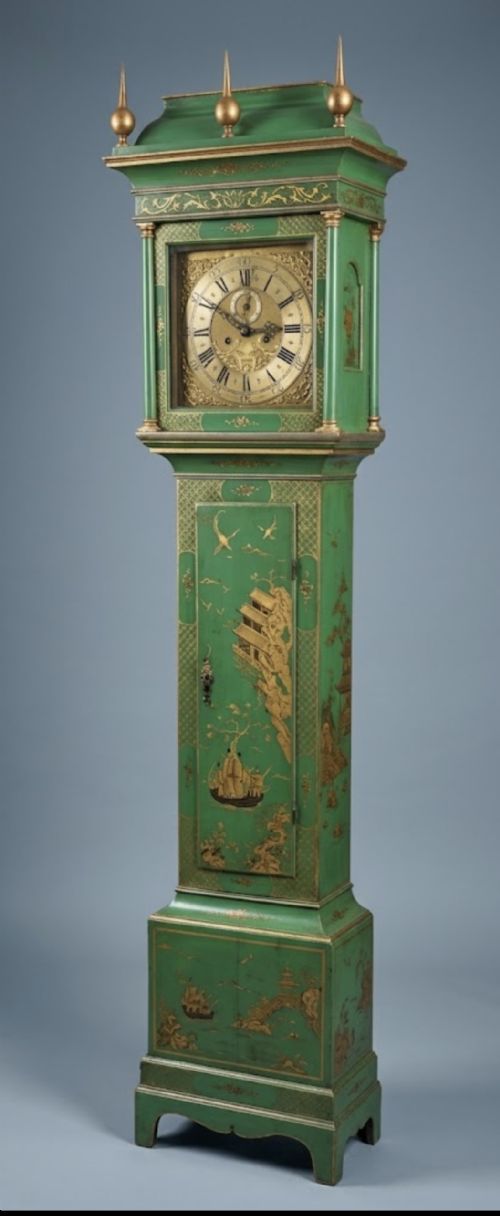
A georgian chinoiserie tall clock brings a striking palette of lacquered wood and gilt decoration into a room, offering both traditional timekeeping and intricate orientalist artistry.
Georgian Chinoiserie Tall Clock
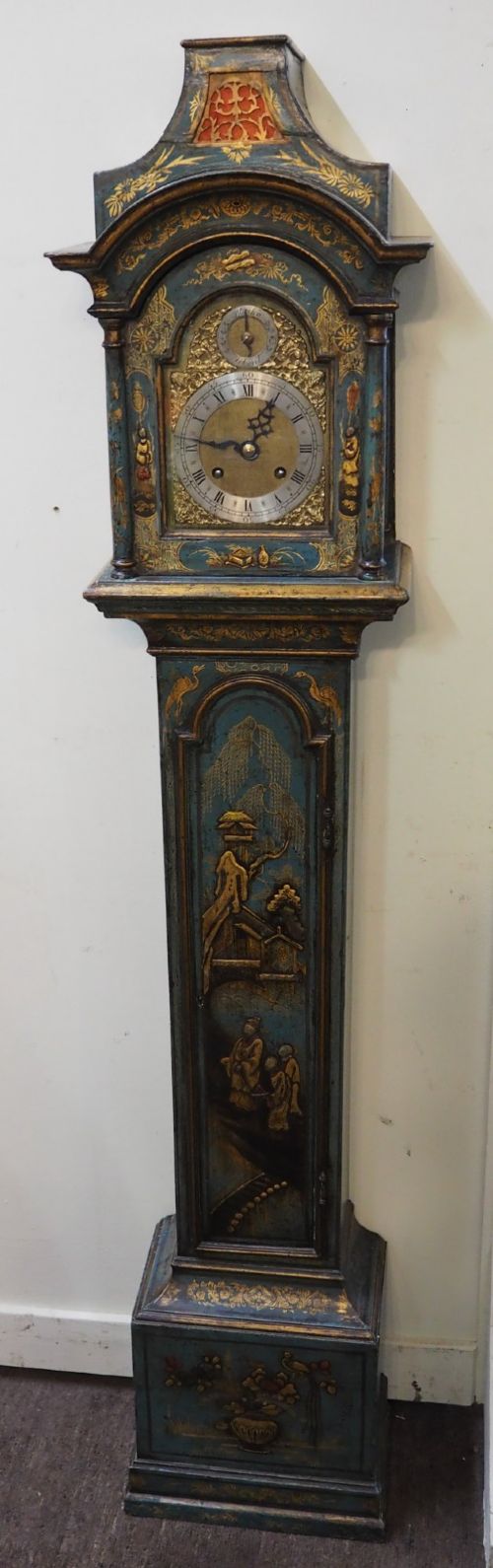
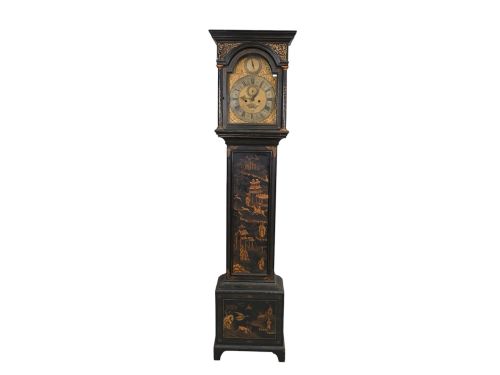
A georgian chinoiserie tall clock combines the traditional longcase clock form with decorative lacquer work, typically finished in green, blue, or gilt motifs. These tall clocks stand as substantial floor-standing timepieces, uniting the mechanical clockwork of the period with distinct decorative painting.
The versions most commonly met on this page span the Georgian era, including specific periods like George I and George III, alongside mid-eighteenth-century examples. Makers such as John Fielder of Alton, William Kipling London, and Gardner of London appear across the listings, alongside nineteenth-century pieces and later variations from 1930.
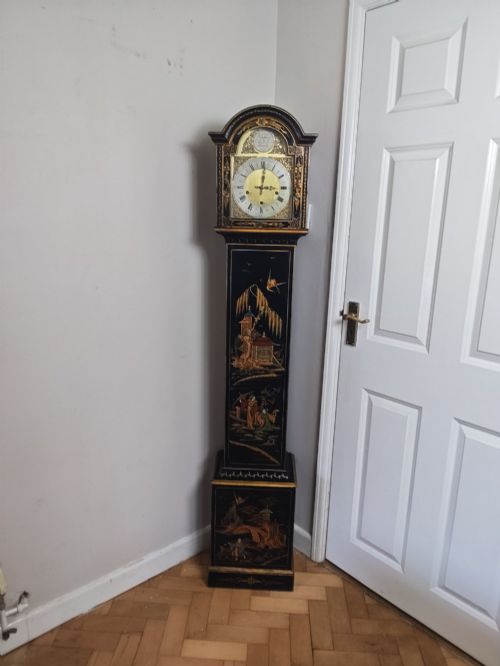
Buyers encounter longcase clocks, grandfather clocks, and smaller grandmother clocks, often housed in cases of japanned wood or lacquered wood. Many retain brass movements, while musical and automaton movements appear among the recorded long case clocks.
How they were made
The construction of a georgian chinoiserie tall clock relies on timber carcases finished with specialist lacquer and japanning techniques. Artisans applied layers of lacquer to wood surfaces, building up a deep finish that accommodated detailed painted scenes and figures.
Gilt and gold leaf work highlights the raised figures and landscapes typical of chinoiserie decoration, contrasting against green or blue background colours. Glass panels protect the dial face, while brass movements provide the internal mechanics for the clockwork.
Some clocks feature automata that set tiny painted figures into motion while the chime sounds.
What varies in quality
Quality in these clocks rests upon the preservation and execution of the lacquer and gilt decoration on the wood case. Finer examples display crisp detail in the painted orientalist scenes and well-maintained surfaces that retain their original colour and depth.
The sophistication of the internal movement also dictates the standing of a piece, with musical and automaton complications representing more complex horological work. The integration between the clockmaker's movement and the cabinetwork marks the distinction between standard production and exceptional examples.
John Fielder of Alton·William Kipling London·Gardner of London
The Georgian Chinoiserie Tall Clock Glossary
- Japanning
- European imitation of East Asian lacquerwork using resin-based paints and raised metallic decoration. This technique created the glossy painted surfaces seen on many eighteenth-century clock cases.
- Longcase clock
- A tall, weight-driven pendulum clock enclosed in a wooden case with a base and a hood. These pieces are also commonly referred to as grandfather clocks.
- Automaton
- A mechanical device designed to mimic human or animal actions, sometimes integrated into the dial of a clock. These moving elements added visual diversion to the timekeeping function.
- Gilt
- Application of gold leaf or powdered gold to a surface to give a thin coating of gold. It highlights the decorative motifs on the lacquered cases.
Georgian Chinoiserie Tall Clock: Frequently Asked Questions
Where should I place a tall clock?
These tall floor-standing clocks require a stable, level surface against a solid wall to ensure the pendulum swings correctly. Hallways, landings, and reception rooms provide suitable height and space for the proportions of a longcase.
Position the clock away from direct sunlight and heat sources to protect the delicate lacquer and gilt decoration on the wooden case over time.
How do I wind a longcase clock?
Winding involves using a specialised key to raise the weights inside the trunk of the case via the winding holes on the dial face. Care must be taken not to overwind the movement, as this can strain the internal gear train.
Consulting the specific movement type helps determine the correct winding schedule, whether the clock runs for eight days or requires more frequent attention.
What is the difference between a grandfather and grandmother clock?
Grandfather clocks refer to standard full-sized longcase clocks that typically measure over six feet in height to accommodate long pendulums and heavy weights. They form the traditional proportions most frequently associated with eighteenth-century timekeepers.
Grandmother clocks are scaled-down versions produced in smaller dimensions, offering the same general form and movement style in a more compact height suited to lower ceilings or smaller rooms.
How do I care for lacquered wood?
Maintenance of lacquered and japanned surfaces requires gentle dusting with a soft, dry cloth to prevent the accumulation of grit. Avoid using modern chemical polishes, water, or abrasive cleaners that can damage the delicate lacquer and gold leaf.
Maintaining a stable indoor room temperature and humidity level prevents the wood underneath from expanding or contracting, which preserves the integrity of the decorative finish.