
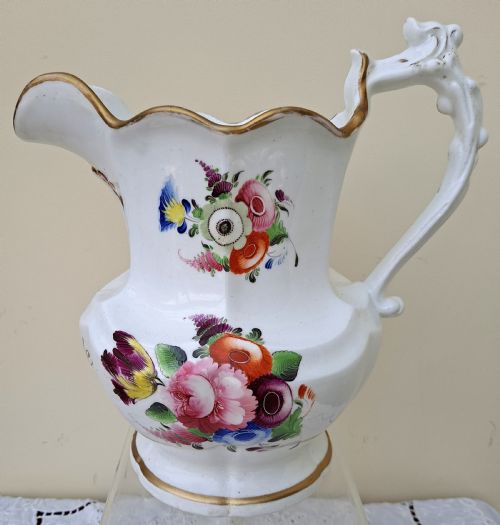
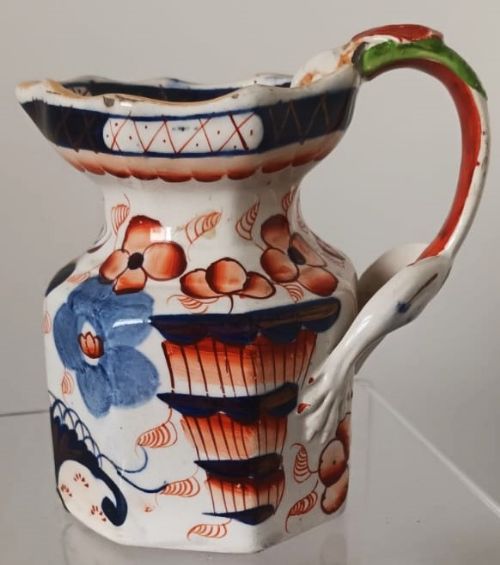
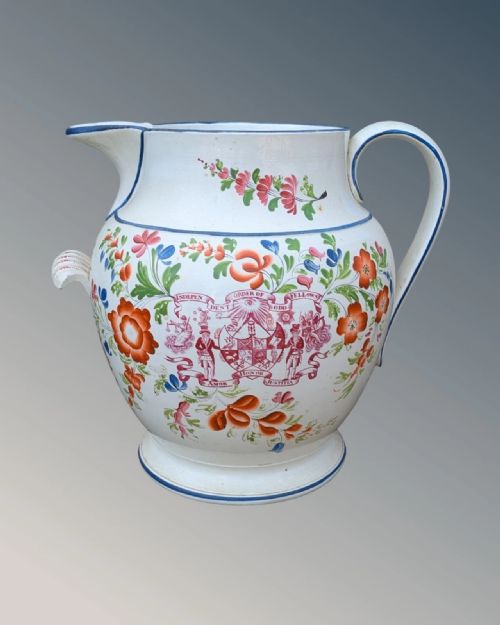


Georgian Ceramic Water Jug
A georgian ceramic water jug is a utilitarian vessel transformed by period potting traditions, prized for serving water or ale at table.
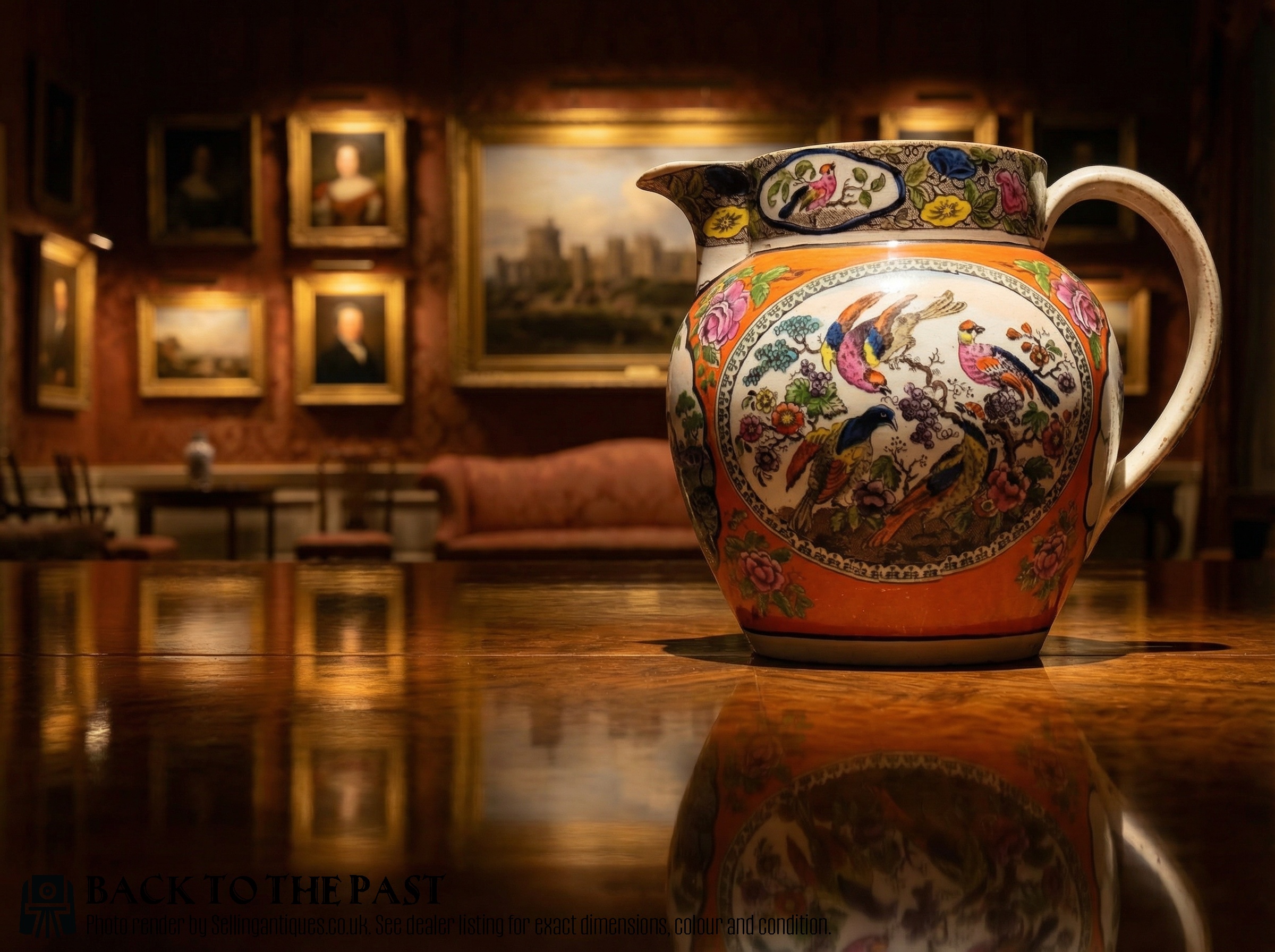
Georgian Ceramic Water Jug
A georgian ceramic water jug encompasses robust utilitarian pitchers and delicate porcelain ewers made during the eighteenth and early nineteenth centuries. Buyers frequently encounter creamware, pearlware, and earthenware iterations produced by English potteries during the Georgian and Regency periods.
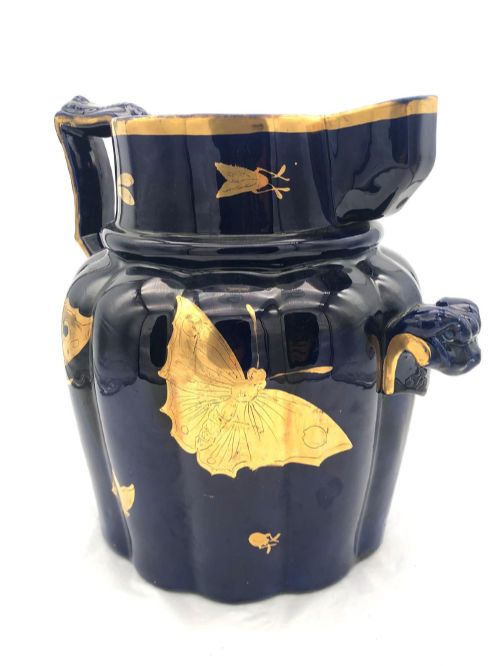
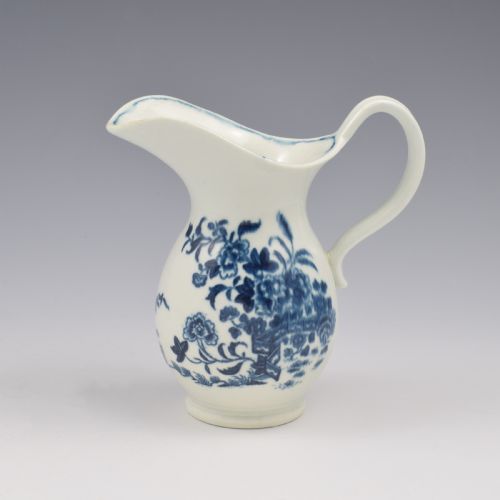
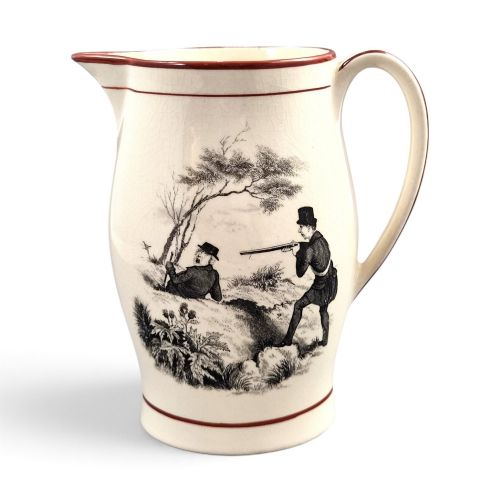
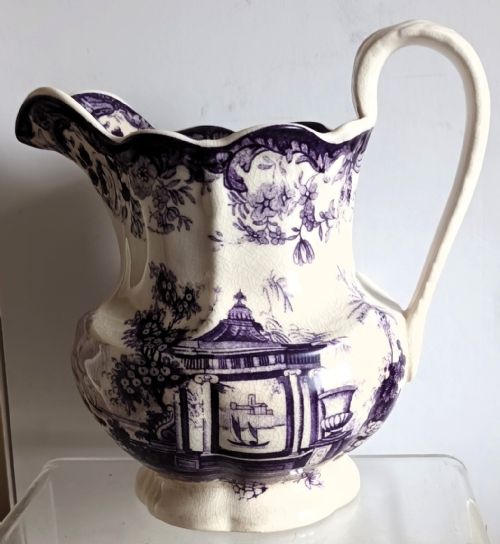
The selection ranges from large one-gallon pottery vessels intended for communal use to refined porcelain pieces painted with views or armorial crests. Many examples display moulded details such as cabbage leaf patterns or transfer-printed scenes reflecting the aesthetic tastes of the era.
Materials and production methods
Potters utilised earthenware, creamware, and pearlware bodies, often shaping them on a wheel or pressing them into moulds. Relief moulding created textural elements like mask heads and leaf motifs directly in the clay before firing.
Decoration relied on underglaze blue painting, enamel colours, gold leaf accents, and transfer-printing techniques. Lustre glazes and dark brown or yellow prints provided the rich surface finishes characteristic of the period.
Listings feature earthenware, porcelain, creamware, and pearlware, spanning the Georgian, Regency, and Victorian periods.
Assessing quality and craftsmanship
Quality rests in the crispness of the moulding and the precision of the transfer print or hand-painted details. Finer porcelain bodies and detailed armorial crests or topographical views indicate workshop production of higher ambition.
The weight, balance, and handle attachment reveal the potter's skill in handling heavy earthenware or delicate porcelain. Superior glaze application ensures an even, glossy surface without pooling or pitting.
Worcester Porcelain·Chamberlain Worcester·Caughley Coalport·Mason's
The Georgian Ceramic Water Jug Glossary
- Creamware
- A fine earthenware with a pale yellowish cream glaze developed in Staffordshire during the eighteenth century. It revolutionised domestic tableware through its light weight and clean appearance.
- Pearlware
- An earthenware body featuring a slight bluish tint in the glaze to emulate Chinese porcelain. It superseded creamware around the turn of the nineteenth century.
- Transfer-printing
- A method of applying intricate designs to ceramics by transferring engraved patterns from copper plates via paper. This technique allowed complex pictorial scenes to be produced rapidly.
- Lustre
- A metallic glaze application producing an iridescent surface sheen, often seen in pink or copper tones on nineteenth-century pieces. It reflects light to create a distinctive metallic shimmer.
- Armorial
- A design incorporating heraldic coats of arms, crests, or family badges. These custom commissions denoted high status and bespoke ownership.
Georgian Ceramic Water Jug: Frequently Asked Questions
How do I date a ceramic water jug?
Dating relies on stylistic markers, ceramic bodies, and manufacturing techniques recorded in the piece. Creamware and pearlware bodies typically point towards the late eighteenth and early nineteenth centuries.
Changes in glaze formulation, transfer-printing styles, and registration marks help narrow the timeline further. Comparing the handle shape and base construction with documented examples confirms the period.
What is the difference between earthenware and porcelain?
Earthenware is an opaque, porous ceramic fired at lower temperatures, commonly used for robust creamware and pearlware jugs. Porcelain is vitrified, denser, and often translucent, requiring higher firing temperatures.
Porcelain pieces in this category generally indicate more formal or high-status table use. Earthenware vessels frequently served larger, everyday domestic or communal functions.
Were these jugs used exclusively for water?
While termed water jugs or ewers, many of these vessels served multiple liquids at table, including ale, milk, and cider. Large one-gallon capacities suited communal gatherings and ale consumption.
Smaller porcelain examples functioned as milk jugs or decorative ewers for washing and table service. Their actual usage depended largely on the volume and room in which they were placed.
How should I display and care for a period jug?
Display these jugs on stable surfaces away from direct sunlight and sudden temperature fluctuations to protect the glaze and enamel decorations. Gentle dusting with a soft cloth maintains the surface.
Avoid immersing antique earthenware in water for prolonged periods due to the porous nature of the historic body. Hand washing with mild soap is recommended only when strictly necessary.