
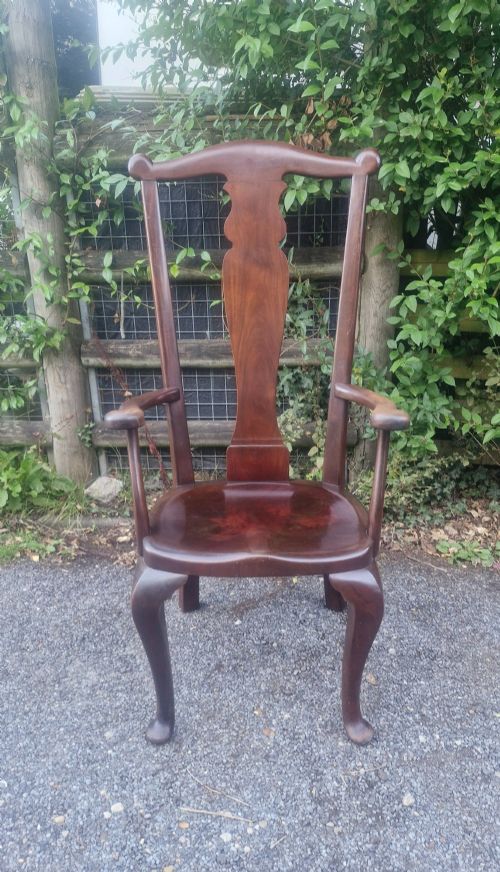
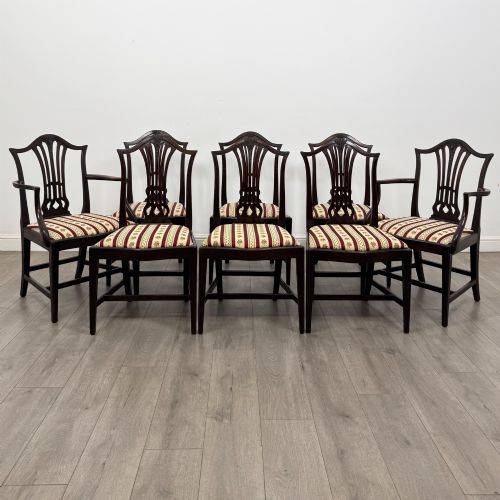
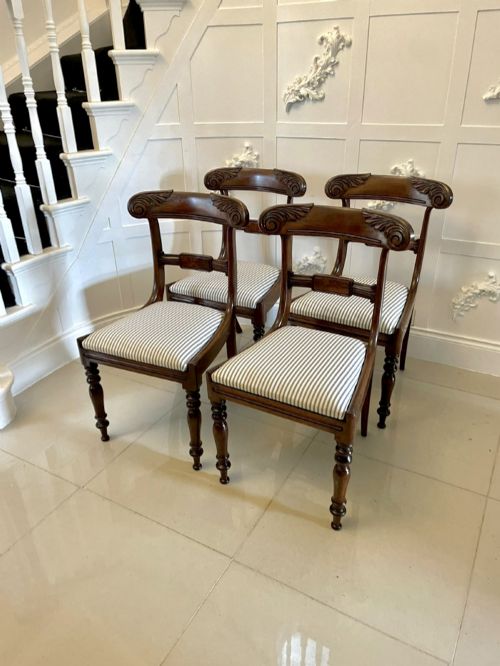
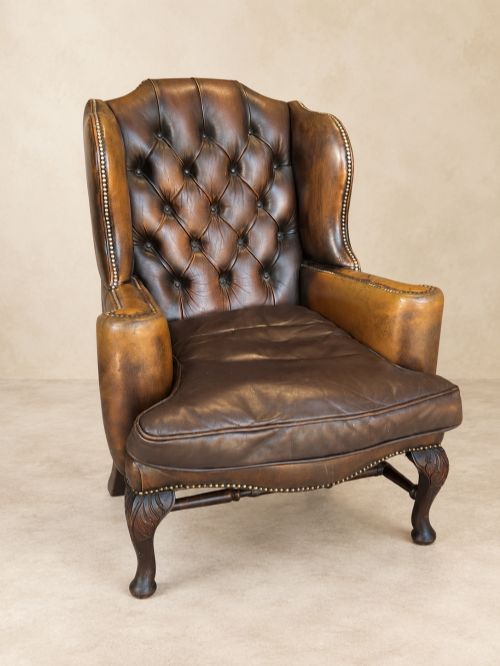


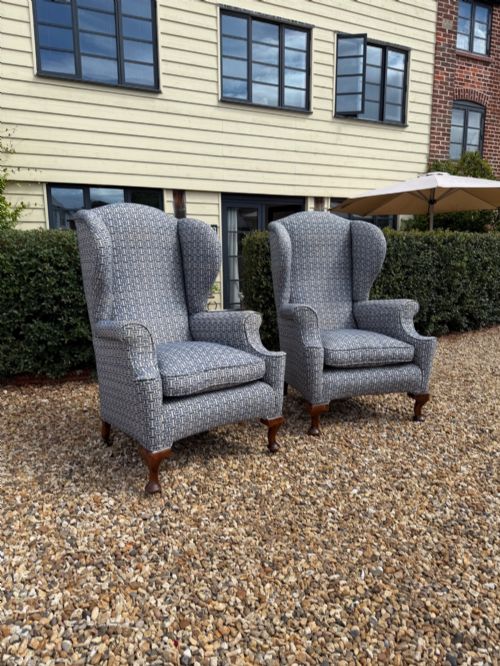
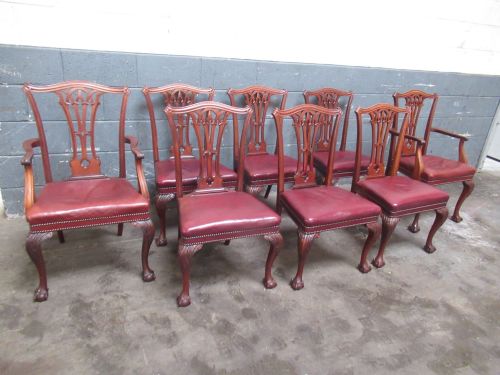
Georgian Carved Back Chairs
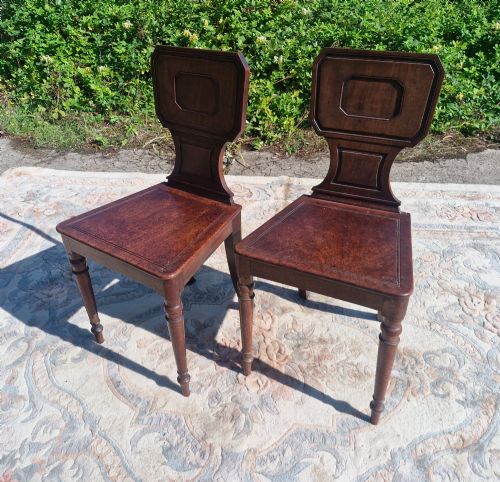
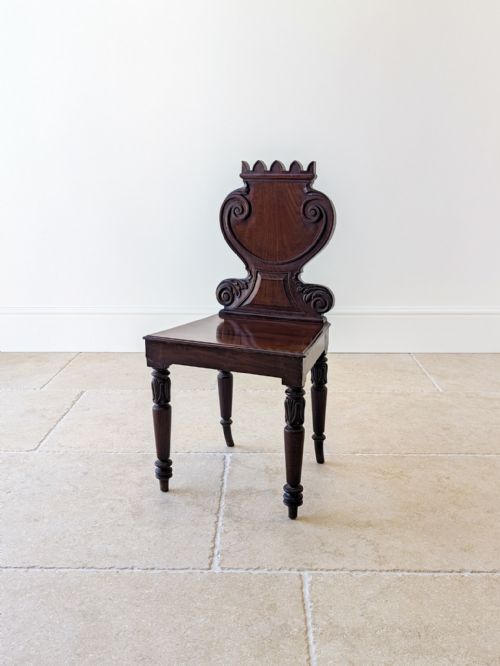
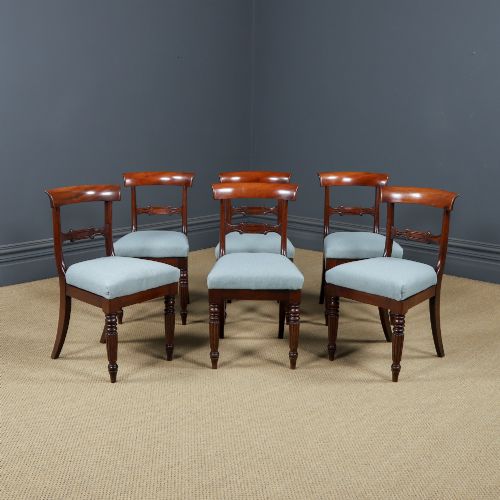
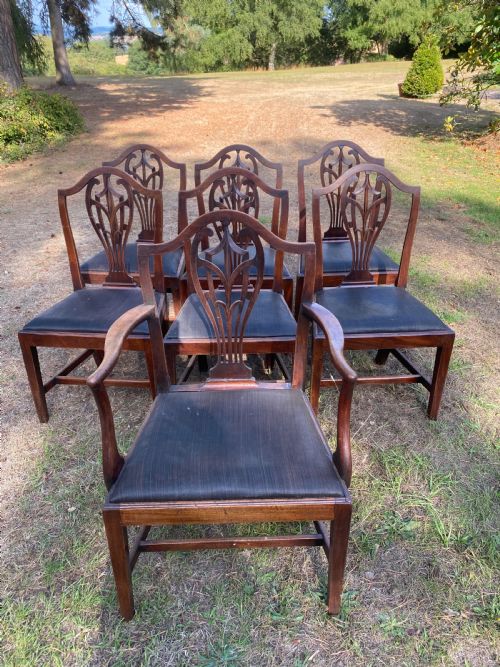
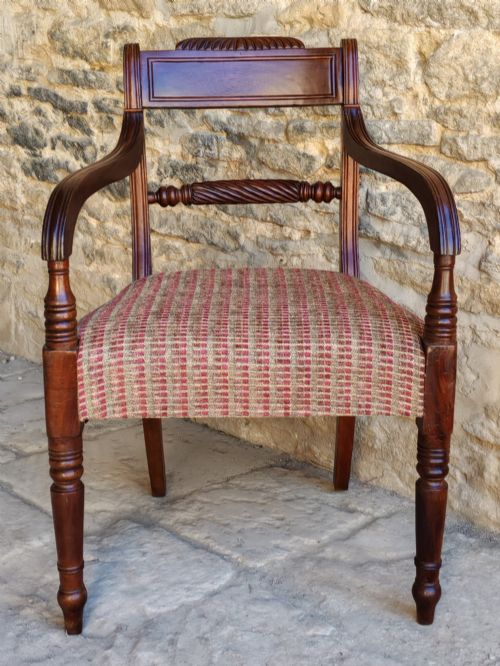
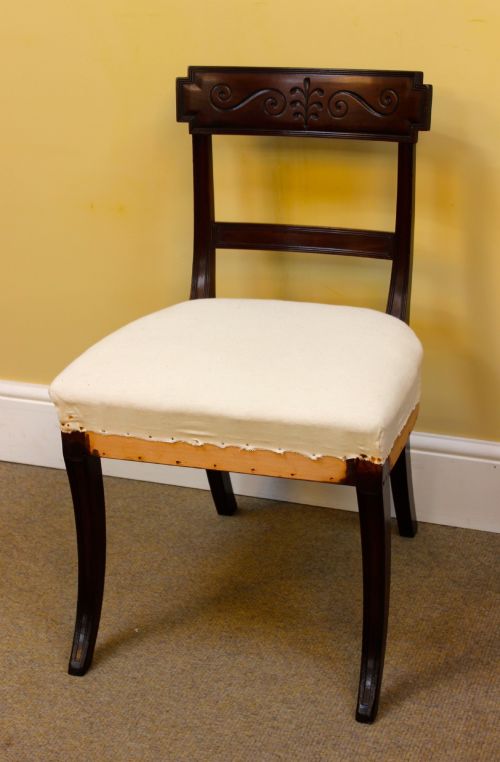
Georgian carved back chairs are seating pieces spanning dining, hall, and desk forms in mahogany and oak, chosen for structural timber quality and carved detail.
Materials and Technique
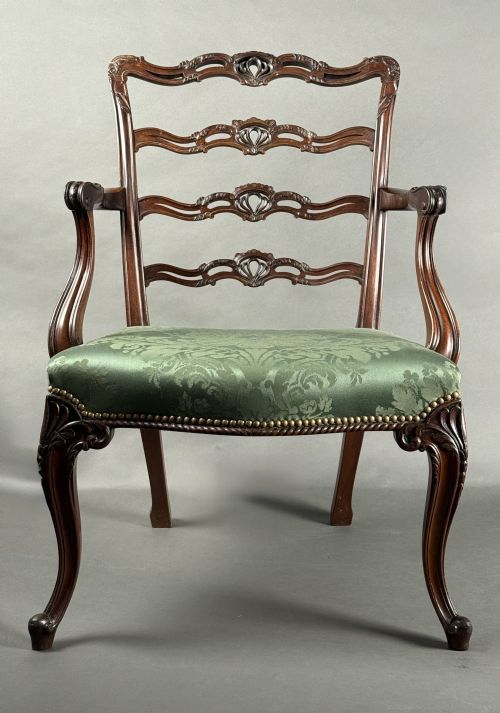
Cabinetmakers constructed these frames primarily from dense imported mahogany, alongside native timbers such as oak, walnut, and elm, secured through traditional mortise and tenon joinery. Carved splats and crest rails received hand chiselling directly into the solid timber.
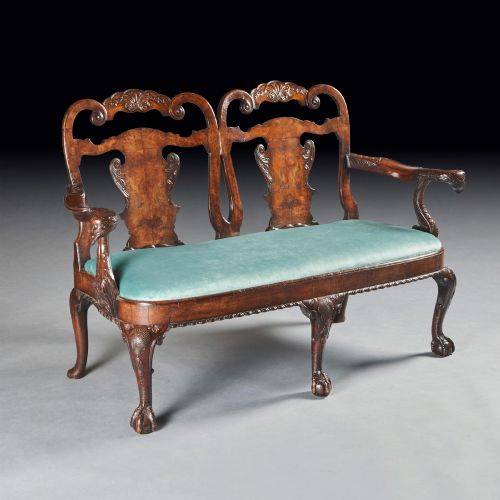
Upholstered variations integrate drop-in seats or pad seats covered in leather, fabric, or velvet, sometimes supported by horsehair stuffing or feathers. Secondary woods appear in seat frames and internal corner blocks.
Design and Execution
Quality rests upon the crispness of the hand carving on the back splats and the selection of figured timber grain in the mahogany or walnut. Refined proportions in the stiles and legs distinguish workshop output.
Original surface patination and structural integrity without excessive timber replacement separate well preserved examples from heavily restored sets or later nineteenth and twentieth century revival pieces.
Periods represented span the early eighteenth century through to 1930s revival interpretations.
Thomas Chippendale
The Georgian Carved Back Chairs Glossary
- Shield back
- A chair back shaped in the outline of a shield, popular in the late eighteenth century. This design often incorporates carved drapery or feather motifs.
- Bar back
- A horizontal wooden slat crossing the uprights of a chair back, typical of nineteenth century seating. This form appears frequently in William IV dining sets.
- Splat
- The vertical wooden strip down the centre of a chair back, positioned between the top rail and the seat. Carved variations define specific regional styles.
- Giltwood
- Timber coated with gold leaf or gold paint over a prepared gesso ground. This finish appears on high status eighteenth century armchairs.
Georgian Carved Back Chairs: Frequently Asked Questions
How do I date a Georgian carved back chair?
Dating relies upon examining the timber species, secondary woods, and construction marks left by hand tools. Joinery methods and tool tracks inside the frame indicate whether a piece belongs to the eighteenth century or a later revival.
Stilistic shifts from heavy walnut forms to lighter mahogany shield backs provide further chronological markers. Comparing the carved motifs to documented cabinetmaker designs narrows the period.
Are these chairs suitable for daily dining use?
Most solid timber dining chairs from this era are structurally robust enough for regular seating if the joints remain tight. Professional checks ensure the frame blocking and glue lines are stable.
Upholstered drop-in seats can be re-webbed and covered in modern fabrics to suit domestic dining tables. Care should be taken with antique armrests and delicate open splats.
How should I care for antique mahogany frames?
Maintain timber surfaces by dusting with a dry cloth and applying natural beeswax sparingly to nourish the grain. Avoid placing chairs near direct heat sources or strong sunlight that can dry out the wood.
Checking structural joints periodically prevents movement from weakening the original mortise and tenon connections. Professional conservation is recommended for loose carving elements.