
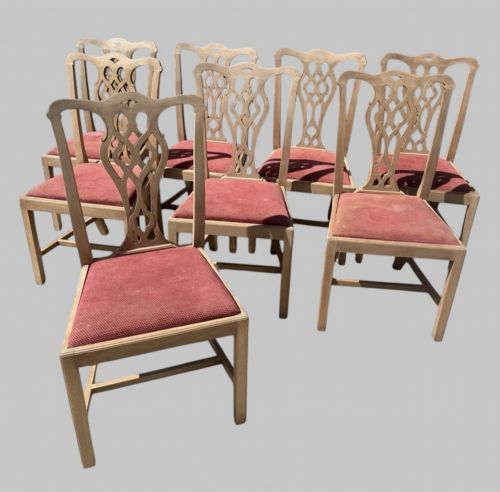


Georgian Country House Chairs
Georgian country house chairs bring the sturdy character of provincial domestic life into modern rooms.
Georgian Country House Chairs
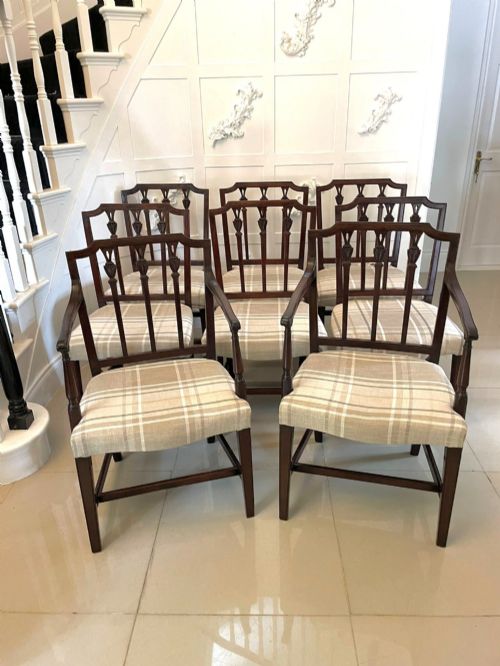
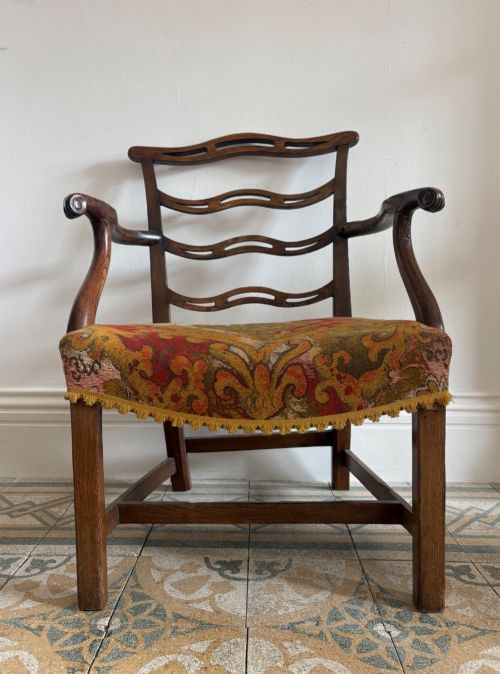
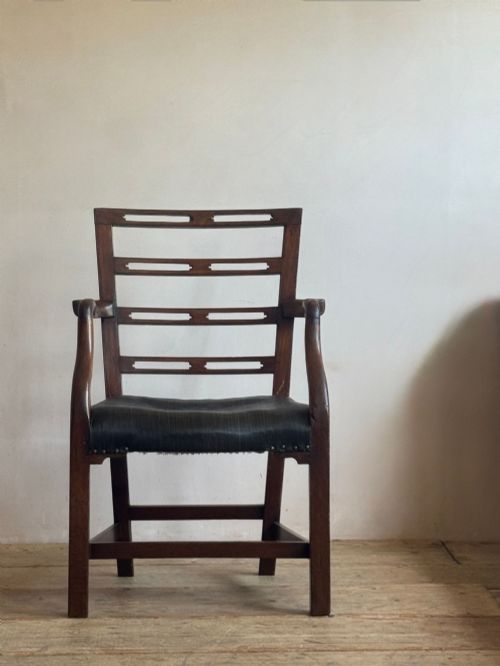
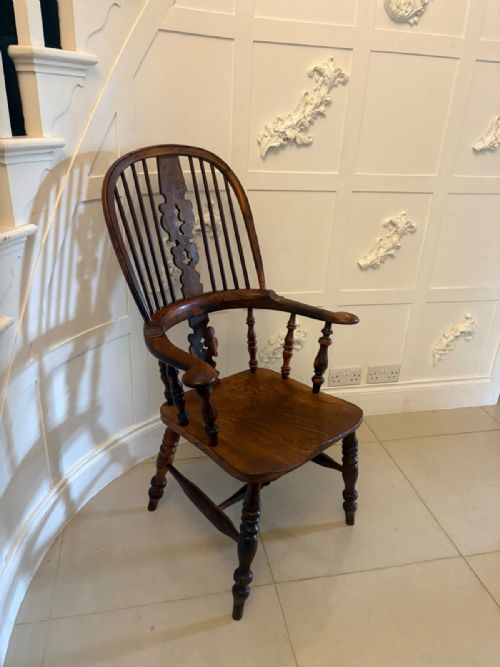
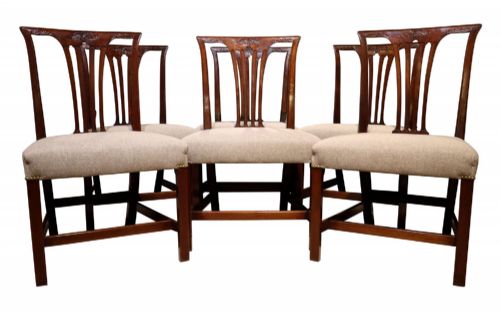
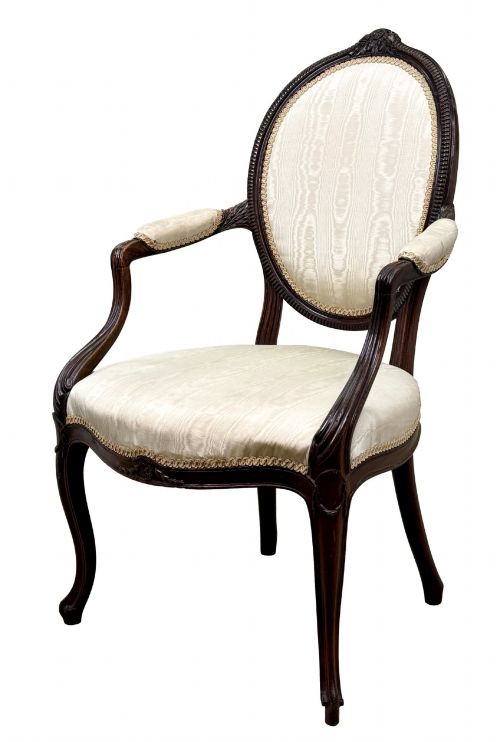
The selection ranges from elm and ash Windsor forms to mahogany dining chairs influenced by Chippendale and Hepplewhite designs. Elm and fruitwood are particularly prevalent among provincial carvers, Lancashire spindlebacks, and ladderbacks. This diverse category bridges the gap between high-style London cabinet work and rural craftsmanship.
How they were made
Makers utilised native timbers such as elm, ash, oak, fruitwood, and mahogany, selecting each wood for its specific structural and bending properties. Windsor chairs often combine an ash or yew hoop back with an elm seat, while dining chairs rely on solid mahogany or fruitwood frames. Joinery typically involves mortise and tenon construction, steam bending for curved backs, and traditional turning for spindle supports.
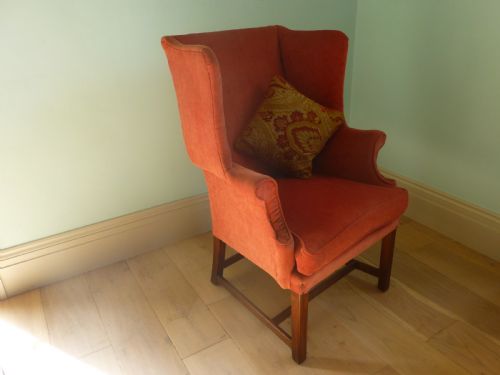
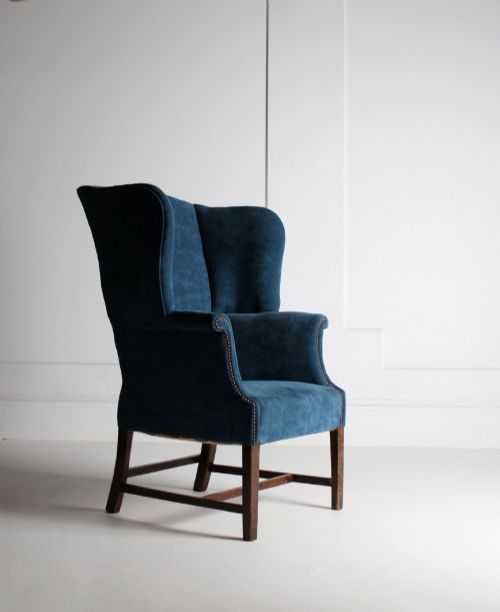
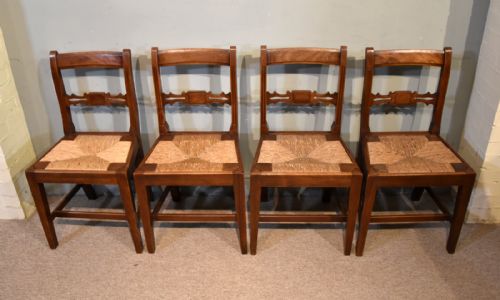
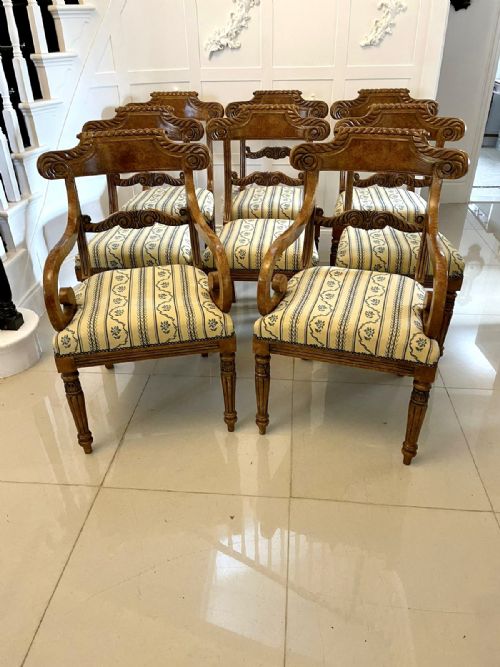
Upholstery methods varied from simple drop-in rush or tapestry seats to more elaborate stuffed backs covered in leather, velvet, or chenille twill. Surface finishes range from original painted or distressed treatments to polished mahogany and bleached timber. Provincial makers prioritized durability and functional comfort, employing straightforward joinery techniques that have survived centuries of daily use.
Some chairs retain traces of original farmhouse paint that has survived countless family dinners.
What varies in quality
Quality in these pieces depends heavily on the integrity of the timber, the purity of the regional design, and the survival of original surfaces. Chairs retaining their untouched painted finishes or original patinated elm show superior historical value compared to stripped or heavily restored examples. The fluidity of the turning on spindlebacks and the crispness of carved details on Chippendale-influenced chairs also signal higher workshop competence.
Proportional harmony and structural honesty dictate the standing of individual examples. Chairs that maintain their original joinery without excessive timber replacement demonstrate better initial manufacture and careful stewardship. Sets matching in timber grain and exact form command greater appreciation than assembled groupings.
Whytock and Reid
The Georgian Country House Chairs Glossary
- Windsor chair
- A chair built with a solid wooden seat into which the legs and back sticks are independently inserted. These vernacular seats often feature bentwood hoops and sculpted elm saddles.
- Spindleback
- A chair style characterised by a backrest composed of numerous thin, turned vertical wooden spindles. This regional form appears frequently in Lancashire and Suffolk variants.
- Ladderback
- A wooden chair featuring horizontal slats or rails fitted between the upright rear posts. The slats are usually curved to fit the sitter's back.
- Carver chair
- An open armchair designed for the head of a dining table or general parlour use. These pieces typically match a set of smaller side chairs.
- Rush seat
- A woven seating surface constructed from dried marsh rushes twisted into cords. This traditional method offers a flexible and durable platform for provincial chairs.
Georgian Country House Chairs: Frequently Asked Questions
What defines a country house chair?
Country house chairs are vernacular seating pieces made for provincial estates rather than urban drawing rooms. They combine domestic utility with regional woodworking traditions.
These chairs often utilise local timbers like elm, ash, and fruitwood, resulting in robust forms designed for everyday longevity rather than strict adherence to metropolitan fashion.
How do I spot an original finish?
An original finish displays natural oxidation, consistent wear patterns, and the subtle accumulation of age across the wooden surfaces. Untouched paint or polish reveals a soft, matte depth.
Modern stripping and refinishing remove this historical patina, leaving the timber looking flat and overly uniform. Close inspection under natural light helps reveal underlying layers of old wax and pigment.
Can I use these chairs daily?
Most antique provincial chairs are structurally sound enough for regular modern use provided the joinery remains tight. Elm and ash frames offer remarkable resilience.
It is wise to check rush or fabric seats periodically for wear and avoid placing antique mahogany or fruitwood near direct heat sources.
How do I date an elm armchair?
Dating relies on examining construction methods, tool marks, and stylistic clues borrowed from prevailing furniture fashions. Eighteenth-century examples often feature deep saddle seats and hand-turned spindles.
Nineteenth-century variants tend to show standardised lathe work and slightly different timber drying characteristics. Comparing the leg turnings and arm joints with dated regional pieces provides further clarity.