
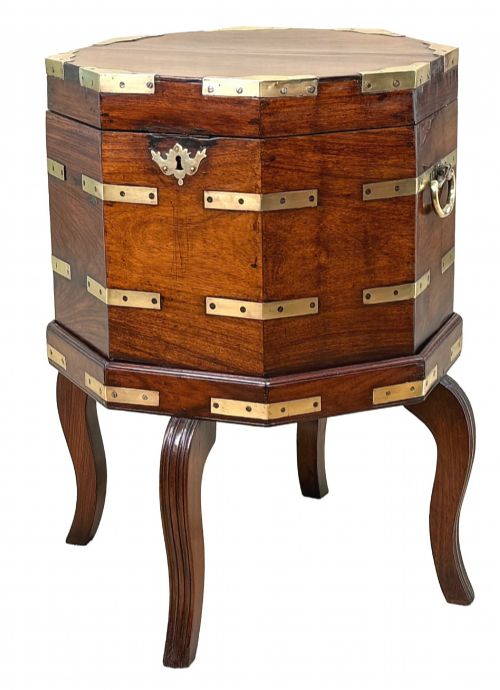
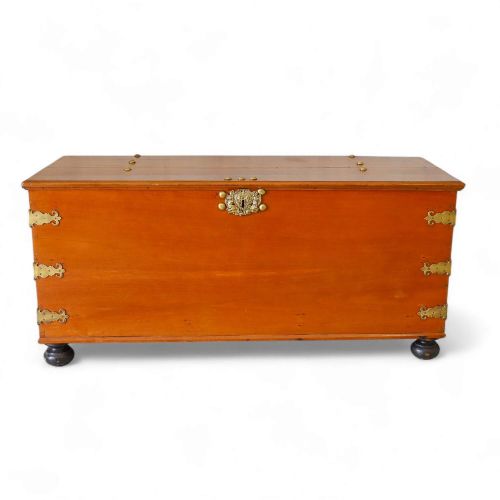
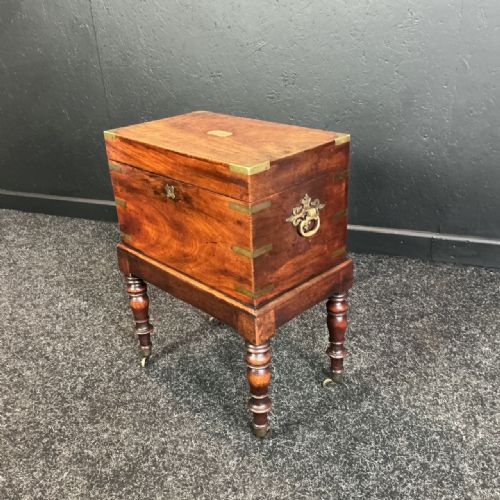
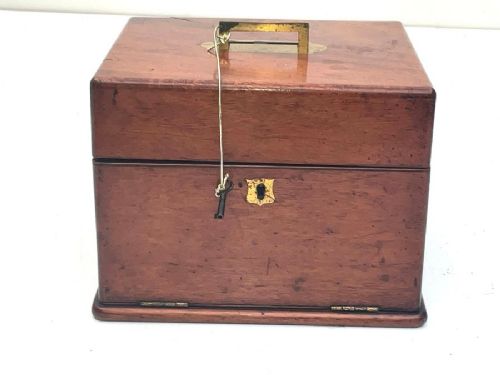


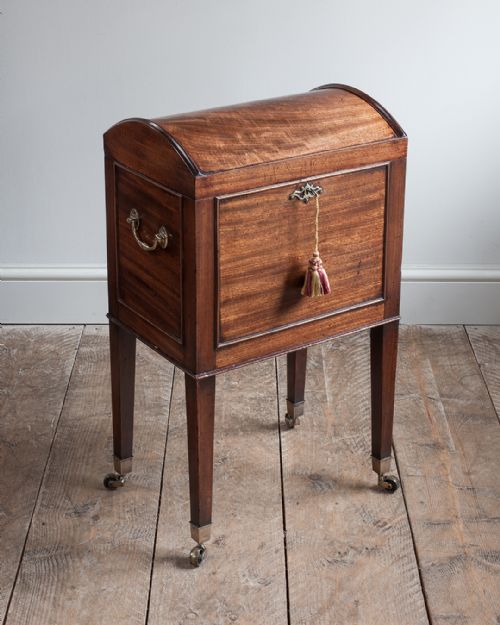


Georgian Brass Mounted Box
A georgian brass mounted box brings robust metalwork together with rich timber, offering a practical storage piece built to last.
Georgian Brass Mounted Box
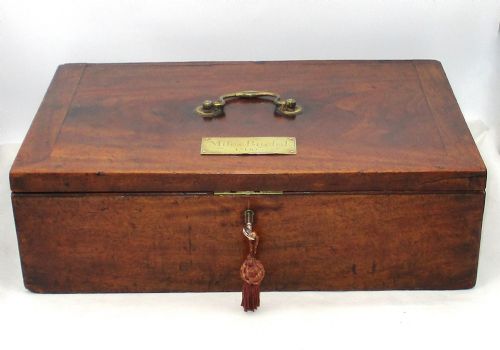
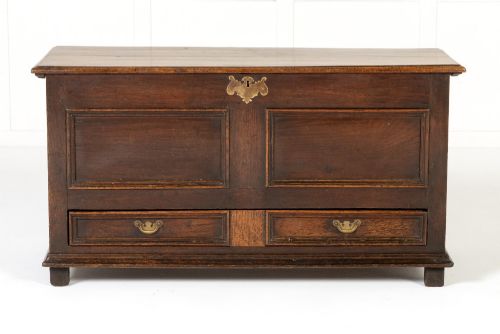
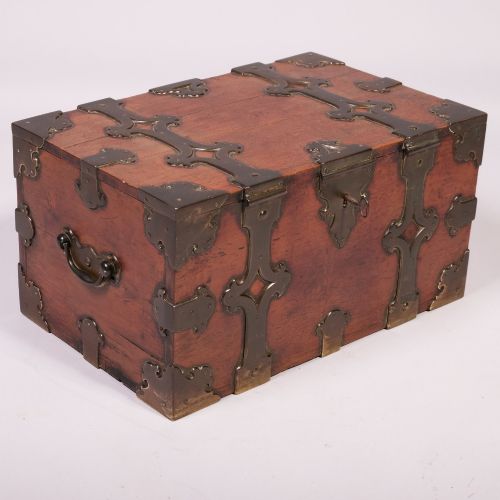
The most common versions on this page are mahogany tea caddies and campaign writing slopes, alongside larger oak and walnut chests. Makers utilised durable timbers like rosewood, padouk, and camphor, pairing them with secure metal corners, straps, and carrying handles for travel or domestic organisation.
Materials and Technique
Cabinetmakers constructed these vessels using dense hardwoods such as mahogany, oak, walnut, and elm, often shaped with dovetail joints for lasting strength. Surfaces were frequently polished or left with a natural waxed finish to highlight the grain of the wood.
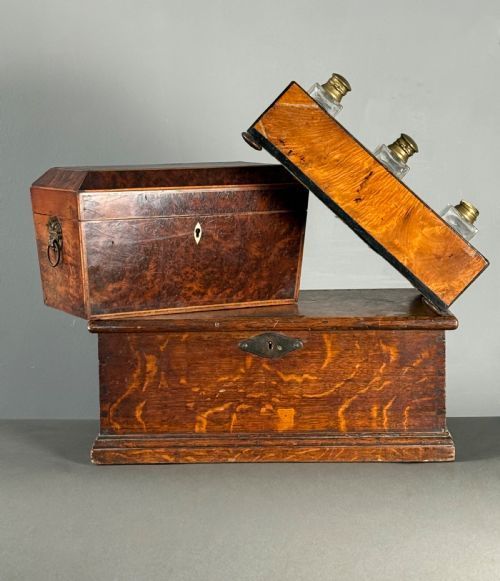
Heavy brass mounts, corners, escutcheons, and drop handles were secured with small pins or screws to reinforce the structure and protect edges during transit. Interiors often featured fitted compartments, glass bottles, or leather linings tailored to the specific function of the container.
A travelling doctor or soldier trusted these fitted apothecary chests to keep glass vials unbroken across rough colonial roads.
Craftsmanship and Survival
The distinction between standard containers and superior examples lies in the precision of the cabinetwork and the weight of the metal hardware. Finer pieces display tightly fitted joints, well-cast brass mounts that sit flush with the wood, and original internal fittings or bottles that remain intact.
Overall survival of the original surface and structural integrity dictates the character of each piece. Boxes retaining their functional locks, keys, and unblemished timber patination stand apart from those with replaced hardware or extensive repairs.
The Georgian Brass Mounted Box Glossary
- Campaign writing slope
- A portable desk designed for travel, featuring a hinged sloping lid that opens to reveal a writing surface, inkwells, and storage compartments.
- Apothecary box
- A fitted cabinet or chest designed to hold medicinal bottles, scales, and powders securely during transit or home use.
- Coffer bach
- A small Welsh vernacular chest or box, traditionally mounted on feet and used for storing valuables or linen.
- Escutcheon
- A protective brass plate surrounding a keyhole, designed to prevent the wood from splitting around the lock.
- Padouk
- A heavy, durable tropical hardwood with a distinctive reddish-brown colour, frequently utilised in colonial cabinetmaking.
Georgian Brass Mounted Box: Frequently Asked Questions
What were these boxes used for?
These containers served specific domestic and travel purposes, ranging from securing valuable tea leaves and writing materials to housing medical supplies and personal jewellery. Their sturdy construction allowed them to protect fragile contents during frequent journeys.
Larger versions functioned as miniature chests or trunks for personal belongings, while smaller caddies and boxes remained static on tables or desks within the home.
How do I date a brass mounted box?
Dating relies on observing the timber species, the style of the brass hardware, and the construction methods used inside the joints. Earlier eighteenth-century pieces often feature hand-cut dovetails and simpler, robust mount designs.
Nineteenth-century examples frequently incorporate more refined machinery-produced screws and standardised internal layouts, alongside styles typical of the Regency and Victorian periods.
Are the internal bottles usually original?
Some apothecary boxes retain their complete set of original glass bottles and stoppers, whilst others have lost them over centuries of use. Finding a box with its complete original contents remains less common.
Replacements are frequently encountered in medical and travelling chests, so checking whether the bottles match the fitted compartments is standard practice for collectors.
How should I clean the brass mounts?
The metal fittings benefit from gentle dusting with a soft cloth to preserve the natural oxidation and dark patina accumulated over time. Aggressive metal polishes can strip the historic surface of the brass and stain the surrounding wood.
Keeping the timber nourished with an appropriate wax maintains the condition of both the box and the metalwork without altering their age.