
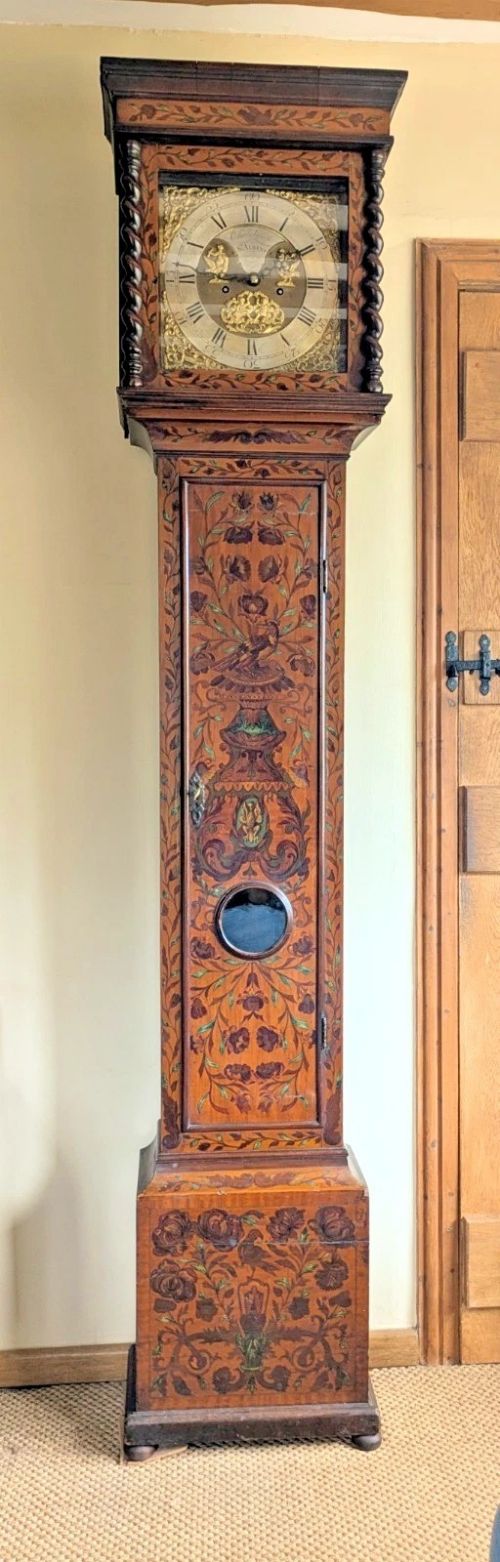
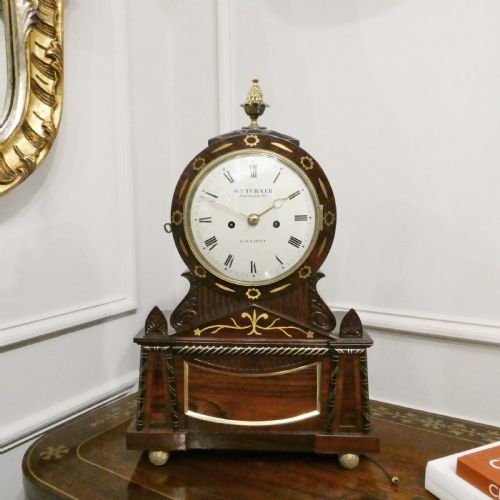


Georgian Brass Inlay Clock
A georgian brass inlay clock brings together solid timber and precise brass work in forms designed to anchor a room.
Georgian Brass Inlay Clock
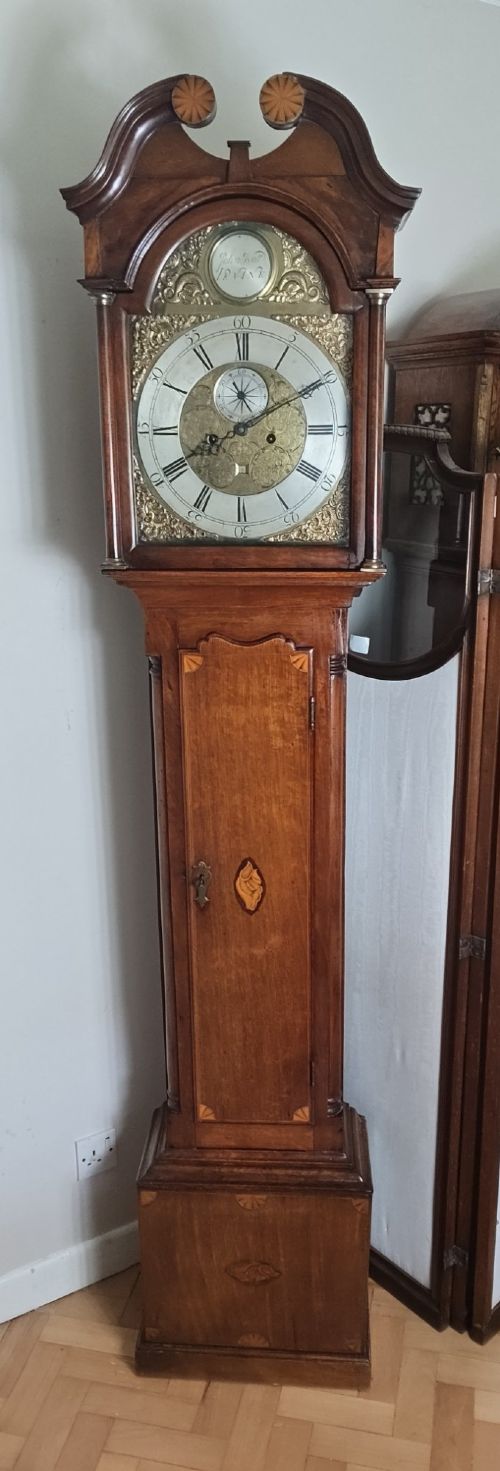
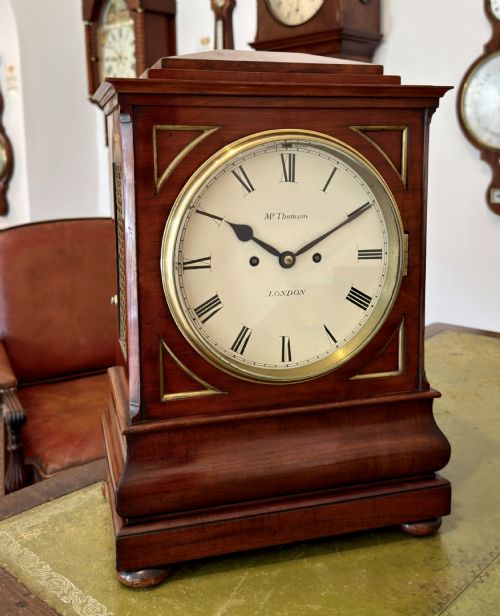
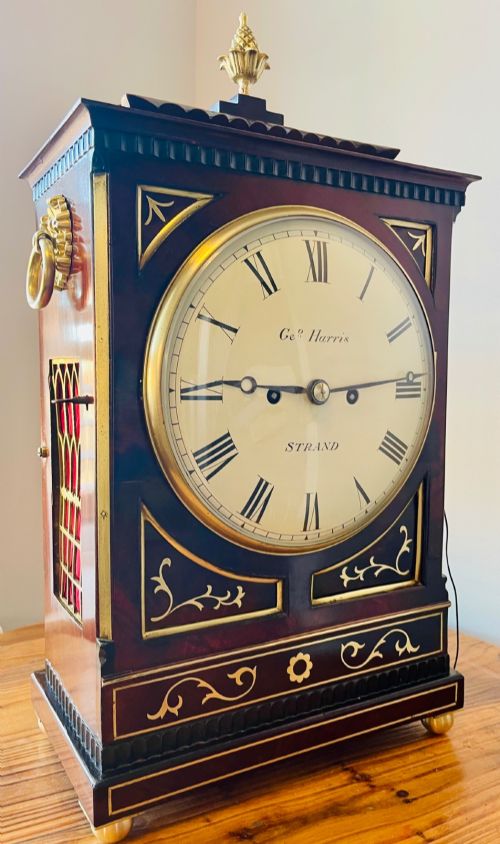
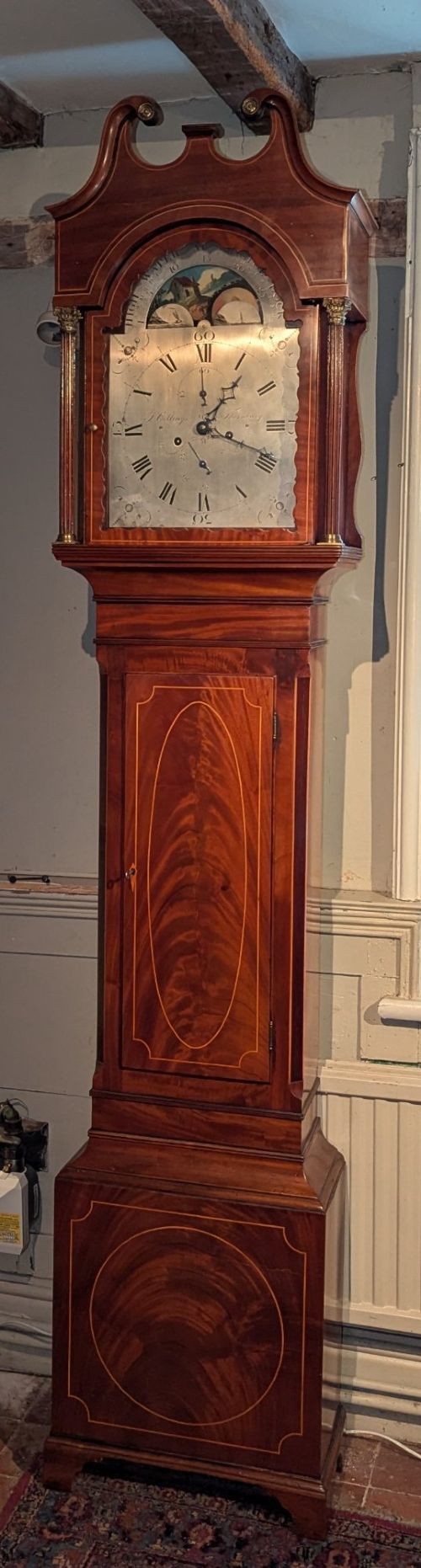
When you search for a georgian brass inlay clock, you encounter timepieces housed in timber cases that span floor-standing longcase examples to compact bracket and wall clocks.
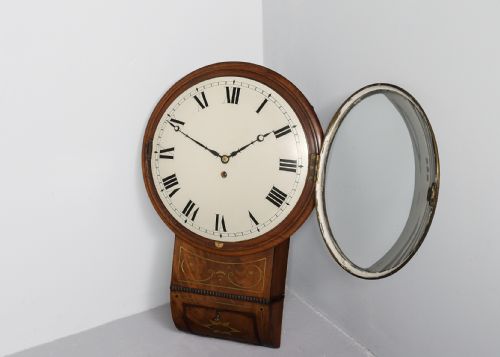
The selections on this page draw from the Georgian, Regency, and Victorian periods, utilising forms such as the grandfather clock, mantel clock, and drop dial wall clock.
Mahogany and rosewood dominate the visible woodwork, accompanied by oak and walnut, whilst brass provides structural highlights and decorative inlay.
Materials and construction
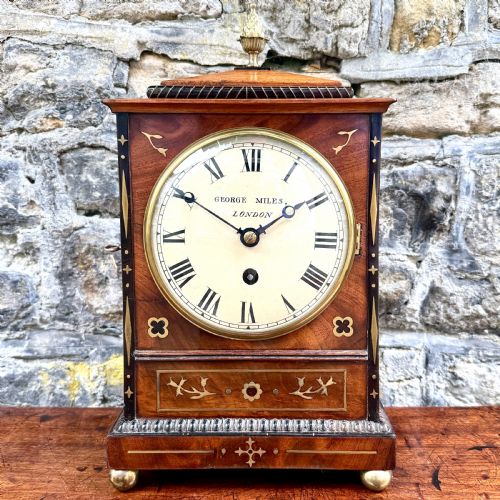
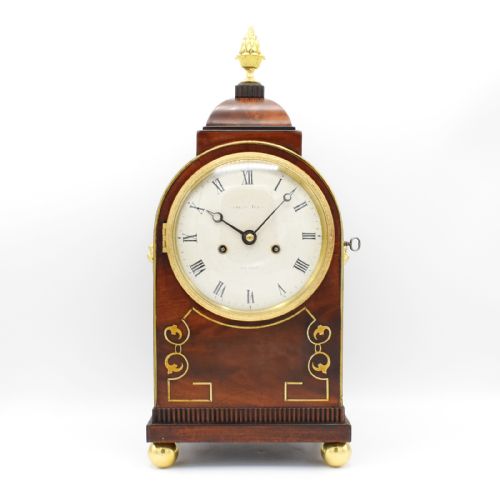
Cabinet makers constructed the bodies from dense hardwoods like mahogany and rosewood, applying brass inlay directly into the timber surface to form geometric patterns or floral motifs.
Dials utilise painted enamel, silvered brass, or convex glass surfaces, protecting the mechanical fusee movements housed within.
Makers in Auchtermuchty and Stroud kept provincial time moving precisely alongside their London contemporaries.
Levels of craftsmanship
The refinement of the brass inlay work and the choice of timber grain dictate the visual impact of the piece, alongside the crispness of the engraved dials.
Internal fusee movements by recorded makers demonstrate superior mechanical execution compared to unmarked provincial alternatives.
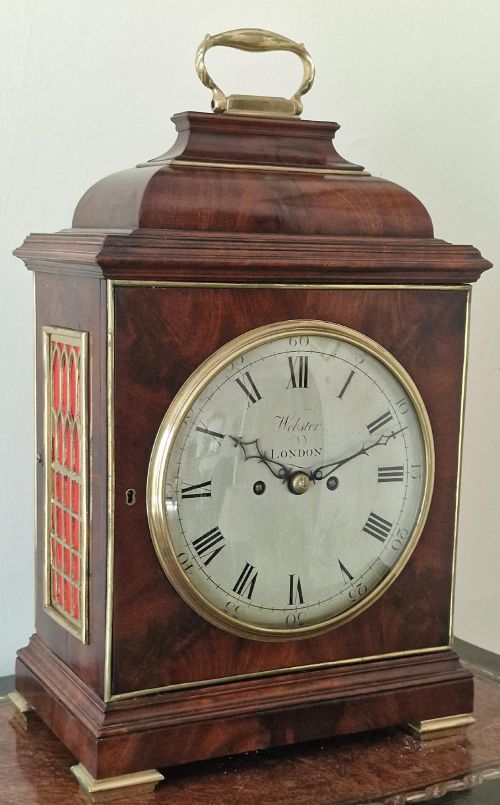
Thomson of London·Webster London·Charles Pratt London·Charles Louch St Albans·Turner of London·Bush of London·L Vick of Stroud·Seller of Reading·Thomas Moss·Barrett London·David Morice of Auchtermuchty·Hyde of Salisbury·Ganthony of London·Taylor of London·Leplastrier of London
The Georgian Brass Inlay Clock Glossary
- Fusee
- A conical pulley used in older clock movements to maintain an even pull as the mainspring unwinds. This mechanism ensures consistent timekeeping across the duration of the wind.
- Bracket clock
- A portable table or shelf clock originally designed to sit on a wall bracket. They often feature striking mechanisms and carrying handles.
- Longcase clock
- A tall freestanding weight-driven clock enclosed in a wooden case, commonly called a grandfather clock. These house pendulum systems requiring tall vertical drops.
- Drop dial clock
- A wall clock featuring a circular dial face set above a short trunk or box. They were widely used in public spaces and hallways.
- Paterae
- Circular ornamental reliefs carved into wood or rendered in brass. They frequently appear as decorative terminals on classical furniture and clock cases.
Georgian Brass Inlay Clock: Frequently Asked Questions
What is a fusee movement?
A fusee is a mechanical device that equalises the power of the mainspring as it runs down.
This ensures the clock maintains steady accuracy throughout its eight-day cycle.
Where did bracket clocks go?
Bracket clocks sat on wooden wall brackets or heavy tables in principal rooms.
Their portability allowed owners to move them between studies, libraries, and bedrooms.
How do I identify a Georgian clock?
Georgian clocks display proportions and timber selections characteristic of the eighteenth and early nineteenth centuries.
Look for mahogany or rosewood cases combined with brass dial work and distinct architectural hoods.