
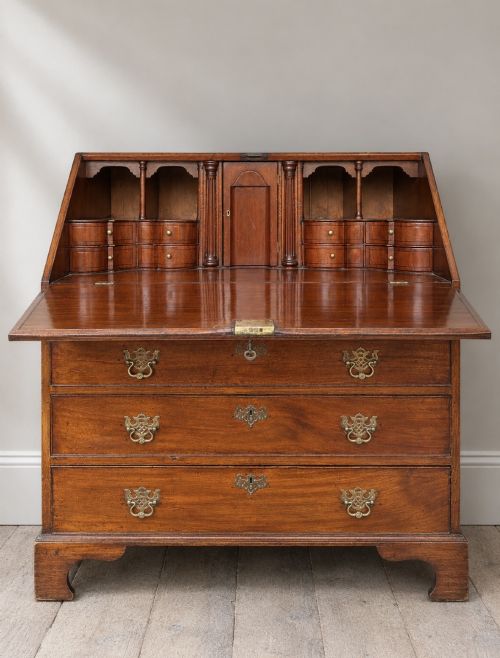
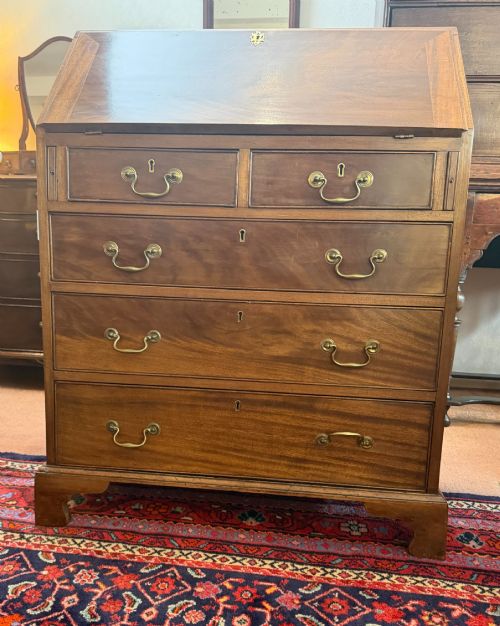
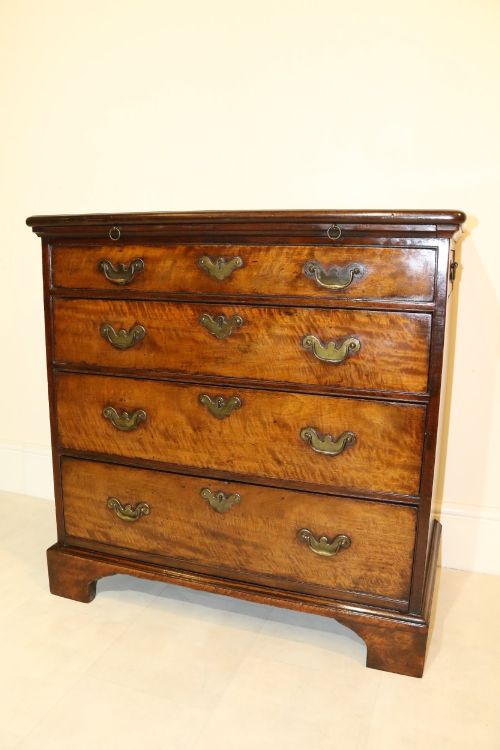
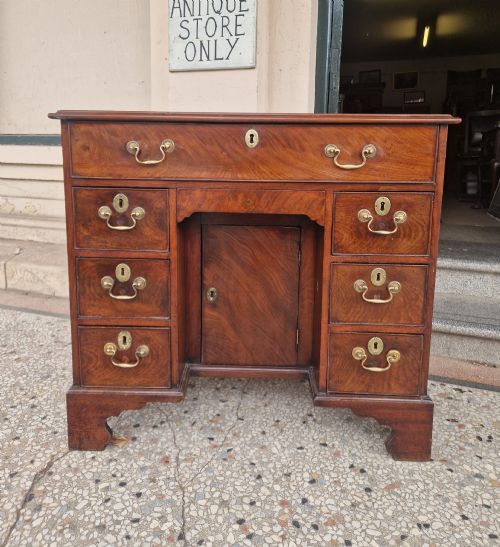




Georgian Bracket Foot Desk
A georgian bracket foot desk brings together period timber and steady proportions, offering a dedicated writing space grounded on neat corner supports.
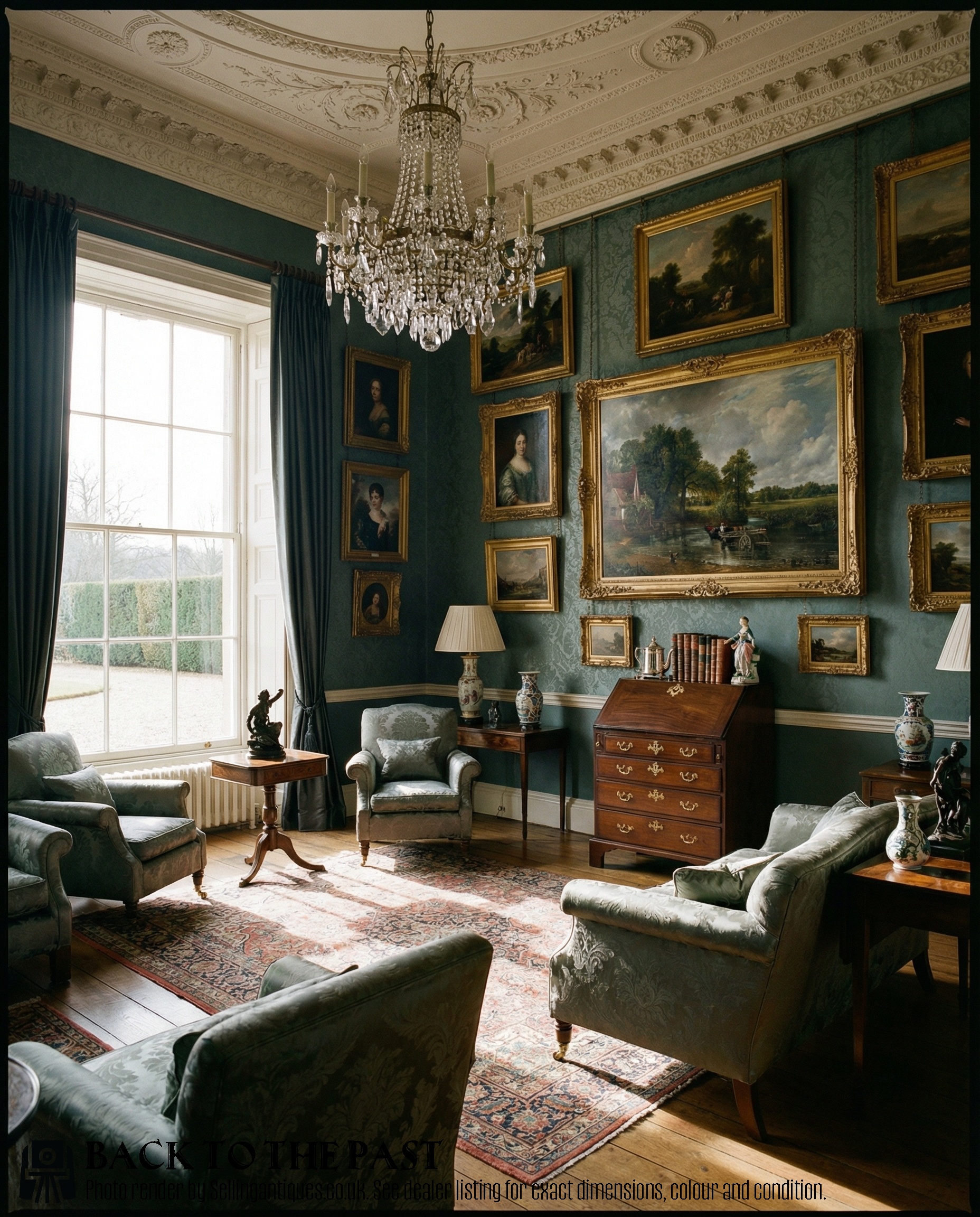
Georgian Bracket Foot Desk
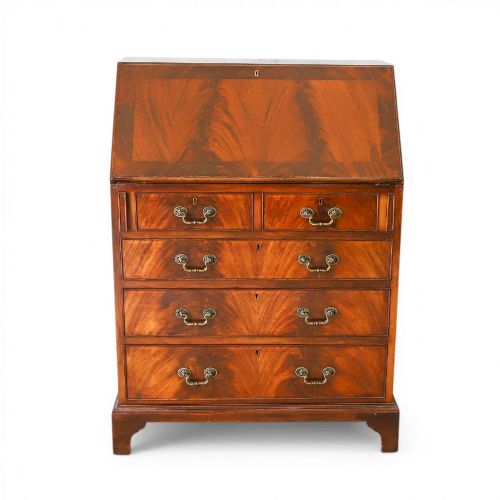
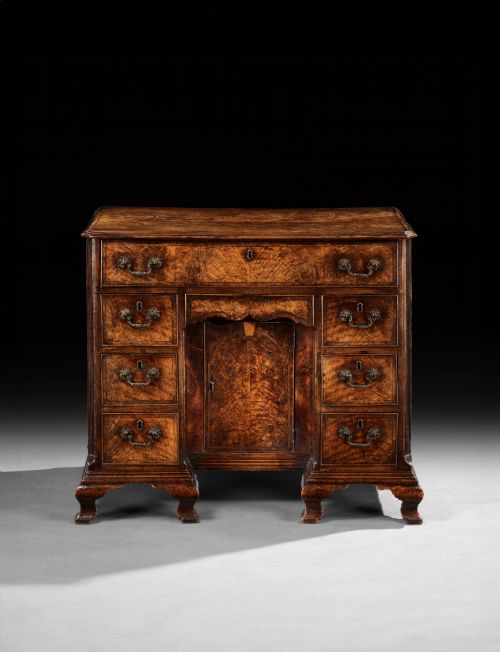
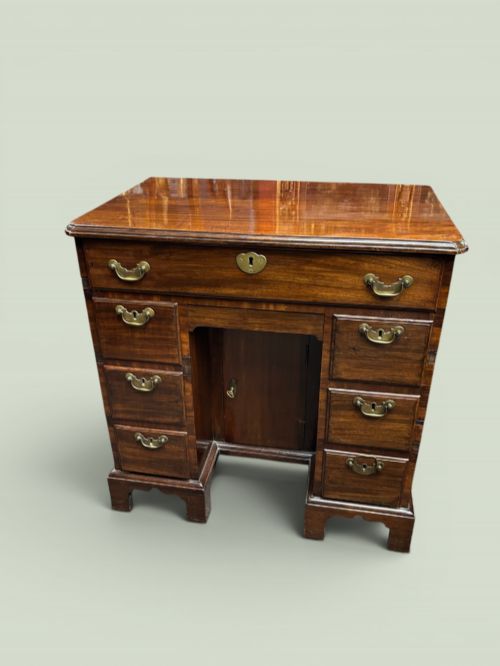
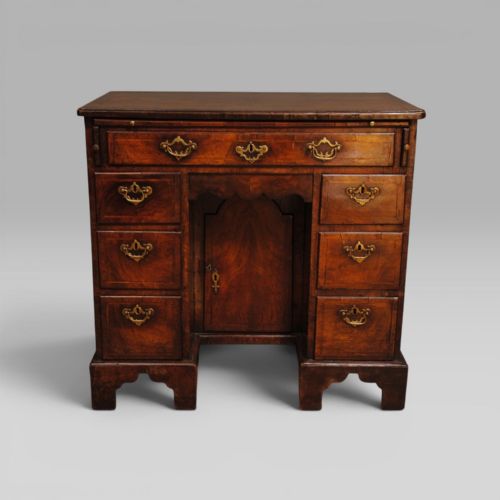
A georgian bracket foot desk encompasses writing furniture built during the eighteenth century and subsequent revival periods, typically taking the form of a kneehole desk, a bureau, or a writing chest. These forms serve as compact writing stations with fitted drawers and writing surfaces designed for domestic utility.
Mahogany and walnut dominate the selection, often worked as solid timber or refined veneers including burr walnut and fiddleback walnut, alongside occasional examples in oak, elm, and yew. The defining structural detail rests in the bracket feet that elevate the case pieces clear of the floor.
The pieces on this page range from early eighteenth century Queen Anne and George II specimens to later George III examples and twentieth century revivals. Buyers encounter everything from diminutive kneehole desks to flame fronted mahogany bureaux.

How they were made
Cabinet makers constructed these desks using dense hardwoods like mahogany and walnut, frequently applying decorative veneers to primary surfaces while utilising secondary timbers for drawer linings and internal divisions. Timber selection dictated the character, drawing on the varied grain patterns of burr walnut, flame mahogany, and fiddleback walnut.
Construction relied on traditional joinery methods, incorporating dovetailed drawer boxes and panelled carcases supported by rigid bracket feet fixed to the lower corners. Brass hardware, including drop handles and escutcheons, was fitted to secure and operate the drawers.
Surface finishes were developed through careful polishing and waxing to highlight the natural figure of the wood without obscuring the grain. Details such as featherbanding added crisp linear borders to drawer fronts on finer pieces.
Listings feature eighteenth-century pieces alongside revival works from the twentieth century, constructed primarily in mahogany and walnut.
What varies in quality
The grade of timber and the choice of veneer dictate much of the distinction between pieces, with carefully matched grain patterns and highly figured burr walnut or flame mahogany marking out superior examples. The execution of fine details, such as precise dovetailing and well-proportioned bracket feet, separates standard workshop production from finer cabinet work.
Proportion and scale influence desirability, as smaller dimensions and diminutive proportions are particularly sought after by collectors seeking compact writing furniture. The survival of original brass hardware, fitted desk interiors with secret compartments, and working keys contributes significantly to a piece's standing.
Bush of London·Plumbly and Tupman
The Georgian Bracket Foot Desk Glossary
- Bracket foot
- A corner foot shaped in the profile of a bracket, supporting case furniture like desks and chests. These feet lift the body off the floor with clean mitred mitres.
- Bureau
- A sloping front desk enclosing a fitted interior of small drawers and pigeonholes. When closed, the slant conceals the working surface.
- Kneehole desk
- A flat-topped writing table featuring a central recessed space for the legs, flanked by pedestals of small drawers. This form provides a compact writing station.
- Featherbanding
- A decorative inlay technique using veneer strips arranged in a herringbone pattern around drawer edges. This creates a contrasting border framing the timber figure.
Georgian Bracket Foot Desk: Frequently Asked Questions
How do I use a bureau desk?
A bureau desk provides a sloping writing flap that folds down to create a flat surface for correspondence. Opening the flap reveals a fitted interior containing small drawers and pigeonholes for stationery storage.
Beneath the writing flap, several larger drawers offer storage space for household papers and personal items. This combination of a closed writing slope and drawer storage makes the bureau a practical piece for everyday study.
What is a kneehole desk used for?
A kneehole desk is designed as a writing table featuring a recessed central space where a chair sits comfortably. Pedestals of drawers on either side keep writing materials and documents close at hand.
These desks work well in studies or principal rooms where space is measured, offering a generous top surface without the bulk of larger library tables.
How can I tell the period of a desk?
Dating a desk involves examining the timber species, construction methods, and hardware styles used by the cabinet maker. Earlier eighteenth-century pieces often feature walnut and featherbanding, while later Georgian examples frequently utilise mahogany.
Internal construction details, such as hand-cut dovetails on drawer boxes and the profile of the bracket feet, provide further clues to the decade of manufacture. Comparing the proportions and secondary woods helps confirm whether a piece belongs to the original Georgian era or a later revival period.
Where should I place a desk in my home?
These desks suit studies, living rooms, and bedrooms where their compact proportions allow them to sit flush against walls or in alcoves. Placing them near natural light enhances the working surface while highlighting the grain of the wood.
Because many examples are finished on all sides or present a clean profile, they can also function as freestanding pieces in larger rooms. Ensuring the desk is kept away from direct heat sources protects the antique timber and veneer.