
Georgian Bracket Chest
A georgian bracket chest provides dependable storage elevated on neat feet, bringing period proportion and timber warmth to a room.
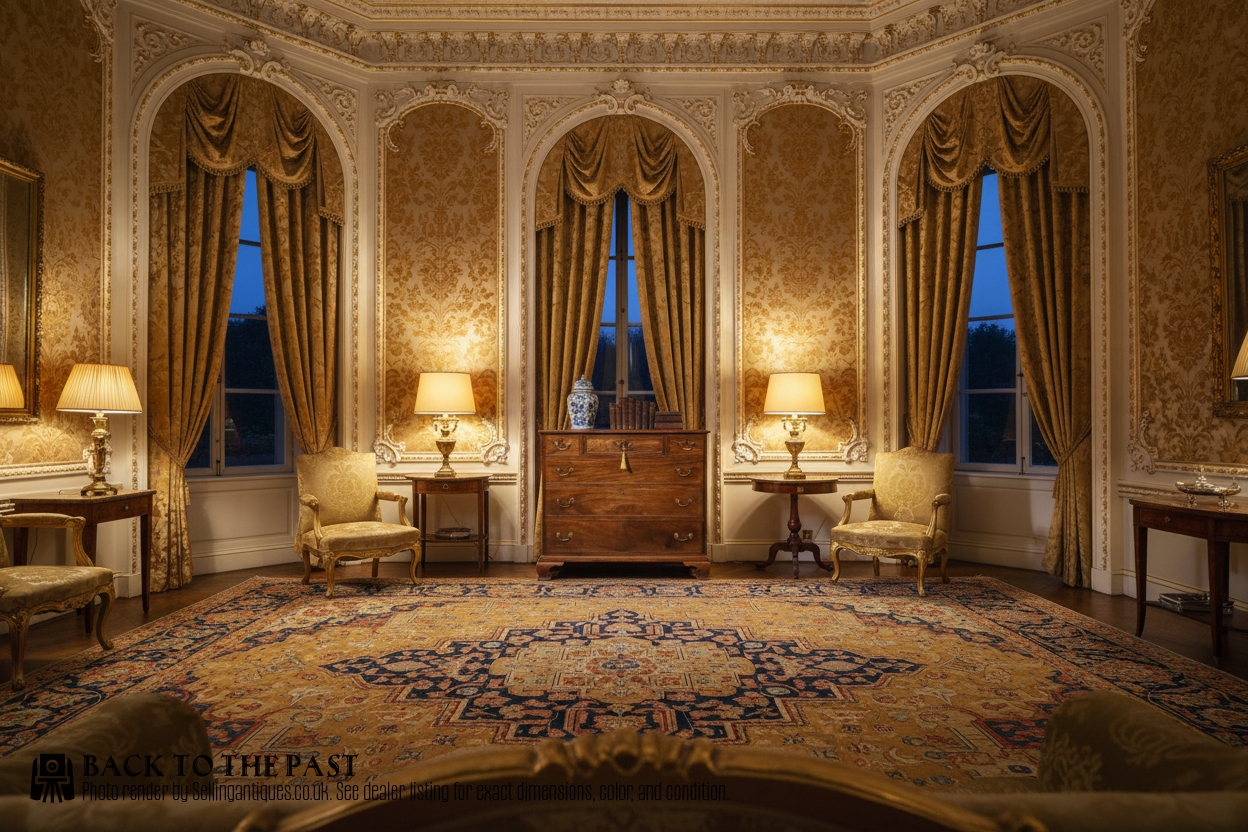
Georgian Bracket Chest
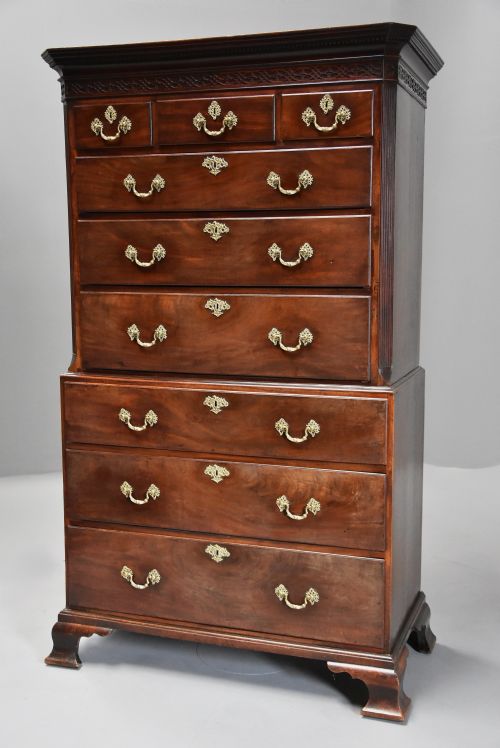
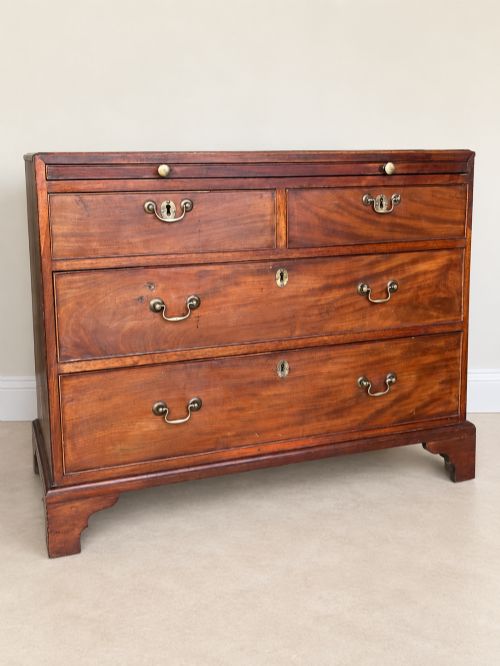
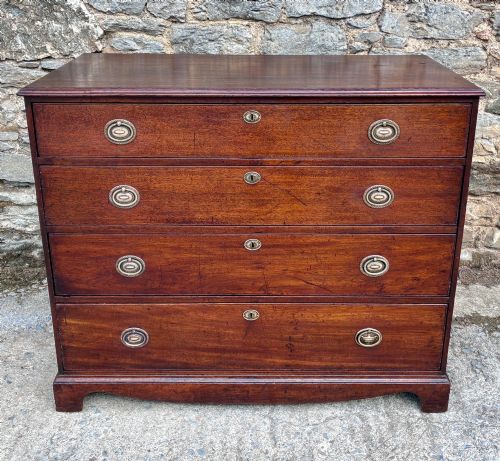
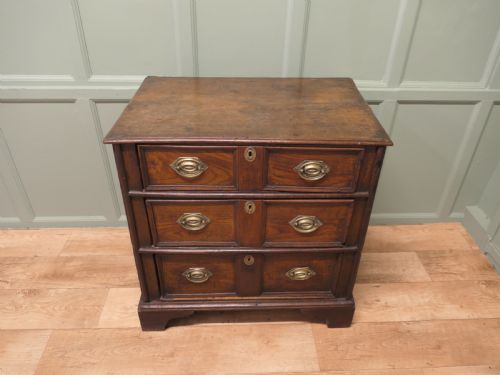
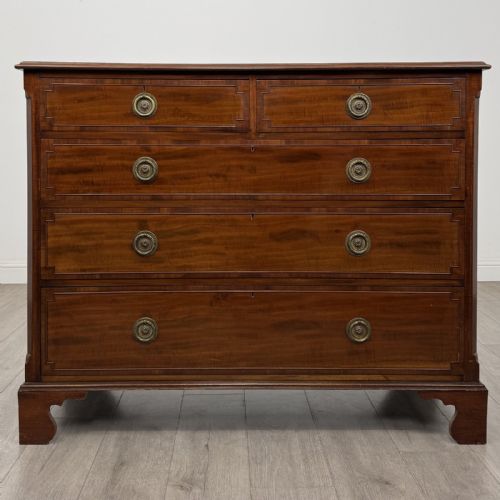
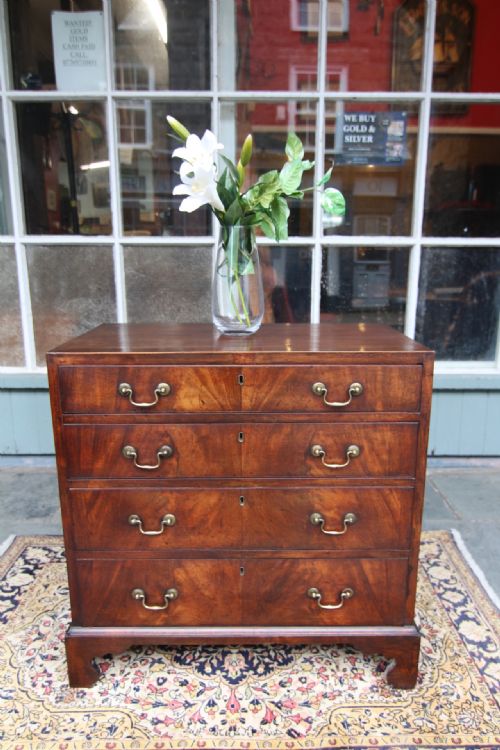
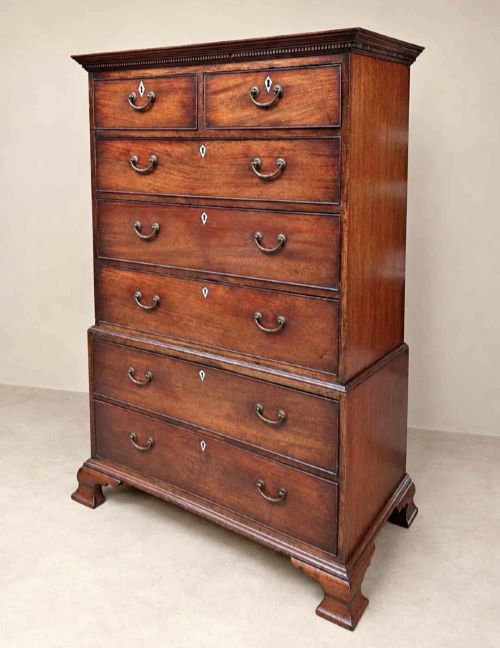
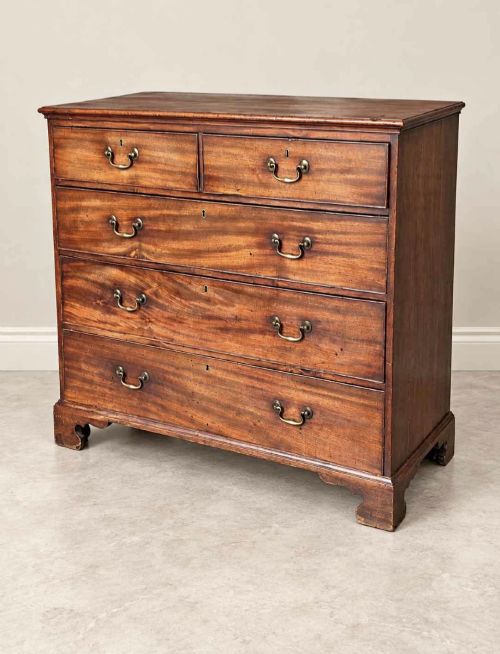
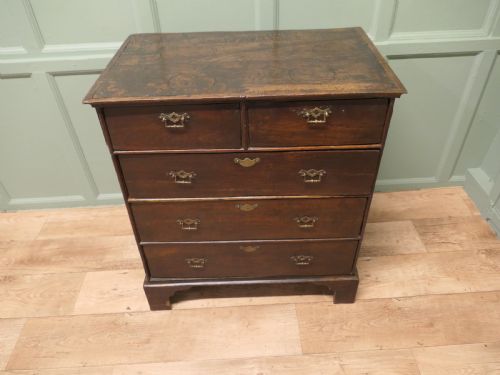
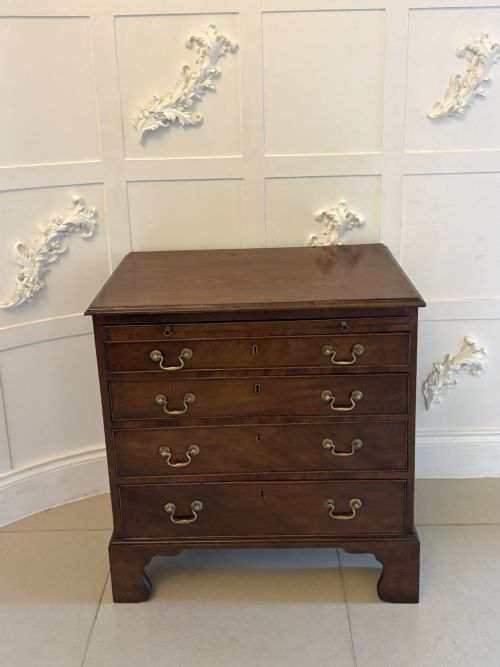
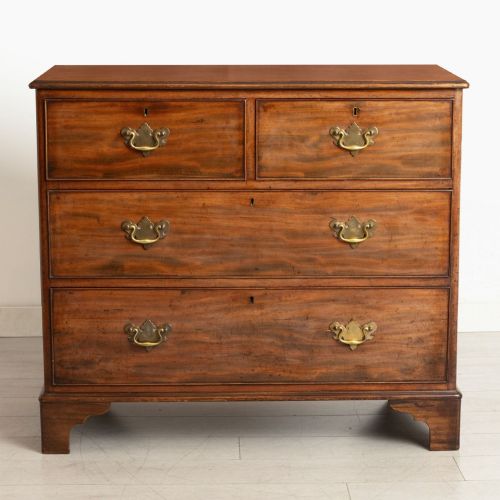
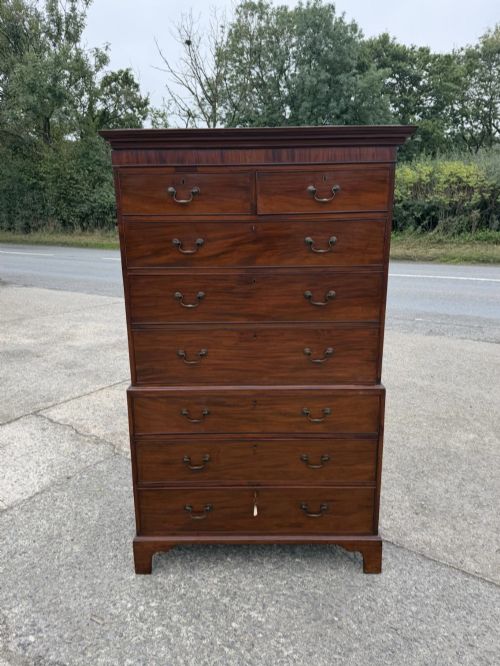
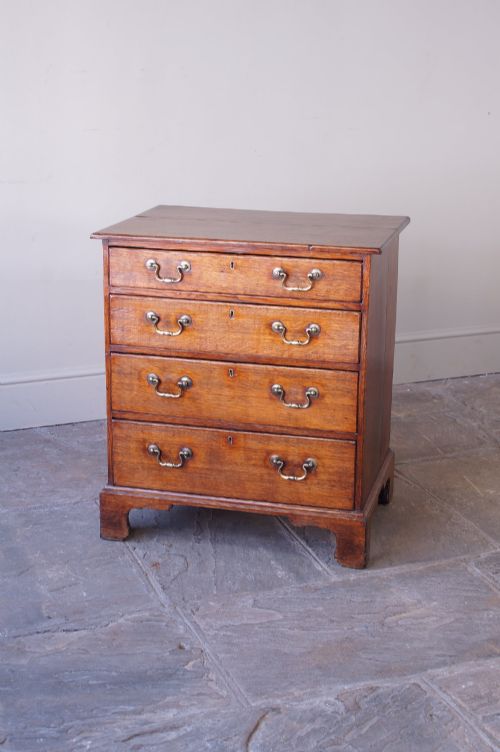
A georgian bracket chest is primarily a chest of drawers built during the eighteenth or early nineteenth century, standing firmly upon architectural bracket feet. These pieces range from modest low proportions to tall chests on chests, often arranged with two small drawers above three larger ones.
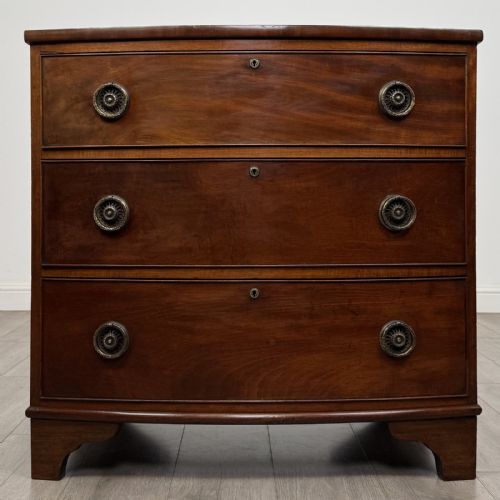
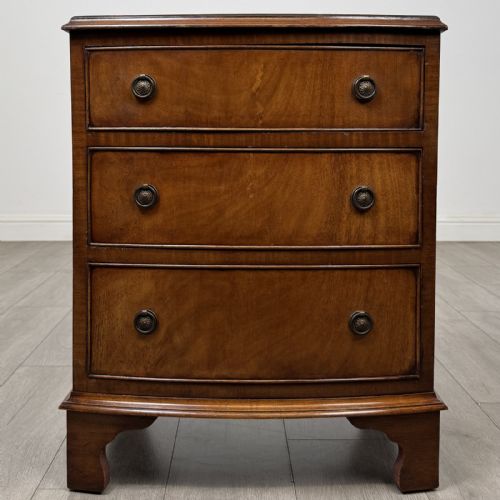
While many examples take a straight front, others exhibit a serpentine or bow front outline. Buyers frequently encounter mahogany and oak constructions, alongside walnut, burr walnut, and fruitwood inlay.
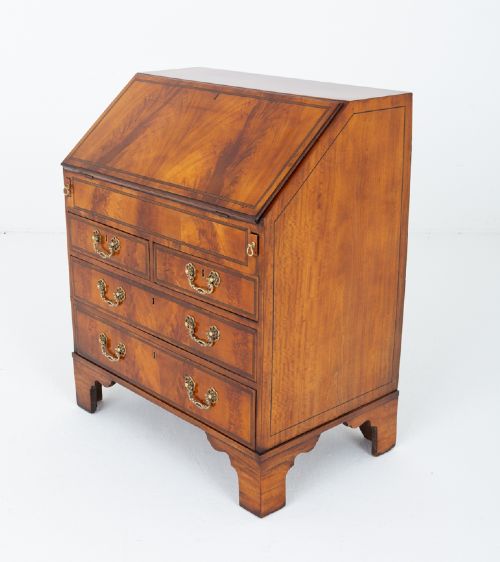
Bedside tables, desks, and smaller miniature chests also appear within this tradition, offering the same characteristic timber construction and bracket support on a reduced scale.
Materials and Construction
Cabinet makers relied heavily on solid mahogany, oak, and walnut, often selecting figured timbers for drawer fronts and applying decorative fruitwood or boxwood inlay. Brass handles and escutcheons provided functional contrast to the dark polished wood.
Construction involved sturdy dovetail joints for the drawers and robust framing to support the characteristic bracket feet upon which the carcass is raised.
Judging Quality
Quality rests upon the choice of timber and the crispness of the cabinet work, particularly around the bracket feet and drawer linings. Figured veneers, well-matched grain patterns, and original brass hardware elevate a piece significantly.
Proportion and untouched surfaces separate superior examples from later adaptations, as original feet and undisturbed patination reflect the integrity of the period craftsmanship.
J Moorcroft
The Georgian Bracket Chest Glossary
- Bracket foot
- A simple architectural foot supporting the corners of a piece of furniture, shaped like a bracket and meeting at a mitred corner. They provide a stable and neat base for chests of drawers.
- Brushing slide
- A pull-out shelf integrated above the top drawers, historically used for writing or brushing clothes. It sits discreetly within the moulding until required.
- Serpentine
- A gently undulating front with a convex centre flanked by concave curves. This contour requires immense skill from the cabinet maker.
- Crossbanded
- A decorative technique where veneer strips are applied across the grain of the main surface. It creates a neat border around drawer fronts.
- Chest on chest
- A tall storage unit comprising a smaller chest stacked upon a larger base, also known as a tallboy. This form maximises vertical storage space.
Georgian Bracket Chest: Frequently Asked Questions
What is a bracket foot?
A bracket foot is a corner support shaped like a small bracket, commonly found on eighteenth-century case furniture.
It lifts the carcass neatly off the floor while maintaining a stable, solid foundation.
How are these chests used today?
These chests serve as practical bedroom storage, hallway statement pieces, or living room storage units.
Their generous drawer depths accommodate modern clothing and household linens easily.
How do I spot a reproduction?
Look closely at the timber grain, interior drawer construction, and the method of jointing used.
Period pieces display hand-cut dovetails and timber movement consistent with age.
What woods were used?
Mahogany and oak predominate, complemented by walnut, burr walnut, and cedar wood.
Inlays often incorporate fruitwood or boxwood to create contrasting geometric borders.