
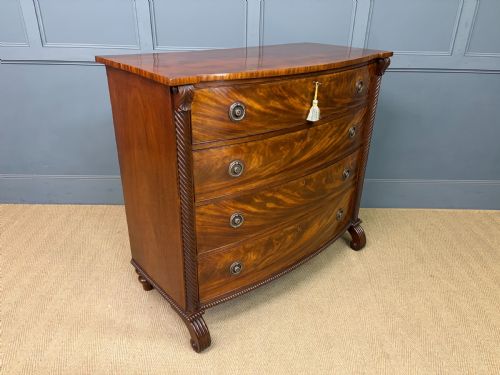
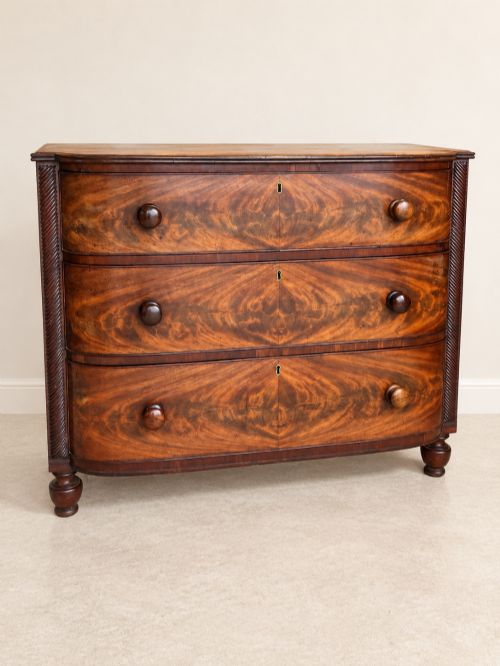
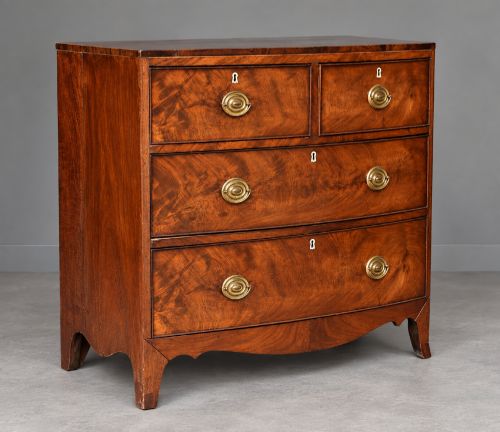
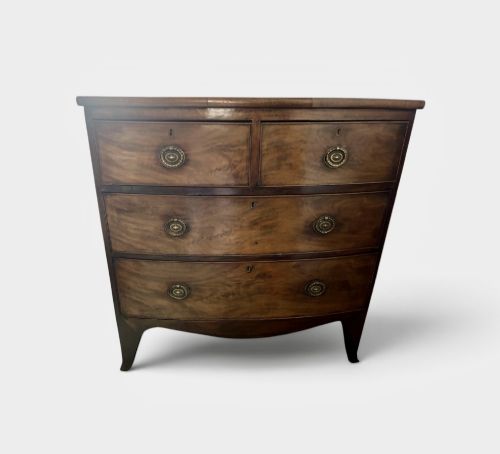

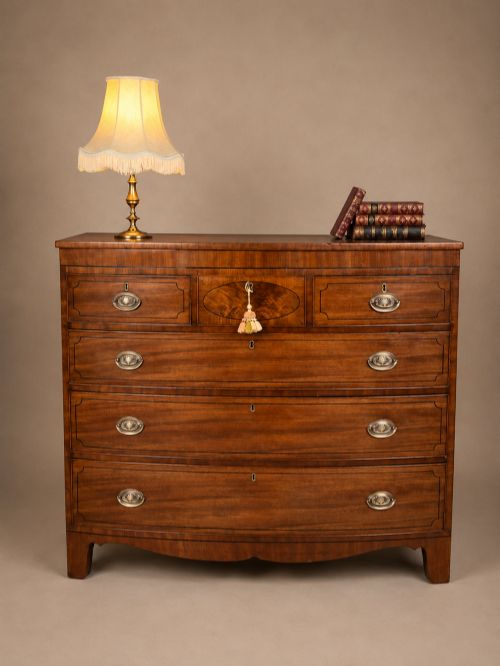
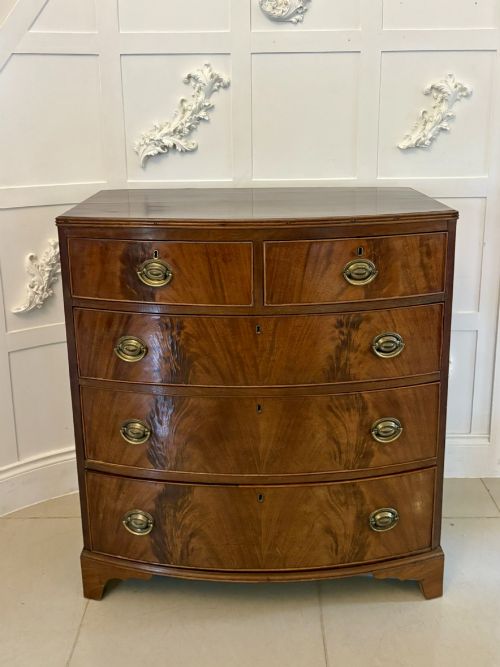
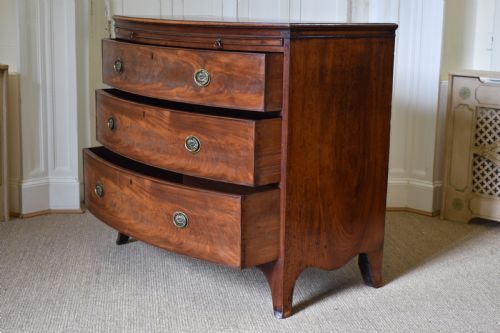
Georgian Bowfront Dresser
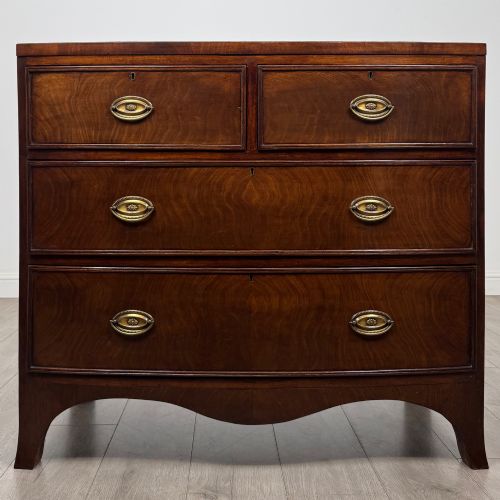
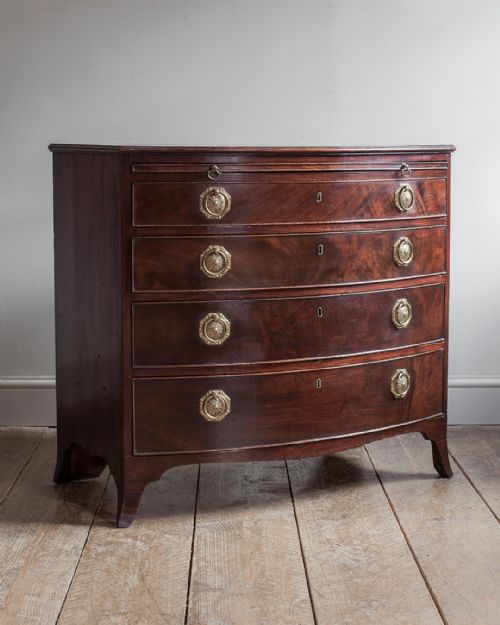
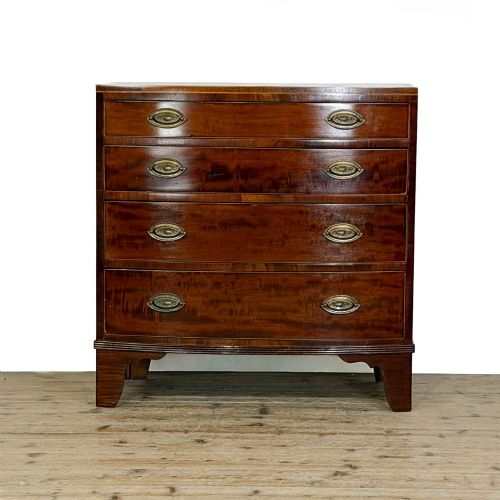
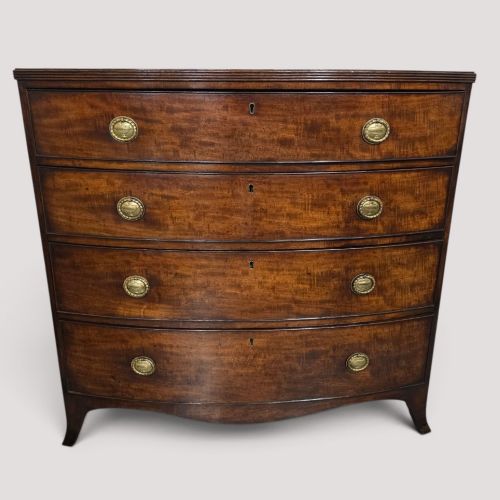
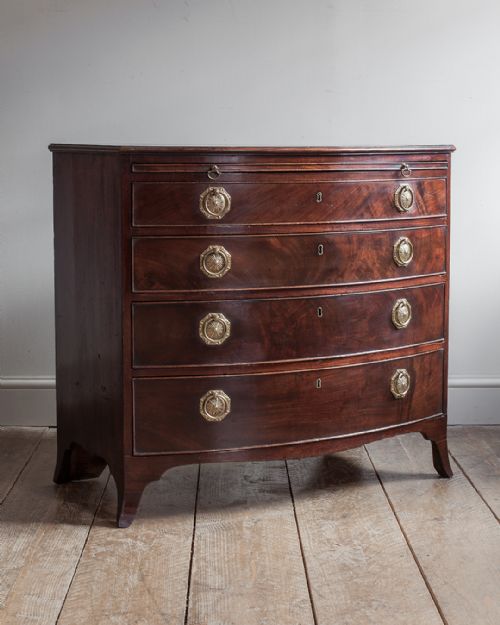
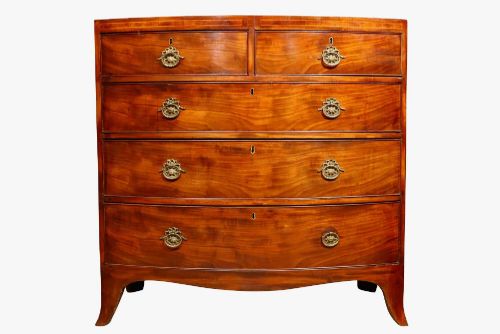
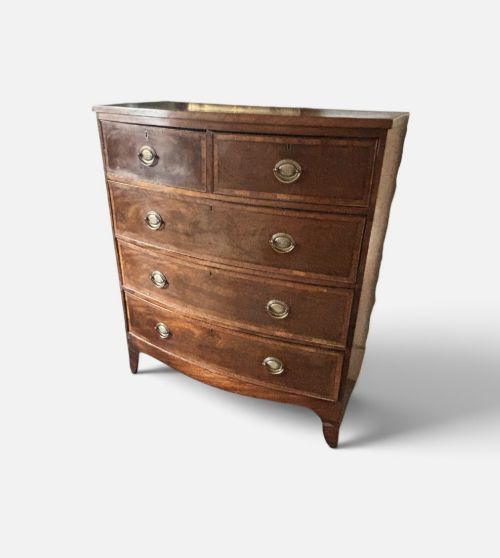
A georgian bowfront dresser offers curved elegance and substantial storage, bringing distinctive character and proportion to a bedroom or living space.
Georgian Bowfront Dresser
A georgian bowfront dresser typically refers to a chest of drawers featuring a convex curved front facade, primarily emerging from the late 18th and early 19th centuries. Buyers searching for this form seek pieces that combine practical drawer storage with the softer, sweeping lines characteristic of the period.
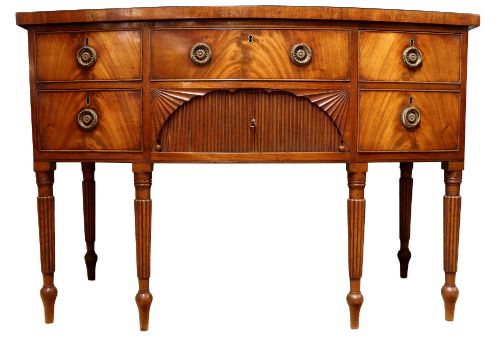
The versions most commonly encountered on this page span the Georgian, George III, George IV, and Regency periods, alongside later 19th-century interpretations. While traditionally constructed as chests of drawers, the category occasionally includes related sideboards sharing the same curved aesthetic.
Dimensions range from small, neat proportions suited to compact spaces to larger statement pieces featuring graduated drawers. Regional variations, such as Scottish or Welsh examples, also appear, sometimes incorporating specialised interior fittings like secret compartments.
Materials and Technique
Makers relied heavily on solid timber and choice veneers, with mahogany serving as the predominant wood used across the majority of pieces. Flame mahogany veneer and figured mahogany frequently provided rich, undulating grain patterns across the curved drawer fronts, often enhanced by contrasting satinwood crossbanding.
Secondary timbers such as oak and walnut appear in structural elements and carcases, whilst brass handles and escutcheons punctuate the polished wood surfaces. Cabinetmakers mastered the difficult task of curving solid boards and matching veneers to follow the outward sweep of the front without buckling.
Assessing Quality
Quality rests upon the crispness of the curved drawer fronts, the careful selection of figured wood grains, and the overall proportions of the piece. Superior examples display seamless veneer matching that accentuates the bow shape, alongside fine dovetail joinery in the drawer construction.
The depth of the natural patina and the preservation of original brass hardware elevate certain pieces above standard production. Subtle details such as crossbanding, inlaid stringing, and well-executed bracket feet or turned legs separate master cabinet work from simpler vernacular output.
The Georgian Bowfront Dresser Glossary
- Bow front
- A convex curved front facade on a chest of drawers or sideboard. This curved design softens the rectangular silhouette of traditional furniture.
- Crossbanding
- A strip of veneer applied perpendicularly to the grain of the main surface. It forms a decorative border around drawer fronts or table tops.
- Graduated drawers
- A series of drawers that decrease in depth from bottom to top. This arrangement creates a balanced visual proportion.
- Patina
- The surface sheen and mellowing developed through age, handling, and polishing. It indicates the gradual ageing of timber over centuries.
- Satinwood
- A pale, hard wood with a lustrous sheen used for stringing and inlay. Cabinetmakers employed it to create sharp visual contrast against darker mahogany.
Georgian Bowfront Dresser: Frequently Asked Questions
What is a bowfront chest?
A bowfront chest is a storage unit featuring a convex, outward-curving front facade. This shape became particularly popular during the Georgian and Regency eras.
Cabinetmakers adopted the curved design to break the rigid boxiness of standard furniture while retaining maximum interior drawer capacity.
How do I date a bowfront chest?
Dating relies on examining the secondary timbers, construction methods, handle styles, and veneer types present on the piece. George III and Regency examples generally exhibit hand-cut dovetails and specific aesthetic proportions.
Comparing the specific wood grain, such as flame mahogany or satinwood inlay, helps align the piece with documented periods like the early 19th century.
Where should I place a bowfront chest?
These chests fit well in bedrooms, hallways, or living rooms where their curved profile can be appreciated without blocking narrow walkways. Their substantial storage capacity makes them practical for organising clothing or linens.
Placing the chest against a flat wall allows the sweeping front curve to serve as a focal point in the room.
What woods were used for bowfront chests?
Mahogany is the primary wood found across these pieces, frequently enhanced with flame mahogany veneer to highlight the curved front. Secondary woods like oak and walnut provide internal structural support.
Details in lighter timbers such as satinwood frequently appear as crossbanding or decorative inlay around the drawer edges.