

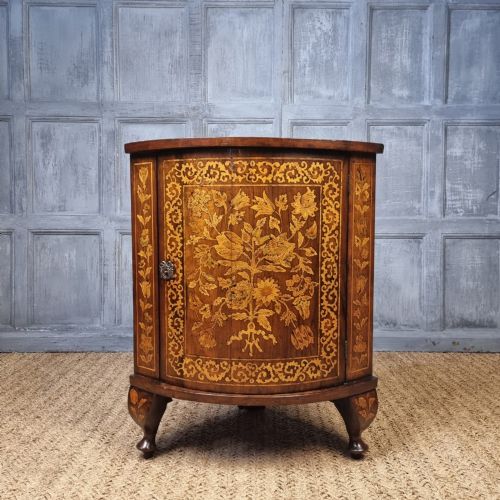


Georgian Bowfront Corner Cabinet
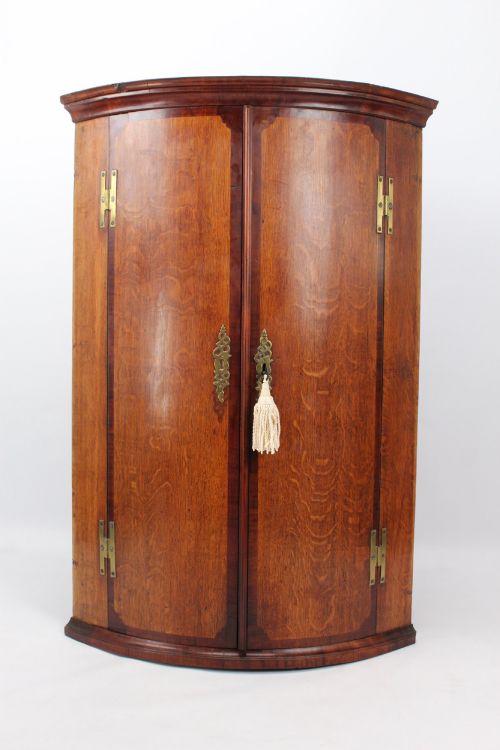
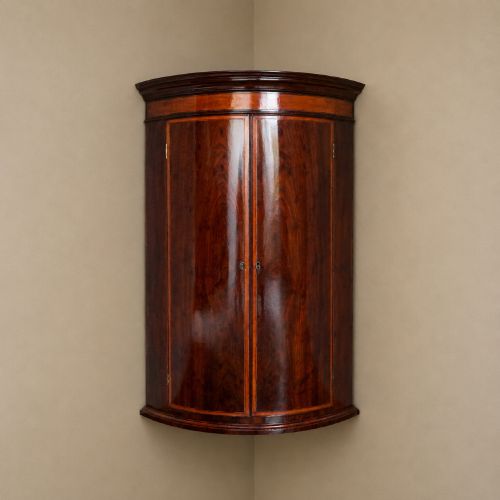
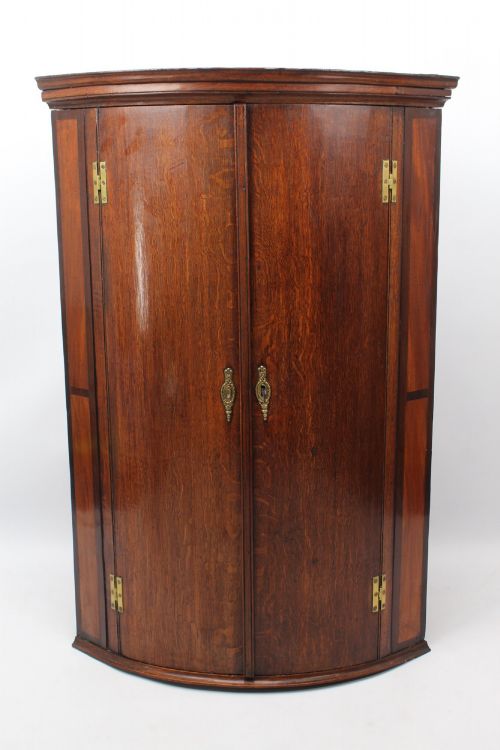
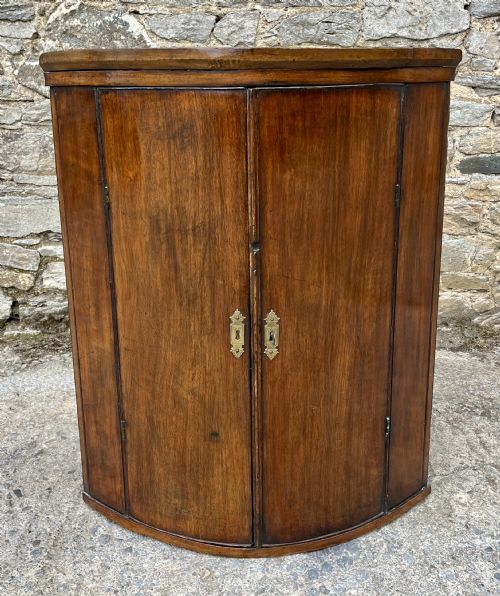
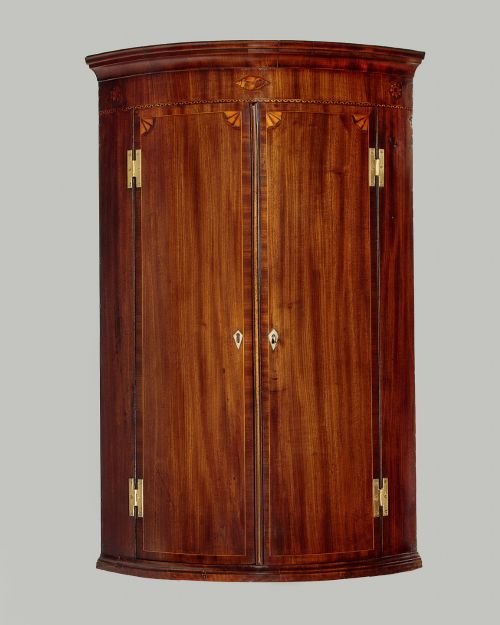
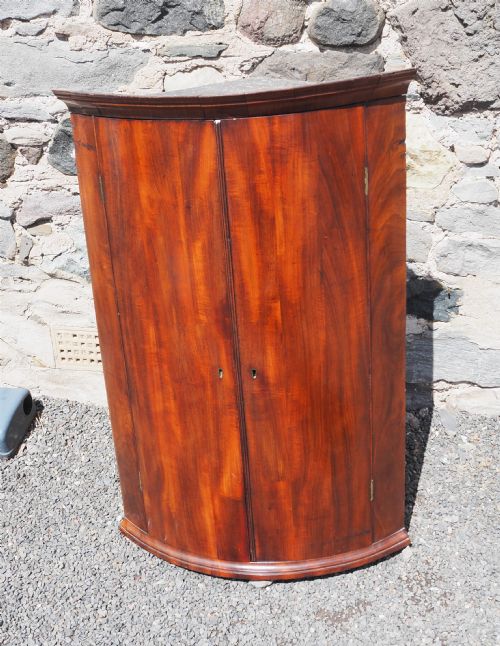
A georgian bowfront corner cabinet is a fitted wall or floor piece designed to turn unused angles into storage, offering curved doors and period timber.
Georgian Bowfront Corner Cabinet
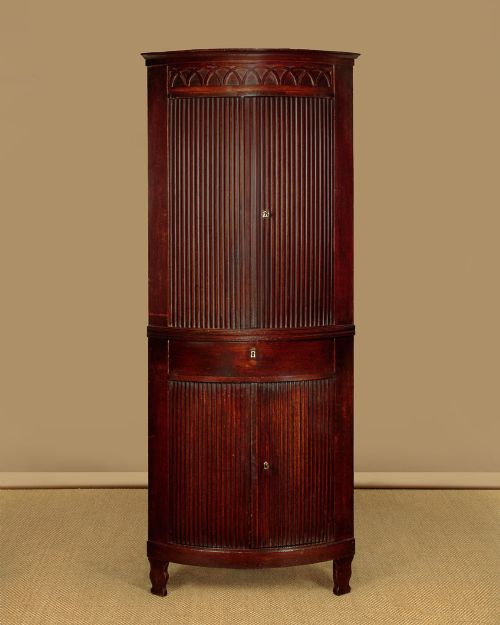
Most examples found in this selection date from the Georgian period through the nineteenth century, utilising robust timbers such as mahogany and oak. These pieces primarily function as hanging wall cupboards or double-height floor-standing cabinets.
Makers designed these units with single or double doors to conceal shelving, occasionally incorporating glazed upper sections for display. Their curved doors distinguish them from standard flat-fronted corner cupboards.
How They Were Made
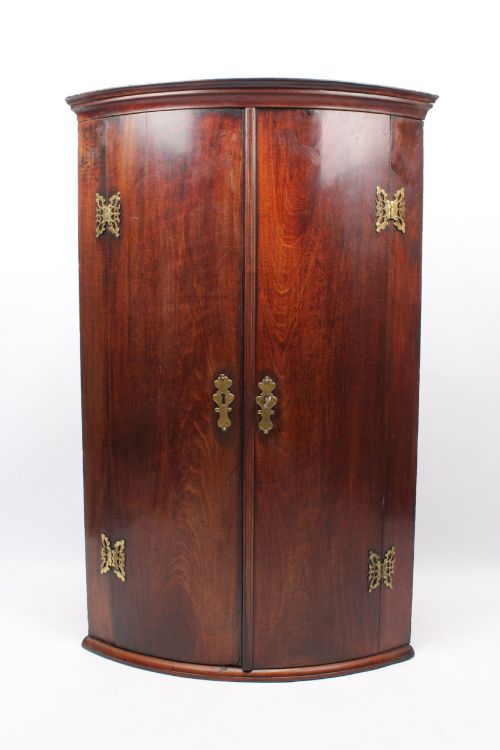
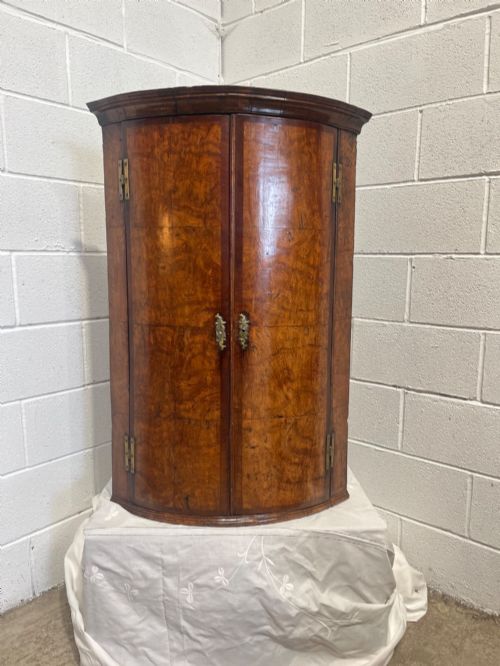
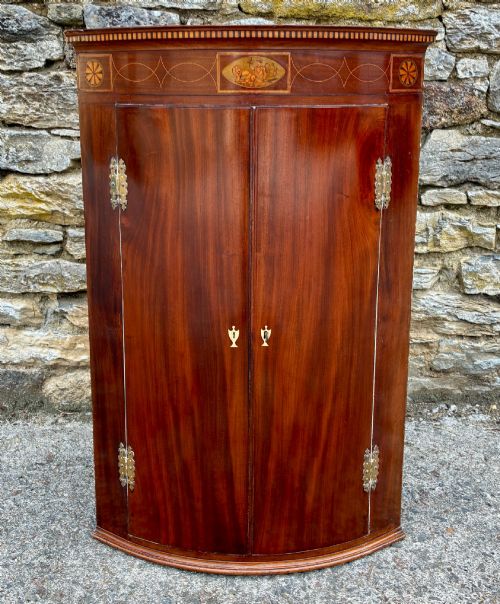
Cabinet makers built these units predominantly using solid mahogany or oak, often applying decorative veneers like plum pudding mahogany or flame mahogany across the curved door panels. Timbers were selected for grain pattern and strength, accommodating the tension required for the bow front curve.
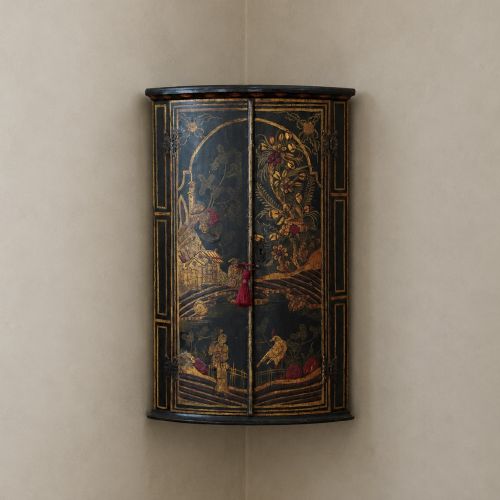
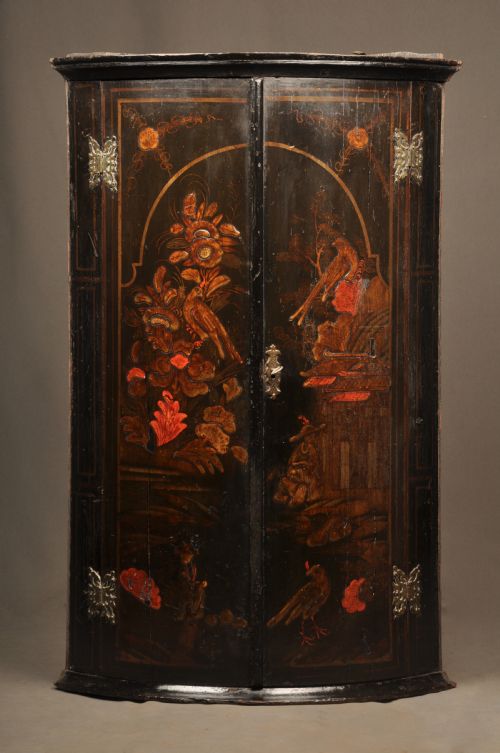
Surface ornamentation frequently includes boxwood inlay, contrasting stringing, and elaborate japanned chinoiserie finishes in black or painted lacquer. Brass H-hinges and escutcheons complete the structural assembly, securing doors and providing functional hardware.
Some cabinet makers hid secret drawers inside the interior shelving, giving owners a secure spot for precious notes and small trinkets.
What Varies in Quality
The sophistication of the timber selection largely determines the standing of an example, moving from plain utility oak to highly figured plum pudding or flame mahogany veneers. Rich grain movement and careful matching across the curved door fronts elevate the piece visually.
Craftsmanship shows in the precision of the boxwood inlay, the subtlety of painted chinoiserie details, and the integrity of the structural joinery in the wall hanging brackets. Original brass hardware and well-fitted internal shelving further distinguish finer workshops from simpler regional outputs.
The Georgian Bowfront Corner Cabinet Glossary
- Bowfront
- A convex curved front profile that projects outward, commonly seen on cabinets and chests to soften room angles. This curved design requires skilled carpentry to shape the timber and doors accurately.
- Japanned
- A European imitation of East Asian lacquerwork, typically featuring raised motifs in gold or colour on a dark ground. It provides a decorative surface often found on eighteenth-century chinoiserie pieces.
- Plum pudding mahogany
- A highly figured tropical hardwood variety displaying circular grain markings that resemble the fruit within a traditional pudding. Cabinet makers prized this timber for decorative door panels.
- Stringing
- A narrow strip of contrasting wood inlaid into the surface of a panel to create delicate linear borders. This technique highlights the geometric edges of Georgian furniture.
- Escutcheon
- A protective plate surrounding a keyhole, often cast in brass to complement the timber door. It prevents the wood from wearing around the lock.
Georgian Bowfront Corner Cabinet: Frequently Asked Questions
Where were these corner cabinets placed?
These cabinets fit directly into the right-angle intersection of two walls, making efficient use of awkward room spaces.
They served primarily in parlours, dining rooms, and hallways for storing porcelain, glassware, or documents.
How do I hang a wall cabinet safely?
Wall-mounted versions require secure fixing into structural wall studs or masonry using appropriate brackets to support the substantial weight of solid timber.
Professional installation is recommended due to the heavy mahogany or oak construction combined with the curved door weight.
What is the difference between hanging and floor standing?
Hanging models attach directly to the wall at a convenient height, leaving floor space open underneath for other furniture.
Floor-standing or double-height versions rest firmly on the ground, offering greater interior storage capacity across multiple stacked compartments.
How do I identify a Georgian period piece?
Authentic Georgian examples display period timber construction techniques, hand-cut dovetails on internal shelves, and period brass hardware like H-hinges.
Stylistic indicators include classical bracket feet, restrained boxwood inlay, and authentic aged patination on the mahogany or oak surfaces.