


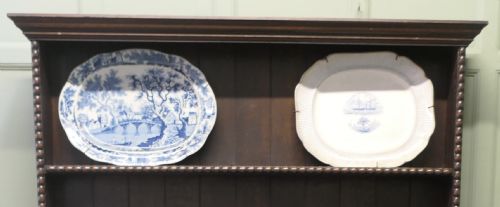
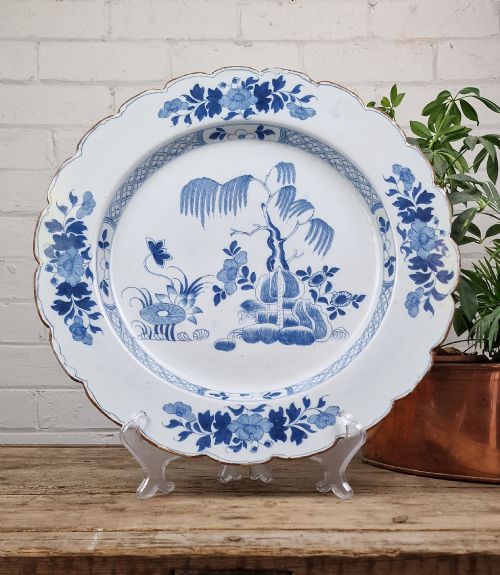


Georgian Blue White Charger
A georgian blue white charger brings grand scale and cobalt pigment together on earthenware.
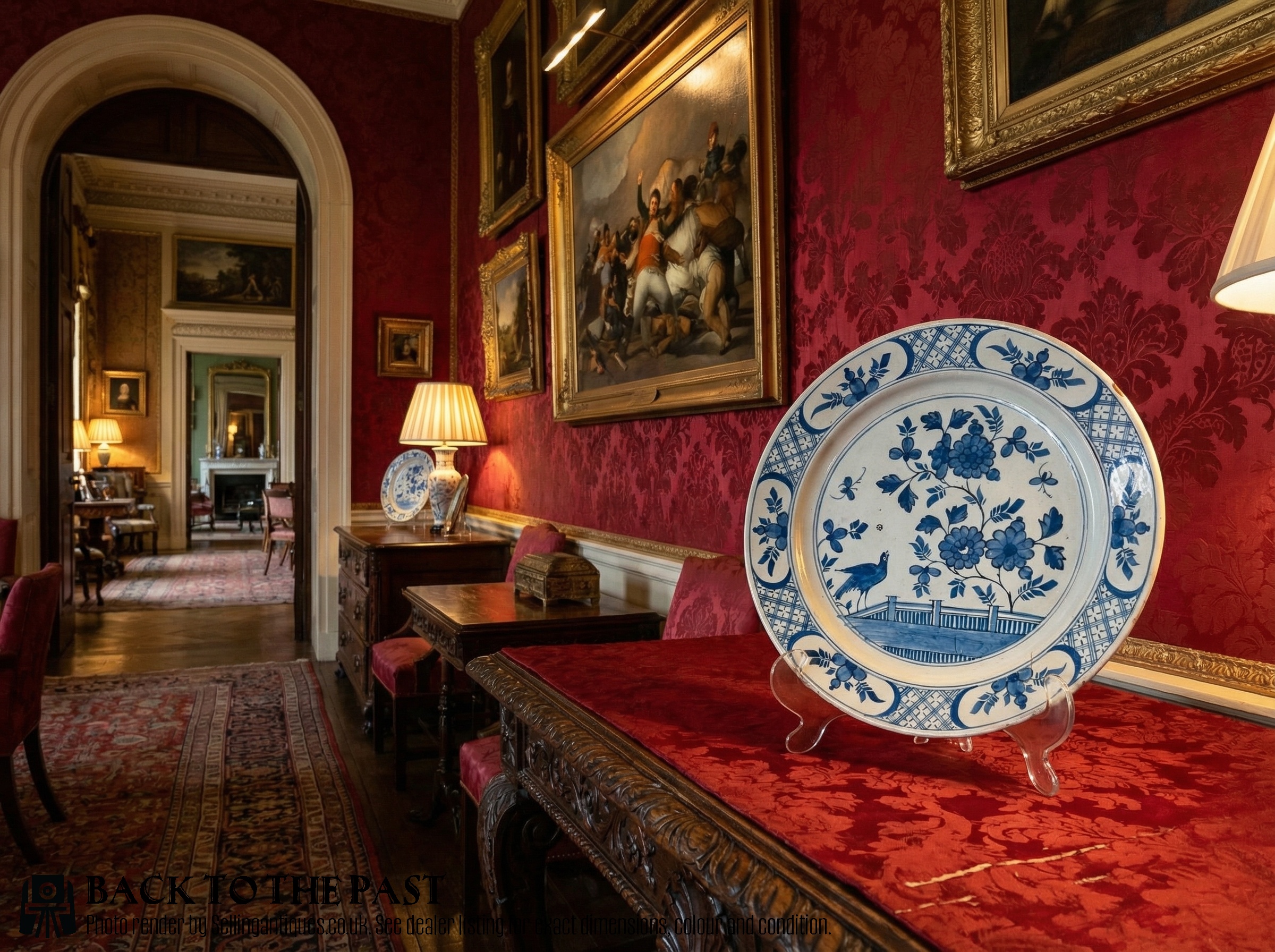
Georgian Blue White Charger
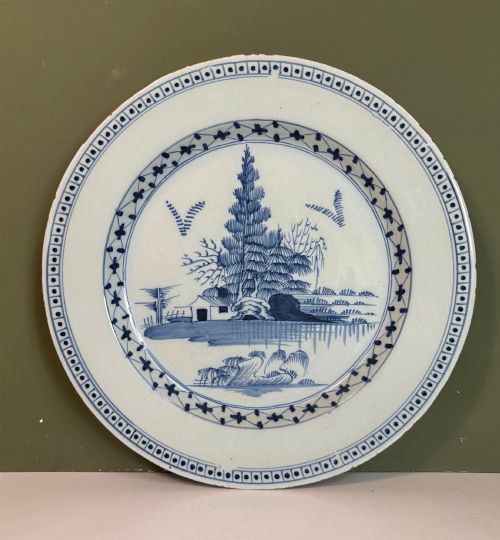
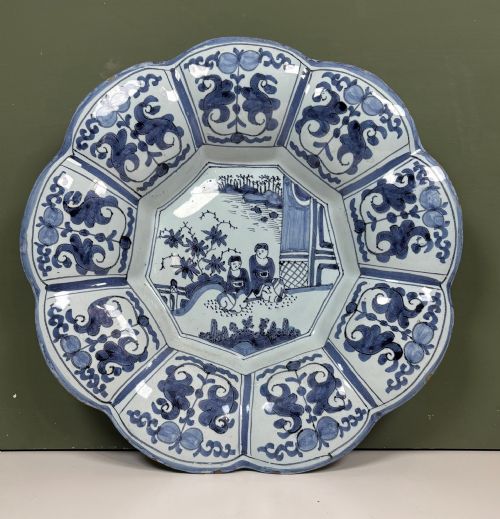
A georgian blue white charger sits at the larger end of domestic ceramic serving vessels, designed to dominate a wall or a sideboard. These pieces emerge from periods spanning the eighteenth and early nineteenth centuries, encompassing both tin-glazed earthenware and later refined ceramic bodies.
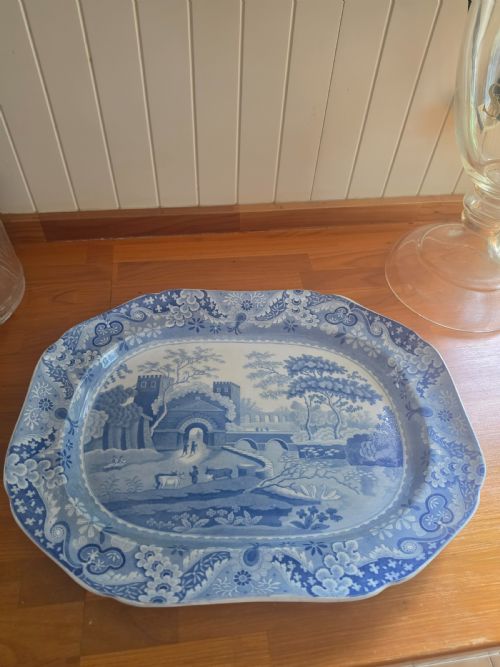
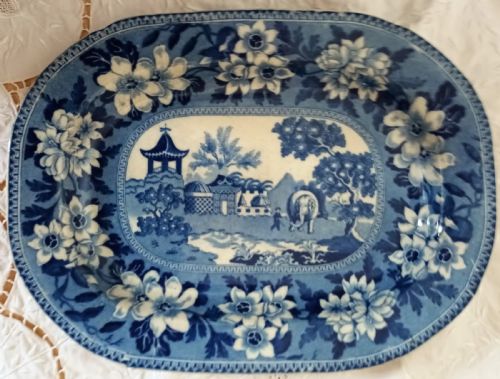
The selections on this page draw heavily from eighteenth-century delftware traditions alongside early nineteenth-century transfer-printed pearls and earthenware. Buyers encounter English and Dutch production centres, particularly Bristol, Lambeth, and Staffordshire potteries.
The forms range from wide flat dishes and deep chargers to large meat platters and compotes. Domestic and narrative motifs dominate the surfaces, showing scenes from maritime battles to traditional Chinoiserie landscapes.
Materials and Method
Potters built these vessels using earthenware bodies coated in tin glaze or lead-based glazes to create an opaque white canvas. Cobalt pigment or oxide supplied the deep blue coloration, applied either by hand painting or via copper-plate transfer printing.
Firing took place in traditional kilns where the cobalt absorbed into the wet glaze, resulting in the characteristic soft feathered edges around the painted brushwork. Transfer-printed examples utilised engraved copper plates to pull fine inked patterns onto tissue paper before pressing them onto the ceramic surface.
Listings feature earthenware, pearlware, and tin-glazed bodies decorated with cobalt oxide across eighteenth and nineteenth-century periods.
Assessing the Pieces
Quality rests upon the crispness of the cobalt application and the stability of the glaze across a broad surface. Hand-painted examples depend on the surety of the brush, while printed pieces rely on the clarity of the transfer without blurring or smudging.
The condition of the glaze and the degree of kiln distortion dictate the standing of an individual charger. Larger earthenware plates naturally suffer minor edge fritting through centuries of handling, but integrity of the central pictorial field remains paramount.
John Rogers and Son·Spode·Minton
The Georgian Blue White Charger Glossary
- Charger
- A large decorative plate or serving dish intended primarily for display on walls or sideboards rather than everyday dining.
- Tin Glaze
- An opaque white ceramic glaze containing tin oxide, which provides the smooth surface characteristic of delftware.
- Cobalt Oxide
- A metallic pigment used to achieve deep blue tones in ceramic decoration under high-temperature kiln firings.
- Pearlware
- A refined fine earthenware developed in the late eighteenth century with a subtle bluish glaze that pools in crevices.
- Transfer Printing
- A decoration technique where an engraved copper plate transfers inked designs onto ceramic surfaces via tissue paper.
Georgian Blue White Charger: Frequently Asked Questions
How do I hang a heavy charger safely?
Large earthenware platters require specialised spring-loaded wall hangers that distribute weight evenly across the rim. Ensure the fixing secures directly into wall studs or masonry rather than plaster alone.
Avoid wire solutions that rely on a single point of pressure against the foot ring, as centuries-old ceramic can weaken under constant asymmetric strain.
Were these chargers used for food?
Many large platters served as ceremonial meat dishes or communal serving vessels on dining tables during the Georgian period. Over time, their decorative impact shifted them toward wall display and cabinet storage.
Tin-glazed surfaces remain porous if crazed, meaning modern culinary use is generally discouraged in favour of preservation.
Can I clean these antique dishes with water?
Gentle dusting with a dry microfibre cloth suits most stable surfaces best. If washing is necessary, use tepid water without submerging the piece entirely, avoiding modern chemical detergents.
Soaking can penetrate old glaze fractures and destabilise historic repairs, so moisture should be kept to an absolute minimum.