


Georgian Bible Box
A georgian bible box is a solid timber repository for household scripture and papers, prized for its honest vernacular joinery and rich patination.
Georgian Bible Box
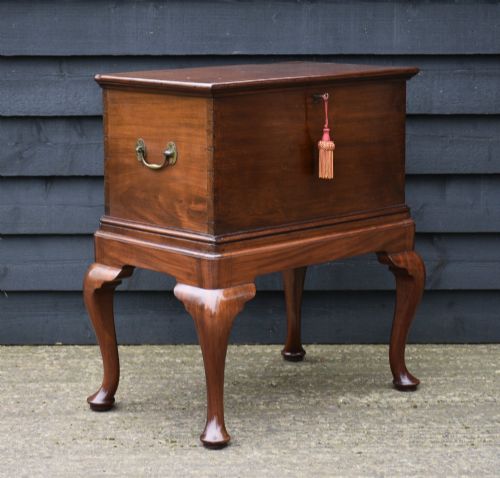
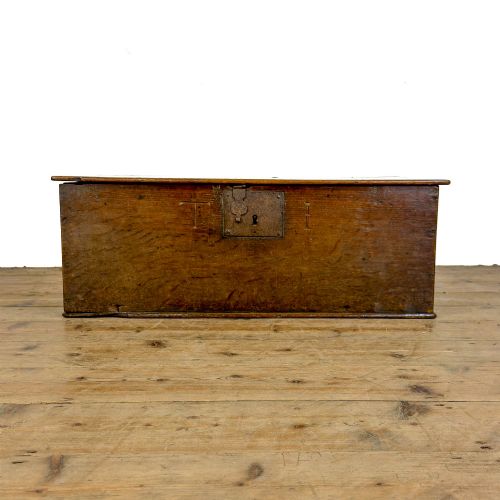
The versions most commonly met on this page span the 18th century and early Georgian periods, occasionally featuring sloped lids for writing or internal drawers. Some variations emerge as diminutive coffer bach chests on feet or desk boxes fitted with iron and brass hardware.
How they were made
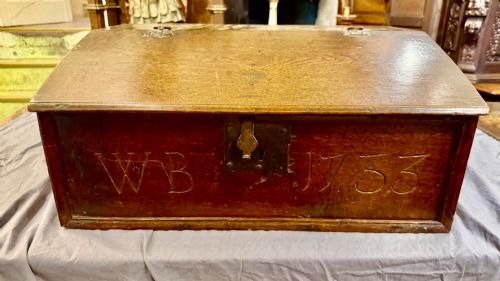
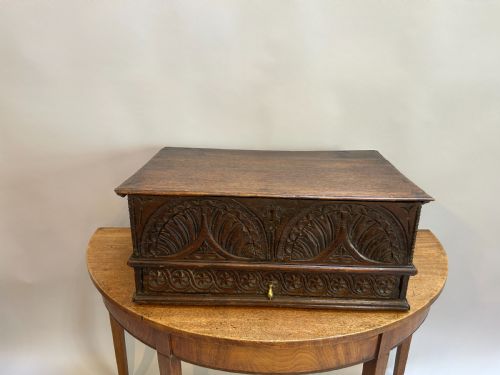
Cabinet makers utilised native timbers such as oak and elm, often pairing them with contrasting fruitwood, holly, and bog oak inlay for decorative effect. Surfaces frequently display carved friezes alongside owner initials and dates inscribed into the wood.
Construction relied on traditional joinery methods, housing lids with iron hinges and securing contents with brass locks. Internal layouts sometimes incorporate small fitted drawers beneath the main compartment or resting upon later stands.
Makers and owners left their mark quite literally, carving initials and dates directly into the oak lid for posterity.
What varies in quality
The standard of a piece rests upon the crispness of its carved detailing and the depth of the timber's natural patina. Boxes retaining their original feet, hinges, and internal drawer arrangements command greater attention from collectors.
Proportion and scale also dictate worth, particularly among smaller vernacular examples and miniature coffer bach forms. Integration of contrasting inlay work and legible contemporary dates further elevates the standing of an individual box.
The Georgian Bible Box Glossary
- Coffer bach
- A small Welsh chest traditionally used for holding valuables or linens. These diminutive repositories frequently feature hinged lids and raised feet.
- Bible box
- A portable desk or container designed to store sacred texts and important documents. They often display sloping lids suited for reading or writing.
- Vernacular
- Domestic furniture built by regional craftsmen using local materials rather than following metropolitan fashions. These pieces emphasise utility and robust construction.
- Inlay
- A decorative technique where contrasting materials such as holly or bog oak are set into recesses flush with the primary surface.
- Patina
- The surface sheen and colour developed by timber over decades of handling, exposure to light, and waxing.
Georgian Bible Box: Frequently Asked Questions
What is a coffer bach?
A coffer bach is a small Welsh chest, translated literally as little chest, built during the seventeenth and eighteenth centuries.
These miniature boxes frequently sat on tables or turned feet and served to store family documents, small valuables, or textiles.
Were these boxes only for bibles?
While originally designed to protect household scripture from damp and damage, owners utilised them for deeds, letters, and money.
The sloping lid also provided a convenient surface for reading and writing before dedicated desks became common.
How do I spot a later stand?
Stands added to desk boxes or chests often show differences in timber species, wear patterns, and fixing methods compared to the box above.
Look closely at where the legs join the base to assess whether the support is contemporary with the main body.
What woods were used?
Oak forms the primary material for the vast majority of these pieces, supplemented by elm for specific panels and boards.
Craftsmen incorporated holly, fruitwood, and dark bog oak specifically for decorative contrasting inlay work.