
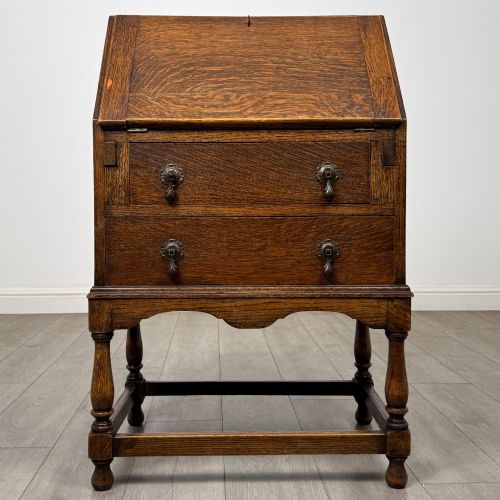
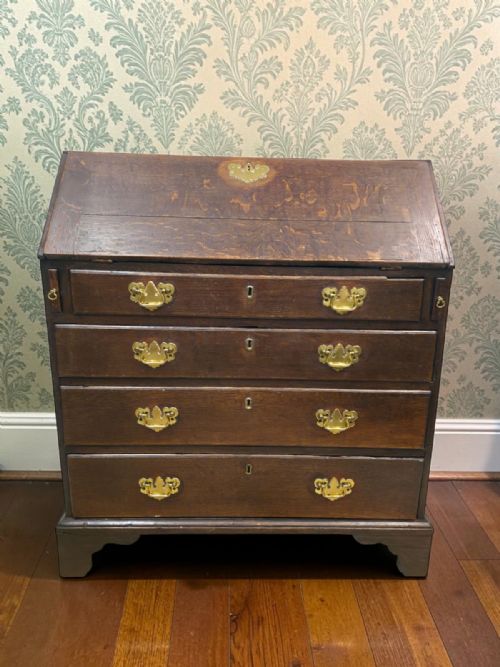
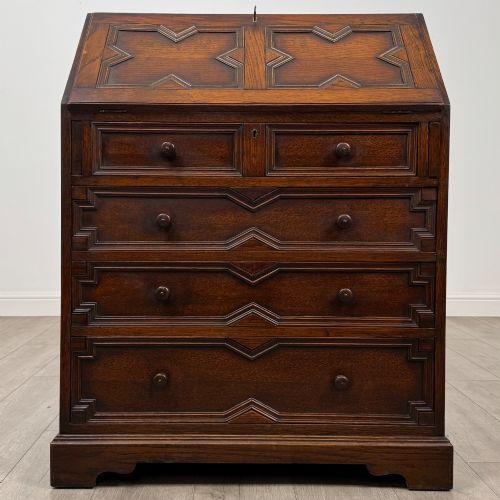
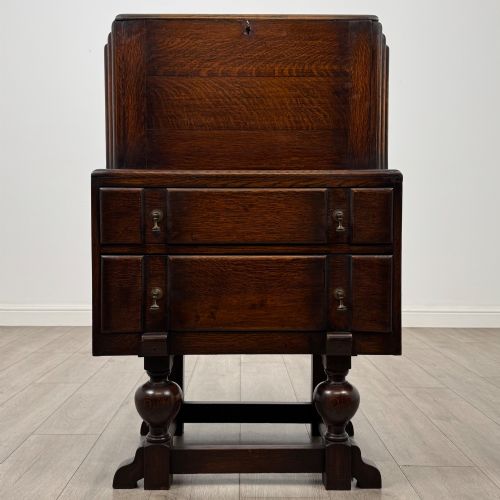
Sloped Oak Desk
A sloped oak desk offers a solid writing surface and concealed storage, drawing on centuries of craftsmanship in hardwood.
Sloped Oak Desk
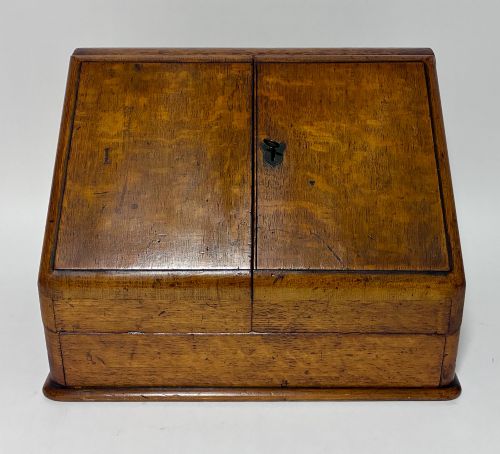
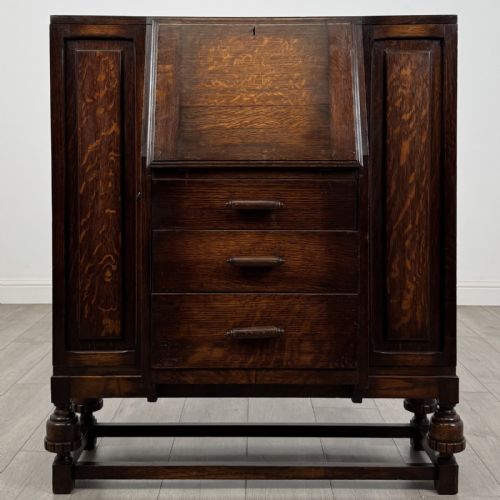
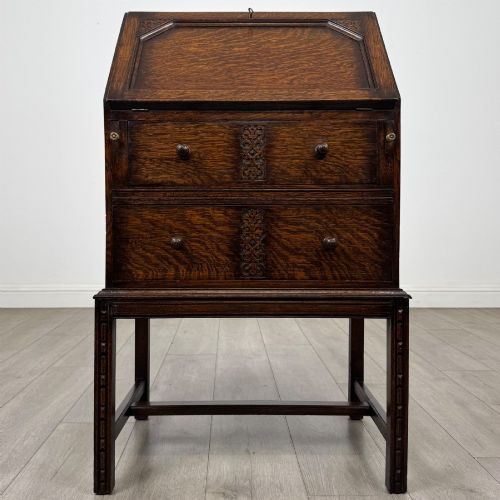
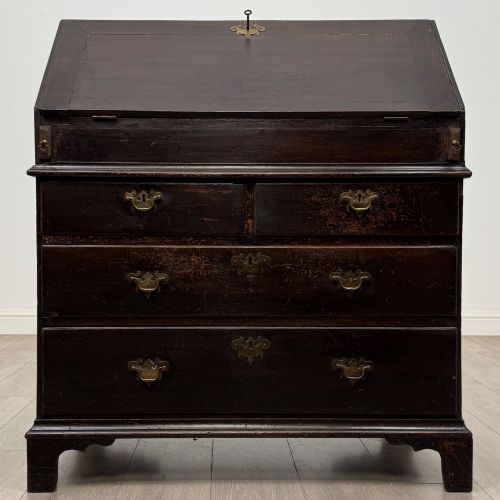
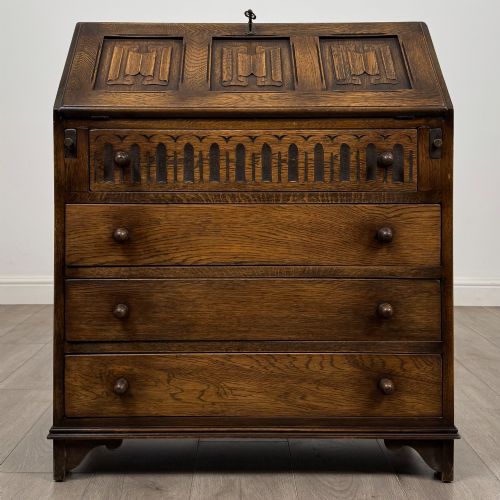
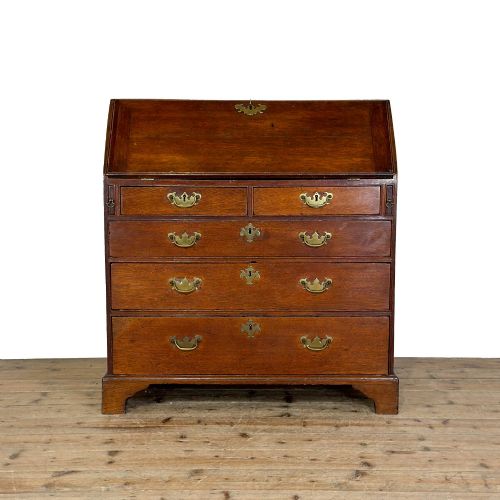
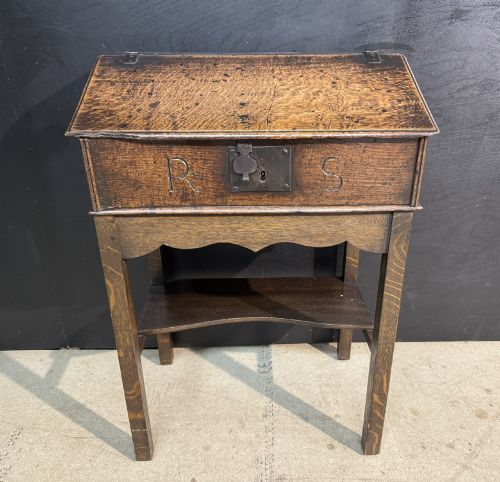
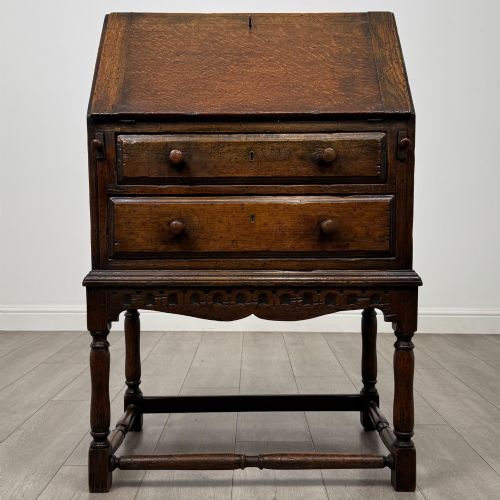
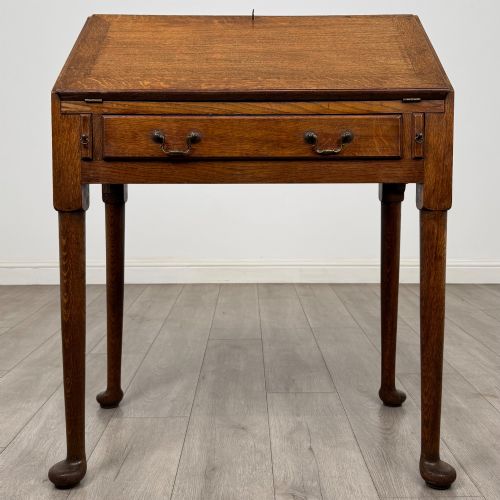
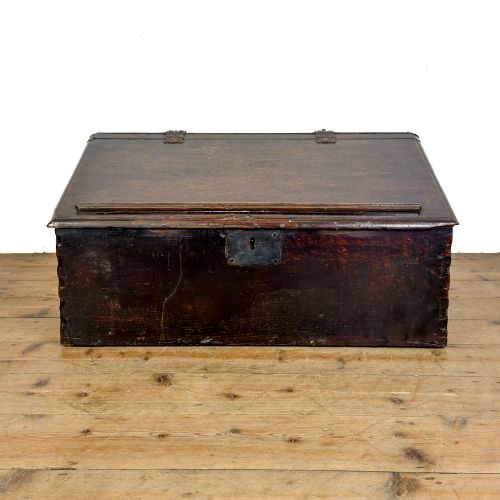
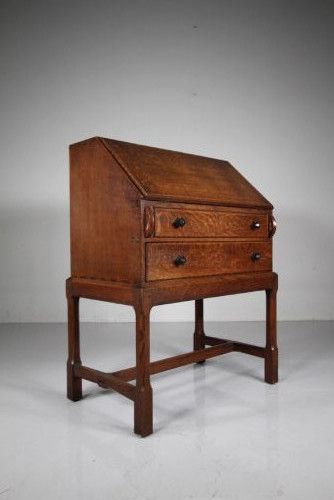
A sloped oak desk encompasses forms such as fall front bureaux, slant front Bible boxes, clerk desks, and writing slopes spanning from the seventeenth century through the Edwardian period. Buyers encounter early vernacular desk boxes alongside Georgian and Victorian bureaux featuring fitted interiors and compartments.
The material palette centres on oak, often accompanied by brass hardware, iron details, and leather writing surfaces. Pieces emerge in styles ranging from plain utilitarian formats to Jacobean Revival and Gothic Revival interpretations.
Materials and construction
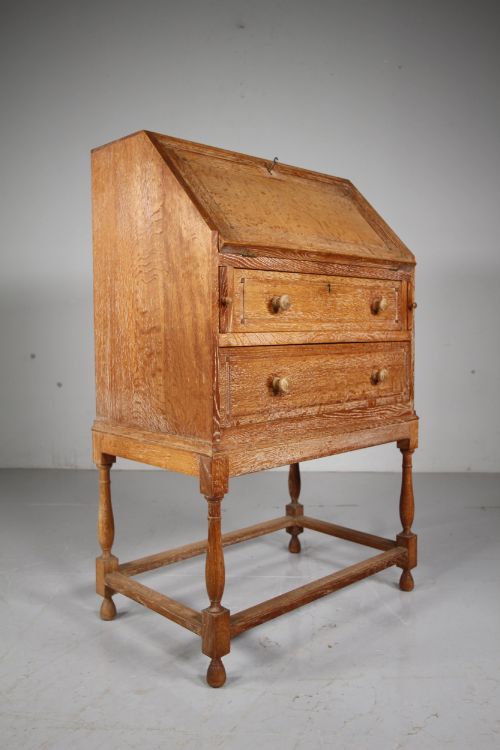
Construction relies heavily on solid oak timbers, sometimes enhanced with pollard oak veneers, walnut, or boxwood details. Cabinet makers utilised traditional joinery techniques to assemble fall fronts, desk boxes, and supporting stands.
Metal fittings such as brass hinges, escutcheons, and iron locks secure the movable slopes and drawers. Leather inserts provide a dedicated writing surface within many of the surviving desks.
Current listings feature oak desks from the 17th century, Georgian, Victorian, and Edwardian periods, utilising brass, iron, and leather.
Judging quality
Quality reveals itself in the integrity of the timber selection and the precision of the carved details, such as linenfold motifs or Green Man reliefs. Pieces featuring well-preserved internal compartments and original brass hardware stand apart from heavily altered examples.
The structural stability of the sloping fall front and the smoothness of interior pigeonholes and small drawers distinguish finer cabinet work from simpler utilitarian items.
Heals of London·Stanley Webb Davies·Pairs MFG Co
The Sloped Oak Desk Glossary
- Bureau
- A desk with a sloping hinged lid that opens to form a writing surface above a series of drawers. This form evolved from smaller portable writing boxes into substantial freestanding furniture.
- Bible box
- A small wooden box with a slanted lid historically used to store sacred texts and writing materials. These portable containers represent some of the earliest surviving writing surfaces.
- Fall front
- A hinged panel that drops down to create a horizontal writing platform and reveals internal compartments. It conceals pigeonholes and small drawers when closed.
- Writing slope
- A portable box with an angled top designed for correspondence and document storage. Interiors frequently include velvet or leather inserts and inkwell compartments.
Sloped Oak Desk: Frequently Asked Questions
What is a sloped oak desk?
A sloped oak desk is a piece of furniture featuring an angled writing surface, encompassing formats from early portable Bible boxes to freestanding Georgian and Victorian bureaux.
These desks provide both a slanted top for writing and integrated storage compartments for paper and ink.
How were early writing boxes used?
Early writing boxes were portable containers placed on tables or laps to hold correspondence, documents, and writing implements.
Owners transported these lidded boxes between rooms or on journeys before dedicated writing furniture became common.
How do I identify seventeenth-century pieces?
Seventeenth-century pieces typically display vernacular construction, pegged joinery, and heavy solid oak timbers without modern veneers.
Characteristics often include simple box forms, hand-carved panels, and minimal internal fittings compared to later Georgian and Victorian examples.
Where should I place a bureau?
A bureau suits studies, living rooms, or hallways where its compact footprint and fold-down writing flap remain accessible.
The enclosed compartments help keep stationery tidy when the desk is not in use.