
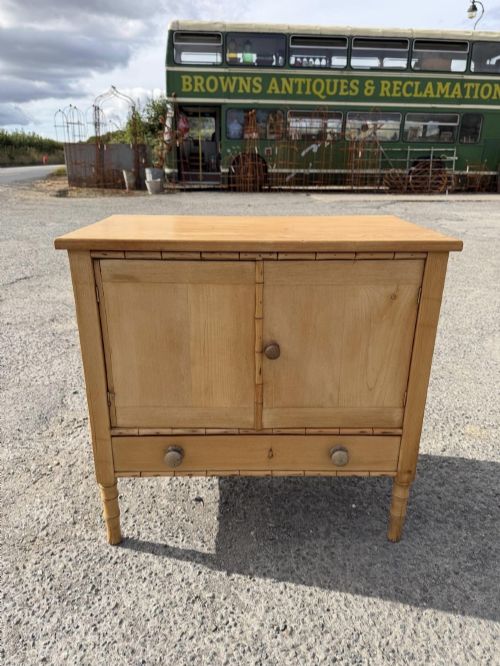
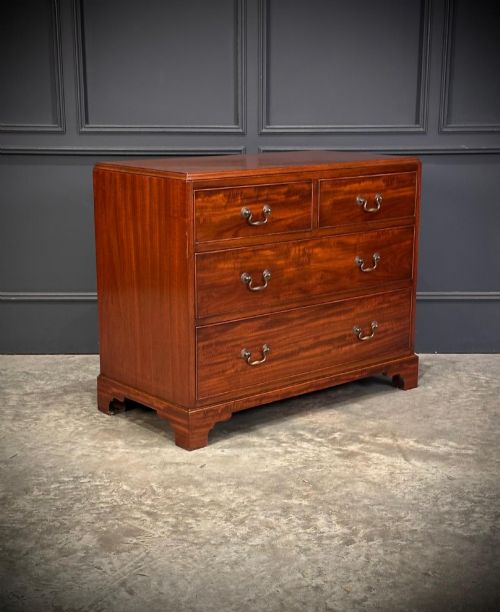
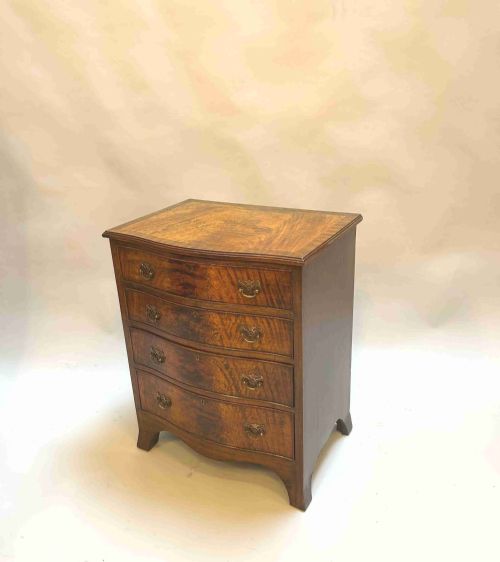
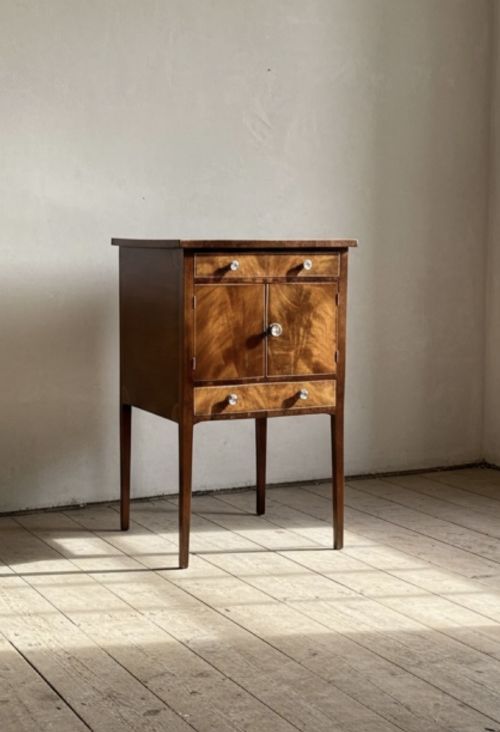

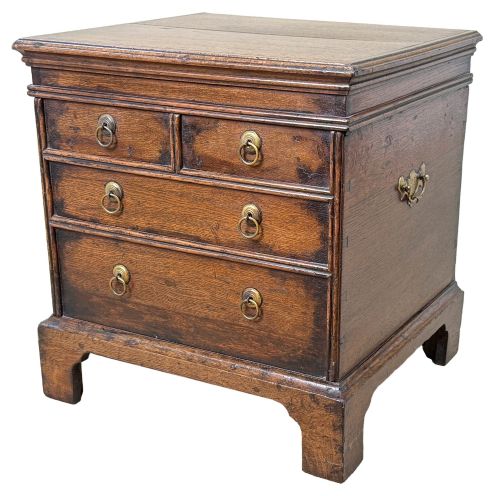
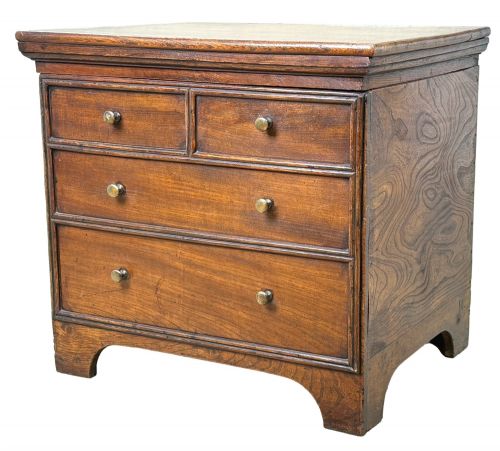
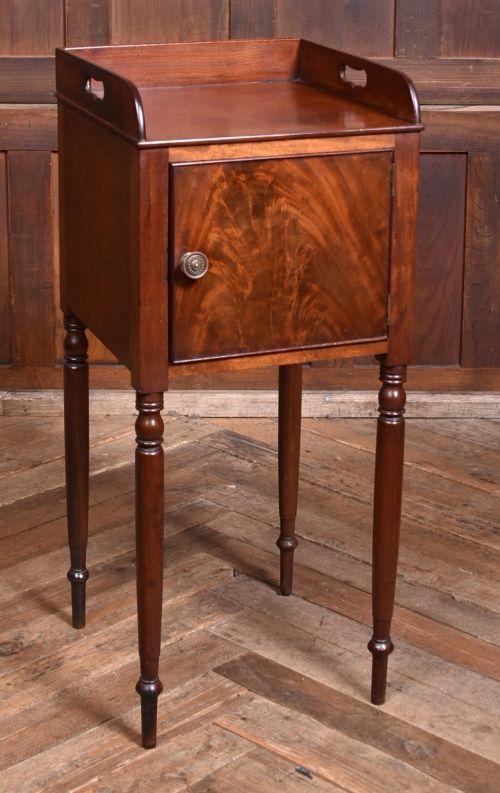
Georgian Bedside Commode
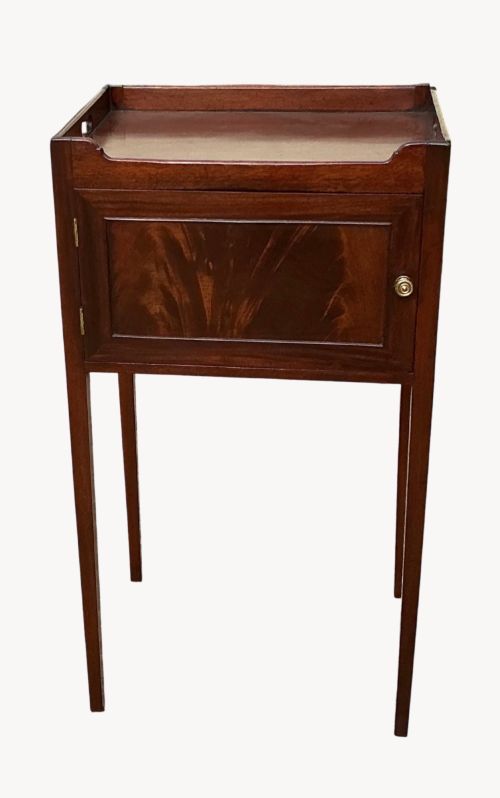
These georgian bedside commode pieces are timber cabinets built to hide bedroom sanitation, now serving as bedside tables.
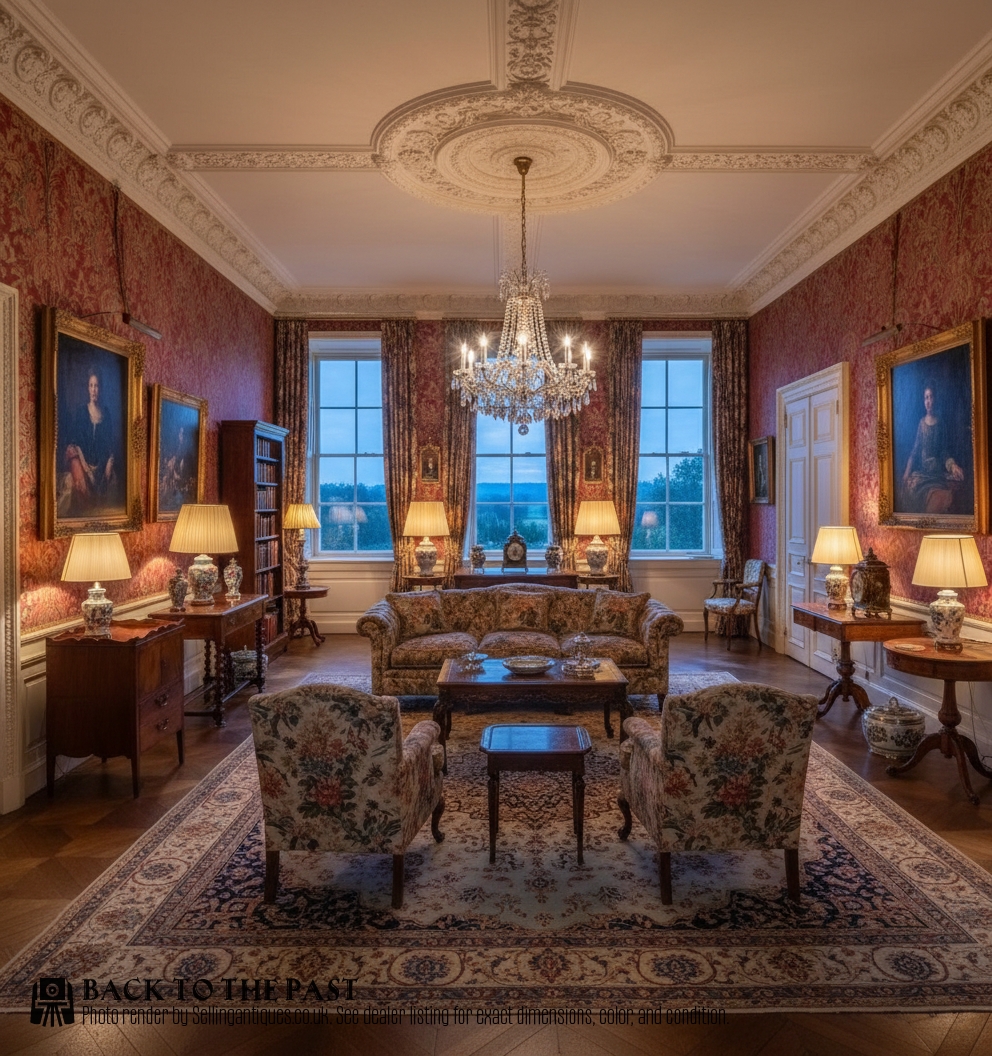
Georgian Bedside Commode
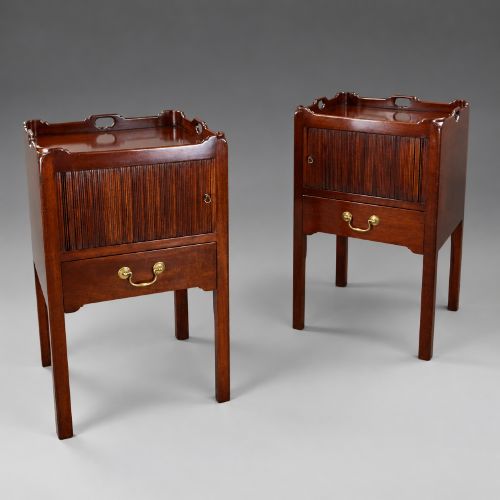
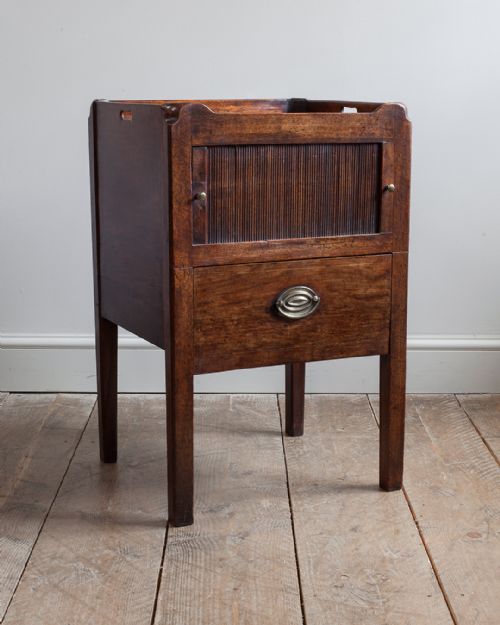
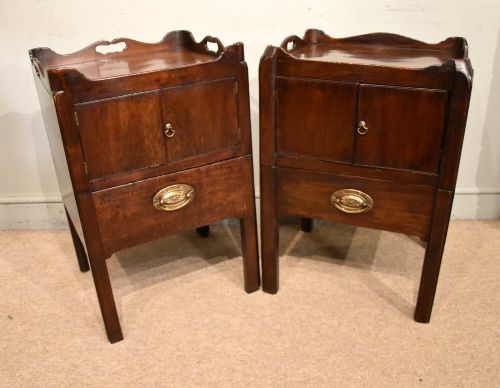
A georgian bedside commode takes the form of a small timber cabinet, cupboard, or tray top table designed for the eighteenth-century bedroom. The search phrase covers pieces originally constructed as close stools alongside later revivals from the nineteenth and twentieth centuries.
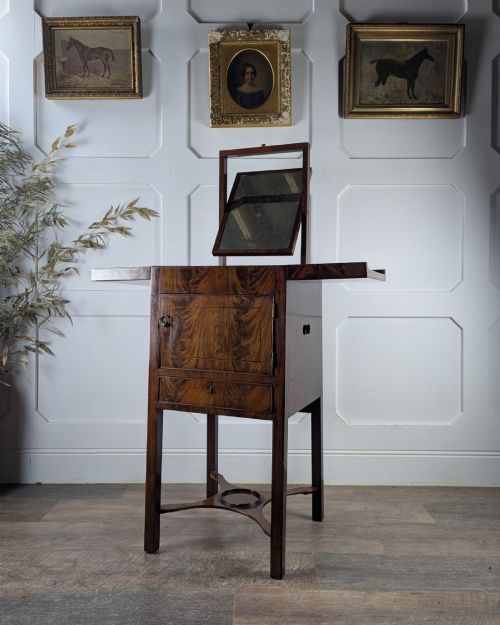
Most examples met on this page appear in mahogany, flame mahogany veneer, or oak, often following George III or Regency designs. Makers constructed these items to hold chamber pots behind doors or beneath hinged tops.
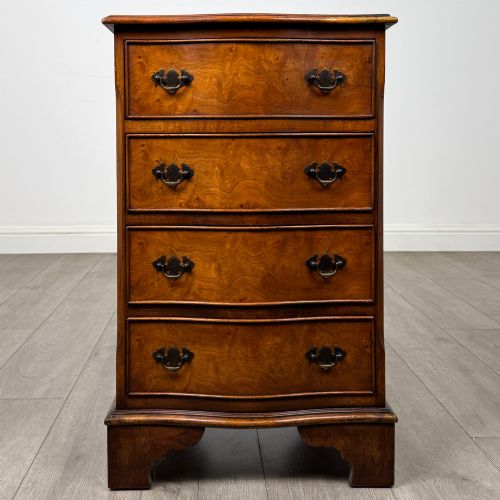
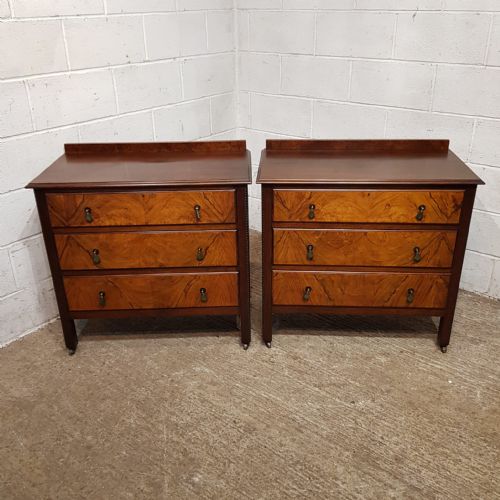
Surviving pieces span actual eighteenth-century originals through to Edwardian and 1930s interpretations. Buyers encounter tray top formats, tambour fronts, and versions styled as small chests of drawers.
Materials and Construction
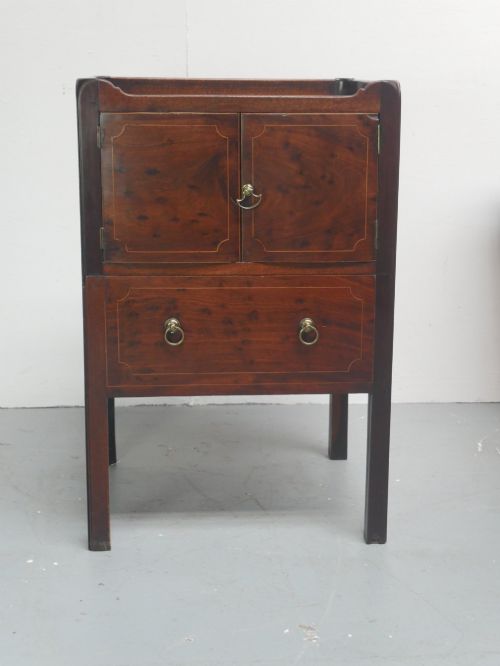
Cabinet makers utilised solid mahogany, burr walnut, oak, and pine as the primary structural timbers. Selected pieces display flame mahogany veneer or boxwood stringing applied to carcases and doors.
Joinery methods involved dovetail drawers, panelled cupboard doors, and turned or square supports. Brass handles, hinges, and carrying brackets completed the hardware on utilitarian and formal examples alike.
Listings feature mahogany, burr walnut, oak, and pine across Georgian, Regency, and Edwardian periods.
Quality and Construction Differences
The standard of timber selection divides basic pieces from superior examples. Workshops using figured Cuban mahogany, dense burr walnut, and matched grain veneers achieved greater visual depth than those using plain pine or secondary woods.
Joinery execution dictates the longevity of each cabinet. Finer pieces retain original brass hardware, tight dovetail joints in the drawer carcases, and precisely fitted tambour shutters or hinged tray tops.
The Georgian Bedside Commode Glossary
- Commode
- A piece of furniture developed to enclose a chamber pot. In this category, it denotes a bedside cabinet or close stool.
- Tray top
- A raised rim surrounding the upper surface of a table or cabinet. This feature prevented items from sliding off the bedside surface.
- Tambour
- A flexible shutter formed of narrow strips of timber glued to canvas. It allowed smooth access to enclosed bedside cabinet compartments.
- Close stool
- An enclosed wooden seat containing a chamber pot. Eighteenth-century versions often disguised this function inside the shell of a small chest.
- Brushing slide
- A pull-out shelf integrated above drawers. It provided a clean surface for sorting items without opening the main compartment.
Georgian Bedside Commode: Frequently Asked Questions
What is a georgian bedside commode?
A georgian bedside commode is a small eighteenth-century cabinet built to house a chamber pot out of sight. These compact units served bedrooms before indoor plumbing became standard.
Today, buyers repurpose these timber cupboards as bedside tables, lamp stands, or small storage chests. Their enclosed designs hide modern clutter while fitting narrow spaces beside a bed.
How do I spot an original eighteenth-century piece?
Original eighteenth-century pieces display period construction methods such as hand-cut dovetails, timber shrinkage patterns, and secondary woods like oak or pine inside carcases. Hardware and timber patination also point to age.
Later Edwardian and 1930s Georgian Revival versions show different internal machining marks, cleaner modern glues, and standardised fixings. Comparing timber grain and structural wear helps clarify the manufacturing era.
What woods were used for these cabinets?
Mahogany served as the predominant timber, often paired with flame mahogany veneers for richer surface patterns. Cabinet makers also utilised oak, walnut, burr walnut, elm, and pine.
Inlays in boxwood appear on select Regency and George III examples. Secondary timbers inside drawers typically consist of oak or pine depending on the workshop origin.
How do I use one in a modern bedroom?
These cabinets function effectively as bedside tables for lamps, books, and small nighttime essentials. The internal cupboards conceal items that would otherwise clutter an open tabletop.
Tray top models hold drinks safely behind raised rims, while drawer versions organise personal items. Their compact footprints suit smaller guest rooms and tight spaces.