
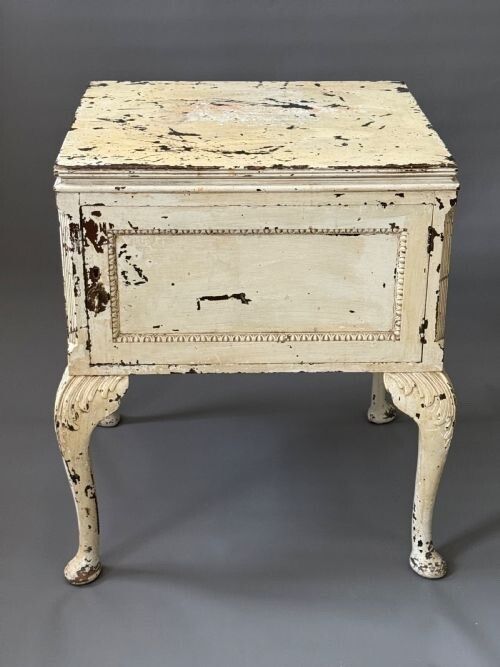
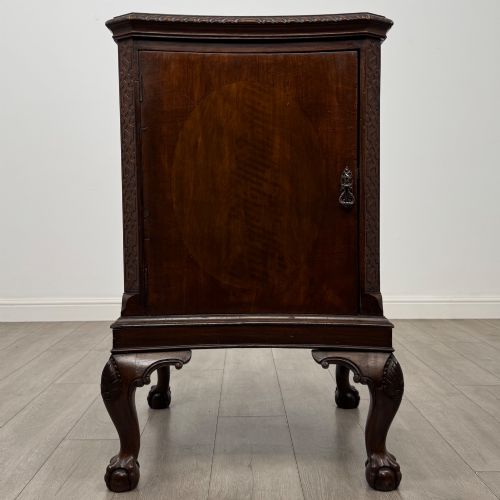

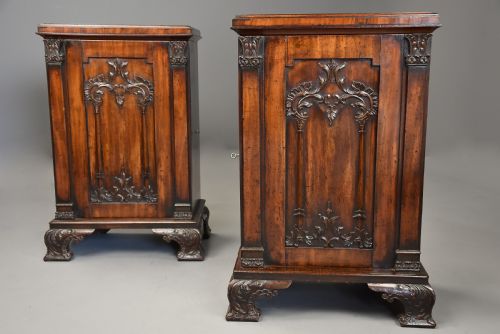
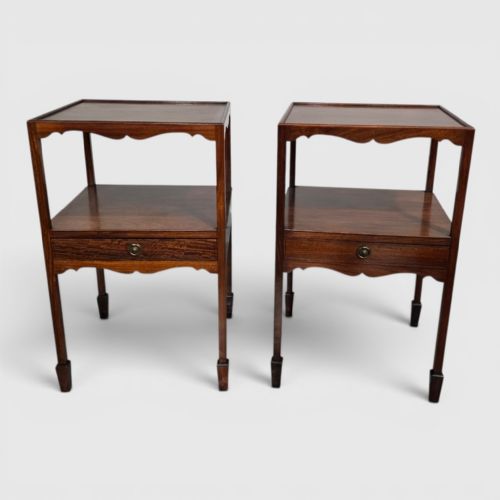




Chippendale Bedside Cabinet
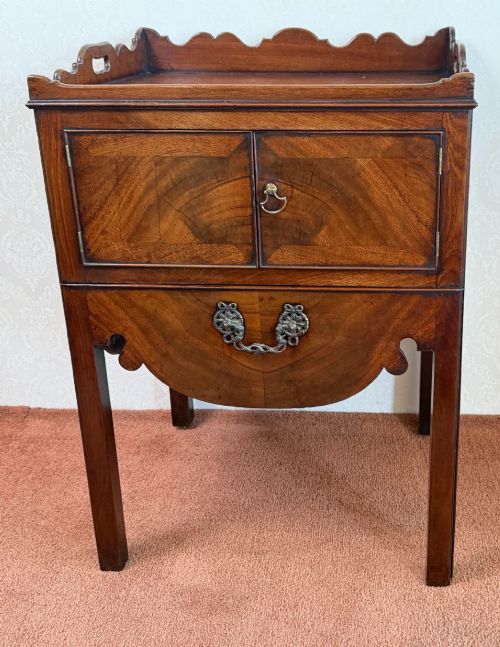
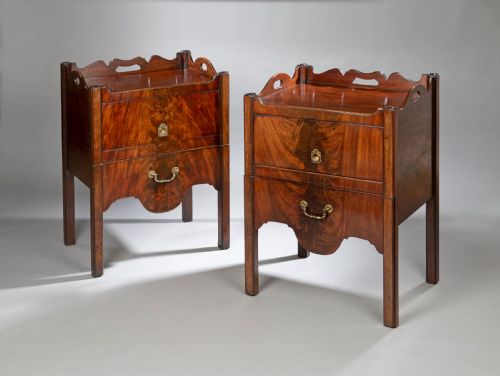
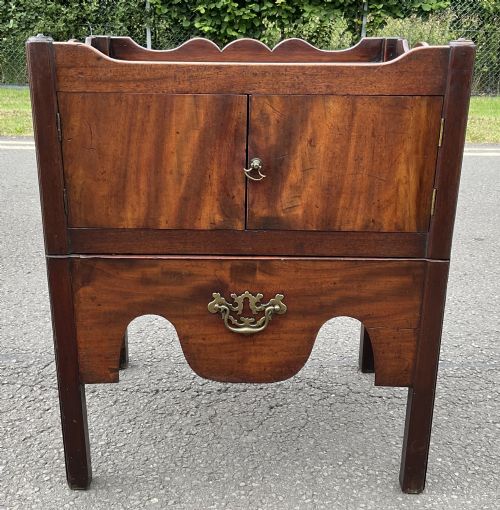
These chippendale bedside cabinet pieces bring Georgian elegance and clever storage to the bedroom.
Chippendale Bedside Cabinet
A chippendale bedside cabinet provides enclosed storage next to the bed, taking the form of a cupboard, commode, or pedestal cabinet. These items range from mid eighteenth century Georgian originals to Edwardian revivals.
Buyers encounter genuine eighteenth century examples alongside later twentieth century and Edwardian interpretations. Most pieces share the characteristic mahogany construction and classical proportions associated with the style.
Materials and Construction
Cabinet makers relied predominantly on mahogany for these items, sometimes adding inlay, paint, or brass hardware. Timber selection dictated the structural integrity and the richness of the final finish.
Surfaces often feature shaped tray tops or serpentine outlines that required skilled woodworking techniques to shape the solid wood. Workshops also integrated wire mesh panels on specific cupboard doors.
Construction methods evolved from eighteenth century joinery practices to Edwardian and later revival techniques. Cabinet makers utilised traditional framing and dovetailing to ensure stability in daily use.
Some nineteenth century cabinets hid chamber pots behind polite panelled doors, proving that discretion was the ultimate Victorian virtue.
Distinctions in Quality
Quality depends on the crispness of the carving, the selection of figured mahogany timber, and the subtlety of the serpentine or tray top shaping. Period pieces from the eighteenth century demonstrate superior hand joinery compared to later revivals.
The integrity of the original brass handles, hinges, and internal fittings influences the overall standard of a piece. Finer examples maintain untouched surfaces and deep patination accumulated over centuries of use.
The Chippendale Bedside Cabinet Glossary
- Tray top
- A raised rim around the upper surface designed to prevent items from rolling off. This feature appears frequently on eighteenth century examples.
- Serpentine front
- A shaped furniture front featuring a convex centre flanked by concave curves. This contour requires advanced woodworking skill.
- Commode
- A term historically used for a bedside cupboard or enclosed cabinet with doors and drawers. These pieces served practical bedside functions.
- Pedestal cabinet
- A tall, narrow freestanding cupboard designed to stand beside furniture. They offer vertical storage within a compact footprint.
Chippendale Bedside Cabinet: Frequently Asked Questions
How do I date a cabinet?
Examine the timber, construction methods, and secondary woods inside the drawers and carcass. Eighteenth century pieces show hand cut dovetails and natural ageing, whereas Edwardian revivals display later manufacturing traces.
Compare the style details against known Georgian and revival periods. Hardware fixings and interior linings often provide further clues to the decade of manufacture.
Are pairs difficult to find?
Original matching pairs of eighteenth century cabinets are scarce because bedside furniture was rarely made in symmetrical sets. Most matching pairs originate from the Edwardian revival period.
Look closely at the proportions and timber grain to verify if single tables were later paired together. Single cabinets remain the standard offering in this category.
What is a tray top used for?
The raised gallery edge kept water jugs, glasses, and lamps secure on the upper surface during the night. It also protected bedroom textiles from accidental spills.
Cabinet makers shaped these edges from solid mahogany to match the decorative scheme of the cabinet base. This practical addition defines many Georgian designs.
How do I care for mahogany?
Keep wooden cabinets away from direct sunlight and strong heat sources to prevent the mahogany from drying out or warping. Regular dusting with a soft, dry cloth preserves the polished surface.
Apply a quality wax periodically to nourish the grain and maintain the natural lustre of the timber. Avoid using silicone sprays or harsh chemical cleaners.