
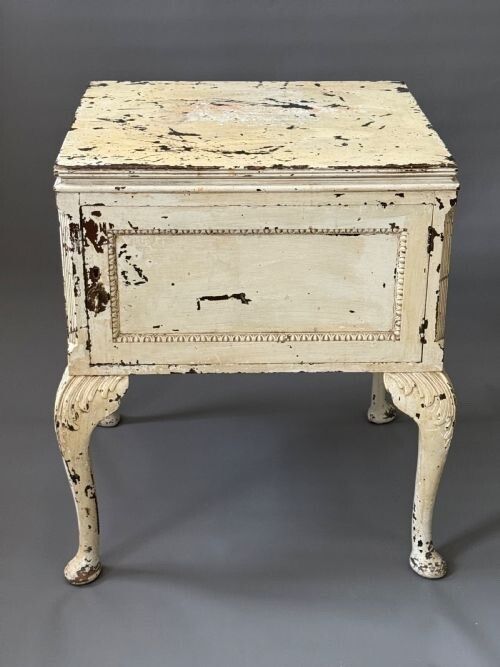
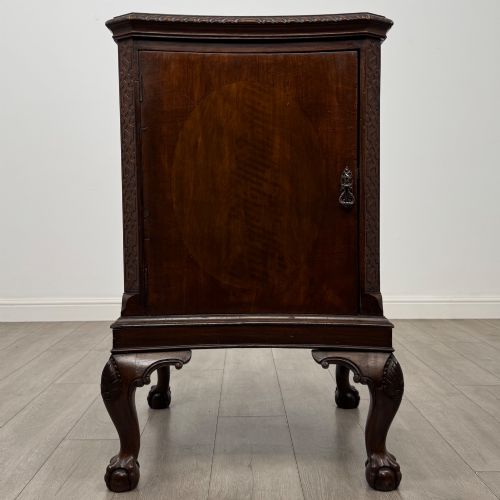
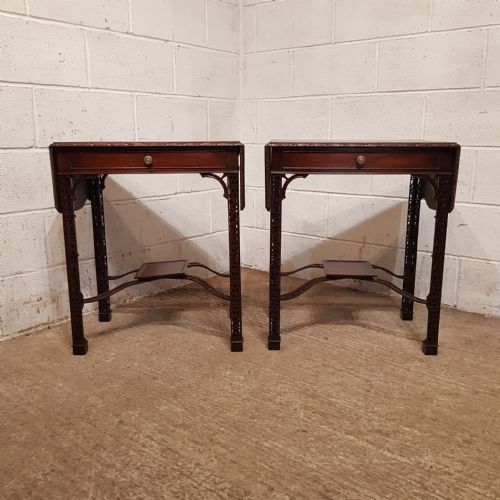
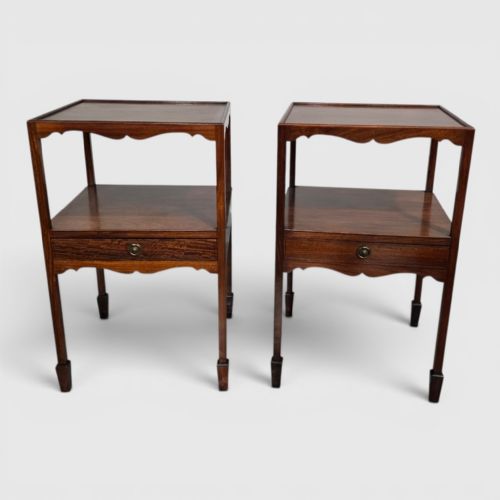
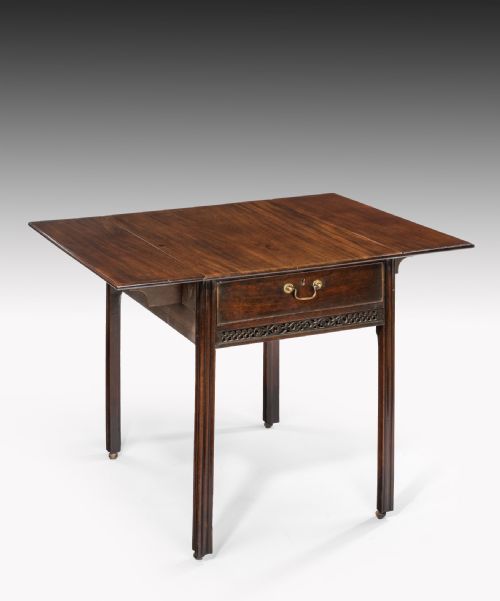


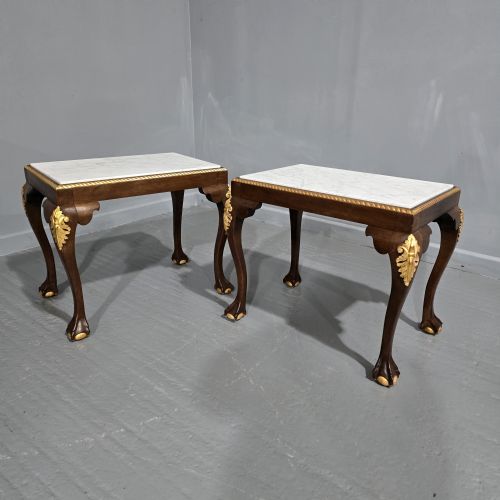


Chippendale Style Nightstand
These chippendale style nightstand pieces bring mahogany craft and classic revival forms to modern bedrooms.
Chippendale Style Nightstand
When you search for chippendale style nightstand, you are looking at bedside cabinets, side tables, and lamp stands rooted in eighteenth-century proportions. The pieces available span from Georgian originals down through Edwardian revivals and early twentieth-century interpretations.
You are most likely to meet mahogany bedside cabinets and lamp tables carrying revival details. The forms include drop-leaf tables, tray-top cabinets, and serpentine chests designed for practical bedside storage.
How they were made
Makers utilised solid mahogany and Cuban mahogany to build these cabinets, often selecting timber with deep grain patterns. Brass hardware and occasional paint or gold leaf finish the construction.
Joinery techniques focus on sturdy carcases for bedside cabinets and drop-leaf mechanisms for functional occasional tables. Marble tops appear on select pieces to provide a durable surface.
Current listings span from Georgian origins through Edwardian revivals, uniting mahogany, brass, and marble in bedside cabinets and occasional tables.
What varies in quality
The distinction between standard production and superior work lies in the selection of timber, such as figured Cuban mahogany. Cabinet-makers who invested time in crisp carving and well-fitted drawers produced pieces that hold their presence.
Surface finishing dictates visual success, where rich polishing enhances the natural grain rather than masking it. Structural integrity in drop-leaf mechanisms and serpentine fronts separates everyday utility from finer examples.
The Chippendale Style Nightstand Glossary
- Cuban Mahogany
- A dense, dark timber prized for its rich figure and durability in eighteenth-century furniture. It was frequently utilised for high-status tables and cabinets.
- Serpentine
- A furniture front curved in a wave shape, presenting a convex centre flanked by concave sides. This technique demands precise woodworking skill.
- Tray-Top
- A table or cabinet top finished with a raised rim to prevent items from rolling off. Edwardian revival pieces adopted this form for bedside utility.
- Drop-Leaf
- A table design featuring hinged flaps that fold down to save space or lift up to extend the surface. It appears on occasional and side tables in the evidence.
Chippendale Style Nightstand: Frequently Asked Questions
What is a chippendale style nightstand?
It is a bedside cabinet or lamp table that draws on eighteenth-century Georgian design principles. These pieces often feature mahogany construction and revival detailing.
They serve as practical bedroom furniture while bringing traditional cabinet-making forms into the domestic space.
How do I date a bedside cabinet?
Dating relies on examining timber selection, joinery methods, and the specific style revival period. Pieces range from eighteenth-century originals to Edwardian and early twentieth-century interpretations.
Matching the hardware, wood finish, and overall proportions helps place a piece within the Georgian or revival eras.
Where were these tables used?
They were built primarily as bedside cabinets, lamp tables, or occasional surfaces in bedrooms and reception rooms. Their compact proportions made them suitable for holding lamps and night-time essentials.
Drop-leaf and tray-top variations offered flexible surface area depending on the room layout.
What wood is most common?
Mahogany is the dominant timber seen across these listings, including standard mahogany and figured Cuban mahogany. Its strength and deep colour made it the preferred choice for this style.
Occasional pieces incorporate brass fittings and marble tops to complement the dark wood construction.