
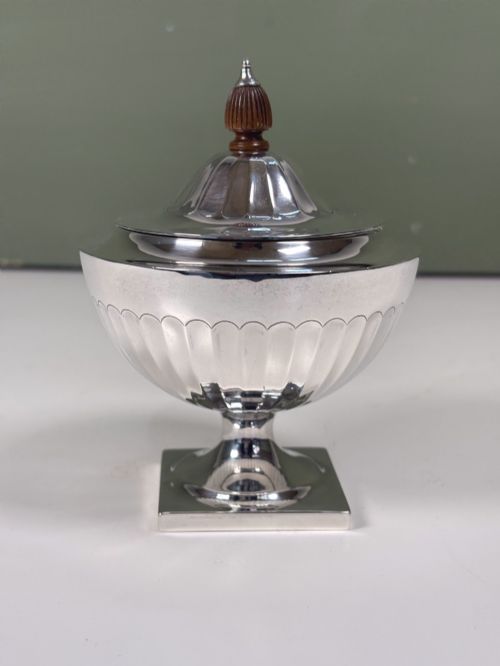
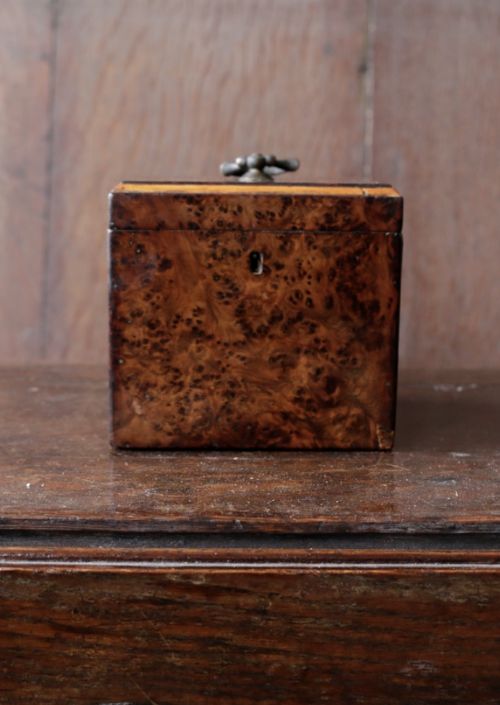


George V Tea Caddy
A george v tea caddy brings early twentieth-century silver and craftsmanship to the table, offering a glimpse into the enduring tradition of domestic tea storage.
George V Tea Caddy
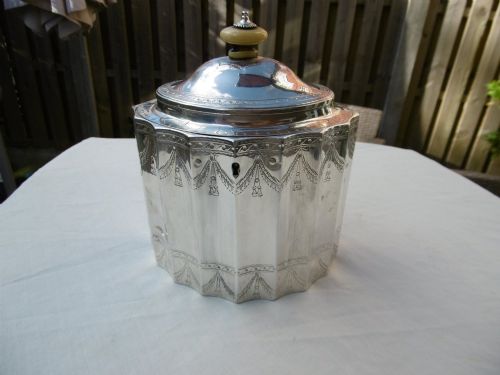
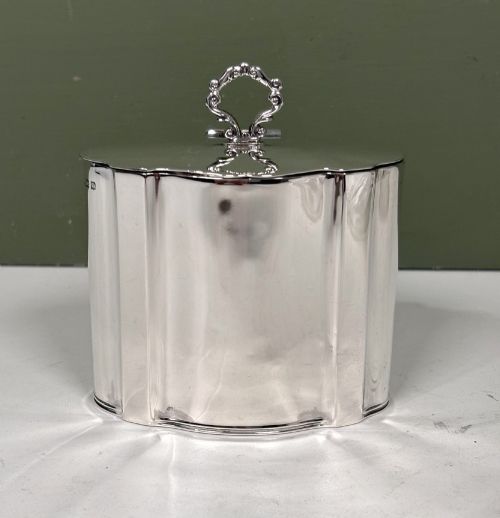
A george v tea caddy represents the solid silver containers produced during the reign of King George V, alongside the broader tradition of wooden and silver boxes found in the archive. These pieces range from polished sterling silver vessels made in Sheffield and Birmingham to earlier wooden caddies spanning the Georgian and Victorian eras. Buyers seeking this specific monarchical style will encounter hallmarked silver boxes dating from the 1910s and 1920s, often bearing marks from notable silversmiths.
The selection on this page extends beyond silver to include wooden storage boxes utilising timbers such as mahogany, yew, and satinwood. Many examples incorporate interior compartments or come paired with matching caddy spoons made by makers like George Unite and Joseph Willmore. Whether selecting a plain silver oval box or an inlaid wooden chest, buyers engage with forms designed originally for preserving precious tea leaves.
Materials and Making
Sterling silver examples were shaped through hammering, spinning, and casting, then finished with chased, embossed, or fluted surface details. Silversmiths applied hallmarks to stamp the metal purity, year of production, and city of assay, providing a clear record of origin.
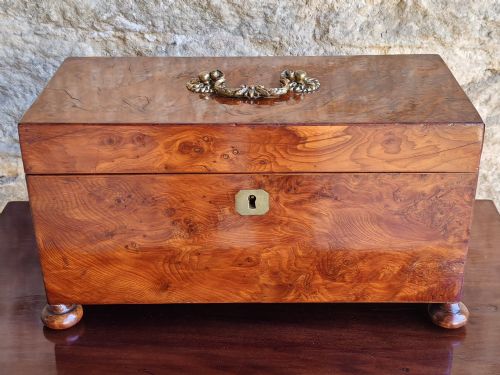
Wooden caddies relied on precise cabinetmaking techniques, utilising timber veneers like burr yew, harewood, and amboyna laid over solid foundations. Makers incorporated marquetry, brass inlay, and bone escutcheons, often building hidden drawers or internal lidded compartments within the box.
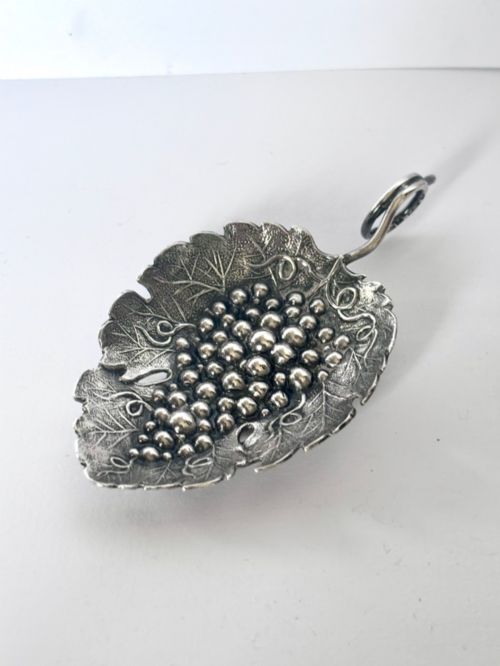
Several silver caddy spoons take the whimsical form of a jockey's cap or a delicate vine leaf.
Evaluating Quality
Quality in these pieces rests upon the crispness of the silversmith's chasing and the integrity of the cabinetmaker's joins. Superior silver boxes exhibit balanced proportions and clear, legible hallmarks without thinning to the metal walls from excessive polishing.
Wooden specimens demonstrate quality through the matching of grain patterns across the panels and the precision of any marquetry or stringing. Original internal elements, such as fitted mixing bowls and working locks with functional keys, elevate the standing of an individual piece.
Joseph Willmore·Robert Hennell·Mappin & Webb·William Neale·George Unite·Walker & Hall·Bracher & Sydenham·Charles Aldridge·Thomas Shepherd·T H Hazlewood·The Atkins Brothers·Henry Chawner·S Blanckensee & Sons·James Dixon & Sons
The George V Tea Caddy Glossary
- Hallmark
- Official stamps applied to precious metals indicating the maker, assay office, and year of testing. These marks allow collectors to date silver pieces precisely.
- Caddy spoon
- A small spoon specifically designed for measuring loose tea leaves from a caddy into a pot. Many feature shell-shaped bowls or figural handles.
- Marquetry
- Decorative veneer work forming pictorial or geometric patterns using various coloured woods. Artisans applied these designs to the exterior surfaces of luxury boxes.
- Sarcophagus
- A box shape featuring a domed or sloping lid atop a rectangular or ogee-curved base, popular during the Regency and Georgian periods.
- Escutcheon
- A small protective plate surrounding a keyhole, frequently fashioned from brass, bone, or ivory on wooden tea containers.
George V Tea Caddy: Frequently Asked Questions
What is a george v tea caddy?
A george v tea caddy is a silver container manufactured during the reign of King George V, typically bearing hallmarks from the second decade of the twentieth century.
These pieces reflect traditional silversmithing techniques from assay offices in cities like Sheffield and Birmingham, often featuring oval or fluted body shapes.
How were tea caddies used?
Tea caddies served to store precious tea leaves securely under lock and key when tea was an expensive and heavily taxed commodity in British households.
Many boxes included internal divisions or mixing bowls so the head of the house could blend different varieties of tea before brewing.
How do I care for silver and wooden caddies?
Silver caddies require occasional gentle cleaning with a soft cloth and appropriate silver polish to maintain their reflective surface without wearing down the raised details.
Wooden caddies benefit from stable room humidity and periodic treatment with neutral wax to preserve the finish of veneers like satinwood, mahogany, and burr yew.
How can I tell the period of a caddy?
Silver examples carry stamped hallmarks that identify the exact year of assay and the workshop responsible for production. Wooden caddies require an examination of construction methods, timber types, and inlay styles to estimate their date of manufacture.