


George IV Writing Desk
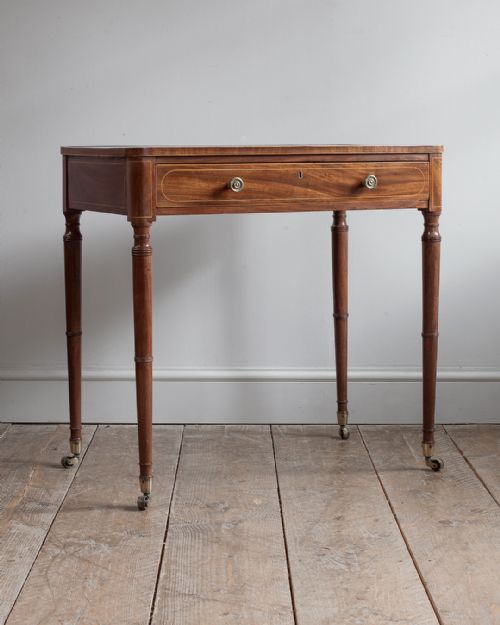
A george iv writing desk brings refined proportion and dense timber into a room, offering a dedicated surface for correspondence.

George IV Writing Desk
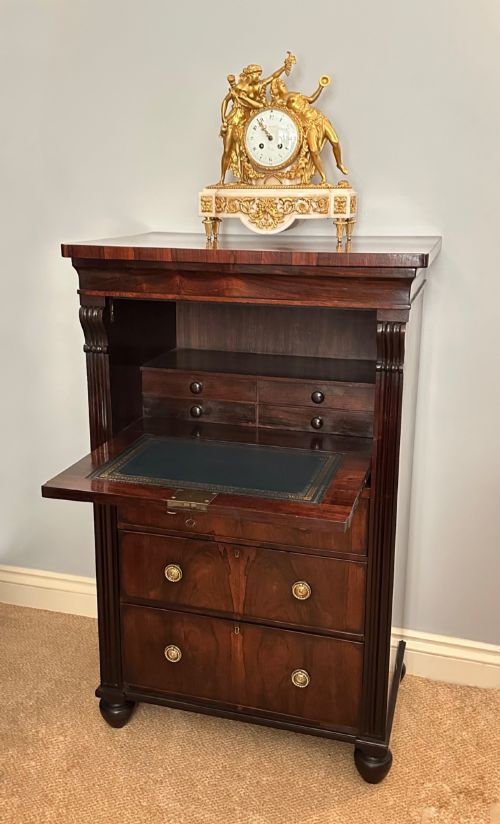
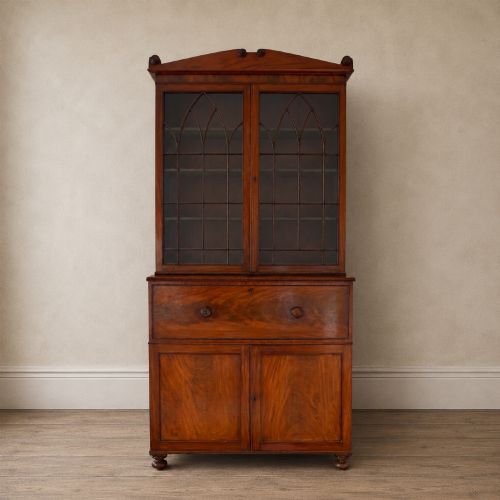
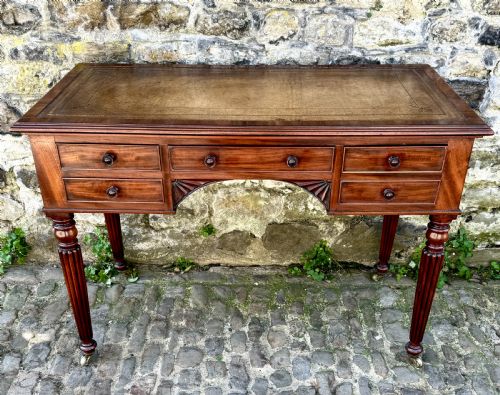
A george iv writing desk spans diverse forms from compact Davenport desks to grand library tables and secretaire bookcases, reflecting the diverse ways people managed their papers during the early nineteenth century.
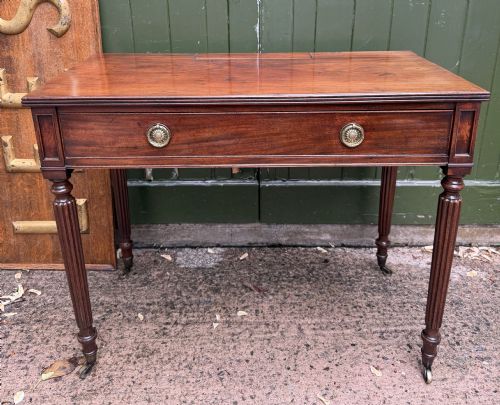
The most frequent examples found in this selection are constructed from mahogany or rosewood, often featuring fitted drawers or writing surfaces inset with leather.
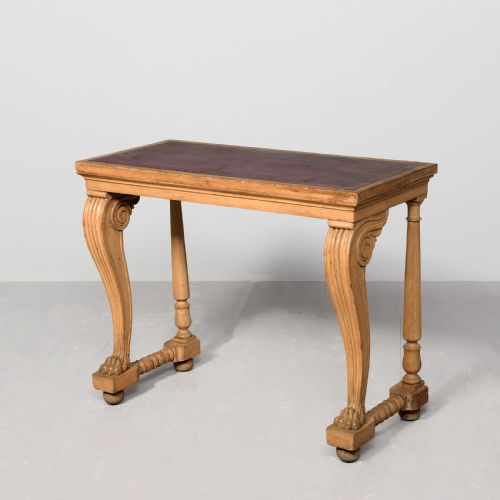
Pieces range from neat side tables and chamber desks to substantial partners tables and drum tables, uniting practical utility with the architectural styling of the Regency and Georgian periods.
Materials and construction
Cabinet makers relied heavily on dense tropical hardwoods like mahogany and rosewood, frequently selecting figured veneers to create rich grain patterns across flat surfaces and drawer fronts.
Brass fittings, ormolu mounts, and glass components were integrated into handles, hinges, and travelling ink wells, while secondary timbers such as oak provided structural rigidity to internal drawers.
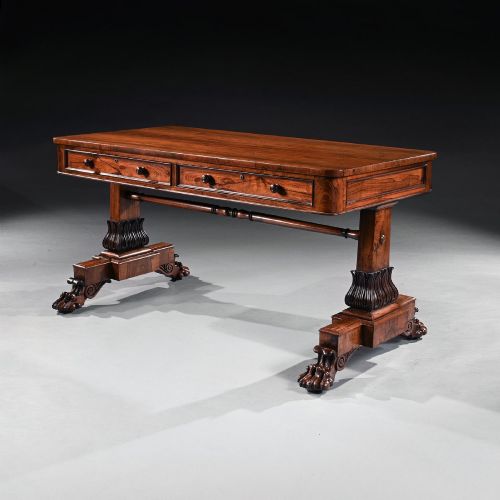
Leather inserts provided a durable writing plane, often finished with gilt tooling, while specialised forms incorporated carved lion paw feet or pedestal supports.
Materials across these listings include brass, mahogany, leather, rosewood, glass, oak, wood, and satinwood.
Judging quality and execution
Quality rests upon the selection of timber, where tightly figured mahogany or richly grained rosewood indicates careful material sourcing by the maker.
The refinement of carved details, such as lion paw feet or ornamental mouldings, separates standard production pieces from those attributed to leading workshops like Gillows.
Internal construction, including the dovetailed joining of drawers and the preservation of original brass hardware or leather surfaces, determines the overall integrity of the piece.
Gillows of Lancaster·James Mein of Kelso
The George IV Writing Desk Glossary
- Davenport
- A compact desk featuring a sloping, leather-lined writing lid above a pedestal of drawers. These pieces often incorporate side compartments or stationery sections.
- Secretaire bookcase
- A tall cabinet combining upper shelving behind doors with a pull-down writing drawer that conceals small pigeonholes and subsidiary drawers.
- Partners table
- A large desk designed to be used from both sides simultaneously, featuring matching banks of drawers arranged beneath a spacious top.
- Library table
- A freestanding centre table with a finished reverse, utilised for reading and writing rather than storage against a wall.
- Ormolu
- Gilded bronze used for decorative mounts and accents on high-status furniture of the period.
George IV Writing Desk: Frequently Asked Questions
Where were these desks placed in a home?
These pieces sat primarily in private libraries, studies, or withdrawing rooms where correspondence and estate management took place.
Freestanding library tables occupied the centre of rooms, while kneehole and side tables stood against walls.
How do I distinguish between Regency and George IV styles?
The Regency style often draws heavily on classical Greek and Roman motifs, with lighter proportions and sabre legs.
George IV pieces tend toward heavier construction, richer veneers, and bolder carved details like lion paws.
Are these desks suitable for daily use?
Many of these pieces function well for contemporary writing and laptop use, provided the leather surface and internal structure remain sound.
Care should be taken to protect antique wood and leather finishes from excessive moisture and direct sunlight.