
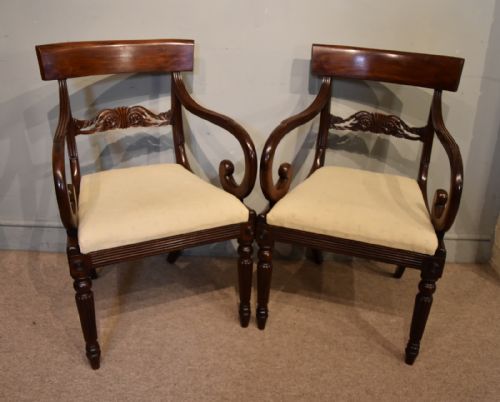


Pair of Library Tables
These pair of library tables are substantial furnishing pieces built for working spaces, offering surface area and matching symmetry for a study or library.

Pair of Library Tables
When searching for a pair of library tables, buyers find substantial working furniture designed for reading, writing, and storage in formal rooms. The listings show forms originating across the nineteenth and early twentieth centuries, including Victorian, Edwardian, and Regency periods.
The versions most commonly met on this page span mahogany, rosewood, and oak timbers, sometimes with fitted leather tops. Makers utilised heavy timber construction to provide the stability required for heavy volumes and desk tasks.
Materials and construction
Makers constructed these tables predominantly from dense hardwoods such as mahogany and rosewood, ensuring structural endurance for daily use. Brass mounts, swan neck fittings, and inlaid details frequently decorate the timber frames.
Surfaces often feature inset leather writing panels alongside turned column legs and X frame stretchers. These structural choices reflect the Regency, Victorian, and Edwardian periods in which the pieces were produced.
Library tables sometimes double as dining tables when the books are cleared away for supper.
Evaluating quality in matching pairs
Quality rests on the uniformity of the timber grain and the precision with which the pair match in proportion and colour. Finer examples display superior timber selection across both tables rather than relying on heavy veneer work.
The execution of brass mounts, structural stretchers, and inset leather panels distinguishes standard workshop production from superior cabinet making. Consistency between the two matching pieces dictates the overall stature of the set.
Gillows·Wild and Wessel·Crunchley·Malby
The Pair of Library Tables Glossary
- Regency
- A style period dating roughly from the early nineteenth century, noted for classical restraint and proportion. Pieces from this era often incorporate mahogany and rosewood timbers.
- Edwardian
- A stylistic period spanning the late nineteenth and early twentieth centuries, characterised by lighter furniture forms and Sheraton revival influences. Oak and mahogany are common.
- X Frame Stretcher
- Support members crossing in an X shape beneath a table to provide structural rigidity. They are frequently seen on nineteenth-century and early twentieth-century library furniture.
- Rosewood
- A dense, dark timber with distinct figuring utilised in high-status furniture during the Regency and nineteenth century. It takes a high polish and pairs well with brass mounts.
Pair of Library Tables: Frequently Asked Questions
How do I date a pair of library tables?
Dating relies upon timber choice, construction methods, and stylistic cues such as Regency classical lines or Edwardian inlay work. Comparing the secondary woods beneath the tables provides further chronological evidence.
Matching the details against documented periods helps establish whether the furniture originates from the early nineteenth century or the Edwardian era.
Are these tables suitable for daily writing?
These robust pieces were originally built for heavy literary work, making them well-suited for modern study use. Their large surfaces and solid timber frames offer practical workspace.
Many examples feature durable leather writing inserts that handle regular daily use while maintaining their period character.
What woods were used for library tables?
Cabinet makers utilised dense hardwoods including mahogany, rosewood, oak, and satin birch to build durable working furniture. These timbers were chosen for their strength and ability to take fine finishes.
Finer pairs often incorporate decorative veneers alongside solid timber framing to enhance the visual impact within a room.
How do I care for antique leather top tables?
Leather writing surfaces require gentle cleaning with dry or slightly damp cloths, avoiding harsh chemical solvents. Applying specialised leather balms periodically prevents the material from drying out.
Protecting the surface from direct sunlight and excessive moisture preserves the original texture and colour of the inset panels.