
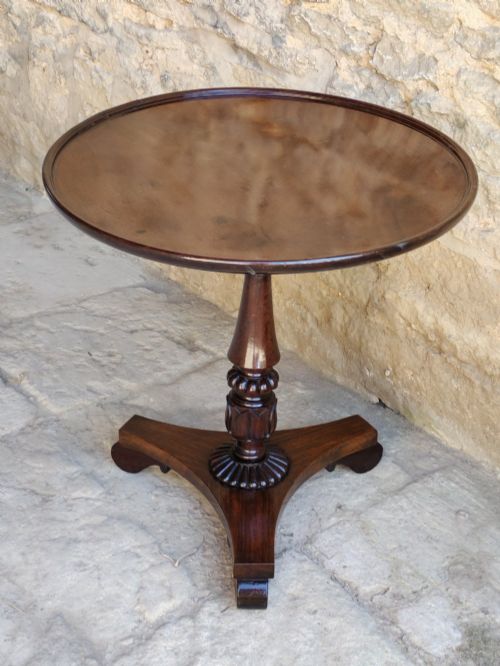

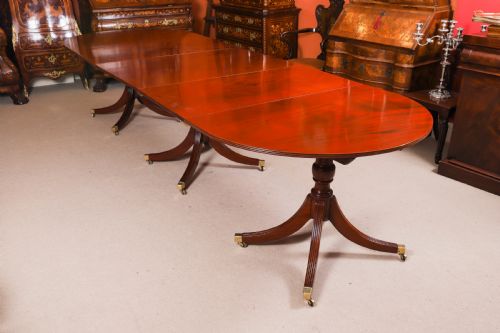


George IV Pedestal Table
A george iv pedestal table brings solid mahogany, figured rosewood and architectural weight to a room.
George IV Pedestal Table
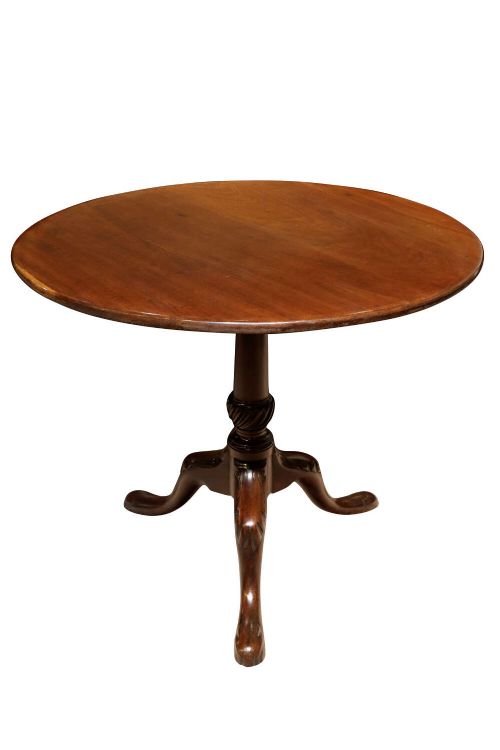
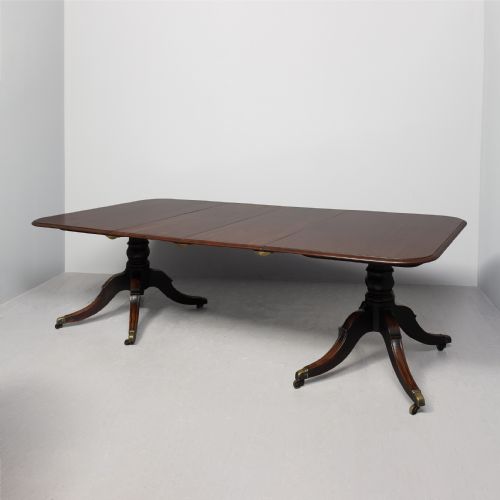
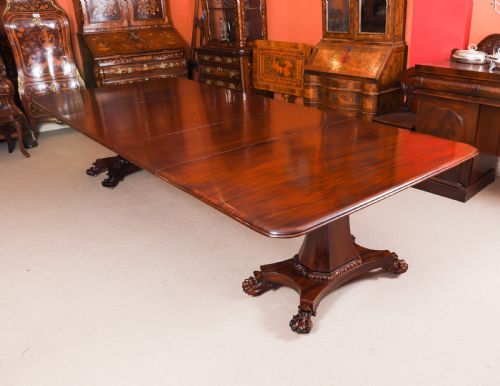
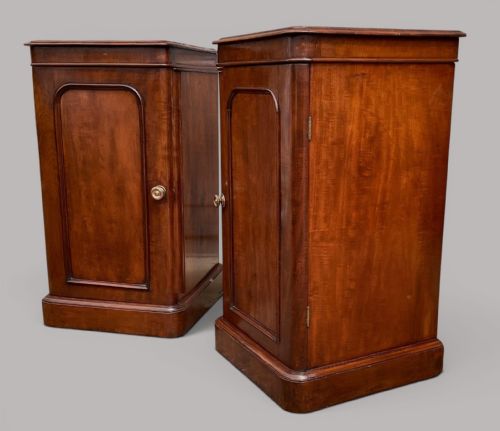
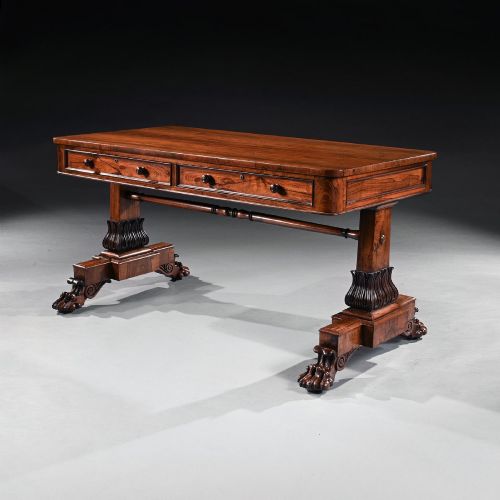
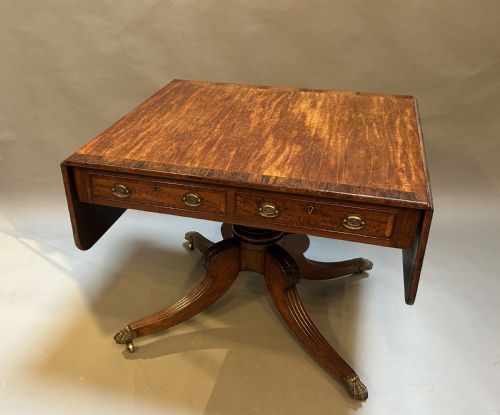
A george iv pedestal table appears in many guises, from large twin-pillar dining tables down to small occasional tables, lamp tables and wine stands. The listings show a strong presence of rosewood and mahogany forms made during the early nineteenth century and the wider Georgian and Regency periods.
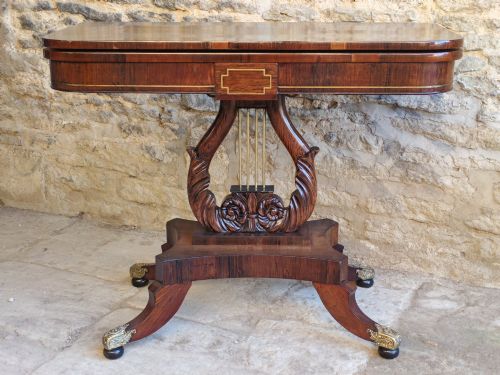
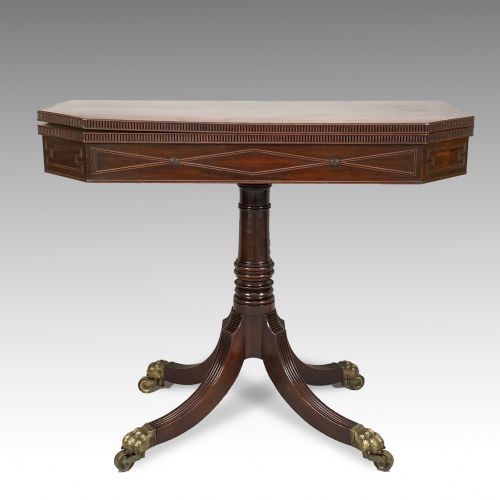
Dining tables and centre tables dominate the larger end of the scale, often supported by central columns or twin and triple pillars. Card tables, tea tables and occasional pieces represent the smaller domestic furniture of the era, frequently featuring tilt tops or fold-over leaves.
Makers and workshops of the period, including Gillows of Lancaster and William Trotter, produced sophisticated variations in pollard oak, goncalo alves and birdseye maple alongside the standard cabinet timbers.
Materials and Construction
Cabinet makers relied heavily on dense timbers such as mahogany and rosewood, often enhanced by marquetry inlay, brass details or inset marble tops. Pollard oak and goncalo alves provided striking alternative grains for higher-status pieces.
Structural strength depended on sturdy central pedestals, frequently resting on tripod bases or carved lion's paw feet. Tilt-top mechanisms and fold-over leaves required precise joinery to ensure stability when open or closed.
The inventory records pieces built from mahogany, rosewood, oak, pollard oak, goncalo alves and birdseye maple, alongside brass and marble.
Cabinet Work and Timber Selection
Quality rests in the choice of timber figure, such as richly grained rosewood or burr oak, and the precision of the carving on the pedestal base. Better examples show crisp execution in details like lion's paw feet and lyre supports.
The integrity of the central pillar construction and the smooth operation of tilt-top mechanisms or fold-over leaves distinguish superior workshop output from simpler domestic items.
Holland & Sons·William Trotter·Gillows of Lancaster·Thomas King·Mack, Williams and Gibton·James Mein Jnr.
The George IV Pedestal Table Glossary
- Tilt-top
- A table top hinged to tip vertically when not in use, saving floor space in smaller rooms. This mechanism requires a secure catch to lock the surface flat.
- Twin pedestal
- A dining table supported by two separate central pillars rather than four corner legs. This design allows greater freedom for seating placement around the table.
- Pollard oak
- Timber taken from trees that were pruned close to the trunk, producing a dense and highly figured grain pattern. It was favoured for decorative panels on high-status tables.
- Goncalo alves
- A dense exotic hardwood with distinct dark brown and yellowish-brown figuring. It was occasionally selected by cabinet makers for striking contrast on library and centre tables.
George IV Pedestal Table: Frequently Asked Questions
How do I use a pedestal table in a modern room?
A smaller occasional or lamp table fits easily beside a sofa or in a hallway, providing a sturdy surface for daily use. Larger centre tables or dining tables anchor a principal room, offering substantial presence without the clutter of standard corner legs.
Because the central pillar design leaves open floor space underneath, chairs or stools tuck neatly out of the way when the table is not occupied.
Are these tables suitable for everyday dining?
Many examples from the period were built specifically for meals, including multi-pillar formats with extra leaves for extension. Their robust mahogany construction handles regular use well.
Care should be taken with hot dishes and moisture, using appropriate mats to protect the polished wood surface.
What is the difference between a centre table and a library table?
A centre table is designed to stand free in the middle of a room, finished with detail on all sides so it looks correct from every angle. Library tables serve a similar freestanding purpose but were traditionally tailored for reading and writing.
Both forms typically utilise heavy rosewood or mahogany veneers and rest on substantial carved pedestals.