
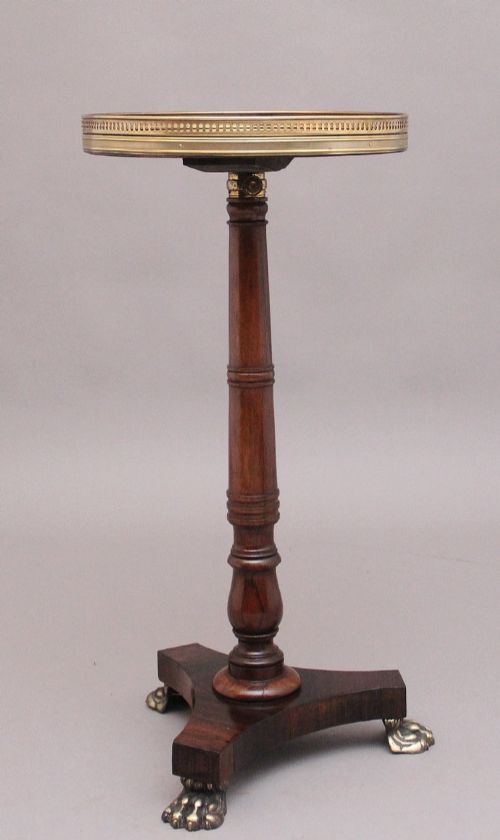
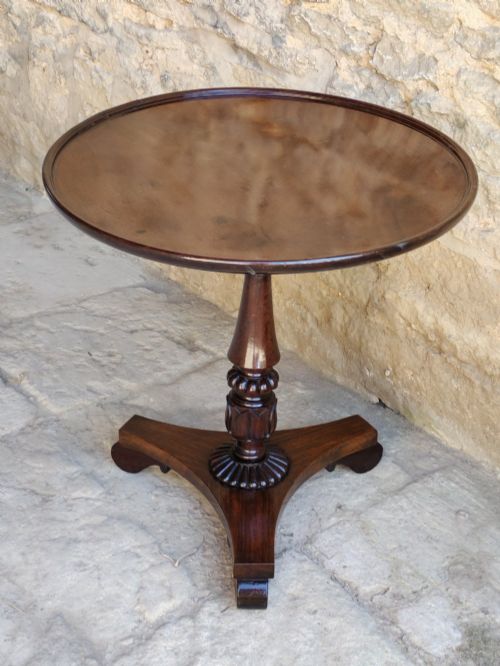
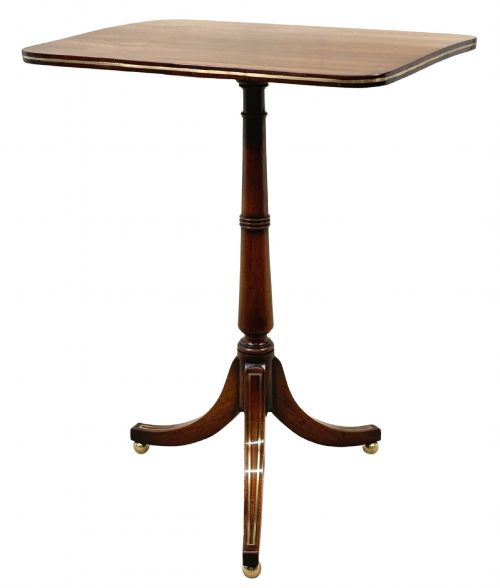

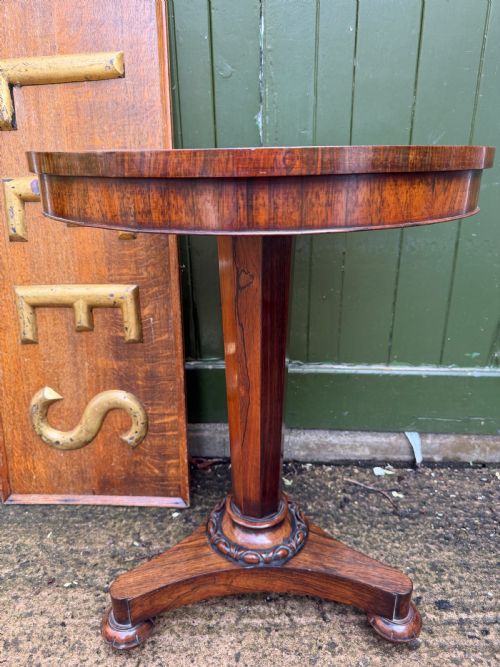


Regency Rosewood Wine Table
A regency rosewood wine table brings rich timber grain and compact elegance to a period room.
Regency Rosewood Wine Table
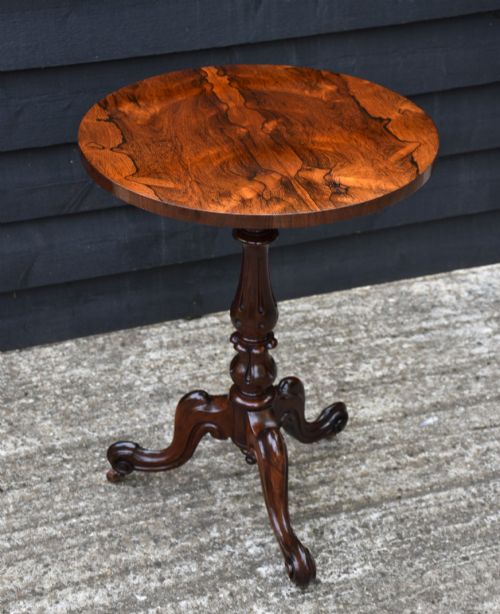
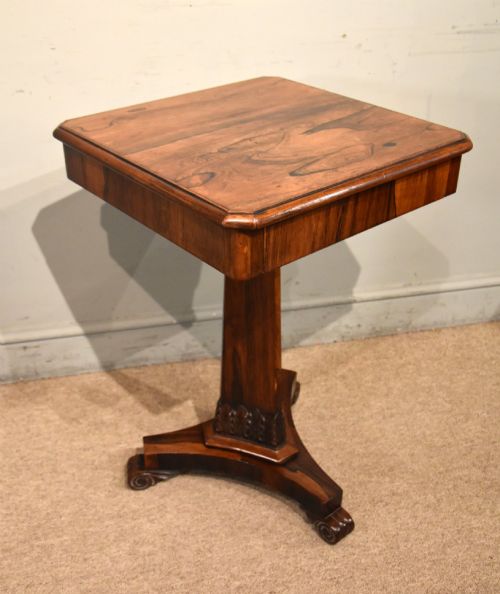
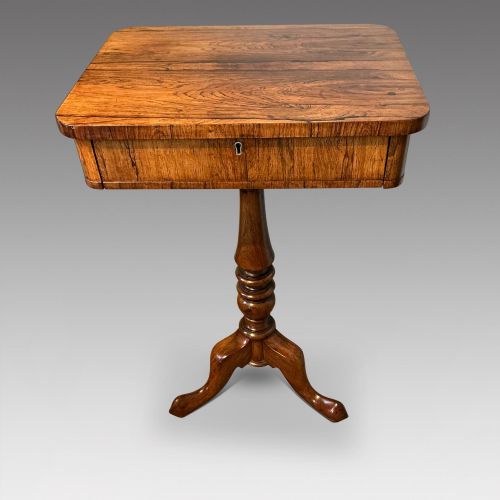
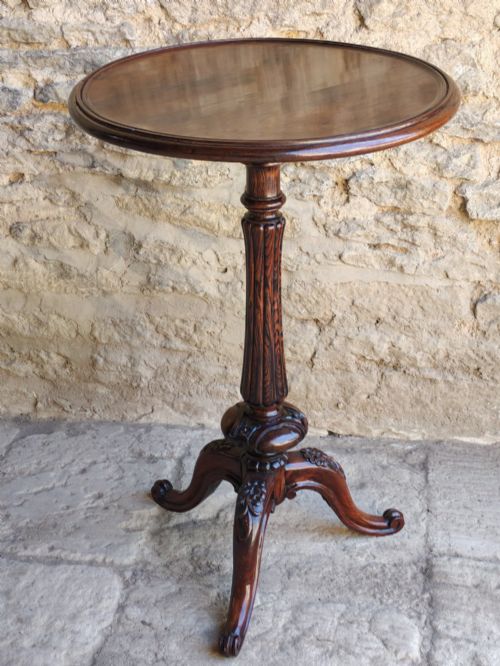
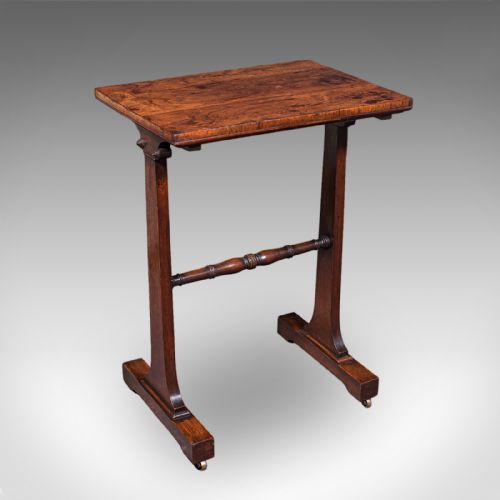
A regency rosewood wine table is a small, portable piece designed for domestic leisure during the early nineteenth century. These items typically appear as pedestal or tripod tables, serving as occasional surfaces for lamps or glasses.
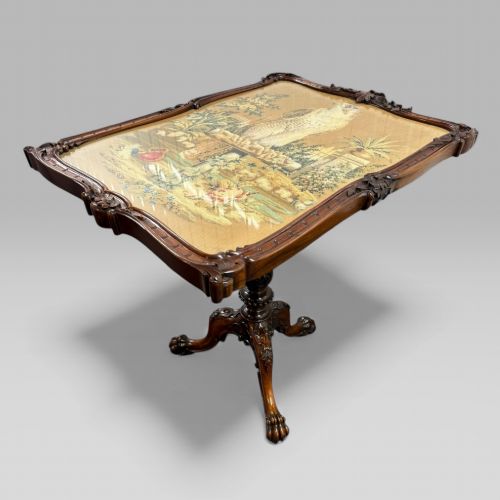
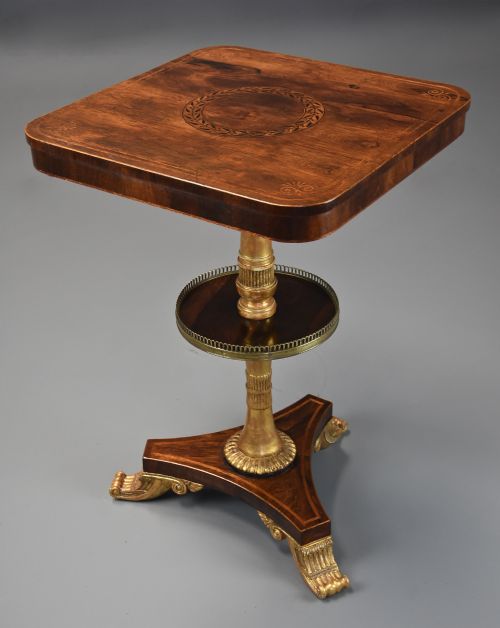
The pieces on this page span the Regency, George IV, William IV, and Victorian eras, alongside some later nineteenth century examples from eighteen sixty. Forms include tilt top designs, square tops, circular tops, and two tier occasional tables.
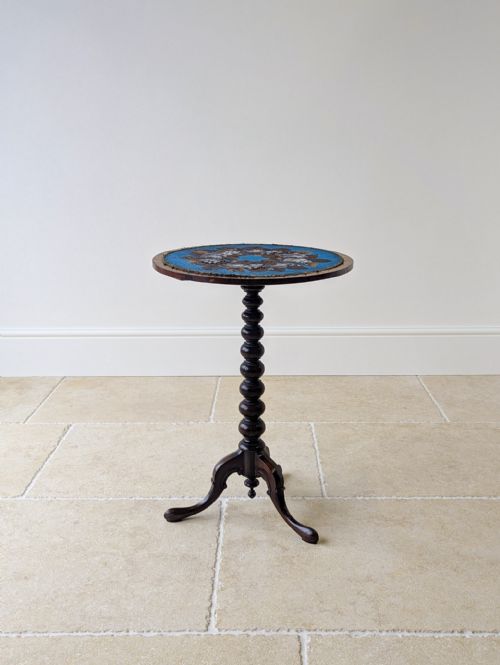
Buyers will encounter both plain circular tops and elaborate variations featuring brass inlay, specimen marble, or beadwork. The evidence also records hybrid functions, including work tables and combined fire screens.
Materials and Construction
Makers utilised solid and veneered rosewood, sometimes supported by secondary timbers like mahogany or walnut. Brass inlay and brass stringing frequently accent the dark timber surfaces, creating sharp visual contrast.
Tripod bases and pedestals provide the structural support, often paired with tilt top mechanisms for convenience. Specialist surfaces incorporate inset marble or intricate specimen wood arrangements into the top.
One exceptional piece converts its tripod table surface into a fire screen for polite afternoon warmth.
Markers of Quality
Quality rests upon the selection of the rosewood veneer and the precision of any brass inlay or geometric stringing. Figured grain patterns and solid construction elevate the status of a piece significantly.
Design sophistication also distinguishes the work, with some items reflecting the distinctive manner of prominent workshops. Finer examples display harmonious proportions between the pedestal base and the top.
Gillows·George Bullock
The Regency Rosewood Wine Table Glossary
- Tripod table
- A small freestanding table supported by a central pillar resting on three legs. This construction keeps the surface stable on uneven floors.
- Tilt top
- A tabletop hinged to the pedestal so it can tilt vertically when not in use. This allowed the furniture to be stored flat against a wall.
- Brass stringing
- Inlays of thin brass wire set flush into channels cut into the timber surface. It defines the edges and geometric panels of Regency furniture.
- Crossbanding
- A border of veneer laid around the perimeter of a tabletop so the grain runs at right angles to the centre. It creates a neat framing effect on mahogany and rosewood pieces.
Regency Rosewood Wine Table: Frequently Asked Questions
What was a wine table used for?
These small tables were positioned beside seating to hold glasses, decanters, or reading materials during the evening. Their portable nature allowed servants to move them easily around the room.
They also functioned as lamp tables or occasional surfaces in morning rooms and lounges. The tilt top versions saved space when the furniture was not actively in use.
How do I identify a Regency piece?
Regency furniture dates roughly from the early nineteenth century, aligning with the Regency and subsequent George IV and William IV periods. Look for classical proportions and dark exotic timbers like rosewood.
Fittings often include brass stringing, sabots, or castors on the tripod feet. Cabinetmakers of this era drew inspiration from classical antiquity.
Are these tables solid rosewood?
Many examples utilise rosewood veneers applied over secondary structural woods such as mahogany or deal. Solid rosewood pieces do occur, as recorded in several listings on this page.
Cabinetmakers used fine veneers to display the rich, figured grain patterns characteristic of the timber. Construction methods varied according to the workshop and the intended cost of the piece.
Where should I place this table today?
A wine table suits placement beside a sofa or armchair as a convenient surface for a drink or a lamp. Their compact footprints make them ideal for smaller spaces.
Avoid placing antique rosewood in direct sunlight or near strong heat sources to protect the polished finish. Regular dusting with a dry cloth helps maintain the timber.