


Dark Rosewood Tripod Table
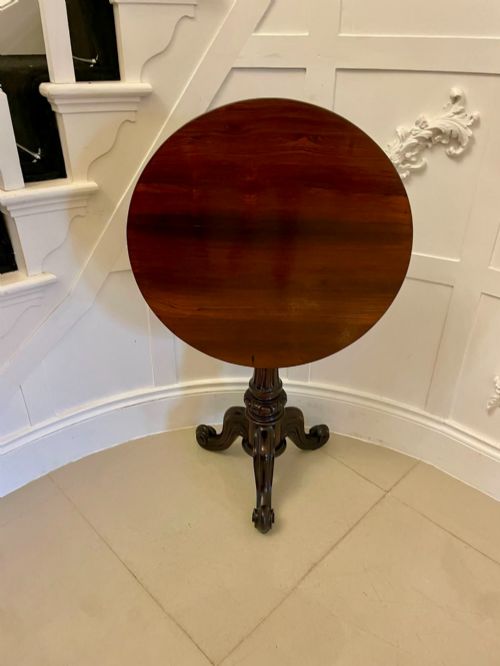
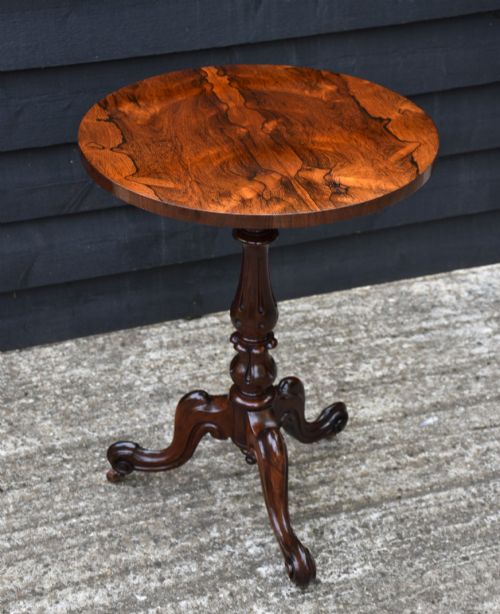
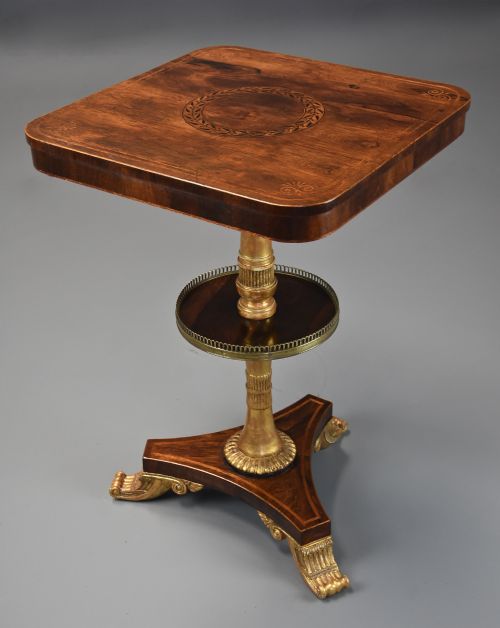
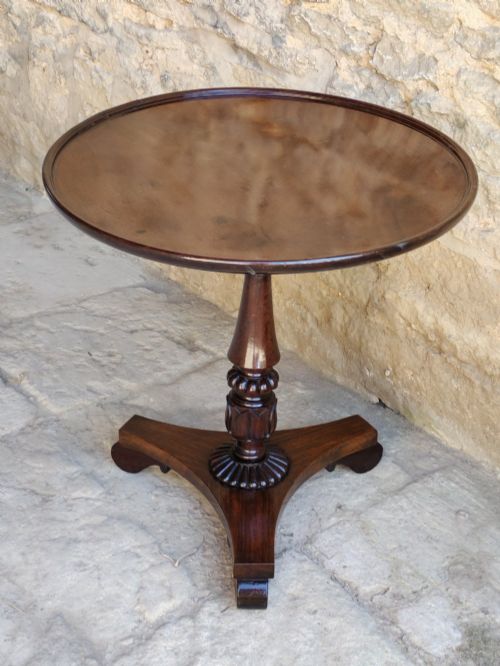
A dark rosewood tripod table brings dense grain and stable three-legged support into a room, serving as a lamp or wine stand.
Dark Rosewood Tripod Table
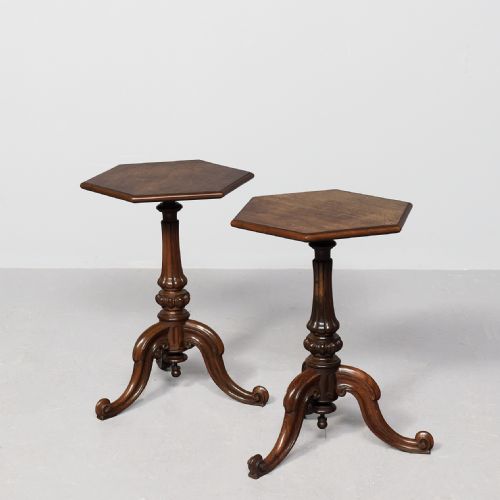
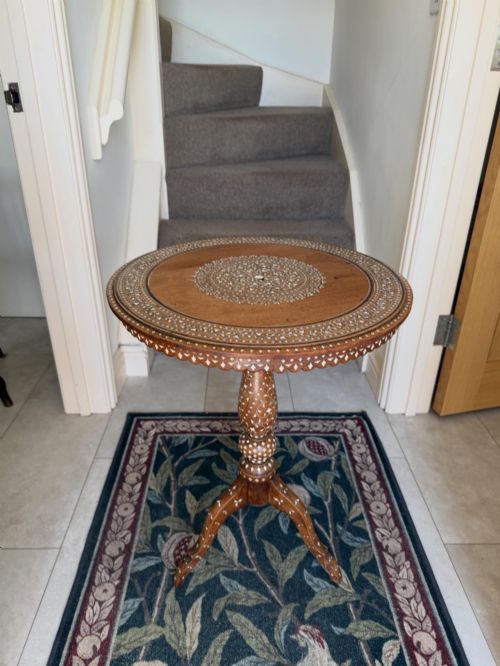
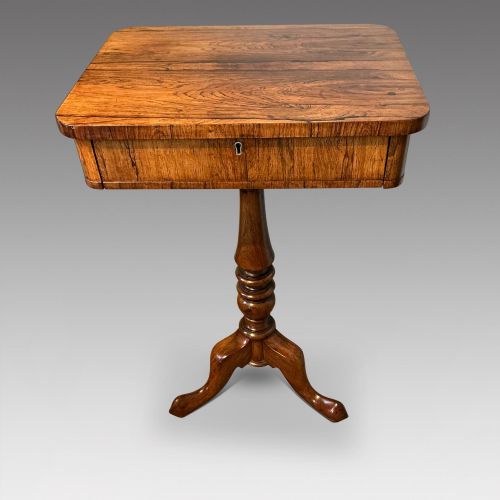
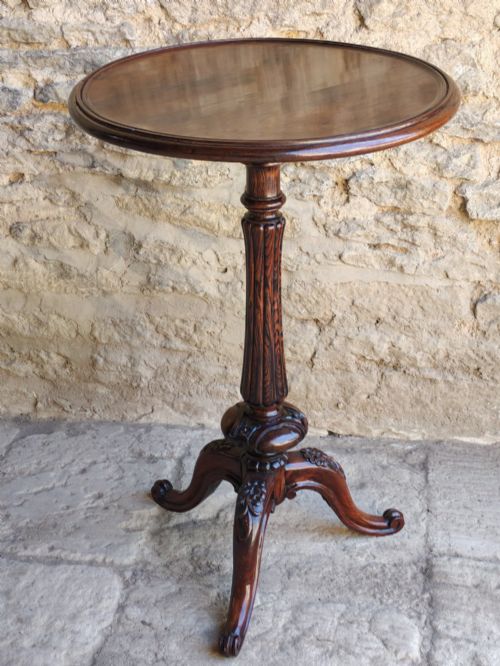
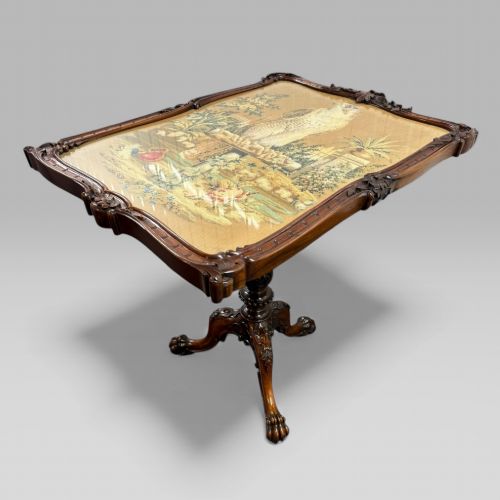
A dark rosewood tripod table combines a circular or shaped top with a central pillar supported by three distinct feet. These pieces emerge primarily across the Regency and Victorian periods, alongside specific William IV examples dated into the nineteenth century.
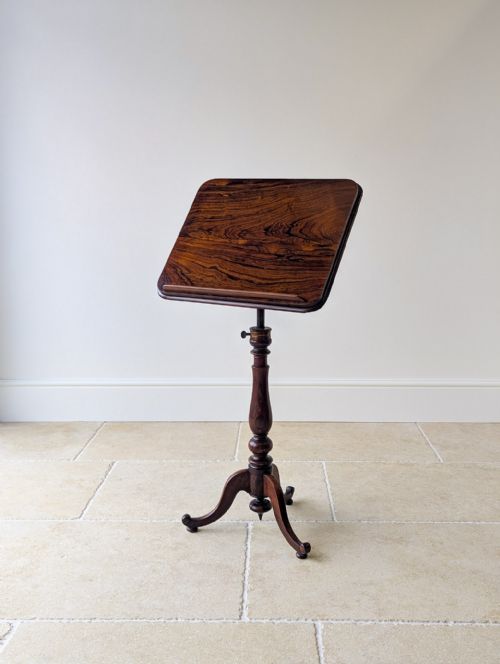
The form appears in various domestic contexts, functioning as occasional tables, wine tables, lamp stands, and reading tables. Most items visible here span the nineteenth century, including specific dated instances from eighteen-fifty, eighteen-sixty, and eighteen-eighty.
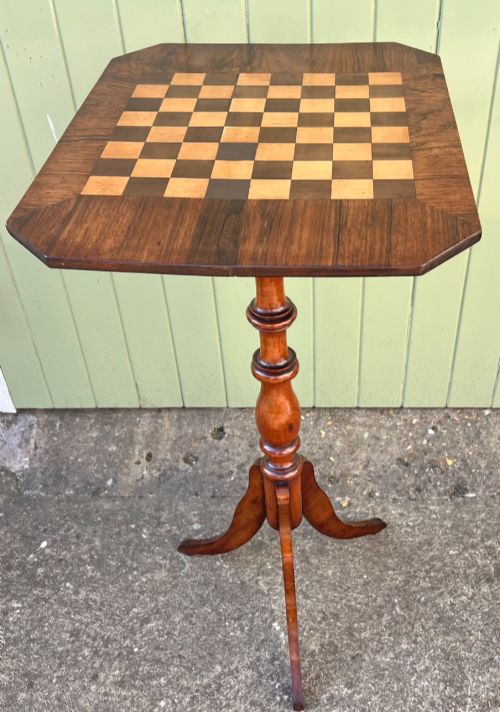
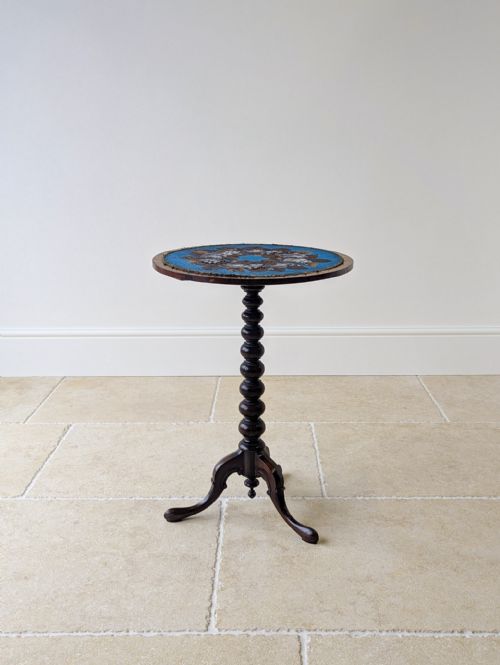
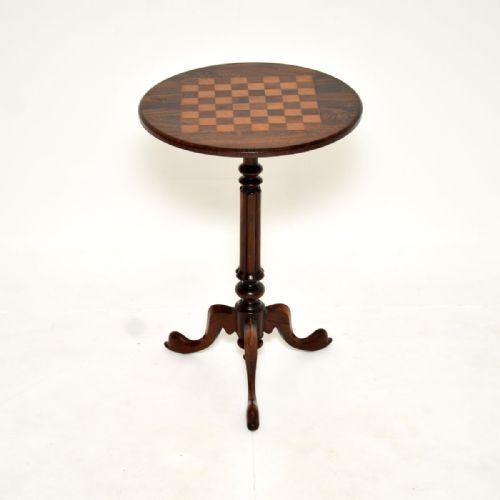
Design influences range from standard British cabinet making to Anglo-Indian Colonial production and East Asian workshops. Buyers encounter forms featuring tilt-top mechanisms, fixed tops, and occasionally specialised work or chess surfaces.
Materials and construction methods
Construction relies heavily on dense tropical hardwoods, predominantly rosewood, sometimes paired with secondary timbers like mahogany, teak, or padouk. Cabinet makers utilise brass for stringing, castors, and mechanical hinges, while boxwood, giltwood, and mother-of-pearl provide contrasting inlay.
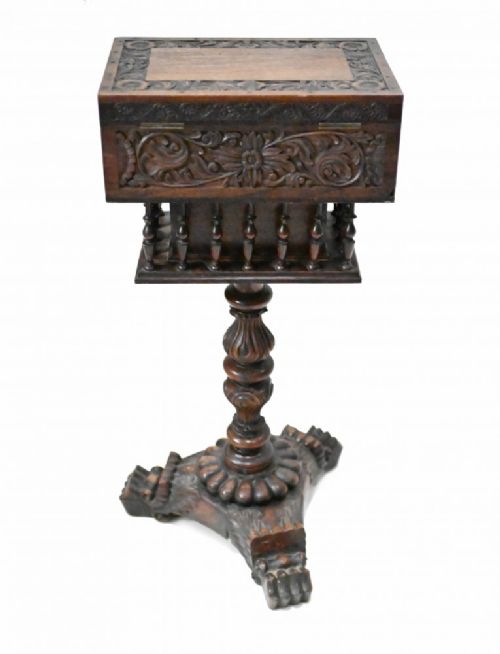
The central pillar meets a three-legged base through sturdy joinery, often incorporating tilt-top mechanisms for storage or display. Surface enrichment involves marquetry, beadwork, intricate carving, and turning such as barley twist columns.
Some nineteenth-century examples doubled as fire screens, letting diners enjoy warmth without scorching their complexions.
Distinguishing quality in craftsmanship
Quality rests in the selection of the timber and the precision of the cabinet work. Superior examples show deeply figured rosewood grain matched carefully across the top, alongside crisp, hand-carved details on the pillar and feet.
The integrity of the central mechanism defines functional merit. Tables with smooth-operating tilt catches, tight joints at the tripod base, and cleanly executed brass inlay or marquetry sit firmly at the upper end of the range.
Gillows
The Dark Rosewood Tripod Table Glossary
- Tripod table
- A small freestanding table supported by a central pillar and three legs. This construction keeps the table stable on uneven floors.
- Tilt-top
- A table top hinged to the central column so it can pivot vertically. This allows the piece to stand flat against a wall when not in use.
- Brass stringing
- Thin strips of brass inlaid into channels cut into the wood surface. It creates geometric or linear decorative borders.
- Marquetry
- Fitted pieces of various woods and materials veneered onto a surface to form pictorial or decorative patterns. It requires precise cutting and fitting.
- Teapoy
- A small box or table designed to hold containers of tea. They often feature internal compartments and rest on a central pillar.
Dark Rosewood Tripod Table: Frequently Asked Questions
What is a dark rosewood tripod table used for?
These tables function primarily as occasional pieces for holding lamps, books, or drinks beside seating. Their compact footprint makes them practical for smaller spaces.
Historically, specific variants served specialised tasks such as wine pouring, chess playing, or needlework storage. Today they remain versatile accent furniture for living spaces and studies.
How can I tell a Regency table from a Victorian one?
Regency pieces often incorporate bold brass inlay, sabre legs, and clean classical proportions reflecting early nineteenth-century design. The timber choice leans toward dark, richly grained rosewood.
Victorian examples frequently introduce heavier carving, turned pillars like barley twists, and more elaborate marquetry or beadwork. The scale can vary more widely in the later nineteenth century.
How do I care for antique rosewood furniture?
Keep the wood away from direct sunlight and heat sources to prevent the rosewood from drying out or splitting. Maintain a stable indoor environment.
Dust the surface regularly with a soft, dry cloth. Avoid silicone-based polishes and apply occasional quality wax to nourish the grain.