
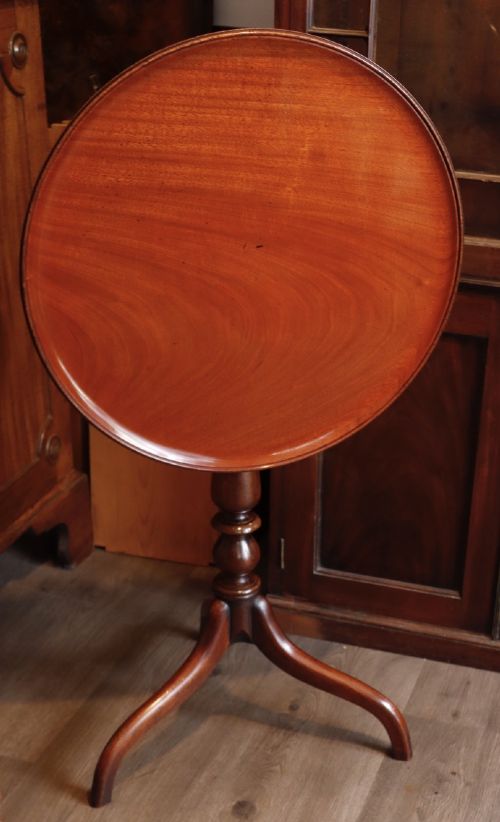
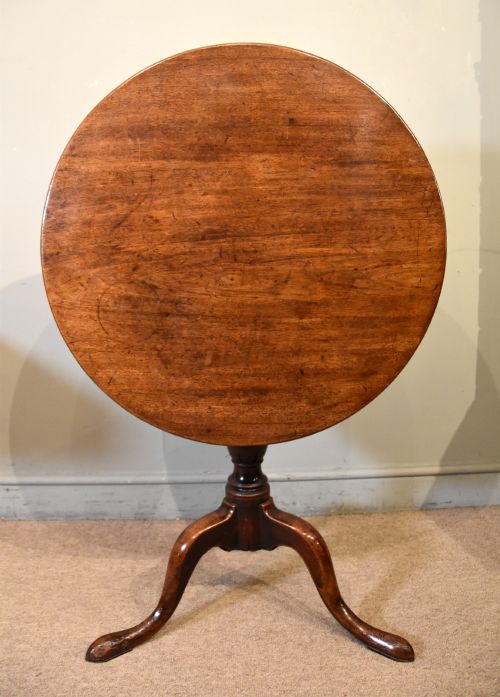
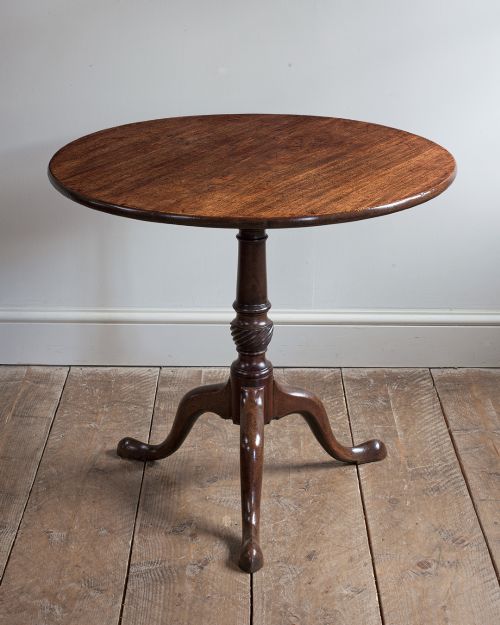
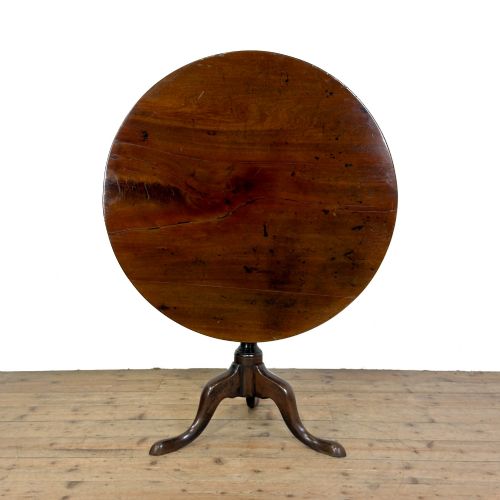
George III Tilt Table
A george iii tilt table combines a clever tilting mechanism with a stable tripod or pedestal base, designed to save space when not in use.
George III Tilt Table
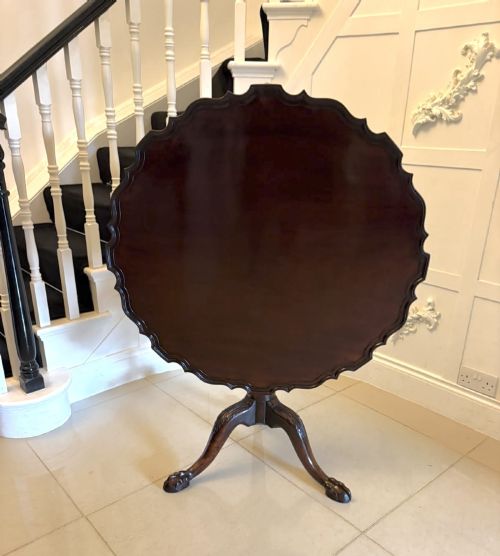
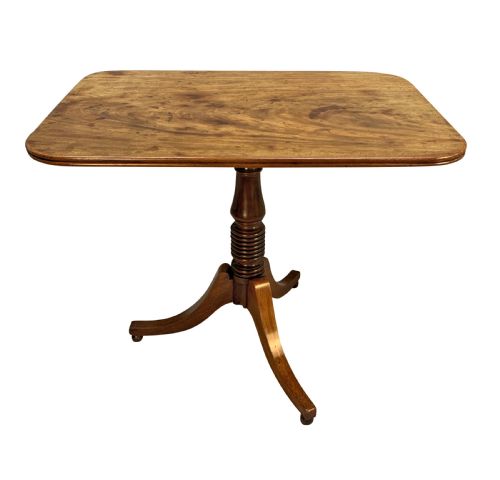
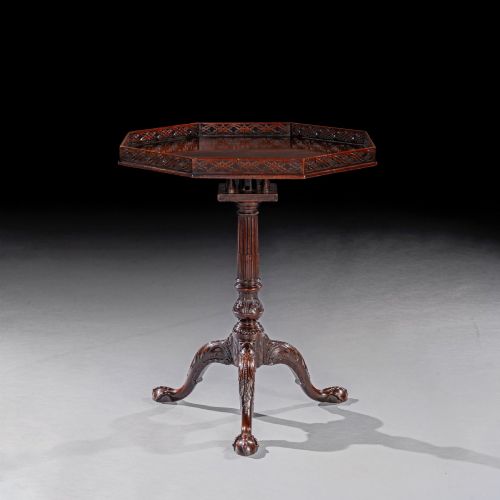
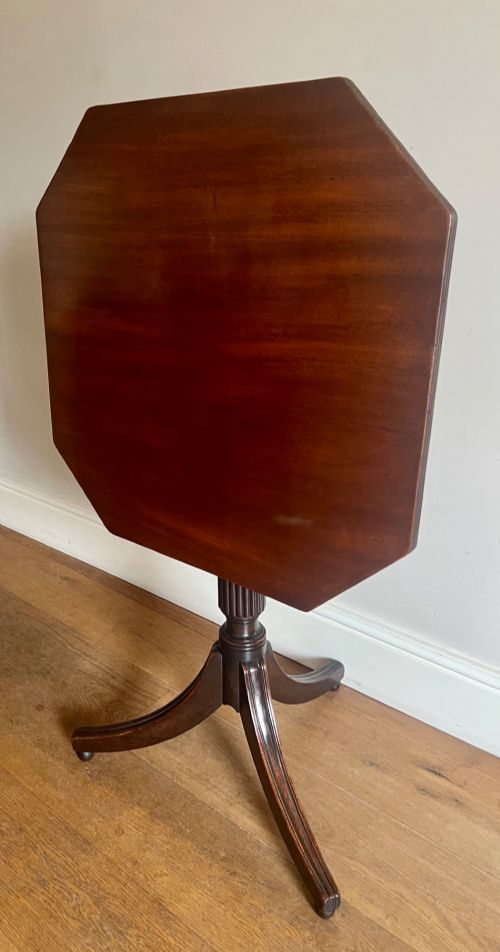
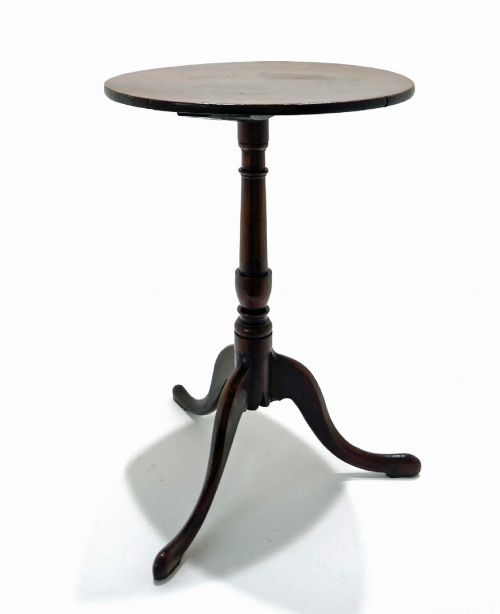
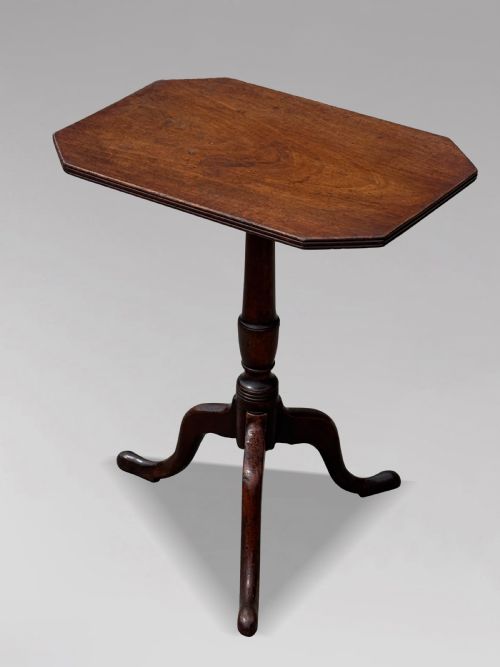
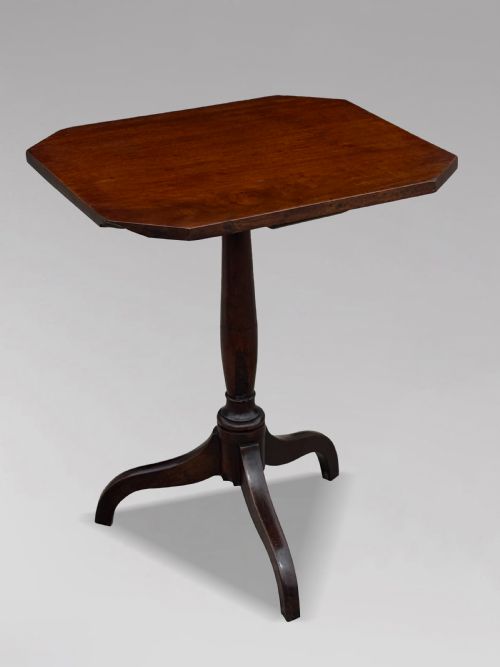
When you search for a george iii tilt table, you encounter versatile pieces created primarily during the eighteenth and early nineteenth centuries. The form typically pairs a circular, oval, or octagonal top with a pivoting mechanism that allows the surface to fold vertically against the support column.
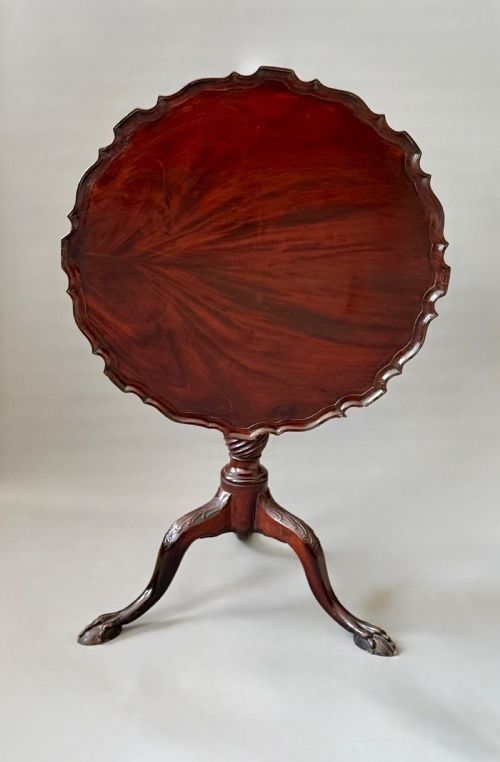
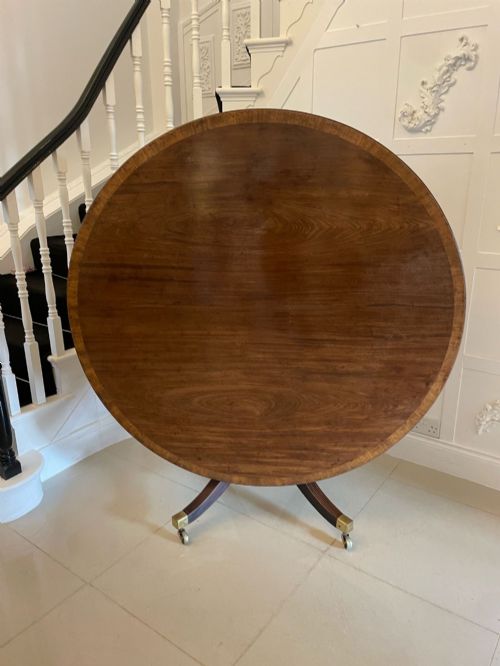
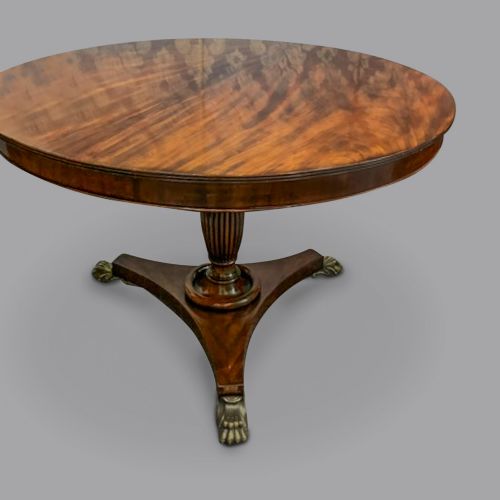
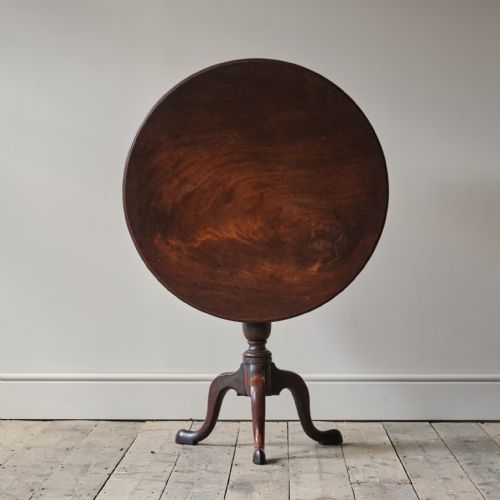
The most common version on this page is the tripod table in mahogany, often designed as a wine table, tea table, or occasional table. Examples range from compact wine stands intended for a corner to larger dining and breakfast formats capable of seating multiple guests.
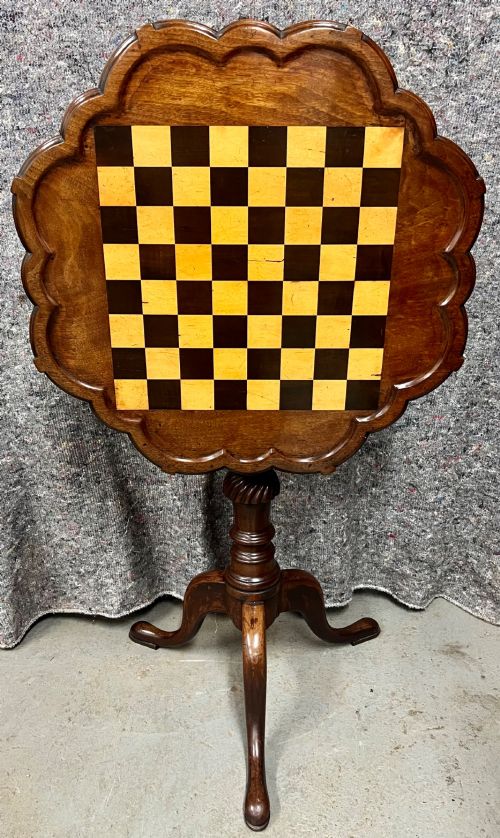
Makers of this era also produced country variants in oak or burr elm alongside sophisticated urban pieces featuring inlaid chess boards, birdcage mechanisms, or carved piecrust edges. Each variation reflects the specific domestic requirement it met in a period interior.
Materials and construction
Makers relied heavily on dense tropical hardwoods like mahogany, which permitted the crisp carving seen on tripod legs and raised dish tops. Regional pieces frequently utilised native timbers such as oak, elm, or fruitwood for simpler country furniture.
The pivoting action relies on sophisticated joinery, often incorporating a birdcage mechanism that allows the top to both tilt and revolve independently on the central pillar. Brass fittings occasionally appear on hinges, catches, and castors to reinforce moving parts.
Some dining tables were built large enough for eight guests, meaning the tilting mechanism required considerable upper body strength to operate safely.
Assessing quality
Quality rests heavily on the selection of timber and the proportion of the components, where finely figured mahogany or solid burr elm elevates a piece above standard stock. The handling of the wood grain on a single-piece top commands greater respect than a multi-plank construction.
Execution of detail separates workshop output, visible in the sharpness of carving on tripod legs, the neatness of wood inlay, and the smooth operation of the tilt mechanism. A well-balanced base that meets the floor evenly without wobble indicates careful initial construction.
Gillows
The George III Tilt Table Glossary
- Tilt-top
- A table mechanism featuring a hinged block that allows the horizontal surface to fold into a vertical position for storage.
- Tripod base
- A support structure consisting of three curved legs radiating from a central column.
- Birdcage
- A timber framework beneath the table top that permits the surface to both rotate and tilt.
- Piecrust edge
- A raised, carved moulding along the perimeter of a circular table top resembling pastry work.
- Snap-top
- A spring-loaded catch system that secures the table top firmly in the horizontal position when lowered.
George III Tilt Table: Frequently Asked Questions
What is a george iii tilt table?
A george iii tilt table is an eighteenth or early nineteenth century small or medium table featuring a top that pivots vertically on a central pillar and tripod base.
These pieces were designed to be folded and stored against a wall when not in service, freeing up floor space in period rooms.
How were these tables used?
They served multiple domestic functions including tea service, holding wine decanters, playing chess, or casual dining depending on their top diameter.
Smaller wine and lamp tables sat beside seating areas, while larger breakfast and centre tables occupied the middle of the room.
How do I live with a tilt table?
You can utilise them as lamp stands in a corner or display them folded flat against a wall as decorative wood panels.
Keep them away from direct heat sources and strong sunlight to protect the polished timber surfaces and prevent the wood from warping.
How do I tell periods apart?
Earlier eighteenth century examples often display crisp hand carving on tripod legs and detailed birdcage mechanisms, while later nineteenth century interpretations tend towards simpler pedestal formats.
Timber choice also guides attribution, with dense mahogany dominating urban pieces and oak or fruitwood pointing towards country workshops.