

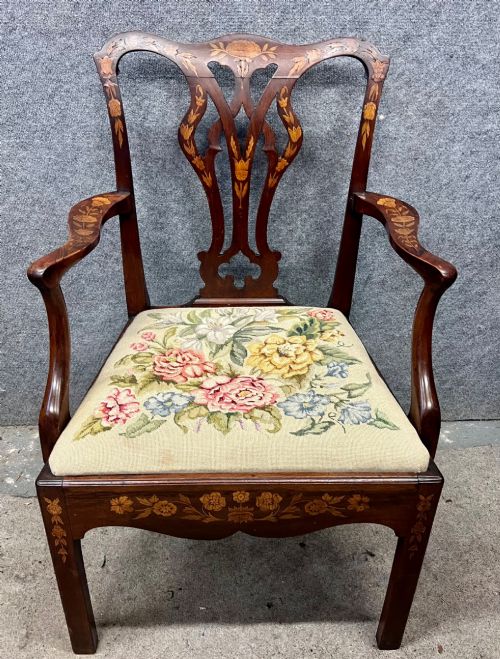
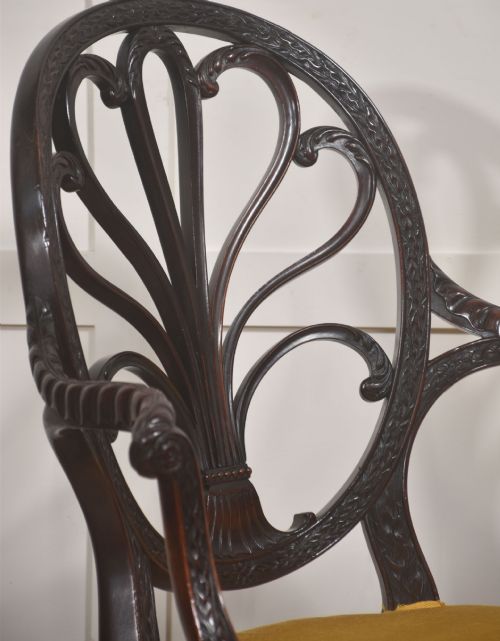
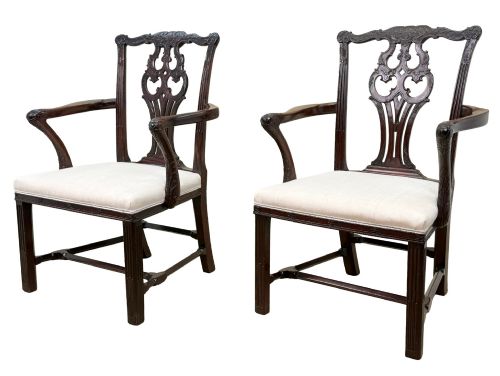
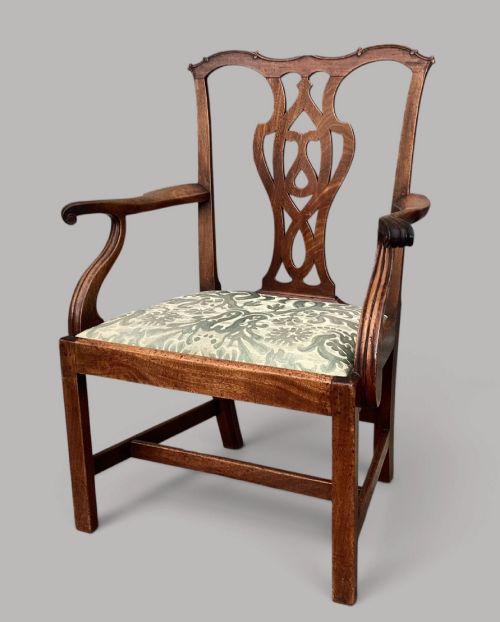
George III Style Chair
When you want a george iii style chair, you are choosing seating rooted in late eighteenth-century proportions, designed in mahogany or oak with upholstered or shield backs.
George III Style Chair
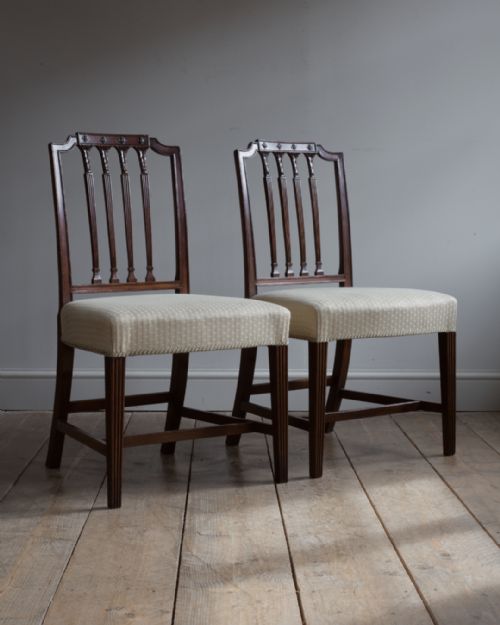
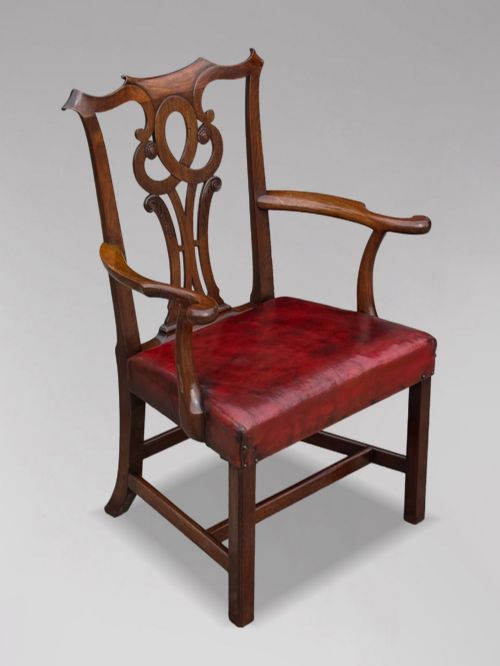
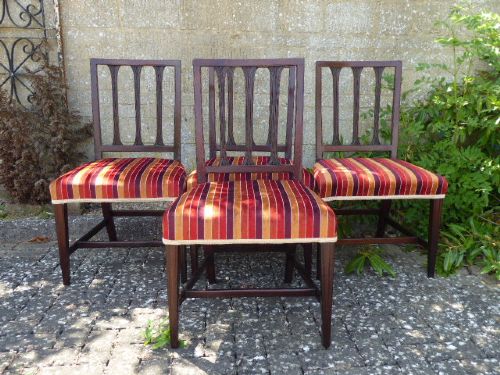
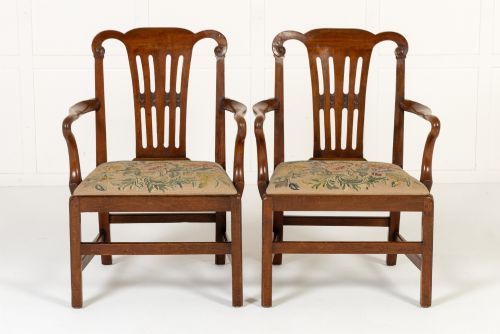
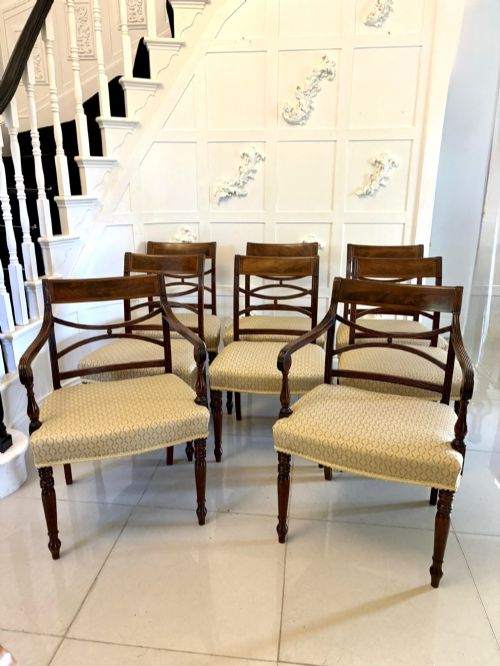
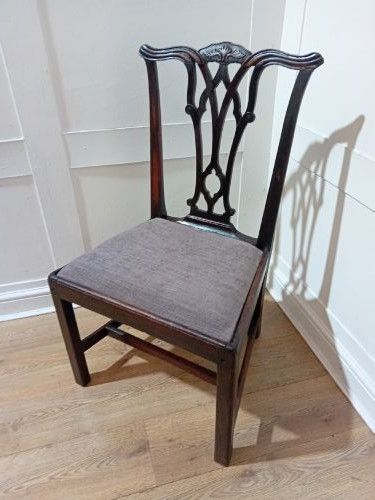
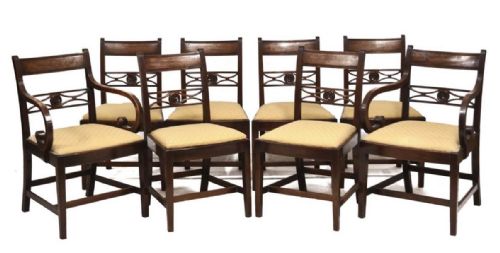
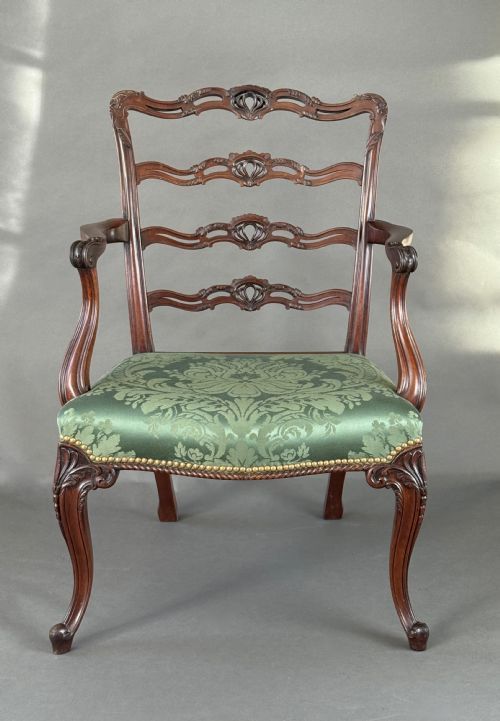
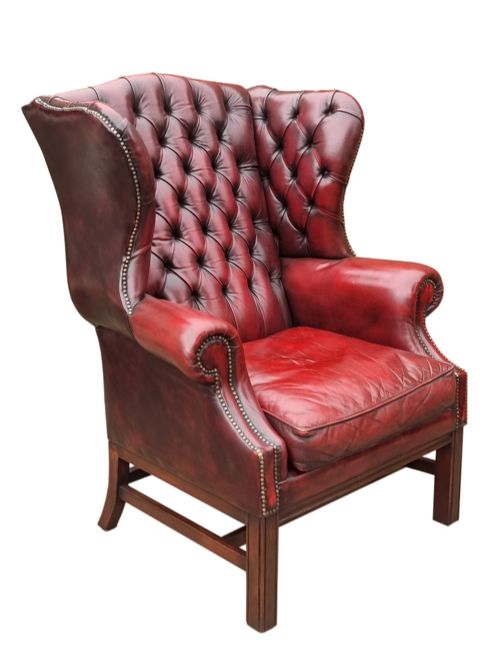
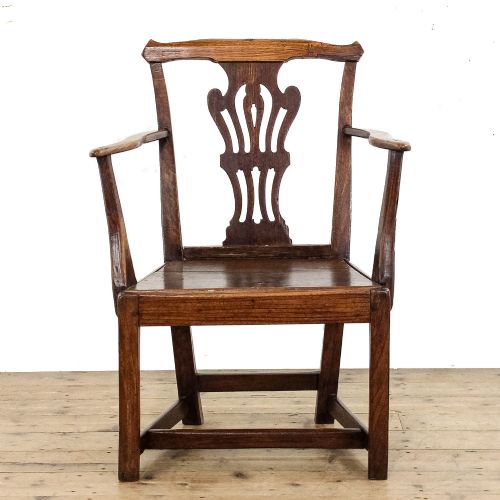
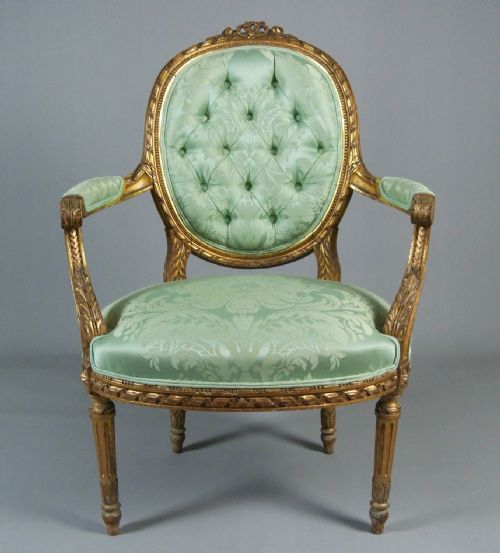
A george iii style chair covers dining seats, library armchairs, and wingbacks spanning the Georgian period itself as well as later nineteenth- and twentieth-century revivals. The listings present everything from single hall chairs and open armchairs to large sets of dining chairs made for formal interiors.
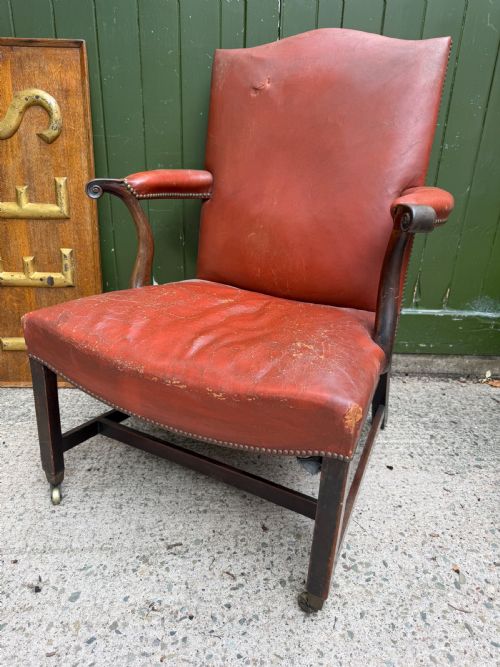
Buyers will encounter original eighteenth-century pieces alongside later copies produced during the Victorian era and the 1930s. The forms range from simple side chairs and carvers to library Gainsborough chairs upholstered in leather or damask.
Materials and Construction
Cabinetmakers relied heavily on solid mahogany, oak, and walnut, frequently shaping the timber into carved backs, claw and ball feet, or inlaid satinwood details. Frames were joined using traditional woodworking techniques to support daily use.
Upholstery materials include leather, horsehair fabric, velvet, damask, and plain fabric, often secured over webbing and stuffing in the manner of the period. Painted finishes and giltwood also appear on specific decorative drawing room armchairs.
George III Style Chair Retail Price Guide 2026
Typical asking prices for george iii style chair among the pieces listed under this phrase on Sellingantiques today, from the lower quarter to the upper quarter. They describe what is for sale here now, not the wider market.
Pieces range from eighteenth-century originals to revival items made around nineteen-thirty.
Assessing the Craftsmanship
The distinction between standard examples and the finest pieces rests upon the crispness of the carving, the selection of figured timber, and the harmony of the overall proportions. Master makers demonstrated superior control over details such as pierced splats, fluted legs, and subtle inlay work.
Integrity of the timber frame and the retention of original components separate desirable specimens from heavily altered ones. Pieces bearing attribution to known workshops command attention through their refined execution and structural balance.
Thomas Chippendale·Gillows of Lancaster·Howard and Co London·Alex Campbell
The George III Style Chair Glossary
- Carver chair
- An armchair designed to match a set of dining chairs, usually placed at the ends of the dining table. These often feature open arms connected to the seat frame.
- Gainsborough chair
- A type of upholstered library armchair with a square back, padded arms, and short legs, popular during the eighteenth century. They are typically covered in leather or rich fabric.
- Shield back
- A chair back shaped in the outline of a shield, frequently associated with the designs of Hepplewhite. The internal woodwork often incorporates carved wheat ears or drapery motifs.
- Library armchair
- A sturdy, deeply padded armchair designed for comfort in a study or library. These frequently feature leather upholstery and substantial wooden frames.
- Claw and ball foot
- A furniture foot carved to resemble a bird's talon clutching a ball. This decorative feature appears on eighteenth-century and revival seating.
George III Style Chair: Frequently Asked Questions
How do I spot a later copy?
Later revivals from the nineteenth and twentieth centuries often use machine-cut joins or timber finishes that differ from eighteenth-century practice.
Examining the underside and interior frame construction reveals the true age of the piece.
Are these chairs comfortable for daily use?
Library armchairs and wingbacks offer substantial padding and support, making them well-suited for regular sitting.
Dining chairs provide upright posture intended for meal times rather than lounging.
What is a Gainsborough chair?
A Gainsborough chair is a wide, upholstered library armchair featuring open padded arms and short wooden legs.
They were designed for reading and writing in eighteenth-century rooms.
How do I care for leather upholstery?
Leather surfaces benefit from occasional cleaning with specialised conditioners to prevent drying and cracking.
Keeping the chairs away from direct heat sources preserves both the hide and the wooden frame.