
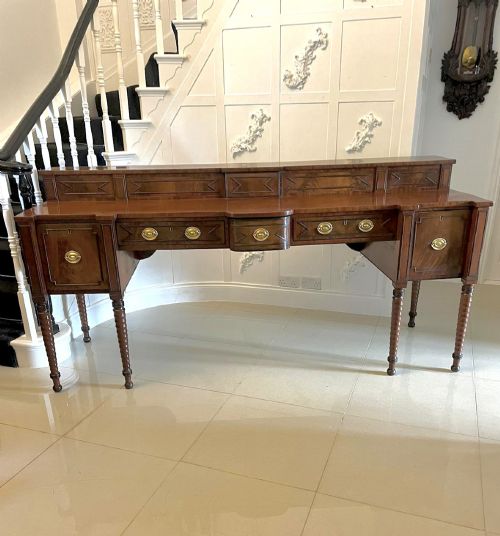
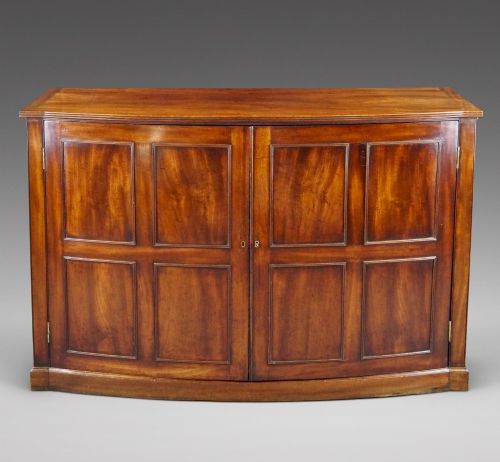
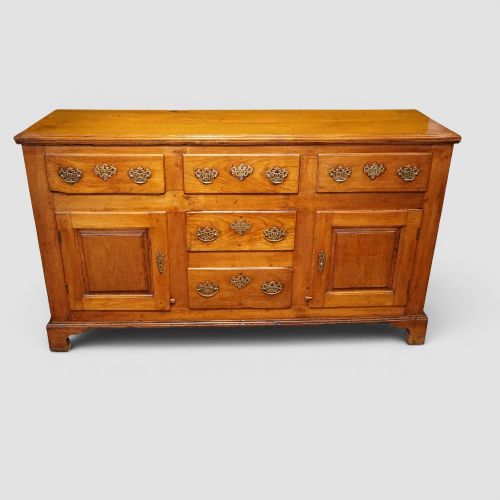
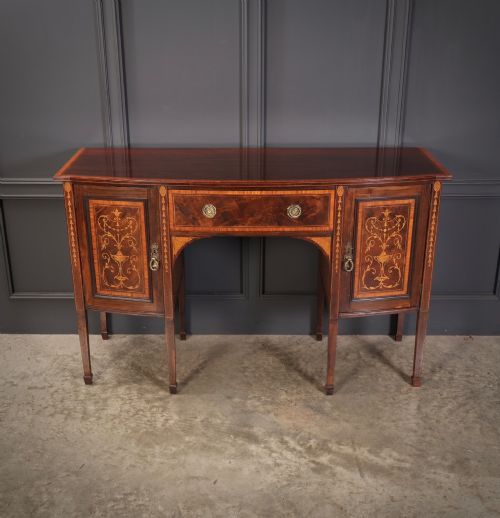


George III Sideboard Cabinet
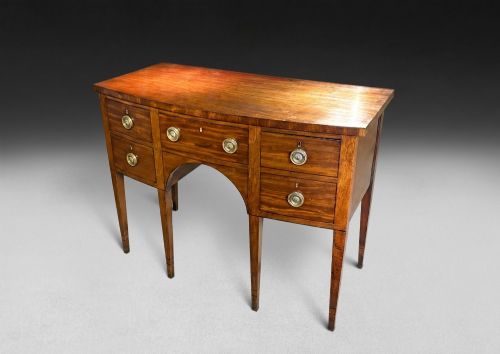
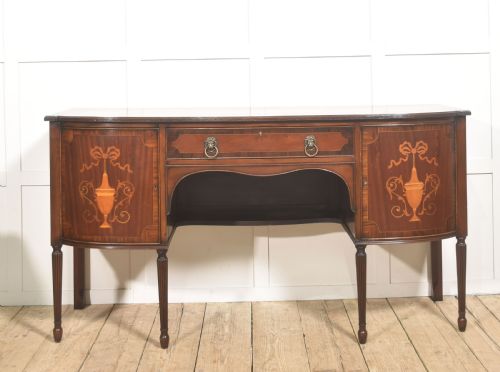
A george iii sideboard cabinet combines architectural presence with deep timber figuring, built to anchor a formal dining room.
George III Sideboard Cabinet
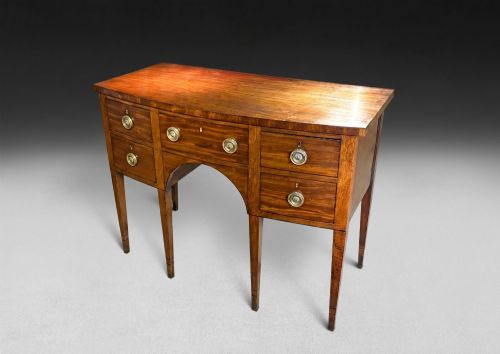
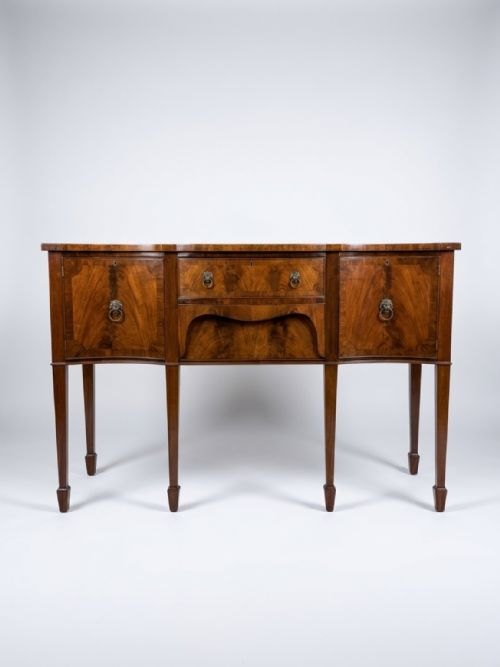
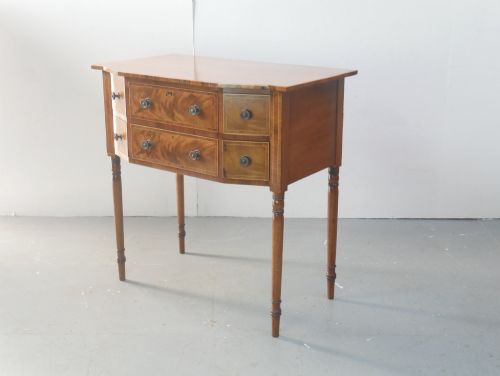
A george iii sideboard cabinet brings together formal dining room storage pieces from the Georgian era, most frequently appearing in bow-fronted or serpentine configurations fashioned from solid mahogany. These pieces span standard rectilinear sideboards, low press cupboards, and curved demi-lune commodes designed to follow the lines of a room.
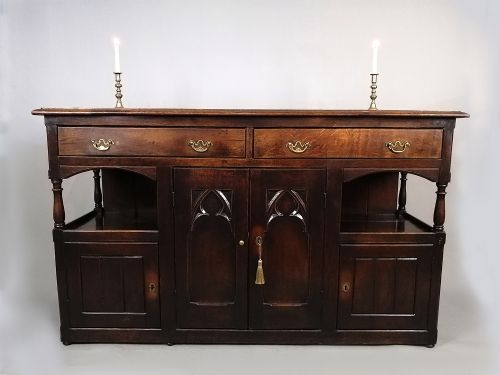
The selection also includes oak dressers and breakfront cabinets originating from the eighteenth century alongside later revival interpretations, reflecting the varied ways cabinet makers adapted storage for domestic spaces.
Materials and Technique
Makers utilised solid timbers like mahogany, oak, and fruitwood for primary structures, often pairing them with flame mahogany veneer to achieve striking grain patterns across drawer fronts and doors. Inlay work frequently incorporates satinwood, boxwood, and rosewood to form contrasting geometric or floral borders.
Brass handles and escutcheons punctuate the polished timber surfaces, while secondary framing relies on sturdy oak or deal construction within internal drawers and shelving.
Some ingenious cabinets concealed pull-out bottle drawers lined for cooling wine with ice.
Craftsmanship and Proportion
The distinction between tiers of execution rests on timber selection and the precision of the joinery, particularly where curved or serpentine drawer fronts meet the frame. Finer examples display continuous grain matching across multiple drawers and intricate marquetry detailing rather than simple painted lines.
Proportion and the handling of secondary woods inside drawers also signal higher workshop standards, separating utilitarian regional pieces from ambitious urban commissions.
Gillows
The George III Sideboard Cabinet Glossary
- Bow-front
- A cabinet front that curves outward in a convex arc, softening the linear geometry of a room. This shape required expert joinery to ensure drawers operated smoothly within the curved frame.
- Serpentine
- A shaped front featuring a concave centre flanked by convex ends, creating a flowing undulating line. This demanding form is characteristic of finer eighteenth-century case furniture.
- Demi-lune
- A half-moon shape characteristic of commodes and side cabinets designed to stand flush against a wall. These pieces often feature sweeping tambour doors or curved drawers.
- Press cupboard
- A dual-purpose piece featuring hanging space or sliding trays enclosed by doors beneath or above a chest of drawers. They provided essential linen storage in period homes.
- Flame mahogany
- A veneer cut from the branch junction of the mahogany tree, producing a swirling flame-like figure. Cabinet makers reserved this highly decorative timber for prominent door and drawer surfaces.
George III Sideboard Cabinet: Frequently Asked Questions
What is a george iii sideboard cabinet used for?
These pieces served as serving surfaces and storage units in formal dining rooms, holding silver, linens, and serving dishes.
Today, they function well as dining room servers or as statement storage cabinets in living spaces and hallways.
How do I identify a george iii piece?
Look for period timber characteristics such as dense mahogany, hand-cut dovetails, and period brass hardware.
Construction methods inside drawers and carcases help differentiate eighteenth-century originals from later nineteenth-century revival pieces.
Where were these cabinets placed?
They traditionally stood against the main dining room wall, often flanked by knife boxes or paired with matching dining tables.
Curved demi-lune versions were frequently chosen for smaller reception rooms or hallways where floor space required a shallower depth.
How do I care for mahogany timber?
Keep the wood away from direct heat sources and strong sunlight to prevent the timber and veneers from drying out.
Regular dusting with a dry lint-free cloth and occasional application of appropriate wax preserves the polished finish.